A discreet, buyer-oriented ranking of Miami’s most exclusive new luxury condo developments for 2026, defined by scarcity, architecture, and hospitality-grade service.
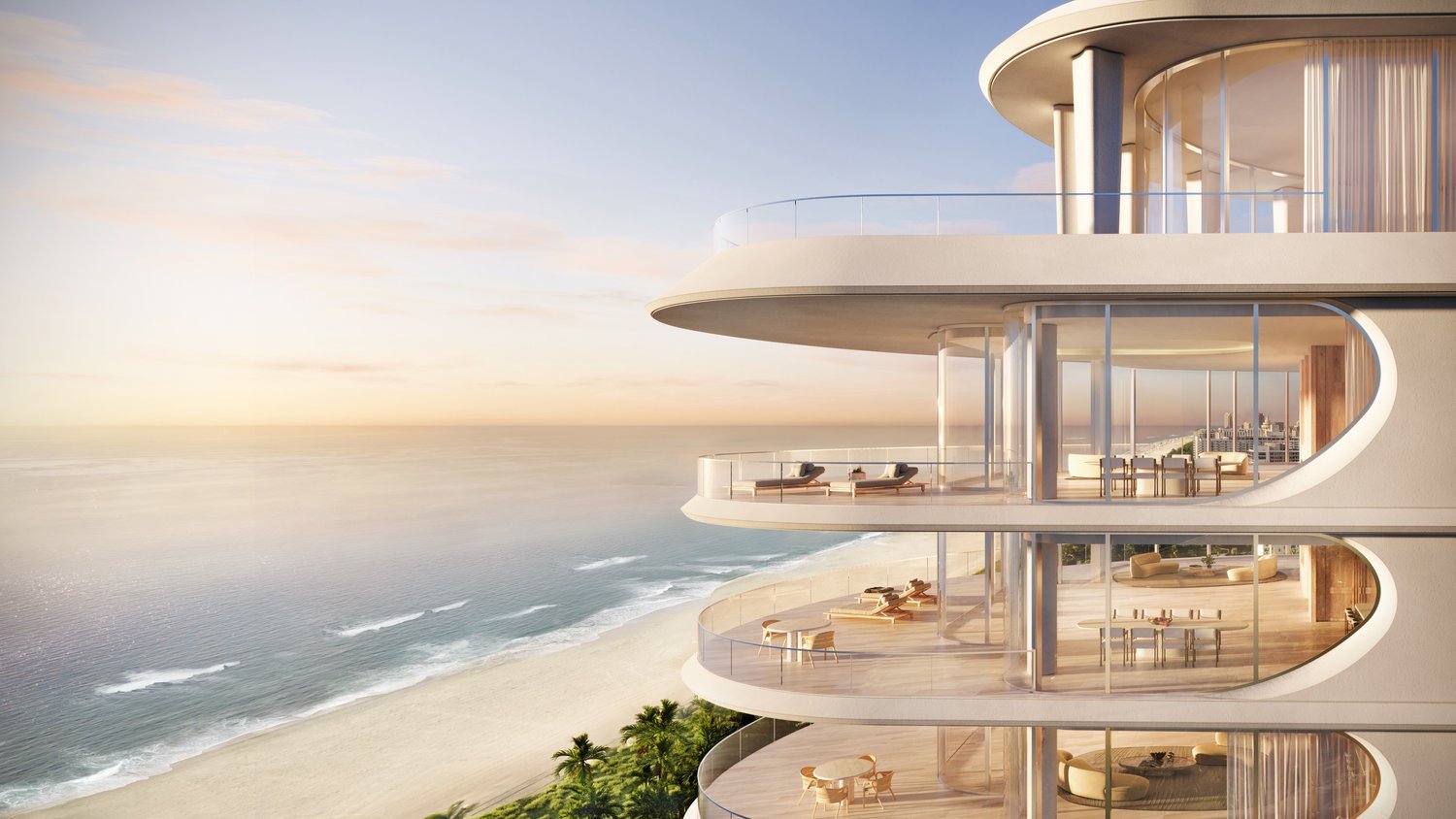
Exclusivity in Miami has always centered on address and view corridor. For 2026 buyers, that conversation has tightened. The most coveted new condominium launches increasingly deliver three things in concert: genuinely low density, a design signature that reads as collectible, and a hospitality platform that operates more like a private members club than a typical amenity deck.
That distinction matters because the luxury market now spans two very different product types. On one end are skyline-scale towers with extensive programming and hundreds of residences. On the other are boutique oceanfront and beach-adjacent buildings where scarcity itself is the amenity. This ranking is built around that second sensibility: projects intentionally limited in residence count and calibrated for owners who prefer discretion over spectacle.
Miami buyers also tend to be exacting about lifestyle logistics. A second-home owner may prioritize turnkey service and predictable operational standards. A primary resident may care more about privacy, controlled access, and the quiet confidence of a well-run residential experience. The strongest new projects are answering with hotel-grade service, tighter resident-to-staff ratios, and layouts that live more like standalone homes in the sky.
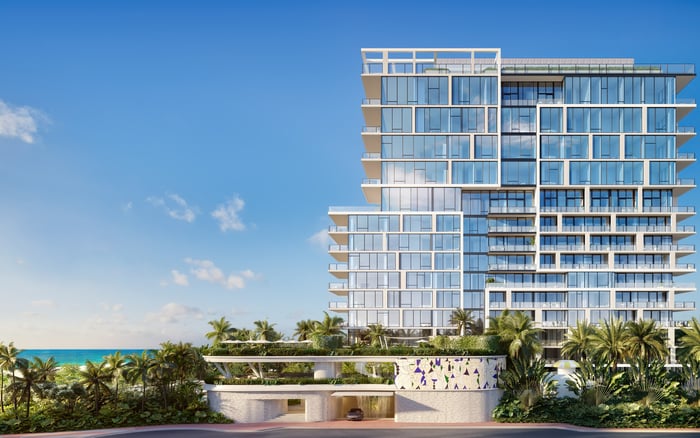
1. Aman Residences Miami Beach - 3425 Collins Ave, Mid-Beach Aman’s planned Miami Beach arrival is defined by scarcity: just 22 residences. That ultra-low density shapes everything from elevator frequency to the social atmosphere, producing a building that can feel closer to a private house than a typical condominium.
The project is designed by Kengo Kuma and is planned as an 18-story tower on the former Versailles Hotel site. Pricing has been publicly discussed as starting around $4 million, positioning it as an entry point into a brand experience where service and discretion are baseline expectations.
2. The Shore Club Private Collection - 1901 Collins Ave, South Beach The Shore Club Private Collection pairs residential ownership with an Auberge-managed hospitality program-a combination that tends to resonate with buyers who want a dependable service culture without giving up residential privacy.
The redevelopment is marketed as 49 residences, with pricing commonly quoted from about $5 million up to $50 million depending on residence type and size. In a South Beach context, the takeaway isn’t only the number-it’s the intent: a limited residential inventory embedded in a destination setting.
3. Surf House - 8995 Collins Ave, Surfside Surf House is boutique by any measure, marketed as 19 residences. In Surfside, that scale matches the neighborhood’s preference for quiet luxury, where proximity to the water and a controlled, low-traffic environment can matter as much as architecture.
Pricing is commonly marketed in an approximately $8.5 million to $28 million range, and the project is positioned with access to a Surf Club and Four Seasons-style service ecosystem in Surfside. For buyers who want oceanfront living without a high-rise crowd, the proposition is clear.
4. Ocean Terrace - North Beach, Miami Beach Ocean Terrace is a mixed-use redevelopment with a condominium component plus a hotel component-an important distinction for buyers who like the energy of a resort environment but still want a true residential product.
It is marketed as 52 condominiums plus 24 condo-hotel residences, with an emphasis on operational separation between residential and transient-use inventory. The redevelopment also highlights large-format programming, including beach club and members-club concepts, signaling a lifestyle-driven approach with a more defined boundary between owners and short-stay guests.
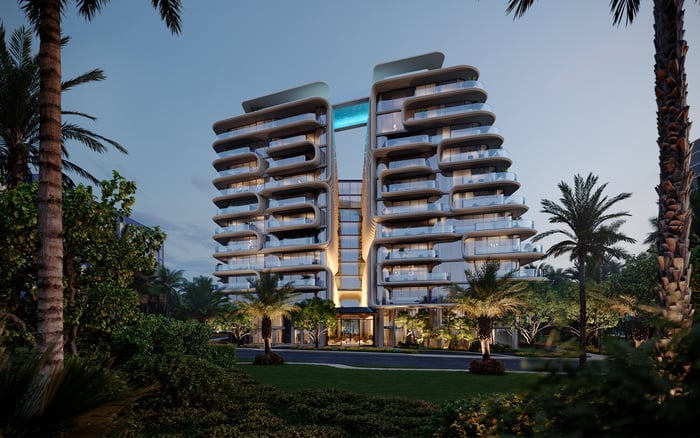
5. The Delmore - 8777 Collins Ave, Surfside The Delmore is marketed as 37 residences, delivering a level of scarcity that remains rare on the oceanfront. The design is by Zaha Hadid Architects, and for many real-estate collectors, that authorship is a core part of the value proposition.
In Surfside-where boutique projects often trade on calm and exclusivity-signature architecture adds another layer of differentiation. This is the kind of building that can become a reference point for the neighborhood’s next era.
The most notable pattern across this list is geographic. The newest scarcity plays cluster along the beach corridor, with Surfside and Miami Beach delivering the clearest boutique signal.
Surfside’s appeal lies in its relative quiet and a tight oceanfront strip where walkability, security posture, and a less commercial streetscape can align with second-home priorities. Buyers who like the neighborhood but want an established alternative with proven cachet often compare new launches to Eighty Seven Park Surfside, a useful reference point for the area’s design-forward, low-density ethos.
In Miami Beach, the story shifts by submarket. South Beach carries global recognition and a more animated social calendar, while Mid-Beach can read as more residential and resort-like. North Beach, long seen as a value relative to the southern sections, is increasingly being repositioned through mixed-use redevelopment and amenity programming that feels more like a curated district than a single building.
This concentration is also practical: true oceanfront sites are finite, and boutique product is inherently harder to replicate. For 2026 buyers, the most exclusive options are often the ones that cannot be value-engineered into a larger unit count.
Luxury buyers in South Florida have become fluent in the language of service. The question is no longer whether a building has concierge and valet-it’s what kind of operating culture the project is built to sustain.
Branded residences typically promise consistency: standards, staffing expectations, and an owner experience that mirrors high-end hospitality. In a “private collection” model, the brand expression is often quieter: fewer residences, a stronger sense of privacy, and amenities that prioritize calm over spectacle.
For context, a buyer considering a hospitality-forward lifestyle in Miami Beach may also look at Setai Residences Miami Beach as an established example of service as a defining feature. The newer wave aims to deliver that caliber of attention with even tighter resident populations.
As you evaluate, keep the questions practical: How is residential access separated from hotel access? Are there dedicated residential elevators or lobbies? How is staffing structured during off-peak seasons? The quiet months often reveal whether “hotel-grade” is a tagline or a true operating philosophy.
In ultra-premium markets, scarcity isn’t a slogan-it’s a structural advantage. A 19-residence or 22-residence building simply has fewer sales competing with each other over time, which can support long-term pricing power, especially when view corridors and floor plans are well-resolved.
Design authorship can amplify that effect. A recognized architect can make a building more legible internationally, widening the buyer pool and strengthening the property’s identity. That matters for owners who treat real estate like a collection: they want pieces that are difficult to substitute.
For buyers who like the scarcity thesis but prefer a different Miami neighborhood, Villa Miami is often discussed for its unusually low residence count relative to its height. It underscores the broader point: exclusivity can be engineered through density, not only through address.
Mixed-use projects can be compelling when they deliver curated retail, wellness, and dining without compromising residential serenity. The risk is operational: if transient-use traffic bleeds into the residential experience, owners feel it immediately in lobby dynamics, elevator usage, and security posture.
Ocean Terrace stands out for explicitly emphasizing separation between condominium residences and condo-hotel units. That “two worlds” principle should be a baseline expectation for any buyer considering mixed-use.
If your lifestyle leans toward a city-meets-hospitality equation rather than beachfront, it can be useful to benchmark against Brickell’s branded tower culture. Baccarat Residences Brickell, for example, represents a larger-format model where amenities and service are scaled to a broader resident population. It’s a different expression of luxury, but it clarifies what boutique projects are intentionally not.
The best choice is rarely about the highest floor or the biggest terrace. It’s about alignment.
If you want maximum discretion and an almost private-house feel, the smallest residence counts tend to deliver that most consistently. If you want social energy, landmark recognition, and a destination setting, South Beach hospitality-driven projects can fit.
If you want Surfside’s calm but still expect a sophisticated service environment, boutique oceanfront living is the obvious lane. For buyers who are Surfside loyalists, it’s also common to compare the neighborhood’s new launches with legacy icons like The Surf Club Four Seasons Surfside, simply to calibrate service expectations and lifestyle tone.
Finally, consider your hold horizon. Scarcity tends to reward patience. Owners who plan to keep a residence through multiple market cycles often value low-density governance and a clear, quiet brand of luxury over the novelty of the newest amenity.
Which of these is the lowest-density option? Aman Residences Miami Beach is planned with just 22 residences, making scarcity central.
What project is the most boutique in Surfside? Surf House is marketed as 19 residences, a true boutique scale for an oceanfront address.
Which ranked project has signature “starchitect” design? The Delmore is designed by Zaha Hadid Architects, appealing to design-collectors.
Which option is positioned for Auberge-managed hospitality? The Shore Club Private Collection integrates residences with an Auberge hotel program.
Is there a project that explicitly separates condos from condo-hotel units? Ocean Terrace is marketed with operational separation between residential and transient-use.
Are any of these in North Beach? Yes. Ocean Terrace is located in North Beach, Miami Beach.
Are these all oceanfront? Several are oceanfront or beach-adjacent, with the list concentrated along the coast.
What price ranges are commonly discussed for these projects? Public marketing commonly places them from around $4M to as high as $50M by project.
Which projects are in Miami Beach proper? Aman Residences Miami Beach, The Shore Club Private Collection, and Ocean Terrace are in Miami Beach.
What should buyers prioritize when choosing among boutique luxury launches? Focus on density, privacy/operations, and whether the service model matches your lifestyle.
To compare the best-fit options with clarity, connect with MILLION Luxury.
If branded residences are on your mind — as a home or as an allocation — we would be glad to share what we are seeing, privately.
Begin a quiet conversation