Feng shui has become a discreet but meaningful layer in South Florida’s luxury conversation, influencing how certain international buyers evaluate light, layout, orientation, and overall livability. As Miami continues to attract global capital, principles that prioritize harmony, wellness, and intuitive circulation are increasingly aligned with the region’s newest branded and wellness-forward residences.
Feng shui, literally “wind and water”, is a centuries-old Chinese practice focused on harmonizing people with their environment through placement, orientation, and the movement of energy, often described as chi. In today’s South Florida luxury market, it rarely presents as a headline feature. More often, it shows up as preferences voiced during showings: an entry sequence with presence, sightlines that feel calm rather than exposed, a bedroom that reads as protected, and a home that seems to “hold” light. This matters because Miami’s buyer pool is global, and cultural design fluency can be decisive at the top of the market. Miami has recently been positioned as the leading U.S. market for foreign home buyers, and international attention includes significant interest from parts of Asia. In practice, a residence may be judged not only on finishes and views, but also on whether its layout supports ease, privacy, and intuitive circulation. In a luxury context, feng shui is less about décor and more about high-functioning calm. The result is a quiet design language that can shape demand without announcing itself.
One of feng shui’s most common planning tools is the Bagua map, which divides a space into nine life areas. Practitioners overlay it on a floor plan to assess how different zones of the home relate to themes such as career, relationships, and wellbeing. For a buyer, you don’t need to adopt every tradition for it to be useful. At minimum, the Bagua is a structured way to ask sharper questions about a plan:
Does the entry feel like a clean transition, or does it drop you into a corridor that pushes you forward?
Do the primary gathering spaces feel grounded and cohesive, or fragmented?
Are bedrooms placed where they feel restful, rather than exposed to constant movement?
In other words, the Bagua can function like a second set of eyes, especially when comparing similar residences where the difference isn’t the view, but the feeling.
Feng shui’s role in luxury real estate isn’t purely aesthetic. In a survey of 500 Chinese Americans conducted for a real estate brand and an industry association, familiarity and follow-through were high: 76% reported being familiar with feng shui, and more than half of those familiar said they follow it in daily life. More notably for sellers, 81% of Chinese-American homeowners said feng shui factored into their most recent home purchase decision, and 86% believed it would influence their future decisions. Price sensitivity is where the conversation becomes concrete. In that same survey, 79% of Chinese-American homebuyers said they would pay more for a home that follows feng shui standards, citing an average premium of 16%. While that figure is best read as a self-reported preference rather than a guaranteed pricing rule, it clarifies why developers and listing agents pay attention. The same survey also found that 90% believed implementing feng shui principles increases a home’s resale value, and roughly 36% said they would avoid working with an agent who lacks feng shui knowledge. For South Florida, the takeaway is straightforward: when international and diaspora buyers are active, design fluency becomes part of transaction readiness.
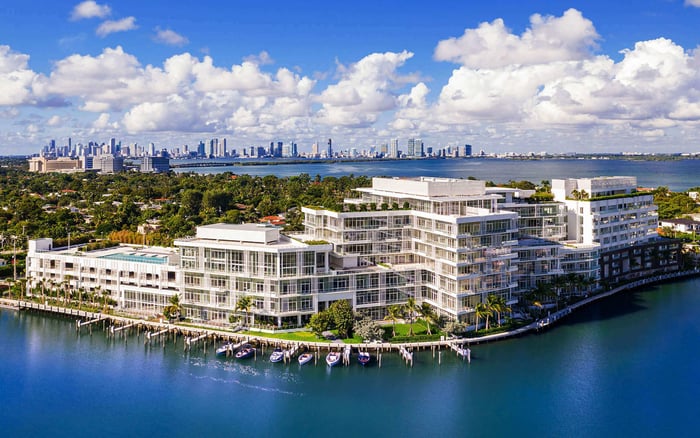
In ultra-premium product, overt symbolism can read as forced. The more sophisticated approach is translating principles into architecture and operations: arrival, transitions, materials, and the choreography of daily life. Miami Beach offers a clear illustration of how feng shui has been positioned within a luxury sales narrative in branded development. The Ritz-Carlton Residences® Miami Beach has been discussed publicly as incorporating feng shui as part of its luxury positioning. Whether a buyer views feng shui as essential or simply intriguing, the underlying idea is familiar in high-end hospitality: design that reduces friction, supports rest, and elevates the sense of welcome. A second pattern is the “Zen” framing of amenity environments. Even when buyers don’t use the term feng shui, they often respond to what the language is trying to signal: softness, composure, and a lack of visual noise.
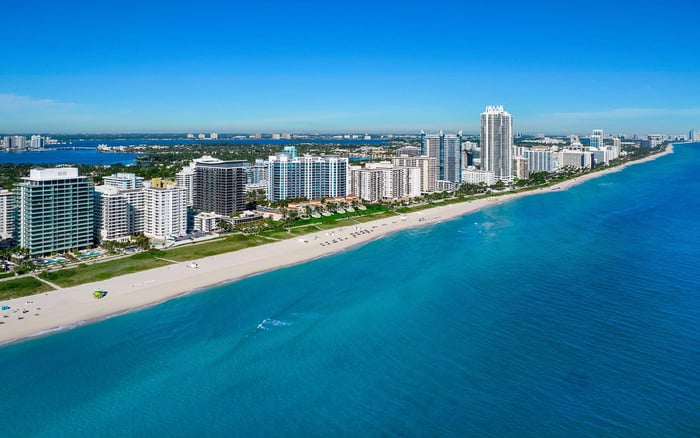
There’s a reason feng shui feels newly compatible with contemporary luxury. Many of its practical outcomes align with today’s wellness-forward design: natural light, restorative materials, greenery, and spatial balance. Biophilic design, widely positioned as a luxury-residential strategy, emphasizes a connection to nature through light, materials, and plant life. That overlaps with feng shui’s foundational attention to environment and wellbeing. In South Florida, where ocean views, sun paths, and indoor-outdoor living are core product attributes, these ideas tend to reinforce each other rather than compete. Consider how a wellness-oriented amenity program complements this sensibility in a direct, livable way. 57 Ocean Miami Beach promotes a wellness-forward mix that includes a spa and fitness and yoga-oriented spaces. The feng shui lens doesn’t require belief in any single doctrine; it simply prompts a clear question: does the building’s lifestyle proposition feel coherent? Does the home support recovery as much as it supports entertaining?
For sophisticated buyers, the most valuable feng shui guidance is often the least mystical. It’s about eliminating subtle stressors and choosing a plan that supports long-term ease.
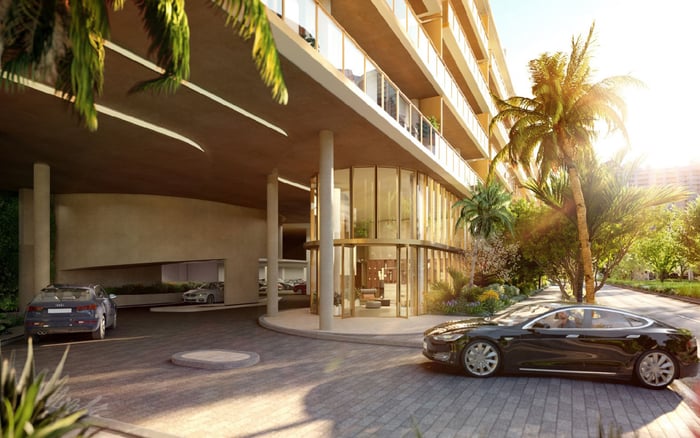
Entry clarity and a sense of arrival A luxury residence benefits from a threshold that feels intentional. If the front door opens immediately into clutter, tight turns, or harsh sightlines, the home can read as restless.
Circulation that is intuitive, not performative Great plans don’t force you to move through private zones to reach social spaces. They also avoid long, aggressive corridors that feel like a hotel back-of-house.
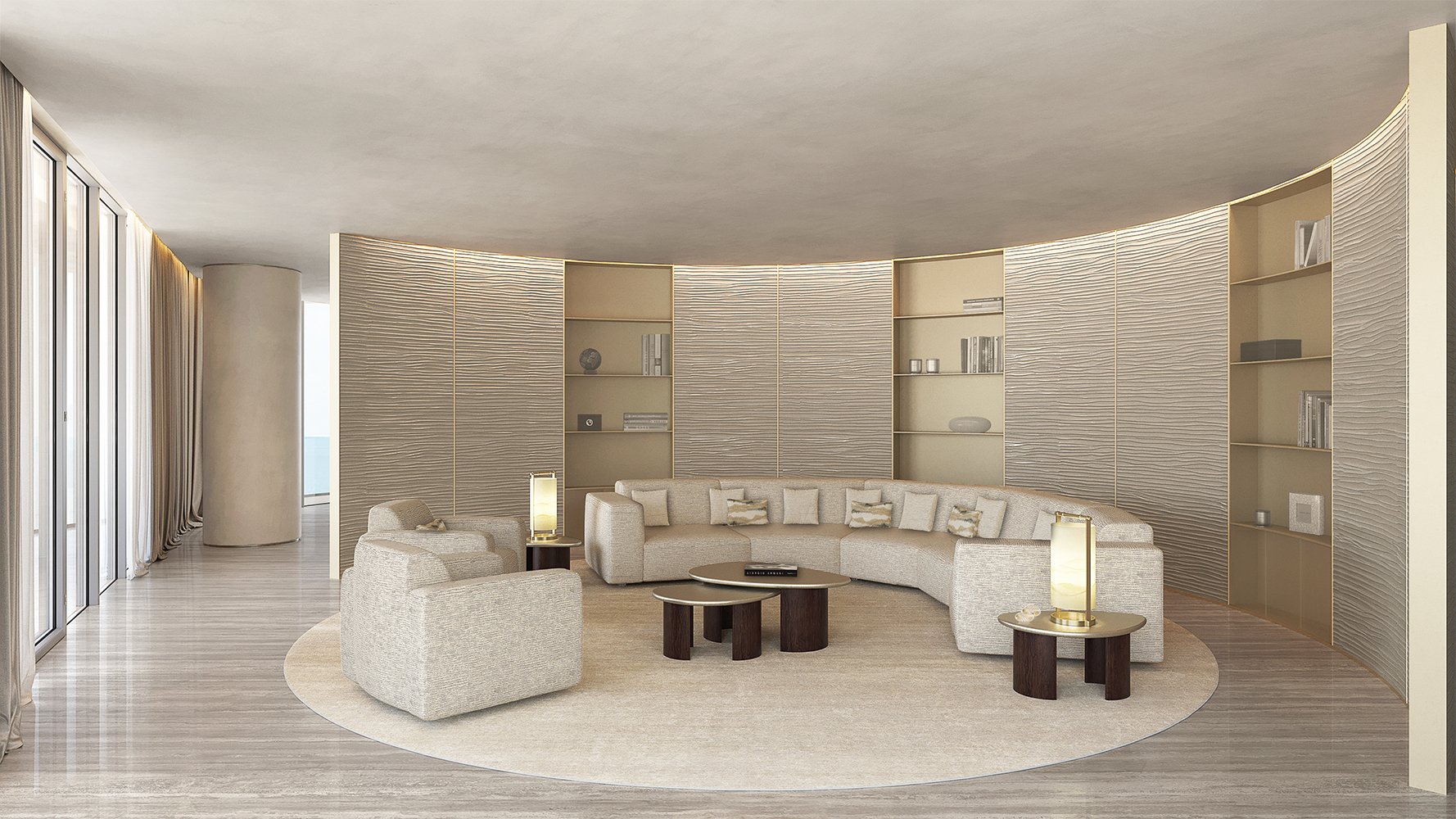
Primary suite placement that protects rest Bedrooms should feel like a destination, not a passage. When possible, prioritize suites that feel buffered from high-traffic areas.
Light quality over sheer glass quantity Floor-to-ceiling glass can be extraordinary, but the best residences balance openness with comfort: glare control, calm morning light, and evenings that feel cocooned. In Brickell and other high-rise neighborhoods, these considerations become especially relevant because views can be equally dramatic across multiple buildings. A buyer comparing luxury towers may find the “winning” residence is the one that feels quieter, not louder. For buyers seeking a contemporary urban base with a more residential, composed sensibility, 2200 Brickell is a useful reference point for the kind of refined, lifestyle-driven product that often aligns with these priorities.
Miami’s standing as a global second-home market means liquidity isn’t purely local. When foreign demand is strong, resale value can be supported by a broader pool of buyers with different decision frameworks. Feng shui is one of those frameworks, particularly for many Chinese and Chinese-American households, but it also resonates with a wider audience that simply wants a home to feel balanced. This is why the “quiet design language” matters. A residence doesn’t need to advertise feng shui to benefit from it. It needs to avoid obvious spatial penalties and deliver what global luxury buyers consistently reward: privacy, proportion, and a sense of controlled serenity. In Miami, branded residences with Asian luxury influence have also helped normalize this sensibility. The Mandarin Oriental hotel in Miami has long been positioned as a major local property with Asian luxury cues, and the branded-residential pipeline extends that influence into the ownership experience. Within that landscape, The Residences at Mandarin Oriental, Miami is a natural touchpoint for buyers who value hospitality-level calm translated into a home.
If feng shui is important to you, the highest-leverage move is to communicate early and concretely. Instead of asking for “good feng shui,” translate preferences into actionable criteria:
You want an entry that feels protected, not exposed.
You prefer a living area with a clear, grounded focal point.
You want a primary suite that doesn’t feel like an afterthought.
You want a kitchen and dining layout that supports gathering without congestion.
These criteria are legible to architects, designers, and experienced real estate professionals, even if they don’t practice feng shui formally. If you plan to furnish with intention, treat the first months of ownership as calibration. Furniture placement, lighting temperature, and window treatments can materially change how a space feels, especially in glass-forward towers where reflections and nighttime glare can disrupt rest.
Is feng shui a religious practice? It is generally understood as a traditional environmental and placement practice rather than a religion, though interpretations vary by household.
Do I need a consultant to buy a feng shui-friendly home? Not necessarily; many buyers use basic principles like calm circulation and protected bedrooms as a practical filter.
What is the Bagua map used for? It overlays nine life areas onto a floor plan to guide how different zones of a home are positioned and used.
Can feng shui affect resale value in Miami? Many buyers believe it can, especially in internationally oriented markets where cultural preferences influence demand.
Is waterfront living compatible with feng shui? Feng shui traditionally emphasizes “wind and water,” so many buyers find water views compatible when the home still feels stable and restful.
What is the most important feng shui feature in a condo? A strong entry and a layout with intuitive flow tend to matter most because they shape daily experience.
Does feng shui conflict with modern minimal design? It often complements it, since both can prioritize clarity, proportion, and reduced visual noise.
Are “Zen” amenities the same as feng shui? Not exactly; “Zen” is often a marketing shorthand, while feng shui is a more specific framework for placement and harmony.
Should I avoid a home with long hallways? Not always, but overly aggressive corridors can feel rushed; balance and transitions matter more than any single feature.
How can I communicate feng shui preferences to my real estate team? Communicate early using practical criteria, like a protected entry, intuitive circulation, and a primary suite buffered from high-traffic areas, so your team can screen options efficiently.
For a private, buyer-aligned plan around Feng Shui in Florida, connect with MILLION Luxury.
If branded residences are on your mind — as a home or as an allocation — we would be glad to share what we are seeing, privately.
Begin a quiet conversation