A buyer-oriented comparison of Surfside’s most privacy-forward oceanfront addresses, contrasting Arte’s ultra-boutique, completed model with The Delmore’s sculptural, planned approach to separation and discretion.
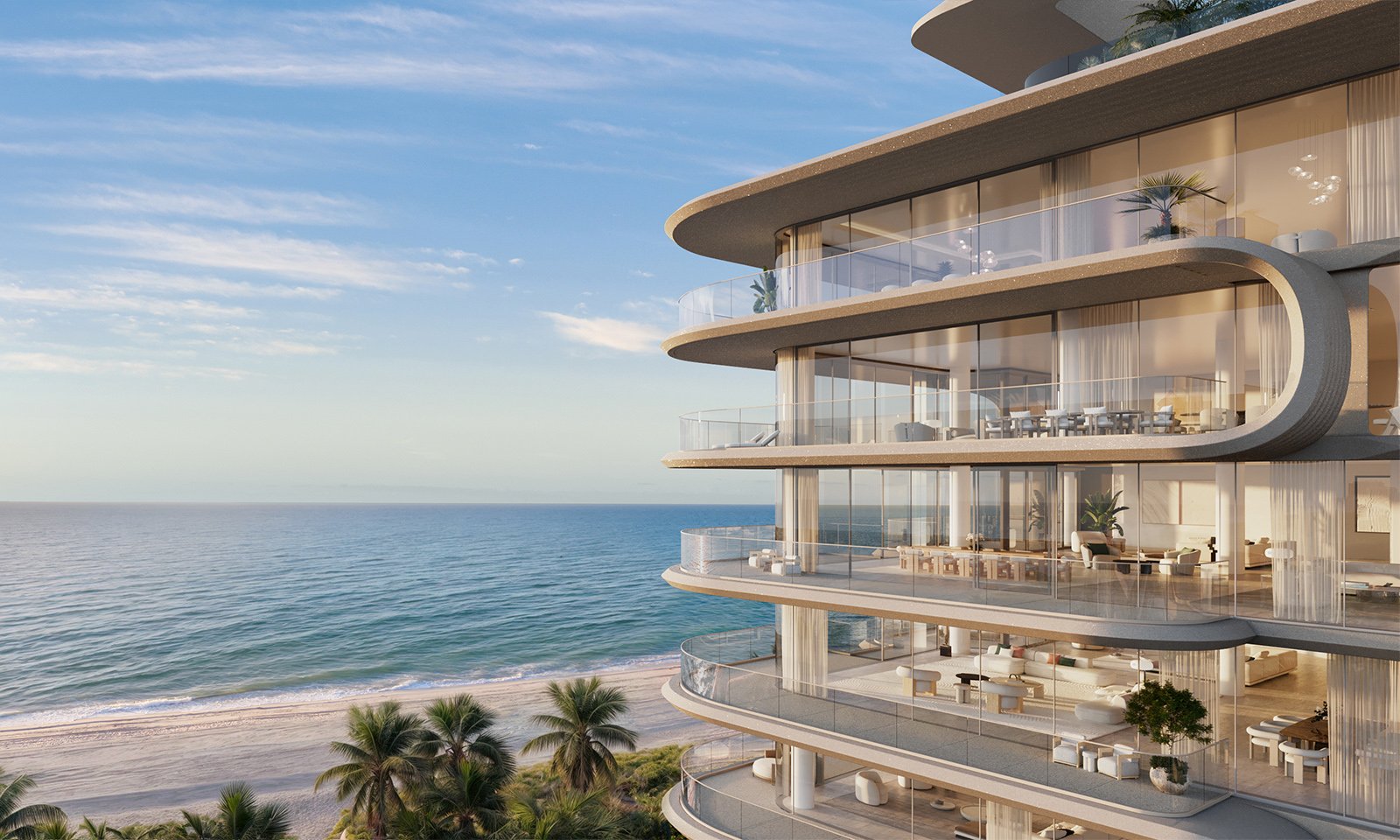
Surfside has long attracted buyers who want Miami Beach adjacency without Miami Beach exposure. In the ultra-premium segment, that preference is sharpening: not simply “quiet,” but engineered privacy - where circulation, residence count, and sightlines work together to protect daily life from the low-grade friction of shared spaces.
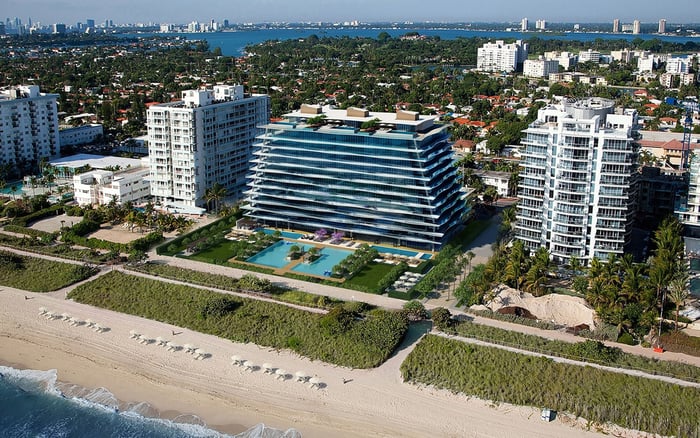
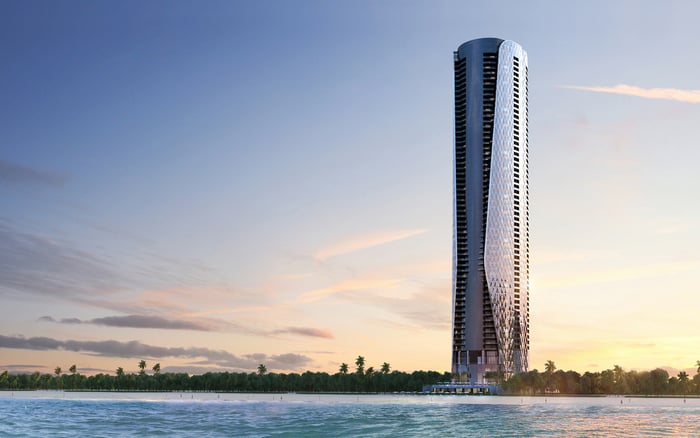
Two oceanfront projects on Collins Avenue define this new era. Arte Surfside is complete at 8955 Collins Ave, a boutique condominium marketed with just 16 residences and a design pedigree led by Antonio Citterio with Patricia Viel. A few blocks away, The Delmore is planned for 8777 Collins Ave, an ultra-luxury oceanfront condominium designed by Zaha Hadid Architects and marketed as a boutique collection of 37 residences.
They are not competitors in a conventional sense. Instead, they represent two distinct philosophies of discretion. Arte delivers privacy through extreme low density and a tightly controlled arrival. The Delmore targets exclusivity at a slightly larger scale by letting architecture do the separating - most notably through a dramatic central void that shapes how space, views, and distance are experienced.
Privacy in a luxury beachfront building is often reduced to a single feature - such as a dedicated elevator or a concierge desk that knows your name. In practice, privacy is a composite outcome, experienced across the entire day.
MILLION Luxury sees privacy-driven buyers evaluating three layers:
First is arrival and departure. A truly discreet building reduces the moments when residents converge and keeps the path from drop-off to front door clean, efficient, and controlled.
Second is circulation. How you move from lobby to residence, from residence to wellness areas, and back again determines whether a building reads like a private house in the sky - or a beautifully finished public venue.
Third is visual privacy: sightlines between neighbors, the way balconies and glazing face one another, and whether the architecture creates natural separation without requiring residents to constantly manage their own exposure.
This is where Surfside is becoming a case study. The market is rewarding buildings that treat privacy as an architectural and operational brief - not a marketing adjective.
Arte Surfside is a completed boutique oceanfront condominium at 8955 Collins Ave. It is marketed as a 16-residence building, and that number reshapes the living experience. Low density doesn’t just signal exclusivity; it directly reduces elevator demand, lobby interaction, and the frequency of incidental encounters that can make even a beautiful tower feel busy.
Arte is also positioned as design-forward, with Antonio Citterio (with Patricia Viel) shaping a refined, quiet-luxury sensibility. Here, the objective isn’t spectacle. It’s control: of the sequence from curb to residence, of the palette, and of the emotional temperature of shared spaces.
A defining part of Arte’s privacy story is private elevator access. Marketing materials describe direct or private elevator entry, supporting a lifestyle where coming home feels less like entering a building and more like returning to a private residence. When buyers say they want to “not see anyone,” this is often the operational detail behind the feeling.
Arte also promotes a substantial amenity program, with wellness-focused features and pools intended to serve residents without turning the property into a high-traffic environment. That distinction is material. Amenities can either concentrate activity into a single busy spine or be planned to let residents use them at different times with less friction. In a 16-residence building, even robust amenities can remain calm because the user base is inherently limited.
For buyers comparing across Miami Beach’s broader coastline, it can be useful to view Arte’s approach alongside other oceanfront privacy plays such as 57 Ocean Miami Beach, where the value proposition also leans toward an intimate, residential cadence rather than a high-volume tower experience.
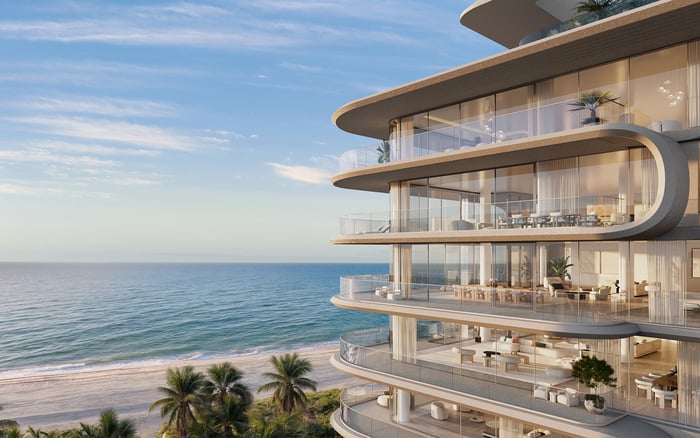
The Delmore is planned as an ultra-luxury oceanfront condominium at 8777 Collins Ave, designed by Zaha Hadid Architects. It is marketed as a boutique building of 37 residences, organized around a dramatic central void - sometimes described as a canyon. The concept is more than visual theater. A central void can function as a spatial separator, connecting interior spaces to views beyond while reducing direct overlook between opposing sides.
The design includes two wings separated by that void, shaping how privacy and separation between residences are achieved. For privacy-minded buyers, “two wings” isn’t just a design label - it’s a practical driver of distance. Wing separation can reduce the sense of living across from someone else, particularly when the architecture is intentionally distancing sightlines.
The Delmore’s positioning emphasizes exclusivity and privacy, and formal progress has been publicly disclosed with a foundation permit. For buyers, that adds a measure of confidence that an ambitious architectural vision is advancing through tangible milestones.
In Miami Beach, privacy often intersects with service expectations. Buyers weighing a Surfside address may also consider branded or hotel-adjacent models for a different expression of discretion, such as The Ritz-Carlton Residences® Miami Beach, where privacy can be reinforced through hospitality-grade operations and controlled access, or Setai Residences Miami Beach, where the tone is similarly composed and intentionally insulated.
It’s tempting to compare these buildings as if privacy were a single dial: fewer residences equals more privacy, period. Density matters, but sophisticated buyers tend to look beyond the headline number.
Arte’s primary advantage is extreme scarcity. With 16 residences, the building’s social surface area is naturally limited. The lobby rarely needs to function as a public room, and circulation can stay quiet without elaborate choreography.
The Delmore’s differentiator is architectural separation. At 37 residences, it still reads as boutique by coastal Miami standards, but it must work harder to preserve the same sense of distance. The central void and two-wing composition signal a clear strategy: preserve privacy by structuring how neighbors relate to one another across the building.
A second difference is how each project communicates discretion. Arte’s privacy feels understated and controlled: direct elevator entry, limited neighbors, and an amenity offering scaled to a small community. The Delmore’s privacy feels sculpted: a design move that creates a protected interior world and manages visibility through form.
A third difference is psychological. Some buyers equate privacy with invisibility and prefer the quiet certainty of a completed, ultra-low-count building. Others are drawn to the idea that architecture can produce a rare spatial experience - one where separation is felt not only in numbers, but in the way light, volume, and circulation are composed.
Privacy is often promised in renderings and brochures, but it’s ultimately proven in plan logic and building operations. For any Surfside oceanfront purchase, focus on questions that translate marketing into lived experience.
Ask how the arrival sequence is structured. Not simply “is there valet,” but where the moments of overlap occur - and whether the design encourages lingering in shared areas.
Ask how residence entry is handled. Private elevator access and direct entry matter because they reduce dependence on shared corridors, but buyers should also consider what happens immediately outside the front door: the distance between entries, the sound environment, and the sense of separation.
Ask how amenities are programmed. A robust wellness program can either enhance privacy by reducing the need to leave the building or dilute it if it generates constant internal traffic. The right answer depends on whether the amenity footprint aligns with residence count and circulation design.
Finally, ask about sightlines. Oceanfront glass is compelling, but privacy is often decided by angles, setbacks, and whether opposing stacks look into one another. In a building like The Delmore, the central void concept is intended to address exactly that kind of relationship.
For buyers who like Miami Beach energy but prefer the insulation of a private residential enclave, other formats exist as well, including curated collections such as Shore Club Private Collections Miami Beach, where the lifestyle premise typically emphasizes controlled access and a more intentional residential experience.
Surfside’s premium is increasingly tied to what cannot be easily replicated: calm, control, and oceanfront scarcity. As new product comes to market, privacy is shifting from a passive benefit to an active design discipline.
Arte shows what happens when scarcity is pushed to its logical extreme: the building becomes a highly edited community where the daily rhythm can feel closer to a private estate than a condominium.
The Delmore suggests the next step: a boutique building that uses architecture as a privacy instrument - carving space to shape separation, manage views, and create a more protected residential world.
For ultra-premium buyers, the takeaway is straightforward. In Surfside, privacy isn’t only about who your neighbors are. It’s about how the building makes it possible to live as if you hardly have any.
Where is Arte Surfside located? Arte Surfside is at 8955 Collins Ave in Surfside and is a completed oceanfront condominium.
How many residences are at Arte Surfside? Arte is marketed as a boutique building with 16 residences.
What is The Delmore and where will it be located? The Delmore is planned for 8777 Collins Ave in Surfside as an ultra-luxury oceanfront condominium.
Who designed The Delmore? The Delmore is designed by Zaha Hadid Architects.
How many residences are planned for The Delmore? The Delmore is marketed as a boutique building of 37 residences.
What is the central void concept at The Delmore? The building is organized around a dramatic central void that connects interiors to views beyond.
How does The Delmore’s two-wing layout relate to privacy? Two wings separated by the central void are intended to support separation between residences.
Does Arte Surfside offer private elevator access? Arte’s marketing describes private elevator access and direct or private elevator entry to residences.
Why does residence count matter for privacy? Fewer residences generally means fewer shared-space encounters and lower overall internal traffic.
What should buyers prioritize when evaluating privacy in Surfside? Focus on arrival sequence, circulation to residences, and how the architecture manages sightlines.
For a confidential assessment and a building-by-building shortlist, connect with MILLION Luxury.
If branded residences are on your mind — as a home or as an allocation — we would be glad to share what we are seeing, privately.
Begin a quiet conversation