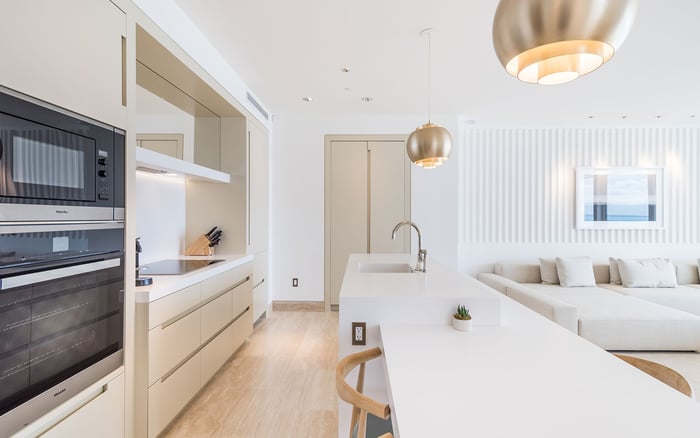
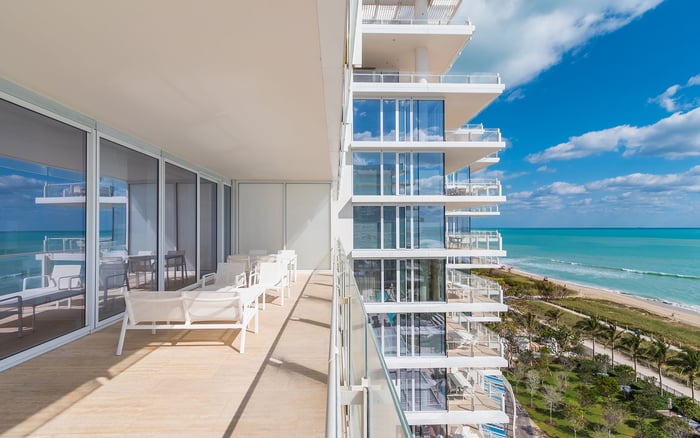
A discreet household-operations comparison for buyers weighing The Surf Club Four Seasons Surfside against Kempinski Residences Miami Design District, with attention to privacy, art logistics, wine handling, and delivery choreography.
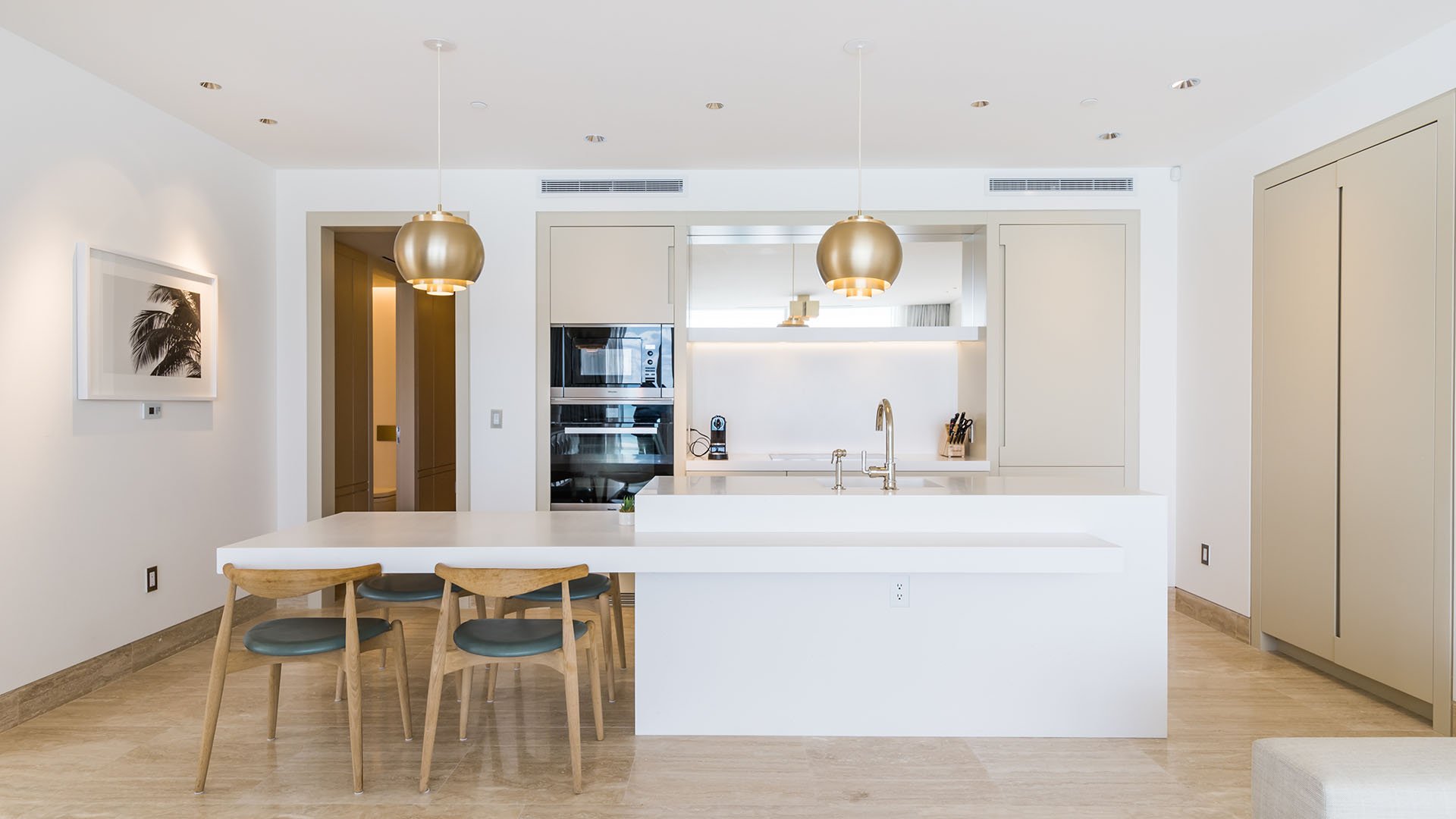
For a certain South Florida buyer, the decision is no longer only about views, finishes, or a recognizable name above the door. It is about how a residence performs when life is in motion. Can a crate arrive without becoming theater? Can a cellar restock be coordinated without interrupting dinner? Can a private household receive fashion, florals, art, and specialty vendors with the quiet discipline expected of a great hotel?
That is the lens for comparing The Surf Club Four Seasons Surfside with Kempinski Residences Miami Design District. The first is a Surfside branded ultra-luxury residential offering relevant to discreet service and household operations. The second, through its Design District positioning, invites a different diligence conversation: urban access, collector routines, and the choreography of movement around art, wine, and high-value deliveries.
The right answer is not simply beach versus city. It is which operating environment better protects the buyer’s privacy, staff cadence, objects, and time.
Surfside offers a more residential, coastal rhythm. For buyers who value a quieter approach to arrival, a less performative address, and proximity to the water, the setting can support an understated mode of living. Oceanfront priorities often include privacy at the porte cochere, staff communication that feels invisible, and separation between leisure and logistics.
The Design District conversation is more urban and collector-oriented. A household active in galleries, fashion, dining, events, and seasonal entertaining may prize proximity over retreat. During Art Basel week, for example, the question becomes less about whether the neighborhood is active and more about whether the building can buffer that activity from the residence itself.
This is where buyers should move beyond amenity language. The most important operational questions are practical: where specialty vendors enter, how oversized items are staged, what protocols govern insured deliveries, and how resident privacy is preserved when multiple high-touch households need service at once.
The Surf Club Four Seasons Surfside has the advantage of being legible as a branded ultra-luxury residential environment. For buyers, that matters because branded residences are often evaluated through the expectations they create around service culture, discretion, and continuity. The name alone does not answer every operational question, but it does establish the correct buyer standard: hotel-level polish adapted to private-home life.
In practice, a Surfside household should evaluate how the residence manages the invisible work behind a calm day. That includes receiving wine without heat exposure, coordinating fine-art handlers, protecting corridors and elevators during installations, and ensuring that personal assistants or estate managers have clear channels for scheduling. The best-run building is not the one with the most visible staff. It is the one where staff intervention feels almost absent.
Nearby Surfside comparisons, such as The Delmore Surfside and Arte Surfside, reinforce how carefully this coastline is being read by buyers who want privacy without sacrificing architectural or service ambition. The broader Surfside market has become a study in restraint: fewer theatrics, more precision.
For Kempinski Residences Miami Design District, the prudent buyer should focus on what can be confirmed during private review rather than relying on assumptions about the brand or neighborhood. The Design District context suggests a household that may be more outward-facing: more gallery visits, more entertaining, more wardrobe rotation, more incoming specialty goods, and potentially more frequent coordination with advisors and vendors.
That can be an advantage if the building’s back-of-house is designed for it. A collector living in an urban cultural district may want same-day coordination with installers, framers, stylists, florists, wine merchants, and private chefs. But the service promise must be converted into protocol. Buyers should ask how deliveries are scheduled, whether there is a preferred process for high-value items, how residential privacy is protected during peak neighborhood periods, and who has authority when an object needs urgent handling.
This is not suspicion. It is the correct posture for new project due diligence. The more active the household, the more important the operating manual becomes.
Art logistics are about more than size. They involve insurance, condition checks, climate sensitivity, elevator dimensions, staging time, wall protection, vendor credentials, and privacy. A building suited for collectors should understand that a delivery can be both physically delicate and socially sensitive.
Wine handling is different. It requires temperature awareness, timing, and the ability to move cases without exposing the household or the collection to unnecessary visibility. For serious buyers, the question is not simply whether wine storage exists inside the residence. It is whether the path from vehicle to private storage is calm, direct, and supervised.
Luxury deliveries sit somewhere between the two. Couture, jewelry, watches, linens, florals, and design objects all benefit from controlled access and intelligent communication. In Brickell, buyers considering branded and design-driven towers such as 888 Brickell by Dolce & Gabbana often ask similar questions, because service quality is increasingly measured by what never has to be explained twice.
The Surf Club profile is strongest for the buyer who wants a private coastal base with a refined service atmosphere and minimal friction around household management. It may suit those who value quiet arrival, seaside routine, long weekends, and the sense that the residence can absorb complex needs without broadcasting them.
The Kempinski profile may appeal to the buyer whose household is more embedded in the city’s cultural and design life, provided the buyer confirms that the building’s operational structure supports that intensity. The appeal is not merely being near the Design District. It is being able to live near activity while remaining personally insulated from it.
A fair comparison therefore turns on household behavior. A family with frequent staff handoffs, wine shipments, rotating art, and seasonal wardrobes should review service channels as carefully as floor plans. A couple who travels often may prioritize lock-and-leave coordination and trusted receiving. A collector may care most about freight choreography and installation discretion. A host may care most about guest arrival, catering movement, and post-event reset.
Before choosing between these two addresses, buyers should request a private walk-through focused solely on operations. Ask to trace the path of a large artwork from arrival to residence. Ask how wine shipments are received when the owner is abroad. Ask who communicates with outside vendors, how access is logged, and how service elevators are scheduled during busy periods.
Also ask what happens when multiple households need priority at the same time. Ultra-prime buildings often look most similar in renderings and most different under pressure. The distinction is rarely a marble wall or a branded lobby. It is the calm competence of the people and systems behind the scenes.
Is this comparison mainly about location? No. Location matters, but the deeper issue is how each residence supports private household operations for art, wine, staff, and deliveries.
What is the strongest verified point for The Surf Club Four Seasons Surfside? It is identified as the Surfside property in this comparison and framed as a branded ultra-luxury residential offering relevant to discreet service.
Should buyers assume Kempinski has the same service model as The Surf Club? No. Buyers should review Kempinski’s specific residential protocols directly before making assumptions about operations or staffing.
Why do art collectors need operational diligence? Art handling can involve insurance, climate sensitivity, staging, elevator access, privacy, and specialized vendors.
What should wine-focused buyers ask first? They should ask how shipments move from vehicle to residence and whether the process limits heat, delay, and visibility.
Does a branded residence guarantee discreet service? A brand can set expectations, but buyers should still verify the building’s actual delivery, vendor, and access procedures.
Is Surfside better for privacy? Surfside may appeal to buyers seeking a quieter coastal rhythm, but privacy depends on the building’s specific operating systems.
Is the Design District better for collectors? It may be attractive for culturally active households, provided the residence can manage high-value logistics discreetly.
What is the most overlooked buyer question? Buyers often forget to ask what happens when multiple residents need high-priority service at the same time.
How should a buyer make the final decision? Choose the residence whose daily operating rhythm best matches the household’s staff, collections, travel, and delivery patterns.
When you're ready to tour or underwrite the options, connect with MILLION.
If branded residences are on your mind — as a home or as an allocation — we would be glad to share what we are seeing, privately.
Begin a quiet conversation