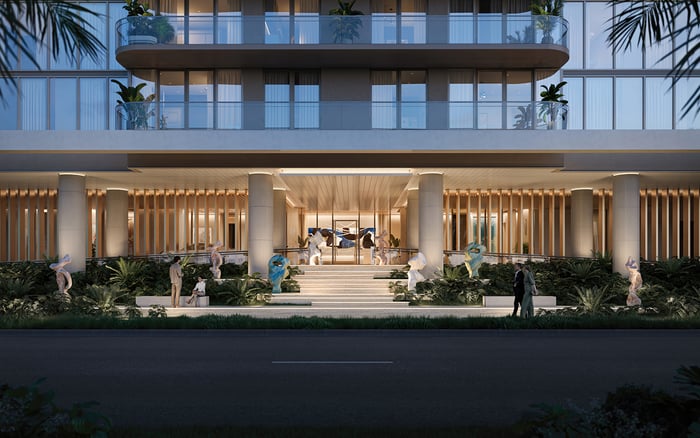
A buyer-focused editorial on why ownership clarity, notice procedure, and entitlement discipline matter when evaluating The Ritz-Carlton Residences® West Palm Beach and comparable ultra-luxury projects.
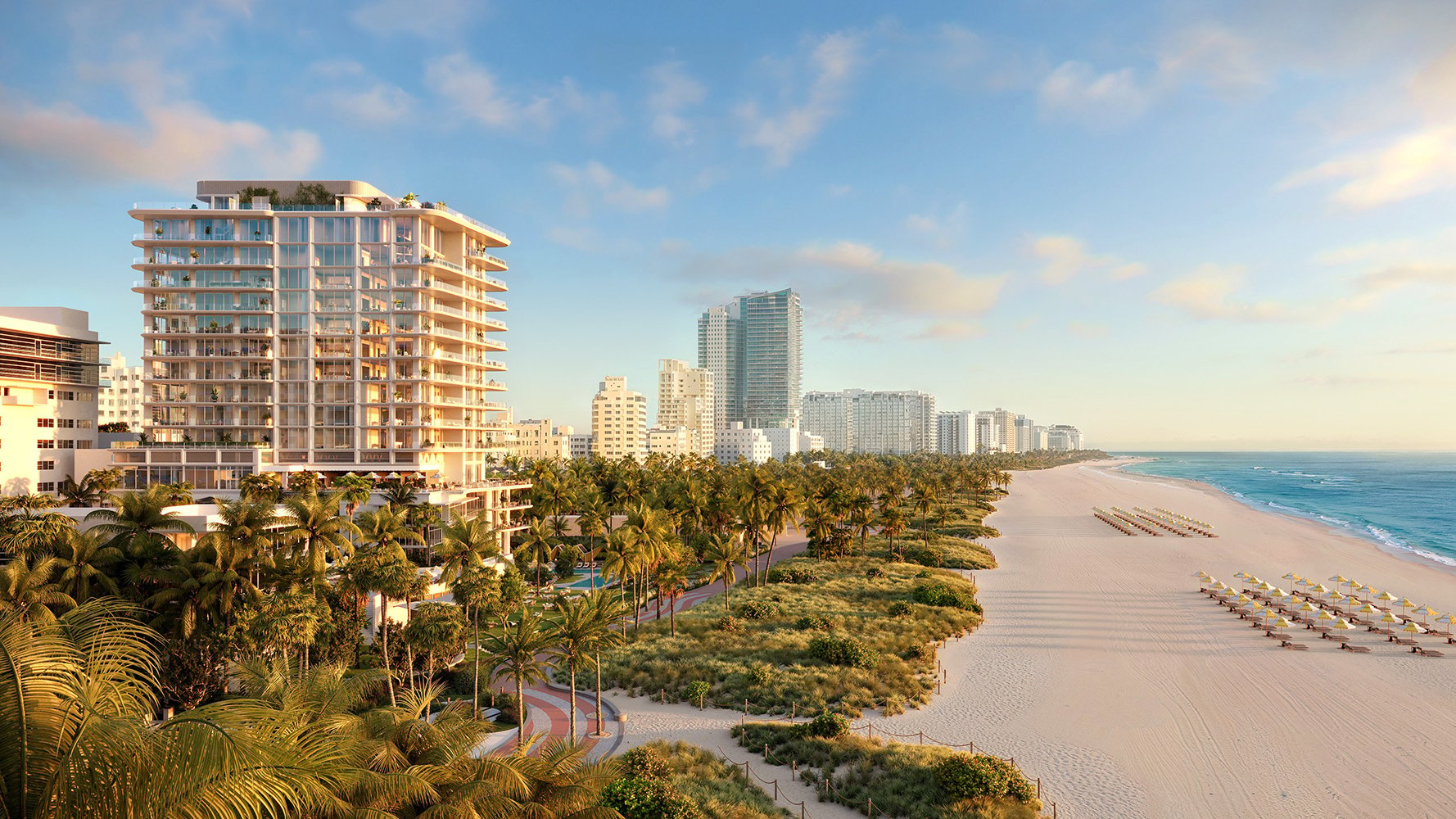
At the top of the South Florida market, the most consequential details are often procedural. A residence may be defined by architecture, service, and views, yet its path to delivery depends on documents many buyers do not see until late in the process. That is why the ownership question behind neighbor-notice rules matters for The Ritz-Carlton Residences® West Palm Beach.
Neighbor notice is not merely a mailing exercise. In a high-value urban setting, it is part of the approval choreography that confirms who is entitled to speak for a property, who must be informed, and whether the public-facing process aligns with the private ownership structure. For an ultra-luxury buyer, that is not a technical footnote. It goes directly to confidence.
The central issue is straightforward: if notice is required, the identity of the owner, applicant, or authorized representative should be clearly understood. Luxury purchasers do not need to become land-use attorneys, but they should understand whether the project’s procedural posture supports the certainty expected at this price point.
Neighbor-notice rules exist because development affects more than the parcel itself. They create a formal moment when adjacent owners, associations, and interested parties are informed that a land-use action may be moving forward. In ordinary housing, the notice may feel bureaucratic. In West Palm Beach luxury real estate, it can read as a signal of governance, timing, and execution.
That signal is especially important where the buyer pool includes family offices, international purchasers, and second-home clients who expect institutional discipline. Their question is not simply whether a branded residence is desirable. It is whether the ownership, approval, and delivery framework feels coherent.
This is part of the broader evolution of West Palm Beach from a seasonal address into a more scrutinized residential market. Buyers comparing Alba West Palm Beach, Mr. C Residences West Palm Beach, and Forté on Flagler West Palm Beach are not only evaluating finishes and amenities. They are evaluating how each opportunity sits within a city where process, waterfront adjacency, traffic, preservation, and neighborhood character are all part of the premium.
The practical review begins with three questions. First, who owns or controls the development site? Second, who is authorized to file, amend, or advance land-use materials? Third, who receives notice when rules require neighbors or affected parties to be informed?
Those questions should be addressed before a buyer becomes emotionally attached to a floor plan. A reservation or contract can be attractive, but confidence improves when the buyer’s advisory team understands the structure beneath the offering. That includes the relationship between the developer, any ownership entity, any licensed brand arrangement, and the timeline for required approvals.
The review should also consider remedies and timing. If a procedural issue delays an approval, what happens to deposits, milestones, or closing expectations? If the project evolves, how much discretion does the sponsor retain? These are normal questions in pre-construction purchases, not signs of mistrust.
For buyers tracking West Palm Beach and Palm Beach opportunities, the most valuable posture is calm diligence. New construction can reward early conviction, but investment discipline requires a clear view of process as well as product.
A name such as Ritz-Carlton carries an implied standard of service, privacy, and operational polish. That brand association is part of the appeal, but it also heightens the expectation that the development process will be orderly. Buyers are entitled to ask whether the legal and municipal path feels as refined as the amenity program.
This is not unique to one address. Across South Florida, branded residences have pushed purchasers to think more carefully about the intersection of hospitality, governance, and real estate ownership. A buyer considering The Ritz-Carlton Residences® Palm Beach Gardens may be motivated by a different lifestyle than a buyer focused on downtown West Palm Beach, yet both should ask similar questions about control, timing, and long-term stewardship.
The best projects anticipate this scrutiny. They make it easy for counsel and advisers to understand who is responsible for filings, who communicates with the city, and how notices are handled. In a market where luxury is increasingly defined by predictability, procedural clarity becomes part of the amenity package.
The existence of neighbor-notice requirements should not be read as a warning by itself. Notices are a normal part of civic planning. The more useful question is whether the ownership and notice framework appears aligned, responsive, and professionally managed.
A buyer should avoid two extremes. The first is ignoring procedure because the architecture, brand, or sales environment feels compelling. The second is treating every procedural question as a fatal flaw. The more intelligent approach is to ask direct questions, obtain clear answers, and understand what remains open.
For West Palm Beach, that balance is particularly important. The city’s luxury market is intimate enough that neighbors matter, but sophisticated enough that major residential projects can be evaluated with institutional rigor. The ownership question is therefore not a distraction from lifestyle. It is one of the ways lifestyle is protected.
The ownership question behind neighbor-notice rules is ultimately about trust. In the ultra-premium segment, trust is built through more than renderings and hospitality language. It is built through consistency between the promise of the residence and the discipline of the process.
For The Ritz-Carlton Residences® West Palm Beach, the buyer’s lens should be exacting but not alarmist. Ask who owns or controls the site. Ask who is authorized to act. Ask how notices are delivered and documented. Ask how any timing risk is addressed in the purchase structure. These are not adversarial questions. They are the vocabulary of serious acquisition.
In a market where discretion is prized, the most elegant answer is often the cleanest one: a transparent chain of authority, a coherent approval path, and a sponsor team prepared for the level of scrutiny that luxury buyers now bring to every decision.
Why do neighbor-notice rules matter to luxury buyers? They help reveal whether ownership, authority, and approval steps are being handled with the discipline expected in a premium purchase.
Does a neighbor notice mean a project has a problem? No. Notice requirements are a normal part of planning and approval processes, but buyers should understand how they are being managed.
What is the key ownership question for buyers? Buyers should know who owns or controls the site and who has authority to file, amend, or advance project materials.
Should this affect a pre-construction purchase decision? It should inform the due-diligence conversation, especially around timing, deposits, approvals, and contractual protections.
Is brand affiliation enough to remove procedural risk? No. A strong brand can elevate confidence, but ownership structure and approval procedure still deserve independent review.
Who should review these issues for a buyer? A buyer should rely on qualified legal, tax, and real estate advisers familiar with South Florida luxury development.
Are West Palm Beach projects different from Miami projects? Each city has its own planning culture, but the same buyer principles apply: clarity, timing, authority, and documentation.
What should buyers ask before signing? They should ask what approvals remain, who controls the process, and what happens if timing changes.
Can neighbor concerns affect a luxury project? They can influence timing, design dialogue, or approval conditions, which is why early clarity matters.
How should buyers interpret procedural questions? Calmly. They are not automatically negative, but they should be answered before commitment becomes substantial.
For a discreet conversation and a curated building-by-building shortlist, connect with MILLION.
If branded residences are on your mind — as a home or as an allocation — we would be glad to share what we are seeing, privately.
Begin a quiet conversation