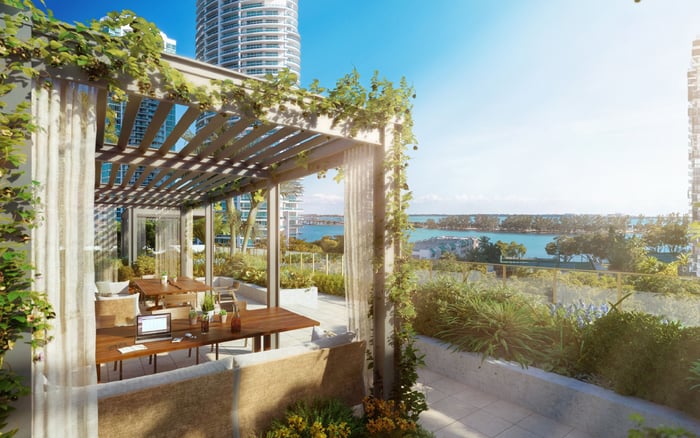
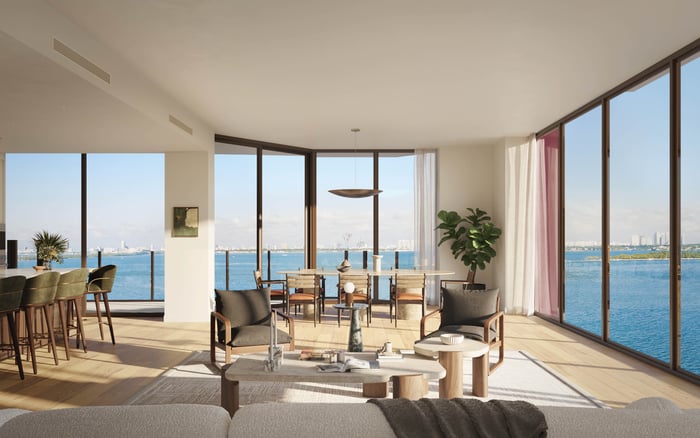
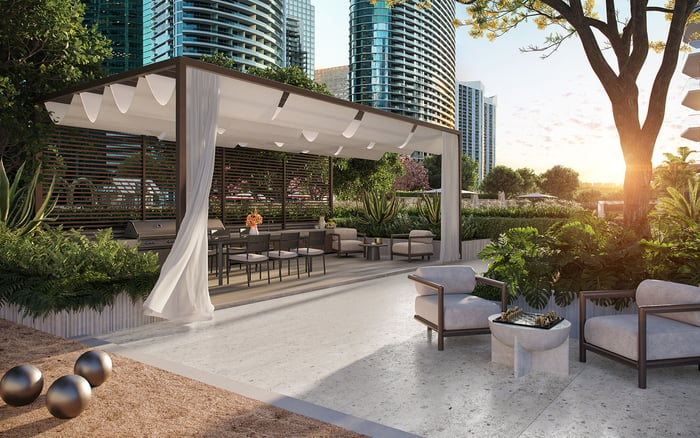
A practical, design-led checklist for evaluating shaded dining terraces in South Florida penthouses, with attention to orientation, comfort, privacy, service flow, finishes, and long-term livability.
A South Florida penthouse terrace can be spectacular on a floor plan and still underperform in daily life. The difference is rarely the view alone. It is shade, proportion, privacy, air movement, and the ability to serve dinner without turning the evening into logistics. For buyers at the top of the market, a shaded dining terrace is not an accessory. It is a second dining room, a sunset salon, and often the most emotionally persuasive space in the residence.
The best terrace is not necessarily the largest one. It is the one that supports the way an owner actually lives. Can eight guests sit comfortably without glare? Can lunch happen without retreating indoors? Is the dining table protected enough to remain set between courses? Does the space feel intimate at night, or exposed to neighboring towers? These questions matter in Brickell, along the beaches, in bayfront enclaves, and in boutique coastal addresses where outdoor living is central to the purchase.
Before admiring finishes, buyers should stand on the terrace at the times they expect to use it. Morning coffee, long lunches, late afternoon cocktails, and evening dinners each reveal a different terrace. A space that feels serene during a broker tour may behave differently when the sun angle changes or neighboring residences become active.
Orientation should be considered alongside overhang depth, ceiling coverage, side walls, and the relationship between indoor dining and exterior seating. A covered edge can create a true outdoor room, while an exposed slab may require furnishings and accessories to work harder. Buyers should also notice whether shade is architectural or improvised. Built shade usually feels more integrated, while umbrellas and movable elements can be elegant but require storage, maintenance, and wind awareness.
When touring vertical residences such as The Residences at 1428 Brickell, ask the same question repeatedly: where will the dining table live when the terrace is being used at its best? If there is no natural answer, the terrace may be more scenic than functional.
A dining terrace should be measured in clearances, not just romance. There should be room for chairs to pull back, guests to circulate, servers to pass, and doors to open without interrupting the meal. Buyers should imagine a fully set table, not an empty terrace with staging furniture scaled for photography.
The connection to the kitchen is equally important. A shaded terrace loses much of its value if every course requires a long route through the residence. Look for a logical path from the kitchen or service area to exterior dining, ideally without crossing private bedroom corridors. If the residence has a secondary prep area, wet bar, or discreet service zone, consider how it supports outdoor dining rather than simply admiring it as an amenity.
Lighting should also be planned early. A strong daytime terrace can feel flat after dark if illumination depends only on ceiling fixtures. Buyers should look for layered lighting potential, including soft table light, architectural wash, and safe movement between indoor and outdoor areas.
Shade is only one part of comfort. Higher floors can bring more exposure, and a terrace that feels glamorous for five minutes may be less pleasant across a full dinner. Buyers should listen as carefully as they look. Mechanical sound, street energy, pool decks, marina activity, and neighboring balconies all shape the experience.
Glare deserves special attention. Reflections from glass, water, pale stone, and adjacent towers can make a shaded terrace feel brighter than expected. This is especially relevant in oceanfront and bayfront settings, where the view is part of the appeal but reflected light may affect comfort.
Privacy should be evaluated seated, not standing at the rail. Sit where the dining table would be placed and look outward, sideways, and back toward the interior. If neighboring residences can see directly into the dining zone, the terrace may require planting, screens, or a revised furniture plan. In low-density coastal settings such as Surfside, buyers considering residences like The Delmore Surfside should still examine sightlines carefully, because privacy is a design condition, not simply a neighborhood promise.
A shaded dining terrace asks a great deal of its materials. Flooring should be comfortable underfoot, visually calm, and appropriate for outdoor exposure. Buyers should consider texture, drainage, slip resistance, and how the surface will look after frequent entertaining. Highly reflective finishes may photograph well but can intensify brightness around a dining table.
Furniture planning should come before furniture selection. The table shape should respond to the terrace shape. Rectangular tables work well in long covered zones, while round tables can soften compact corners and improve conversation. Cushions, covers, and outdoor fabrics should be considered part of the residence’s maintenance rhythm, not decorative afterthoughts.
Storage is often the quiet luxury. If seat cushions, table linens, candles, serving pieces, and protective covers have no dedicated place, the terrace becomes harder to use spontaneously. Buyers should ask where outdoor pieces will live during storms, travel periods, or longer absences.
Not every large balcony is a dining terrace. The distinction lies in depth, cover, access, and furniture logic. A balcony may offer a beautiful pause, while a dining terrace allows guests to gather without compromise. Buyers should be honest about the difference, particularly when a sales plan labels exterior space generously.
Depth matters because dining requires movement. Cover matters because comfort depends on shade. Access matters because entertaining should feel fluid. Furniture logic matters because a terrace should not rely on unusually narrow chairs or a table squeezed against the glass. If a plan only works with miniature furniture, it may not support the lifestyle implied by the marketing.
In Miami Beach, projects such as The Perigon Miami Beach invite buyers to think carefully about how architecture, water views, and outdoor rooms interact. The most successful purchase decisions come from testing the terrace as a lived space, not simply admiring it as a backdrop.
Penthouse buyers should understand what the building permits on terraces. Grilling, planters, heaters, audio, lighting modifications, awnings, and furniture restrictions can all affect how the space is used. The goal is not to assume limitations, but to review them before assigning too much value to a specific outdoor dining vision.
Building culture also matters. Some towers feel quiet and residential, while others have a more active hospitality rhythm. Neither is inherently better, but each affects terrace life. A buyer who imagines intimate family dinners may prioritize calm, while another who entertains frequently may value staff coordination, valet efficiency, and guest arrival flow.
In established and new luxury corridors, including Fort Lauderdale, Palm Beach County, Brickell, and the barrier islands, the best shaded terraces feel intentionally supported by the residence and the building. At Rosewood Residences Hillsboro Beach, for example, a buyer should still bring the same disciplined checklist: shade, access, privacy, service, and durability.
Before making a decision, stage the terrace mentally. Place the table. Add guests. Open the doors. Bring out dinner. Turn on evening lighting. Imagine rain, travel, maintenance, and a quiet Sunday breakfast. The right terrace will not need excuses. It will feel composed, usable, and connected to the residence.
A shaded dining terrace should make the penthouse easier to live in, not harder to manage. When it succeeds, it changes the rhythm of the home. It gives the owner another room in the sky, one that can be elegant at lunch, cinematic at dusk, and deeply private after dark.
What is the first thing to check on a shaded dining terrace? Start with orientation and cover. The terrace should feel comfortable during the hours you expect to dine outside.
Is a larger terrace always better for a penthouse buyer? No. Proportion, shade, access, and privacy often matter more than raw exterior square footage.
How should I evaluate privacy on a dining terrace? Sit where the table would be placed and study sightlines from neighboring buildings, amenity decks, and adjacent terraces.
Why does kitchen access matter so much? Outdoor dining should feel effortless. A long or awkward service route can reduce how often the terrace is actually used.
What is the difference between a balcony and a dining terrace? A dining terrace has enough depth, cover, and circulation for a real table setting. A balcony may be better suited to lounging or views.
Should I ask about building rules before buying? Yes. Rules for furniture, planters, lighting, grilling, and exterior modifications can shape the terrace experience.
How important is lighting for evening dining? Very important. Layered, soft lighting can make an outdoor dining area feel intimate rather than exposed.
Can a terrace be too exposed even with a great view? Yes. Wind, glare, and lack of privacy can make an impressive view less comfortable for regular dining.
What materials should buyers prioritize outside? Look for durable, comfortable, low-glare materials that suit outdoor use and are easy to maintain.
When should furniture planning begin? Before purchase if possible. A terrace should be tested around the table, chairs, circulation, and storage needs.
To compare the best-fit options with clarity, connect with MILLION.
If branded residences are on your mind — as a home or as an allocation — we would be glad to share what we are seeing, privately.
Begin a quiet conversation