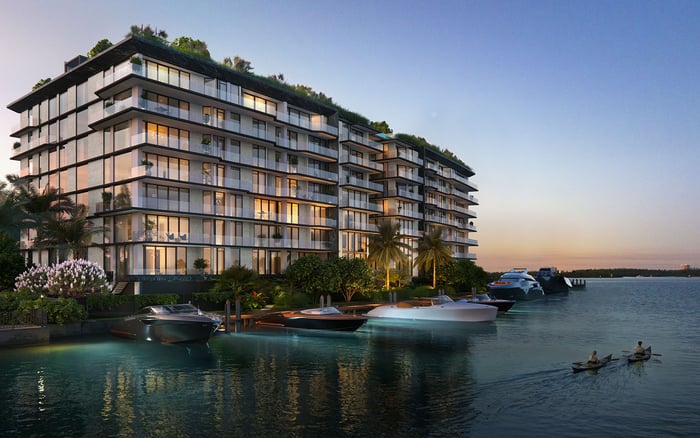
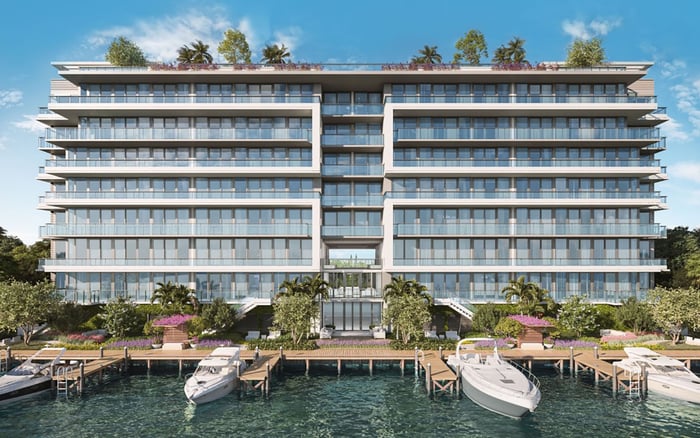
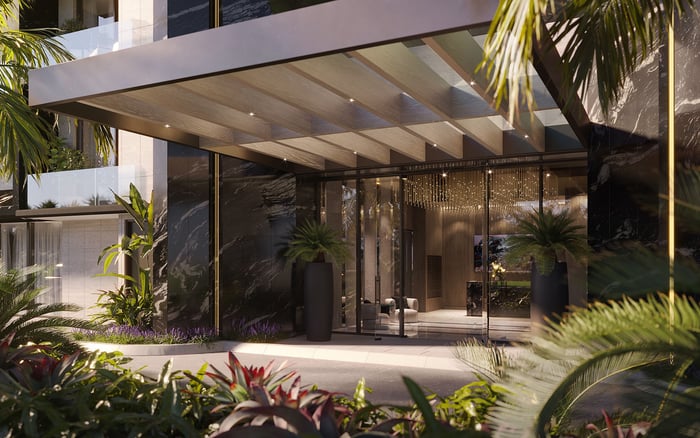
A buyer-focused comparison of Alma Bay Harbor Islands and La Baia North, centered on amenity density, elevator planning, and post-turnover owner control.
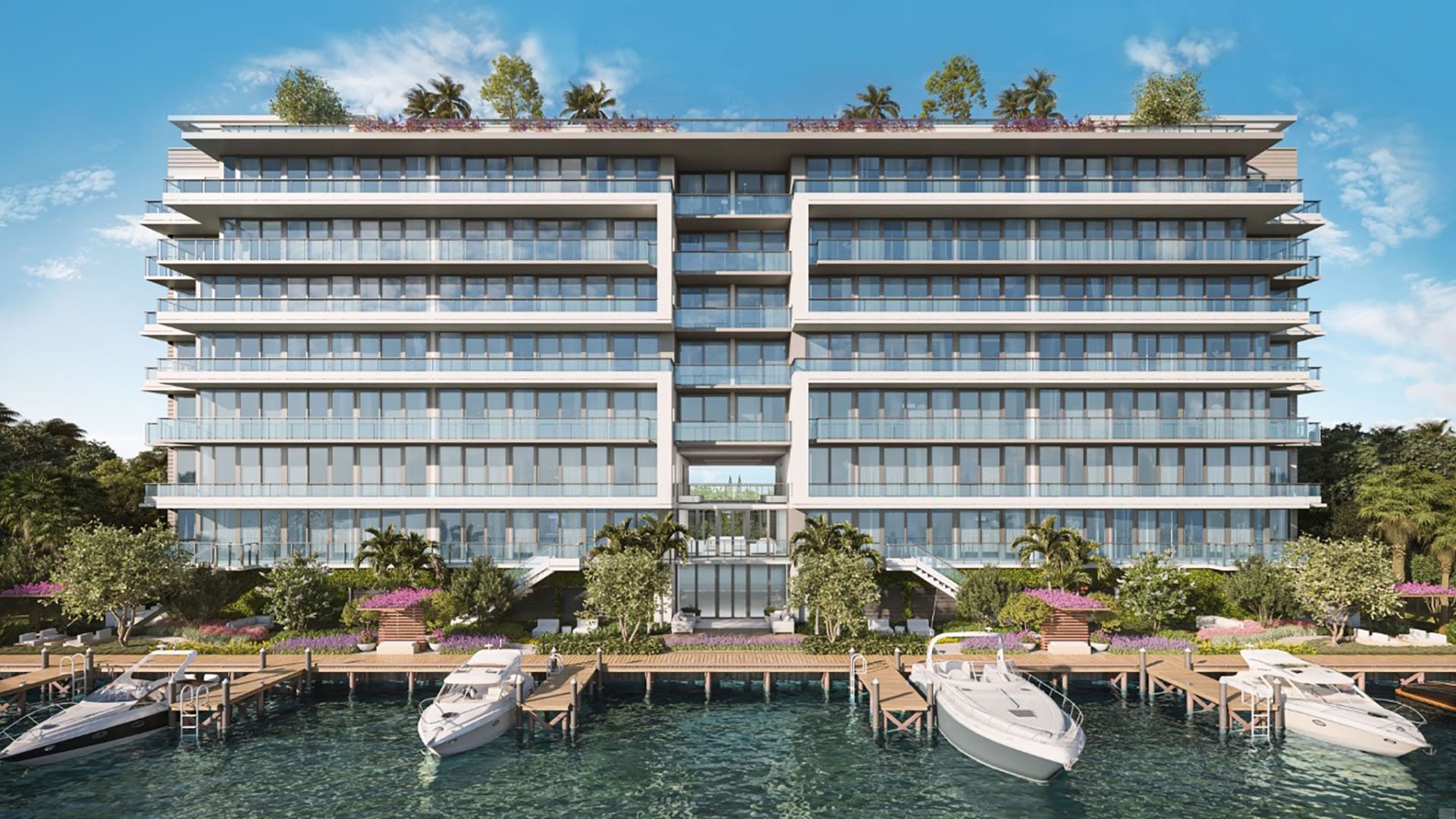
Alma Bay Harbor Islands and La Baia North Bay Harbor Islands sit in the same Bay Harbor Islands condominium conversation: intimate, residential-minded, and designed for buyers who want privacy without disappearing from Miami’s social map. Yet the stronger comparison is not which sales gallery feels warmer, which rendering captures the sunset more dramatically, or which amenity list appears longer at first glance.
The decision should be quieter and more forensic. For Alma Bay Harbor Islands and La Baia North Bay Harbor Islands, the most useful questions are practical: how much usable amenity space is shared by how many residences, how efficiently residents move through the building at peak times, and how much control owners will have once the developer period gives way to condominium governance.
That is not a less luxurious lens. It is the most luxurious lens, because true luxury in a boutique building is not the number of features named in a brochure. It is the absence of friction.
A polished amenity deck can seduce even experienced buyers. The mistake is treating the amenity count as the metric. A lounge, pool, fitness room, wellness room, children’s space, or rooftop terrace has different value depending on how many households share it and how usable the space feels in daily life.
The cleaner test is amenity density: usable amenity square footage divided by the number of residences. If one building offers a shorter but more spacious amenity program, while the other offers a longer menu divided into tighter rooms, the first may live better. Conversely, a compact building can still deliver a strong amenity experience if its amenity-to-residence ratio is favorable.
For Alma, buyers should separate design language from the actual operating experience. For La Baia North, the comparison should be made with the same discipline: request the exact amenity square footage, the residence count, and the amenity floor plans, then compare the ratio directly.
This is especially important in Bay Harbor Islands, where boutique scale changes the equation. Absolute amenity square footage may be smaller than in a large Miami tower, but the private-life quality can still be excellent if the resident load is low and the spaces are genuinely usable.
Elevator performance is rarely the first topic in a sales presentation, but it can become the first daily irritation in a completed building. Even in boutique settings, congestion can occur when the building core is planned too tightly or when the same cab path serves too many functions.
For both Alma and La Baia North, buyers should ask for the number of elevator cabs, the number of residences, the floor count, whether there is separate service-elevator access, and how elevators connect parking, lobby, amenity levels, and residential floors. Those details matter most during ordinary peak moments: the school run, the morning work departure, the return from dinner, move-ins, deliveries, and weekend pool traffic.
The elevator-per-residence ratio is not a perfect forecast, but it is a useful warning signal. A building can feel private in a rendering and still feel crowded if residents, guests, staff, packages, pets, and service providers are compressed into too few vertical pathways.
Buyers comparing nearby Bay Harbor product, including Bay Harbor Towers, should apply the same test. The question is not simply whether the building has elevators. The question is whether the elevator system protects the daily rhythm promised by boutique luxury.
The most consequential parts of a condominium purchase are often not displayed under gallery lighting. They sit inside condominium documents, use restrictions, rental rules, maintenance obligations, developer rights, and board-turnover provisions.
In Bay Harbor Islands, this matters because buyers are not just buying finishes and views. They are buying into a future governance structure that will determine how the building behaves after the initial sales campaign ends.
Before signing, buyers should ask when owner control is expected to transition, what rights the developer retains after sales, how budgets are established, whether certain facilities carry unusual maintenance obligations, and how rental rules protect or dilute the building’s residential character. A beautiful building can lose value in subtle ways if owners later discover that practical control, cost exposure, or use rules do not match their expectations.
This is where pre-construction buyers need unusual discipline. The earlier the purchase, the more important the documents become. Design can evolve, amenities can be interpreted broadly, and operational assumptions can change. Written control terms are the anchor.
A fair comparison begins with three columns.
First, list the usable amenity square footage and divide it by the number of residences. Do not count decorative circulation, back-of-house space, or marketing adjectives. Ask how many people can actually use each space comfortably at the same time.
Second, estimate vertical circulation pressure. Divide residences by elevator cabs, then review routing. If one elevator serves parking, lobby, amenities, residences, deliveries, and service use without adequate separation, the building may feel busier than its boutique branding suggests.
Third, review governance. Ask what happens after turnover, what rights remain with the developer, how rentals are controlled, how rules are amended, and whether the maintenance structure is clear. This is where a building’s culture is formed.
The same framework applies across the broader Bay Harbor Islands set, from The Well Bay Harbor Islands to Onda Bay Harbor. Distinct architecture and branding matter, but the ownership experience is ultimately governed by density, circulation, and control.
Call it the Bay Harbor test: if the project cannot answer these questions clearly, the buyer should slow down.
Ask for the amenity floor plans, not only the amenity list. Ask for the actual square footage assigned to owner use. Ask whether amenity spaces are indoor, outdoor, covered, conditioned, reservable, shared, or restricted.
Ask for the elevator plan in plain language. How many cabs serve residents? Is there dedicated service access? What happens during a move-in? How does a delivery reach a residence? Do residents using parking and residents entering from the lobby converge at the same point?
Ask for the governance summary, then read the documents themselves with counsel. The most elegant purchase is one where the buyer understands both the architecture and the association mechanics before contract deadlines begin to matter.
Alma may appeal to the buyer drawn to curated intimacy, design restraint, and a quieter boutique residential posture. La Baia North may appeal to the buyer who wants to compare a direct Bay Harbor Islands peer through building program, amenities, and ownership structure. Neither should be chosen by rendering alone.
The better building for a particular buyer will be the one with the stronger amenity-to-residence ratio, the more convincing elevator logic, and the cleaner path to owner control. In this segment, luxury is not only what is shown. It is what continues to work after the closing.
What is the most important comparison between Alma and La Baia North? Amenity density, elevator performance, and owner control are the most decision-useful categories for a serious buyer.
Should I compare the total number of amenities? No. The better test is usable amenity square footage per residence, because a longer list does not always mean a better daily experience.
Why do elevator wait times matter in boutique buildings? A smaller building can still experience congestion if too many residences, guests, deliveries, and services rely on limited elevator capacity.
What should I ask about Alma’s amenities? Ask for exact amenity square footage, residence count, and amenity floor plans so the experience can be evaluated beyond marketing language.
What should I ask about La Baia North’s amenities? Request the same amenity square footage, residence count, and floor-plan detail so the comparison with Alma is truly apples-to-apples.
How should I evaluate elevator planning? Review the number of elevator cabs, residences, floors, service access, and whether elevators efficiently connect parking, lobby, amenities, and residences.
Why is owner control important in Bay Harbor Islands? Long-term governance can shape privacy, costs, rentals, rules, and building culture after the initial sales period.
What documents should I review before signing? Review condominium documents, board-turnover terms, developer rights, rental rules, use restrictions, and maintenance obligations.
Can a smaller amenity program still be better? Yes. A smaller program can live better if fewer residents share it and the spaces are well designed for actual daily use.
What is the safest buyer framework? Calculate amenity-to-residence ratio, estimate elevators per residence, and review post-turnover governance before committing.
For a discreet conversation and a curated building-by-building shortlist, connect with MILLION.
If branded residences are on your mind — as a home or as an allocation — we would be glad to share what we are seeing, privately.
Begin a quiet conversation