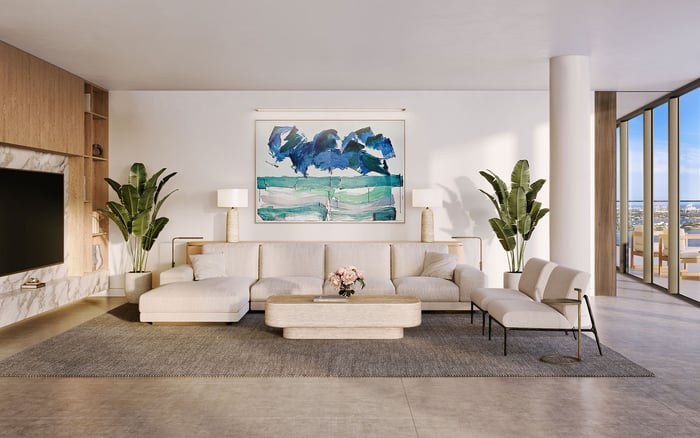
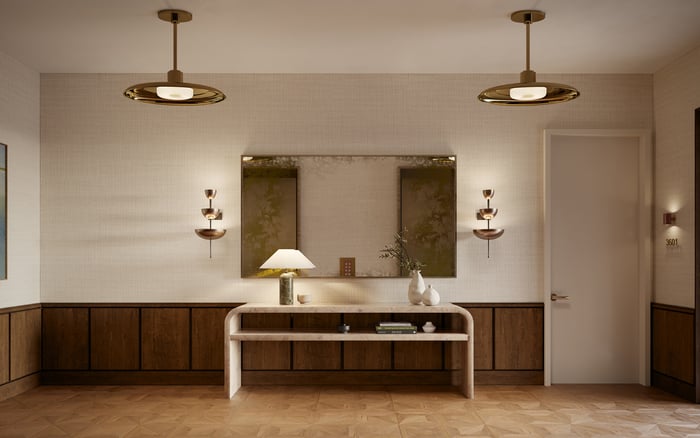
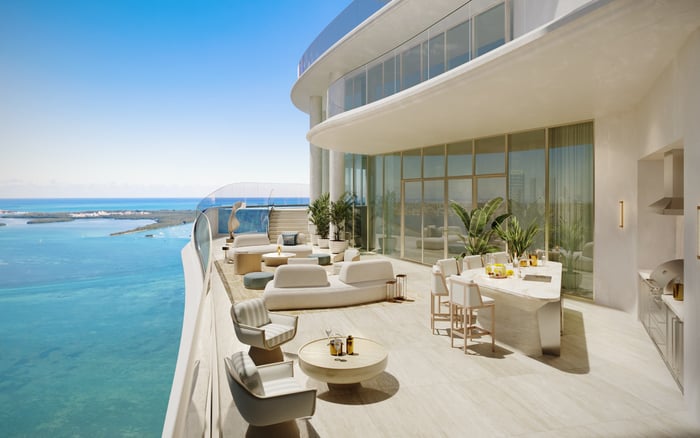
A buyer-focused editorial on why terrace drainage deserves close attention at Kempinski Residences Miami Design District, especially for full-time owners who use outdoor space every day.
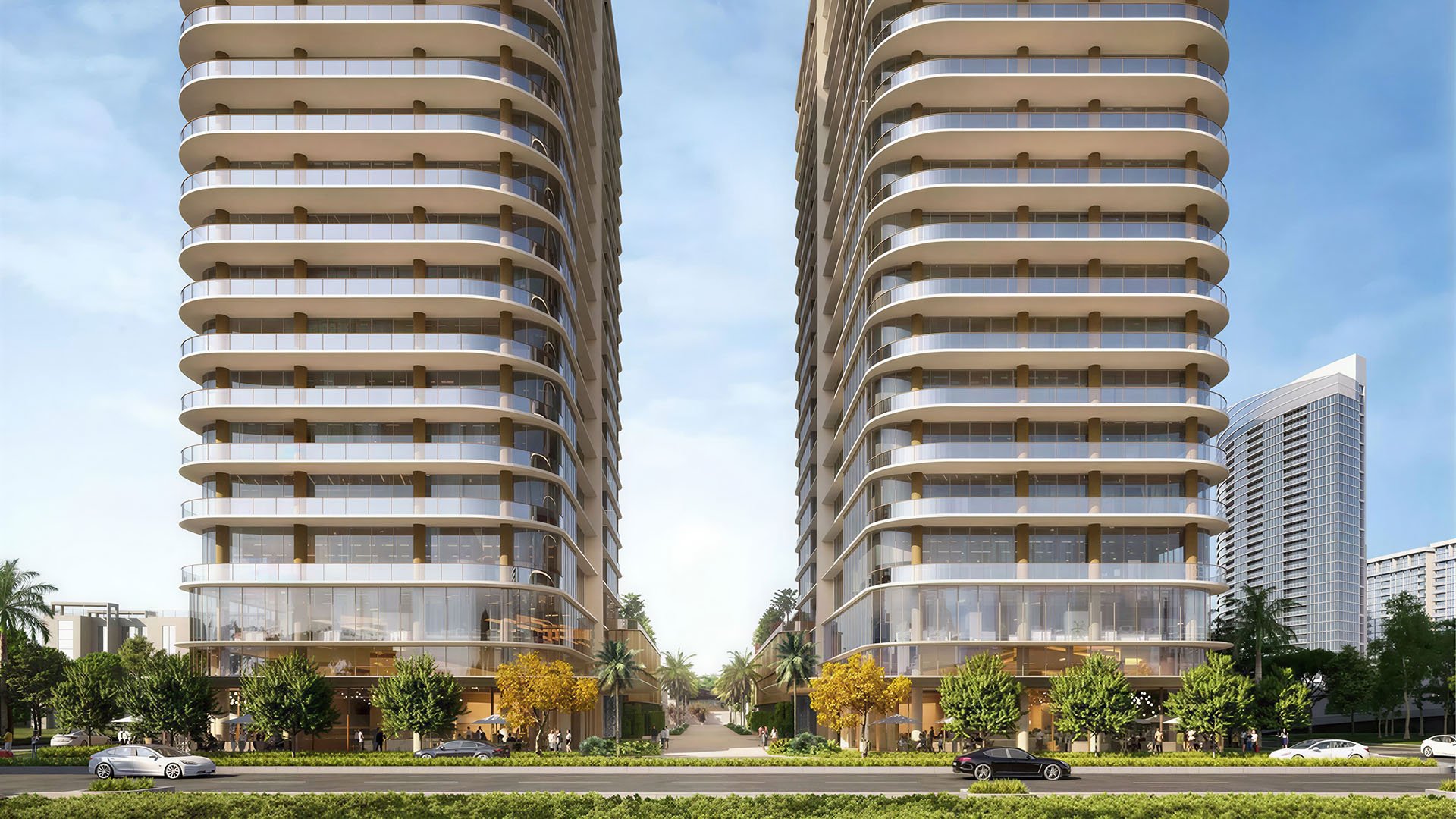
At the top end of Miami real estate, the terrace has become a defining part of the residence. It is where morning coffee becomes ritual, where an evening drink takes in the skyline, and where the boundary between interior design and outdoor architecture begins to soften. At Kempinski Residences Miami Design District, that idea carries particular weight because the Design District buyer is often evaluating more than a view. The question is how the residence will live, day after day, in a polished urban setting.
Terrace drainage rarely leads a sales conversation, yet it deserves close attention from any full-time owner. A weekend buyer may notice finishes, proportions, and exposure first. A year-round resident will notice how quickly the terrace dries after rain, whether water collects near a threshold, whether planters interrupt flow, and whether the surface becomes usable again without constant intervention.
This is not a glamour-versus-utility issue. In luxury condominium living, utility is part of glamour. A beautiful outdoor room should also behave with discipline.
The first question is slope. A terrace should not feel visually tilted, but it must move water with intention. Buyers do not need to become engineers, but they should ask how surface water is directed, where it exits, and what happens when drains are partially obstructed by leaves, soil, or furniture placement.
The second question is threshold protection. The transition from interior flooring to exterior surface is one of the most important details in daily ownership. A terrace can feel seamless and still require serious review of door tracks, weep paths, waterproofing continuity, and the way water is managed at the edge of the living room.
The third question is maintenance access. A drain that cannot be reached easily is a future nuisance. Full-time residents tend to use terraces more actively, which means more outdoor rugs, movable seating, potted trees, irrigation lines, and decorative objects. Each choice can subtly change how water moves across the space.
The Miami Design District buyer often expects a higher degree of aesthetic control. Materials, furnishings, and spatial composition matter. Yet the most refined terrace is still an exterior surface. It receives wind, rain, dust, and the daily effects of outdoor living. The owner who understands this will evaluate not only how the terrace looks when staged, but how it performs once furniture is in place and the household is fully settled.
This is where the conversation becomes practical. Where will a large dining table sit? Will the legs cross a drain line? Can planters be elevated enough to prevent soil from clogging drainage points? Does the intended outdoor kitchen, if contemplated, create water-management or cleaning demands? Even a simple balcony condition should be read through the same lens: how does water leave, how quickly can the surface be restored, and what must the owner or building staff do to keep it functioning?
Buyers comparing other urban luxury addresses, such as The Residences at 1428 Brickell, may recognize that outdoor space in a vertical city is never passive. It is part architecture, part lifestyle, and part operating system.
A serious buyer should ask for the drainage logic in plain language. Where are the primary drains? Are there overflow routes? How are door thresholds detailed? What are the owner responsibilities for cleaning terrace drains? What are the building responsibilities? Are there restrictions on planters, irrigation, exterior rugs, or furniture that could block drainage?
These questions are not adversarial. They are the normal language of informed ownership. New-construction buyers, in particular, should understand that a flawless rendering does not replace a careful review of the built condition. The larger and more furnished the outdoor area, the more important it becomes to align lifestyle plans with terrace performance.
It is also sensible to ask how post-delivery concerns are handled. If ponding appears, who evaluates it? If a drain cover is loose or difficult to remove, who corrects it? If the owner installs heavier outdoor pieces, is there a recommended layout that preserves water movement? Full-time ownership benefits from clarity before the first stormy week reveals what the sales gallery never could.
Many drainage concerns are created after move-in. A terrace may be properly designed, then compromised by a beautiful but poorly placed planter. Outdoor rugs can trap moisture. Low-slung modular furniture can interrupt surface flow. Decorative gravel can migrate. Irrigation can add water in places the terrace was not meant to receive it regularly.
For a full-time owner, the answer is not to avoid outdoor design. The answer is to design with water in mind. Leave drains visible or easily reachable. Keep planters on risers where appropriate. Avoid blocking scuppers or drainage slots. Use outdoor rugs sparingly and lift them periodically. Confirm that furniture layouts do not create pockets where water sits against walls, doors, or built-in elements.
This is especially relevant for owners who see the terrace as a true extension of the living room. Waterview properties and skyline-facing homes alike invite generous outdoor furnishing. Buyers looking across neighborhoods, including projects such as EDITION Edgewater, should treat the terrace plan with the same seriousness as millwork, lighting, and closet design.
A branded residence can create an expectation of elevated service, careful presentation, and a more seamless residential experience. Still, no service model removes the need for owner awareness. Drainage depends on design, construction, maintenance, and use. If one part of that chain fails, the terrace experience can suffer.
For full-time owners, the goal is not perfection after every rain. The goal is predictability. Water should have a path. Drains should be accessible. Staff and residents should understand who handles what. Outdoor furnishings should be chosen for performance, not only visual effect.
The most successful owners tend to be discreetly technical. They ask precise questions, keep records of early observations, and walk the terrace after weather events. They do not wait until minor ponding becomes a repeated inconvenience. In a luxury residence, attentiveness is not anxiety. It is stewardship.
Across Miami, the terrace has become a measure of livability. A beachfront buyer at The Perigon Miami Beach may focus on exposure, salt air, and outdoor entertaining. A Brickell buyer may study skyline orientation and privacy. An Edgewater buyer may prioritize open water and sunset use. The Design District buyer often wants cultural proximity with a composed residential retreat above the city.
Different settings create different expectations, but the drainage questions remain consistent. How does the surface perform? How does the threshold protect the interior? How will daily furniture choices affect water flow? How easy is the system to maintain without disturbing the elegance of the space?
For Kempinski Residences Miami Design District, that is the practical frame. The terrace should be viewed not as a bonus square-footage story, but as a functioning outdoor room. The best outcome is quiet confidence: no drama, no mystery, just a space that supports full-time living with grace.
A polished terrace is one of the great pleasures of Miami condominium ownership. It can also be one of the most revealing parts of a residence. Full-time owners should inspect it with the same care they give to kitchen appliances, glazing, closets, and primary bath finishes.
Before committing, ask for clarity on slope, drains, overflow, thresholds, waterproofing responsibility, furniture restrictions, and maintenance access. After moving in, keep the terrace elegant but legible. Do not bury the systems that protect the space. Luxury is not only what is seen. It is also what works quietly in the background.
Why does terrace drainage matter for full-time owners? Full-time owners use outdoor areas more often, so small drainage issues can become daily irritations rather than occasional inconveniences.
Should a buyer inspect drains before closing? Yes. Buyers should understand where drains are located, how they are accessed, and what maintenance is expected from the owner.
Can outdoor furniture affect drainage? Yes. Furniture, rugs, and planters can block water paths or hide drains if they are placed without a clear plan.
Is a seamless indoor-outdoor threshold always better? It can be beautiful, but the detail must still manage water carefully at the door track and exterior surface.
What should owners ask about planters? Ask whether planters need risers, liners, or placement restrictions to avoid soil movement and blocked drainage points.
Does branding eliminate terrace maintenance concerns? No. Branding may shape service expectations, but drainage still depends on design, maintenance, and resident use.
How often should terrace drains be checked? They should be checked regularly, especially after heavy weather or after changing furniture and landscaping layouts.
What is ponding? Ponding is standing water that remains on a surface after rainfall, and repeated ponding should be reviewed promptly.
Are outdoor rugs a concern? They can be. Rugs may trap moisture or conceal drainage paths, so they should be selected and placed carefully.
What is the smartest buyer mindset? Treat the terrace as architecture, not decoration, and review its performance before making major design decisions.
For a confidential assessment and a building-by-building shortlist, connect with MILLION.
If branded residences are on your mind — as a home or as an allocation — we would be glad to share what we are seeing, privately.
Begin a quiet conversation