A buyer-focused comparison of St. Regis® Residences Brickell and The Surf Club Four Seasons Surfside, framing the choice as anticipatory urban personalization versus historic oceanfront service culture.
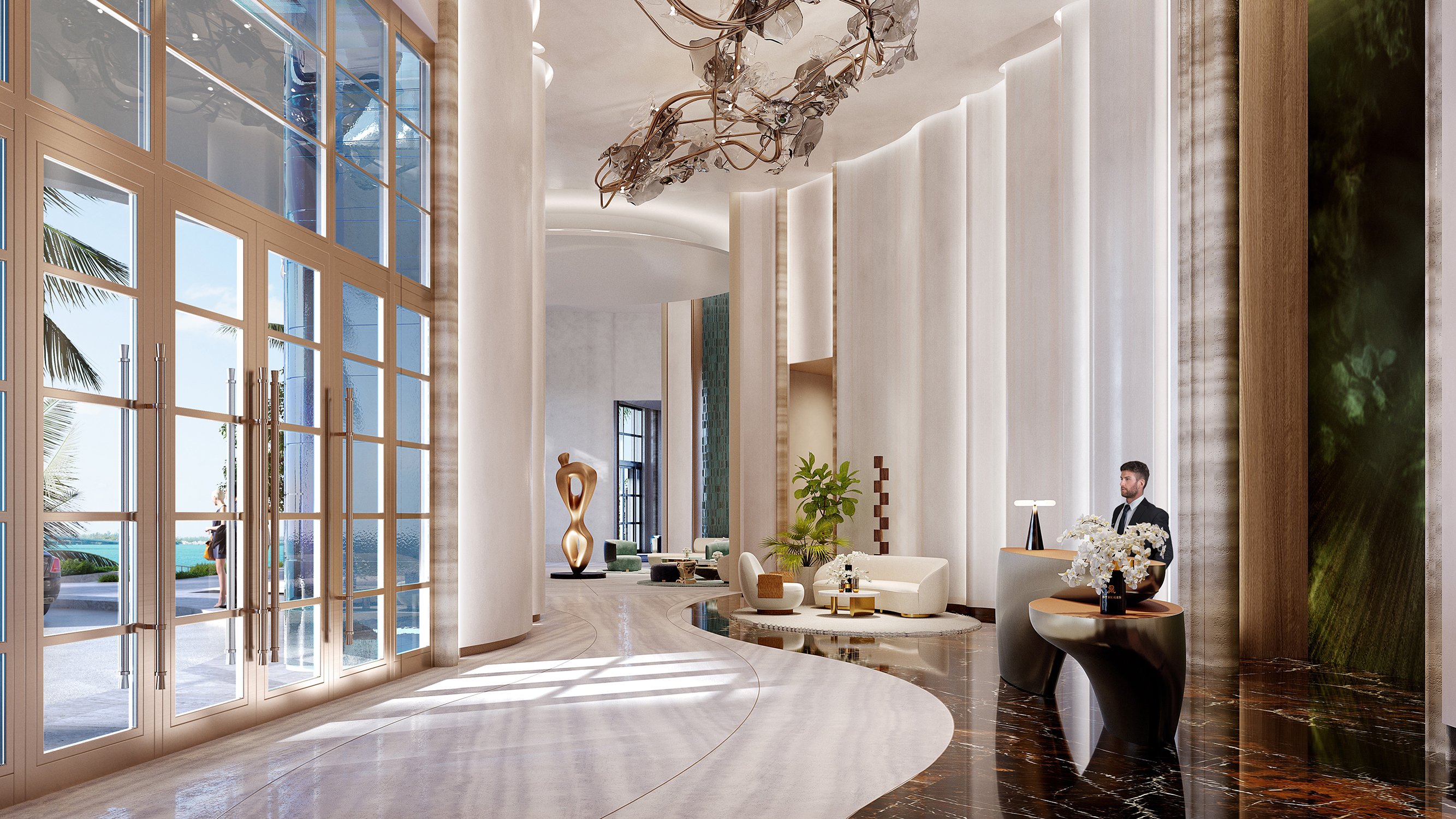
For a certain tier of South Florida buyer, the question is no longer whether a residence offers views, amenities, or a recognized name at the door. It is how the building behaves once ownership becomes daily life. Does service move at the tempo of a financial district, anticipating a schedule that changes by the hour? Or does it unfold with the quieter codes of a private oceanfront institution, where discretion and continuity matter more than velocity?
That is the meaningful contrast between St. Regis® Residences Brickell and The Surf Club Four Seasons Surfside. The comparison is not simply Brickell versus Surfside. It is contemporary urban branded service versus historic beach-club legacy service. One is future-facing, convenience-driven, and embedded in Miami’s vertical business core. The other is retreat-like, heritage-driven, and shaped by the social memory of an exclusive oceanfront club.
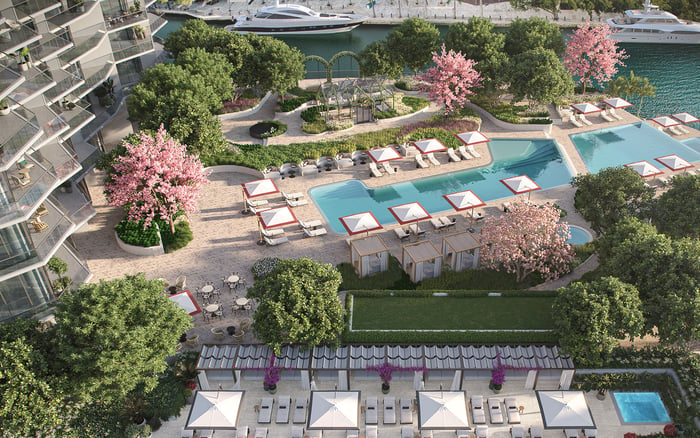
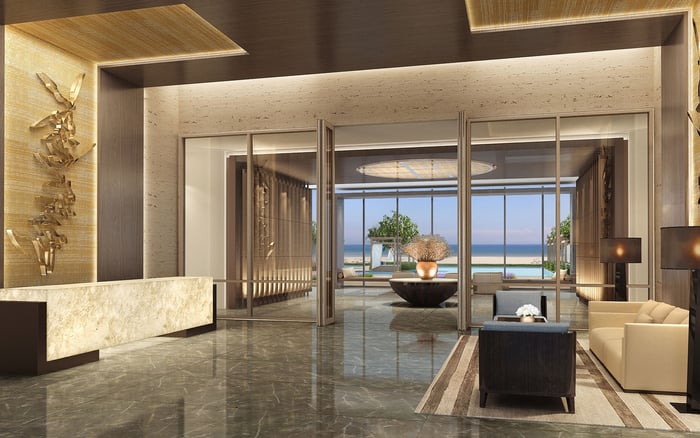
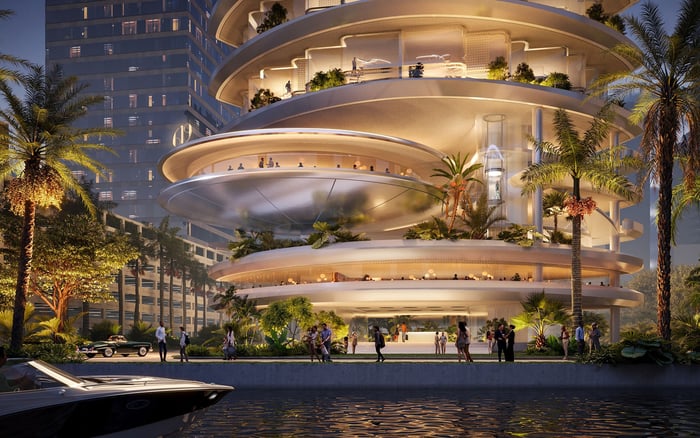
Brickell has become Miami’s most concentrated expression of high-rise urban living. Business, dining, nightlife, and downtown convenience sit in close proximity, and the residential expectation reflects that density. At St. Regis® Residences Brickell, the service proposition is best understood as modern branded-residence hospitality layered into ownership, rather than a hotel experience transplanted into a condominium.
The key phrase is anticipatory urban personalization. Buyers are not only purchasing a refined private residence. They are choosing a building culture designed to support momentum: responsive concierge-style assistance, polished daily touchpoints, and a service rhythm suited to residents who may move between meetings, dinners, travel, and private entertaining in the same day.
That makes Brickell service inherently practical. It is less about nostalgia than friction reduction. The appeal is a residence-first environment where hospitality is present but not theatrical. For buyers comparing the broader Brickell landscape, projects such as The Residences at 1428 Brickell help illustrate how the neighborhood has become a laboratory for highly serviced city ownership.
The Surf Club Four Seasons Surfside occupies a different emotional register. Its identity is rooted in a historic oceanfront property associated with private-club heritage and Four Seasons hospitality. Here, service is not defined by urban acceleration. It is framed by history, privacy, discretion, and continuity.
Surfside’s quieter beachfront setting changes the entire tone of daily life. Arrival feels less like entering the center of the city and more like crossing into a residential resort environment with institutional character. The service ideal is low-key refinement: present when needed, restrained when not, and shaped by an atmosphere where privacy is part of the luxury.
The Four Seasons operating layer gives the property a globally recognized hospitality standard, but the deeper appeal is how that standard interacts with the Surf Club’s private-club past. For buyers who respond to legacy, the distinction matters. Service is not merely efficient. It carries memory, etiquette, and a sense of established prestige. Nearby oceanfront comparisons, including The Delmore Surfside, underscore how Surfside continues to attract buyers who want calm, beachfront permanence, and architectural seriousness rather than downtown immediacy.
Oceanfront living and urban living ask different things of service. In Brickell, the staff culture is expected to help residents compress time. In Surfside, it is expected to protect time. That difference is subtle, but decisive.
A Brickell owner may value the ability to move easily between home, work, dining, and nightlife. The residence becomes a polished command center, with hospitality supporting a schedule that is often public, professional, and fluid. The service culture should feel alert, informed, and adaptable.
A Surfside owner may be seeking the opposite: separation, calm, and a sense of arrival away from Miami’s dense urban rhythm. The Surf Club’s appeal lies in beachfront quiet and historic prestige, where service supports retreat rather than circulation. For Miami Beach and Miami Beach-adjacent buyers who want coastal refinement without the intensity of South Beach, Surfside’s restraint can feel especially compelling.
St. Regis® Residences Brickell fits the buyer who wants a polished city residence with hospitality integrated into daily ownership. This buyer is likely to value convenience, responsiveness, and the assurance that service can keep pace with a high-velocity lifestyle. The emotional appeal is modernity: a branded residential environment tuned to Miami’s future as a global urban market.
The Surf Club Four Seasons Surfside fits the buyer who prioritizes beachfront calm, historic prestige, and discreet service refinement. This buyer may care less about immediate downtown walkability and more about privacy, continuity, and institutional character. The emotional appeal is permanence: a setting that feels inherited rather than newly staged.
Neither model is inherently superior. They serve different visions of luxury. Brickell offers proximity and momentum. Surfside offers retreat and legacy. Brickell is about the elegance of things working quickly. Surfside is about the elegance of things not needing to announce themselves.
The best way to compare these two addresses is to imagine a typical day. If your ideal residence quietly accelerates your routine, prepares for movement, and keeps you close to Miami’s commercial and social energy, Brickell has the stronger logic. If your ideal residence slows the day, protects privacy, and places hospitality inside a historic beachfront frame, Surfside has the stronger emotional pull.
Service culture is ultimately a form of architecture. It shapes transitions, rituals, privacy, and the way a building feels after the novelty fades. In this comparison, St. Regis® Residences Brickell represents the new grammar of branded urban residential life. The Surf Club represents the enduring grammar of clubby, oceanfront discretion. The right choice depends on whether your luxury is measured in access or retreat.
What is the main difference between St. Regis® Residences Brickell and The Surf Club Four Seasons Surfside? St. Regis® Residences Brickell is best read as modern urban branded service, while The Surf Club Four Seasons Surfside is defined by historic oceanfront legacy service.
Is St. Regis® Residences Brickell more like a hotel or a private residence? It should be understood as a residence-first environment with hospitality services layered into ownership, not simply as a hotel experience.
Who is the ideal buyer for Brickell service culture? The ideal buyer values business proximity, dining, nightlife, downtown convenience, and responsive support for a fast-moving city lifestyle.
Who is the ideal buyer for The Surf Club? The Surf Club suits buyers who prioritize beachfront calm, historic prestige, privacy, and low-key service refinement.
Does Four Seasons matter at The Surf Club? Yes. Four Seasons adds a globally recognized hospitality operating layer to the property’s historic private-club identity.
Is Surfside quieter than Brickell? Yes. Surfside’s oceanfront setting supports a calmer resort-residential rhythm compared with Brickell’s dense urban pace.
Is Brickell better for downtown walkability? Brickell is the stronger fit for buyers who want proximity to business, dining, nightlife, and central Miami convenience.
Is The Surf Club mainly about nostalgia? No. Its appeal is heritage combined with discretion, privacy, continuity, and refined hospitality in an oceanfront setting.
Can both service models be considered luxury? Yes. Brickell expresses luxury through speed and personalization, while Surfside expresses it through restraint and legacy.
How should a buyer decide between them? Choose Brickell if service should accelerate daily life, and choose Surfside if service should protect calm, privacy, and retreat.
For a discreet conversation and a curated building-by-building shortlist, connect with MILLION.
If branded residences are on your mind — as a home or as an allocation — we would be glad to share what we are seeing, privately.
Begin a quiet conversation