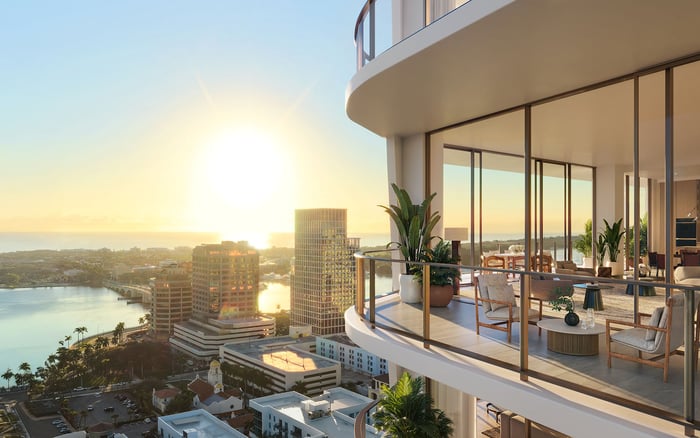
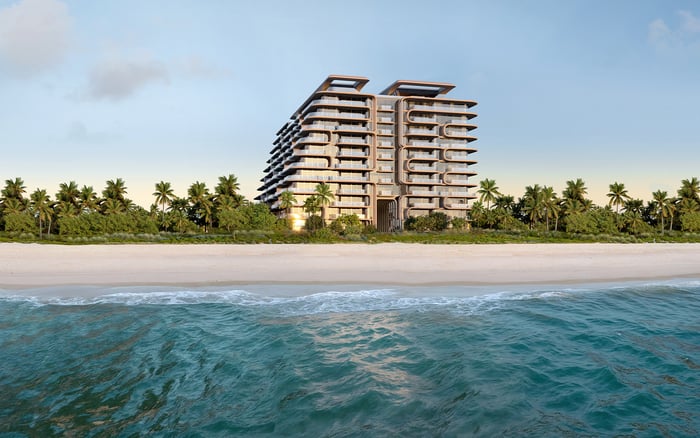
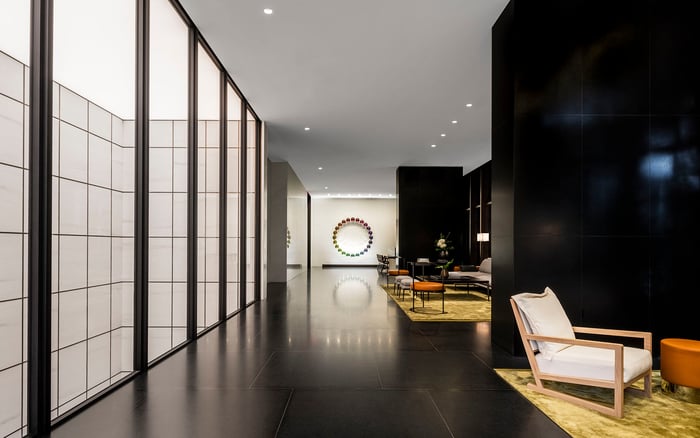
A discreet 2026 due-diligence guide for comparing wellness programming, spa traffic, and long-stay livability at The Delmore Surfside, The Surf Club Four Seasons Surfside, and Nora House West Palm Beach.

In South Florida’s upper tier, wellness is no longer a decorative amenity category. It is a daily operating system. For buyers evaluating The Delmore Surfside, The Surf Club Four Seasons Surfside, and Nora House West Palm Beach, the essential question is not whether wellness appears in the narrative. It is how wellness is governed, staffed, accessed, and protected from congestion.
That distinction matters for 2026. The most sophisticated purchasers are looking beyond pools, treatment rooms, fitness studios, and spa language. They are asking how a building absorbs peak demand, how residents maintain privacy when hospitality services are present, and whether a residence can support a three-month stay with the same ease as a long weekend. In Surfside, those questions are intensified by oceanfront expectations, resort adjacency, and the prestige of low-density coastal living. In West Palm Beach, the lens often shifts toward town-centered convenience, seasonal rhythm, cultural access, and everyday logistics.
The result is a more forensic style of luxury buying. Wellness must be beautiful, but it must also be quiet, disciplined, and livable.
The Delmore Surfside should be viewed through a project-specific diligence lens. Buyers will want to review its current residence narrative, wellness positioning, service expectations, and any disclosed operating framework before drawing conclusions about daily life. The appeal of a Surfside address is clear, but a refined purchase decision depends on the details: how residents arrive, how service moves through the building, how guest access is controlled, and how amenity spaces are preserved for owners.
The Surf Club Four Seasons Surfside is a different reference point because its public identity connects residences, hospitality, wellness, and service in a highly visible way. For buyers, it can serve as a benchmark for understanding how branded service and private residential life may coexist. The diligence question is not whether the name is compelling. It is how access, reservation systems, guest policies, parking, staffing, and spa usage function in practice.
Nora House West Palm Beach belongs in the comparison because the West Palm Beach luxury conversation has matured into something broader than seasonal convenience. The correct approach is documentary: review current buyer materials, building rules, amenity operations, and long-stay assumptions before assigning value to wellness or lifestyle claims. A West Palm Beach decision often carries a different cadence than an oceanfront Surfside decision, and the operational questions should reflect that.
Wellness programming can mean many things. At the highest level, it may include fitness, spa services, recovery, treatment rooms, movement studios, pools, food and beverage adjacency, outdoor calm, and staff-supported routines. For a buyer, the more relevant question is who controls the calendar.
A residence with excellent design can feel compromised if wellness access is shaped by crowded booking windows, heavy outside traffic, unclear guest privileges, or inconsistent staffing. Conversely, a quieter program with disciplined resident priority can be more valuable than a larger amenity menu that is difficult to use. Buyers should ask whether wellness spaces are residential-only, shared with hotel or club users, available to guests, or subject to seasonal restrictions.
At The Delmore Surfside, the prudent 2026 review should focus on current project disclosures and the relationship between the building’s intended residential privacy and any wellness offering. At The Surf Club Four Seasons Surfside, the analysis should examine how branded hospitality and residential access are organized. At Nora House West Palm Beach, buyers should verify the specifics of programming rather than assume that urban convenience automatically produces wellness ease.
This is particularly important for second-home owners. A residence used for extended stays must allow routines to be repeated without friction. If a buyer cannot reliably train, recover, take treatments, receive deliveries, host family, and maintain privacy, the wellness promise is incomplete.
Spa traffic is one of the least glamorous but most consequential topics in premium residential due diligence. It affects valet flow, lobby feel, elevator privacy, service corridors, staff presence, scent, sound, scheduling, and the subtle sense of ownership residents feel when entering the building.
The issue is not whether a spa exists. The issue is whether its users are the same as the residents, adjacent to the residents, or entirely separate from them. Buyers should ask practical questions: Are treatment users checked in through the same arrival sequence? Do spa guests share elevators? Are appointments concentrated during seasonal peaks? Are residents given priority booking? Can non-resident guests access wellness areas without the owner present? How are staff and vendors routed?
In Surfside, where beach, resort, and residential expectations can overlap, the boundary between sanctuary and activity should be especially clear. The Delmore Surfside and The Surf Club Four Seasons Surfside sit within a market where discretion is part of the value proposition. Buyers should confirm that the wellness concept enhances calm rather than creating a circulation issue.
For Nora House West Palm Beach, the same questions apply in a different setting. Urban luxury can be extremely livable, but spa traffic, parking, guest access, and building entry sequences should still be studied carefully, especially during high season and event-heavy periods.
Long-stay livability is where marketing language meets daily routine. A residence may photograph beautifully, but the real test is whether it supports weeks or months of living without small frictions becoming expensive irritations.
Buyers should study storage, service access, laundry logistics, package handling, guest parking, pet policies, outdoor comfort, acoustic separation, elevator wait times, and the ease of maintaining staff or family routines. Wellness matters here, but so do kitchens, closets, terraces, natural light, and the ability to live privately while still being supported.
New-construction buyers should be particularly careful. In a new residence, renderings can suggest atmosphere, but operating documents reveal how that atmosphere will be protected. The most important materials are often not the prettiest: rules, budgets, service descriptions, reservation policies, access controls, and management structure.
For The Delmore Surfside, the due-diligence lens should include how the residence is expected to function as a long-stay coastal home rather than a purely seasonal escape. For The Surf Club Four Seasons Surfside, buyers should consider whether the hospitality ecosystem aligns with their desired level of activity. For Nora House West Palm Beach, the question is whether town living supports the buyer’s daily pattern with enough calm, convenience, and privacy.
A serious buyer should treat wellness as an operational covenant. Before reserving or purchasing, request clarity on resident priority, guest usage, staff qualifications where relevant, spa access, opening hours, cancellation rules, private event policies, and whether wellness areas can be used by outside members or hotel guests.
The second layer is circulation. Ask how many entry points exist, who uses them, how service providers move, where rideshare and valet activity concentrate, and whether residents have protected arrival sequences. Luxury is often experienced in these transitional moments.
The third layer is long-stay governance. Review pet rules, rental restrictions if relevant, guest duration policies, housekeeping access, storage, maintenance procedures, and the building’s approach to privacy. For long-term rentals or flexible ownership strategies, this analysis becomes even more important, though each building’s governing documents will control what is allowed.
Finally, compare lifestyle geography. Surfside offers an oceanfront frame and a quieter residential sensibility. West Palm Beach offers a different urban rhythm, with its own appeal for buyers who want cultural proximity, dining access, and a walkable seasonal pattern. Neither is inherently superior. The better choice is the one whose operations match the buyer’s daily life.
Why is wellness due diligence important for 2026 buyers? Because wellness value depends on access, staffing, privacy, and daily usability, not just amenity descriptions.
How should buyers evaluate spa traffic? They should study who uses the spa, how guests enter, whether residents receive priority, and how circulation is separated.
Is The Surf Club Four Seasons Surfside a useful benchmark? Yes. It is a relevant reference for understanding how hospitality, residences, wellness, and service can interact.
What should be reviewed at The Delmore Surfside? Buyers should examine current project materials, residence rules, wellness access, service structure, and long-stay practicality.
How should Nora House West Palm Beach be approached? Buyers should verify its current building materials, amenity operations, access policies, and day-to-day residential logistics.
What matters most for long-stay livability? Storage, privacy, service access, elevator performance, guest policies, outdoor comfort, and reliable routines matter most.
Are larger wellness programs always better? No. A smaller, resident-prioritized program can feel more valuable than a larger amenity suite with crowded access.
What should second-home buyers ask first? They should ask whether the building supports repeated routines for wellness, guests, deliveries, pets, and privacy.
Do Surfside and West Palm Beach require different diligence? Yes. Surfside often emphasizes oceanfront discretion, while West Palm Beach may emphasize urban rhythm and convenience.
What is the best way to shortlist comparable options for touring? Start with location fit, delivery status, and daily lifestyle priorities, then compare stacks and elevations to validate views and privacy.
When you're ready to tour or underwrite the options, connect with MILLION.
If branded residences are on your mind — as a home or as an allocation — we would be glad to share what we are seeing, privately.
Begin a quiet conversation