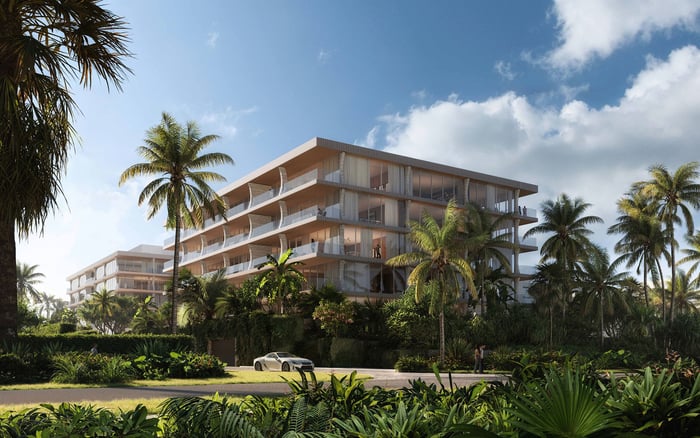
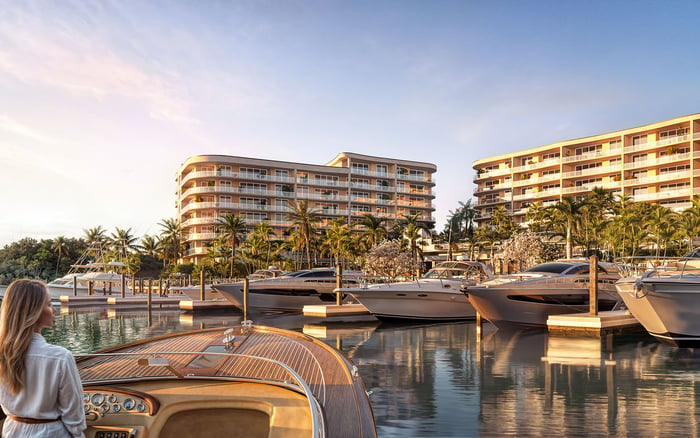
A buyer-focused guide to restaurant access diligence at The Residences at Mandarin Oriental Boca Raton, including nonresident access, owner priority, circulation, documentation, privacy, and resale considerations.

At the highest end of Boca Raton real estate, a restaurant is no longer simply an amenity. It can become part of the daily rhythm of ownership, the social identity of the building, and the arrival experience residents encounter every time they come home. For buyers evaluating The Residences at Mandarin Oriental Boca Raton, restaurant and food-and-beverage access should be treated as a defined due-diligence topic, not an assumed benefit of ownership.
The essential question is straightforward, but the answer may be layered: who gets to dine there, under what conditions, and with what priority? A restaurant program may serve residents, resident guests, hotel guests, outside Boca Raton diners, event guests, or some combination of those groups. Access may also vary by venue. Fine dining, a bar or lounge, poolside service, private dining rooms, and club-style areas may each operate under different rules.
For affluent buyers, this is not merely about securing a Saturday night table. It is about understanding whether the property is designed to feel like a serene private enclave, a polished hotel-style destination, or a carefully managed blend of both. That answer can influence privacy, guest experience, service expectations, and long-term resale positioning.
Before signing, ask for a clear explanation of which dining venues are intended for residents, which may be available to nonresidents, and whether access changes by time of day or season. Do not rely on broad language such as “exclusive,” “private,” or “world-class” without asking how those terms translate into actual operating rules.
A precise access map should confirm whether outside diners may book the principal restaurant, whether hotel guests have separate rights, whether resident guests must be accompanied by an owner, and whether certain areas are reserved for residents only. It should also clarify whether private dining rooms or restaurant buyouts are available to owners, and whether outside guests may attend owner-hosted events.
This kind of diligence is increasingly important across branded residences in South Florida. Buyers comparing Boca Raton options such as Alina Residences Boca Raton or Glass House Boca Raton often look beyond finishes and floor plans to the subtler question of how hospitality, privacy, and daily convenience are governed.
Restaurant policy can sit with several parties. The hotel operator, developer, condominium association, master association, or a third-party restaurant operator may each have a role. A buyer should ask who controls access policies today, who can modify them later, and whether owners have any voting rights, consent rights, or notice rights if rules change.
This is where documentation matters. Ask whether restaurant access policies appear in condominium documents, hotel-residence agreements, house rules, offering materials, or separate operator guidelines. If access is left largely to operator discretion, ask how residents are protected from sudden changes in priority, hours, blackout dates, or guest privileges.
The distinction is not academic. A policy described in a sales conversation may feel very different from a right embedded in governing documents. Buyers should understand whether restaurant access is a contractual expectation, an operational courtesy, or a flexible hospitality practice subject to revision.
Being allowed to dine is not the same as being prioritized. A resident may technically have access, yet still compete with hotel guests, outside diners, private events, or seasonal demand. Ask whether residents receive priority reservations over nonresidents, whether concierge-assisted bookings are treated differently for owners, and whether regular tables or special occasions can be arranged with preferential handling.
Peak periods deserve particular attention. In Boca Raton season, during holidays, charity events, private buyouts, and high-demand weekends, ask whether residents have guaranteed access or merely best-efforts assistance. If the restaurant becomes a coveted local destination, the absence of documented priority could materially change the experience of ownership.
The same question applies to hotel guests and event patrons. Ask whether they receive the same service priority as owners for reservations, special occasions, recurring bookings, and last-minute requests. In a refined hospitality environment, these distinctions may be handled discreetly, but they should still be understood before purchase.
Access rules often become most visible in the details. Ask whether nonresident diners face blackout dates, minimum spends, membership requirements, guest limits, or venue-specific restrictions. If resident guests use the restaurants, ask whether charges can be posted to an owner account, whether dining discounts apply, and whether gratuity or service-charge policies differ between residents and outsiders.
These details can affect both convenience and household operations. An owner who frequently entertains may care about private dining, guest authorization, billing permissions, and the ability to host outside friends without creating administrative friction. A more privacy-oriented buyer may focus instead on whether guest numbers are capped and whether nonresident use is limited during peak hours.
Luxury buyers evaluating other hospitality-led markets, from Mandarin Oriental Residences, West Palm Beach to selective waterfront developments, should apply the same standard: ask for the operating reality, not just the lifestyle language.
Restaurant access is also a design and security issue. If nonresident diners are permitted, ask how they enter the property. Valet routing, lobby access, elevator separation, security screening, and wayfinding all shape the residential arrival experience.
The ideal answer depends on the buyer. Some owners enjoy the animation of a destination dining room and the sense of living above a polished social scene. Others want maximum separation between public-facing hospitality and private residential life. In either case, the circulation plan should be explicit.
Ask whether restaurant patrons can access any residential amenities, terraces, pool areas, lounges, corridors, or elevators, or whether those areas are fully separated. Even when the answer is separation, ask how that separation is enforced in daily practice. A plan can be elegant on paper, but staffing, signage, access control, and event management determine how it feels at 9 p.m. on a busy evening.
A restaurant can give a property energy, texture, and cachet. It can also affect noise, valet demand, deliveries, music, outdoor dining, and late-night service. Buyers should ask how those elements will be managed, especially if a residence overlooks dining terraces, arrival courts, or outdoor gathering areas.
The larger lifestyle question is whether the dining program is intended to create a lively destination atmosphere or a more private resident-oriented environment. Neither approach is inherently better. The right answer depends on how the buyer defines luxury.
For some, lifestyle means the ease of calling downstairs for a table, entertaining friends in a recognized setting, and enjoying a hotel-caliber rhythm without leaving home. For others, it means quiet corridors, minimal nonresident presence, and a sense that every shared space is oriented first toward owners. The key is alignment between expectation and operating model.
Restaurant access policies may eventually affect how future buyers perceive the property. A socially active, public-facing dining program can enhance destination appeal for buyers who value energy and brand presence. A more private restaurant model can appeal to those who prioritize exclusivity and residential calm.
Problems arise when expectations are mismatched. If a buyer assumes resident-only serenity but the program welcomes outside diners, the building may feel more open than anticipated. If a buyer expects priority access to a dynamic restaurant but learns that event guests or hotel guests compete for prime times, the perceived value of the amenity may shift.
This is why restaurant diligence belongs beside views, floor plates, association structure, parking, and service programming in a serious acquisition review. The most important question is rarely whether a feature sounds luxurious. It is whether the rules behind it support the way an owner actually intends to live.
Before moving forward, ask for written clarity on the following: which venues are available to residents, resident guests, hotel guests, outside diners, and event guests; whether rules differ among fine dining, lounge, poolside, private dining, and club-style areas; who controls the policies; whether owners receive priority reservations; whether access is guaranteed during peak periods; and whether policies can change without owner consent.
Also ask about guest limits, membership requirements, minimum spends, blackout dates, owner account billing, resident discounts, service charges, nonresident entry routes, security protocols, elevator separation, and whether restaurant patrons can reach residential amenities. Finally, ask how brand standards are enforced locally if food-and-beverage offerings are positioned as part of the Mandarin Oriental branded experience.
For a buyer considering The Residences at Mandarin Oriental Boca Raton, the goal is not to challenge the appeal of on-property dining. It is to define it. The most sophisticated purchases are made when hospitality, privacy, documentation, and daily use are all understood before the contract becomes a commitment.
Should buyers assume the restaurants are resident-only? No. Restaurant access should be verified directly through current documents, sales materials, and operator guidance before purchase.
Can access differ by venue within the same property? Yes. Fine dining, lounges, poolside service, private dining, and club-style areas may each have different access rules.
Who might control restaurant access policies? Control may involve the hotel operator, developer, condominium association, master association, or a third-party restaurant operator.
Is resident priority the same as guaranteed access? No. Priority may help with reservations, while guaranteed access should be specifically confirmed for peak periods and events.
What should buyers ask about nonresident diners? Ask whether they may book tables, how they enter, whether guest limits apply, and whether blackout dates or minimum spends exist.
Why does circulation matter? Valet routing, lobby access, elevator separation, and security screening can all affect privacy and the residential arrival experience.
Can restaurant patrons access residential amenities? Buyers should ask whether patrons can reach terraces, pools, lounges, corridors, or other residential areas, or whether circulation is separated.
Do owner account charges and dining discounts matter? Yes. Billing privileges, discounts, gratuities, and service charges can shape convenience for residents who entertain frequently.
Can restaurant rules change after purchase? They may be subject to governing documents or operator discretion, so buyers should ask about voting, consent, and notice rights.
Could restaurant access affect resale? Yes. Future buyers may value either exclusivity or an active hotel-style setting, making clear restaurant policies important to positioning.
For a discreet conversation and a curated building-by-building shortlist, connect with MILLION.
If branded residences are on your mind — as a home or as an allocation — we would be glad to share what we are seeing, privately.
Begin a quiet conversation