A discreet buyer’s guide to thinking about Florida residency, state-income-tax savings, and luxury real estate decisions when relocating from Brooklyn to Fisher Island and greater Miami.
For a certain New York buyer, the move from Brooklyn to Fisher Island is not merely a change of address. It is a recalibration of privacy, pace, climate, and financial architecture. State-income-tax savings often sit at the center of the conversation, but they should rarely be treated as the entire thesis for buying in South Florida.
The more useful question is not simply, “How much can I save?” It is, “What must be true in my life, my calendar, my records, and my long-term plans for a Florida move to make sense?” That answer is personal. It depends on income profile, family logistics, business ties, estate planning, and the daily life a buyer genuinely intends to lead.
For high-net-worth households, the strongest real estate decisions usually begin with advisors before they reach the water view. Tax counsel, estate counsel, and financial teams should be in the room early, especially when a primary-residence change is under consideration. The property is the visible piece. Domicile planning is the structure beneath it.
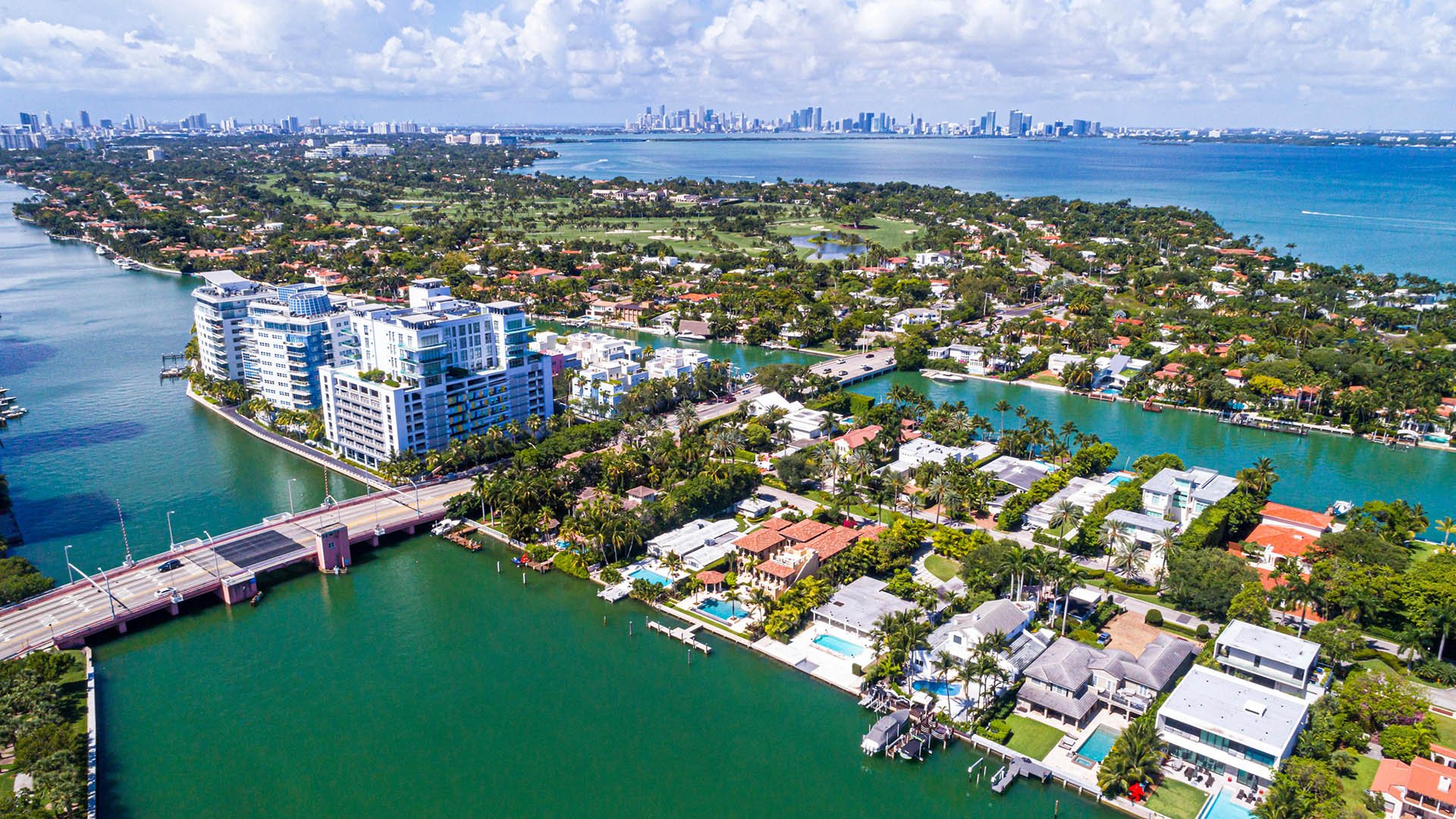
Fisher Island appeals to buyers who want separation without distance. It offers a rare version of Miami living: waterfront, controlled, club-oriented, and deliberately private. For a Brooklyn buyer accustomed to highly curated urban life, the attraction is not only sunshine. It is the ability to trade street-level intensity for a more contained environment while remaining connected to Miami Beach, Brickell, and the broader South Florida market.
Residences such as The Residences at Six Fisher Island speak to that demand for scale, discretion, and resort-level living. On Fisher Island, buyers are often choosing more than square footage. They are choosing arrival experience, privacy protocols, views, club culture, and a residential rhythm that feels fundamentally different from a Brooklyn brownstone or full-service condominium.
For some families, the move is seasonal at first. For others, it becomes permanent only after schools, business travel, health care, household staffing, and social routines are in place. The distinction matters. A tax-motivated relocation that does not align with daily life can be fragile. A lifestyle-motivated relocation that is properly documented can be more durable.
The phrase “state-income-tax savings” can sound simple, but the execution is not. Buyers should be careful not to confuse owning a Florida residence with changing tax residence. A luxury condo, waterfront estate, or club membership may support a broader relocation plan, but those items alone do not replace formal domicile planning.
The central issue is intent, supported by behavior. Where does the buyer actually live? Where is the family based? Where are important records maintained? Where are doctors, clubs, voting records, licenses, vehicles, advisors, and daily routines centered? These details can feel mundane, but they may become important if a former state questions the move.
This is where ultra-prime real estate and disciplined documentation meet. A buyer evaluating The Links Estates at Fisher Island should think beyond architecture and frontage. The larger question is whether the home can credibly become the center of life, not just a beautiful escape from it.
State-income-tax savings can be significant for some households, but they should be weighed against the full cost of ownership. Luxury buyers should model property taxes, insurance, association dues, club costs, household staffing, maintenance, travel, financing structure, and renovation exposure. In the upper tier, these costs can be meaningful and deserve the same rigor as the tax benefit.
The analysis should also include liquidity. A prime South Florida residence may be a long-term family asset, a strategic balance-sheet decision, or a second-home stepping stone. Each use case leads to a different purchase strategy. A buyer seeking a permanent base may prioritize privacy and scale. A buyer seeking optionality may favor a newer condominium with services, security, and easier lock-and-leave ownership.
This is why some Brooklyn buyers compare Fisher Island with Miami Beach, Surfside, Bal Harbour, and Brickell before deciding. At the southern end of Miami Beach, Apogee South Beach offers a different proposition: urban waterfront living with access to restaurants, marinas, and the South of Fifth lifestyle. It may suit a buyer who wants Miami energy nearby rather than island seclusion.
Not every tax-driven buyer ultimately chooses Fisher Island. Some choose Brickell for proximity to offices, private banking, restaurants, and an international business community. Others choose Miami Beach for its social life, beach access, and established condominium inventory. The right answer depends less on prestige and more on the rhythm of the week.
A buyer who plans to work frequently in Miami’s urban core may find St. Regis® Residences Brickell compelling for its location and service-oriented lifestyle. A buyer who values wellness, sand, and a quieter coastal cadence may lean toward Miami Beach or Surfside. A buyer whose highest priority is discretion may return to Fisher Island after every comparison.
This is also where investment thinking should be measured, not performative. The best purchase is not always the one with the most dramatic projected upside. For many wealth-preservation buyers, the goal is quality of ownership, limited compromise, and the ability to hold a scarce waterfront asset through cycles.
Many Brooklyn-to-Florida moves involve timing complexity. A buyer may be selling a townhouse, retaining a pied-à-terre, restructuring business ties, or balancing school calendars. The real estate search should reflect that timing rather than fight it.
If the move is intended to support a formal residency shift, the closing date, occupancy date, and practical move date all deserve attention. Buyers should consider when furniture arrives, when household staff begins, when key accounts change, and when daily life visibly relocates. The more coherent the sequence, the easier it is for the home purchase to support the larger plan.
A buyer’s-guide approach is useful here: define the lifestyle first, then the tax strategy, then the property type. Reversing that order can lead to a beautiful purchase that fails to answer the family’s real needs.
The tax discussion can be clinical, but the move itself is often emotional. Brooklyn offers neighborhood identity, walkability, schools, restaurants, culture, and social density. Fisher Island offers privacy, water, services, and controlled access. These are not substitutes. They are different ways of living.
Couples and families should be honest about what they are leaving and what they are gaining. A buyer who thrives on spontaneous street life may prefer a Miami Beach condominium. A buyer who wants retreat, security, and club continuity may feel immediately at home on Fisher Island. The correct decision is the one that feels livable after the novelty has passed.
That is why trial periods, seasonal stays, and repeated visits at different times of year can be valuable. The most confident buyers do not purchase solely from a terrace at sunset. They imagine Monday morning, school drop-off, workouts, meetings, guests, errands, and quiet evenings.
Does buying on Fisher Island automatically create state-income-tax savings? No. Ownership may support a broader relocation plan, but tax residency depends on facts, intent, and documentation reviewed with qualified advisors.
Should tax planning happen before or after the property search? Before. Buyers should understand the residency framework before committing to a home meant to support a formal move.
Is Fisher Island better for privacy than Miami Beach? For many buyers, Fisher Island offers a more controlled and private setting, while Miami Beach offers more immediate urban and social access.
Can a buyer keep a Brooklyn home after moving to Florida? Possibly, but retaining a former residence can complicate the analysis. Advisors should review how it fits into the overall residency plan.
What costs should be modeled beyond potential tax savings? Buyers should consider property taxes, insurance, association fees, club costs, staffing, maintenance, financing, and travel.
Is Brickell a serious alternative to Fisher Island? Yes. Brickell may suit buyers who want business access, dining, services, and a denser urban lifestyle.
Do seasonal residents need the same level of documentation? Seasonal use is different from a primary-residence change. Documentation becomes more important when formal tax residence is being shifted.
Should buyers prioritize new construction or resale? It depends on timeline, service expectations, customization needs, and tolerance for renovation or delivery risk.
Why do Brooklyn buyers consider South Florida now? They are often drawn by lifestyle, privacy, weather, waterfront living, and the possibility of a more efficient tax profile.
What is the best way to shortlist comparable options for touring? Start with location fit, delivery status, and daily lifestyle priorities, then compare stacks and elevations to validate views and privacy.
For a tailored shortlist and next-step guidance, connect with MILLION.
If branded residences are on your mind — as a home or as an allocation — we would be glad to share what we are seeing, privately.
Begin a quiet conversation