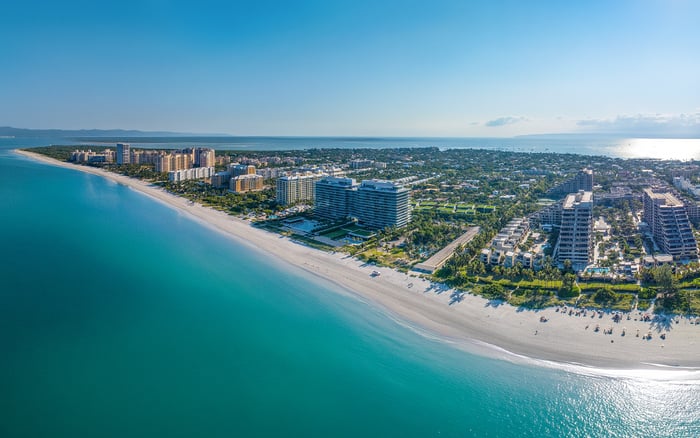
A lifestyle-led guide to choosing between private beach club ownership and public beach access in South Florida, focused on privacy, service, flexibility, and daily rhythm.
In South Florida luxury real estate, beach access is often framed as a binary: private or public. In practice, the distinction is more layered. A private beach club is not simply a quieter stretch of sand, and public beach access is not merely the casual alternative. Each model shapes how a residence is lived, hosted, maintained, and emotionally experienced.
For many buyers, the beach is the reason for the purchase. For others, it is the backdrop to a broader waterfront life that may include boating, dining, wellness, children, visiting family, or seasonal escape. The right answer depends less on status than on daily use. Do you want staff to anticipate your preferred chair placement, or do you prefer the freedom to walk different shorelines without planning? Do you host often, or do you seek retreat? Do you want a controlled arrival experience, or the texture of a public coastal neighborhood?
For MILLION readers, this begins as a beach-access question, but it quickly becomes an oceanfront, Miami Beach, Sunny Isles, Fort Lauderdale, and Palm Beach lifestyle question.
A private beach club usually appeals to buyers who value choreography. Its appeal is not exclusivity alone. It is the ability to arrive, settle in, and rely on a consistent level of service. Chairs, umbrellas, towels, food and beverage, cabana culture, security presence, and guest handling can become part of a residential routine rather than a logistical exercise.
This model is especially compelling for owners who entertain frequently. A private club can make a weekend with guests feel composed rather than improvised. The club environment also tends to support discretion. For high-profile owners, multigenerational families, or buyers who simply prefer a quieter social atmosphere, controlled access can be a meaningful lifestyle feature.
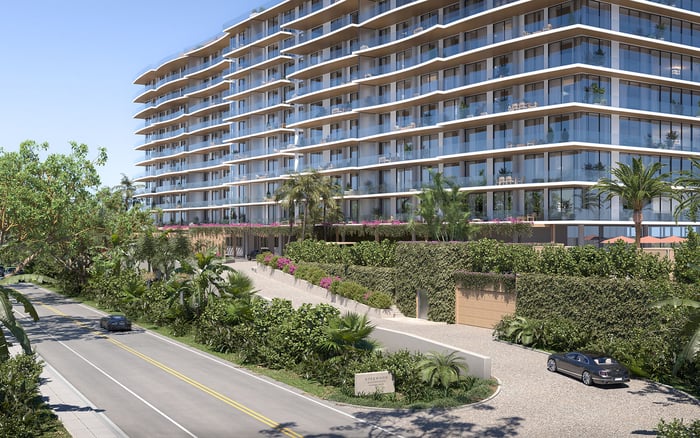
At residences such as The Perigon Miami Beach, the broader appeal of oceanfront living is tied to how a building curates arrival, amenities, views, and daily flow. The beach is not an isolated amenity. It is part of the residence's architecture of privacy.
The tradeoff is structure. Private club environments may come with membership rules, guest policies, operating hours, seasonal patterns, and costs that should be reviewed carefully before purchase. Buyers should understand what is included, what is optional, and what is subject to association or club governance. The more polished the experience, the more important it becomes to understand how that polish is funded and managed.
Public beach access suits a different kind of owner: the buyer who wants spontaneity, variety, and connection to place. Public access can make the coastline feel open and alive. It allows owners to choose the mood of the day, from a sunrise walk to a casual swim, without necessarily passing through club protocol.
For some buyers, that openness is precisely the luxury. It supports a less formal way of living, especially for owners who divide time among several residences or do not want another membership structure. Public access can also appeal to buyers who value walkability, nearby cafés, neighborhood paths, and a more civic beach culture.
Residences near celebrated stretches of Miami Beach, including 57 Ocean Miami Beach, speak to this balance. The value is not only proximity to the Atlantic. It is the ability to live within a refined residential envelope while remaining connected to the wider rhythm of the shoreline.
The practical considerations are different. Public access may bring more activity, less control over the beach environment, and a greater need to assess parking, noise, entry points, and the character of nearby streets. For some owners, that energy is invigorating. For others, it may run counter to the very reason they are buying on the water.
Many of South Florida's most sophisticated buyers do not choose one model in pure form. They seek a hybrid: a residence with resort-level amenities, secure arrival, strong service culture, and easy access to a public or semi-public coastal experience. This is where building selection becomes more important than the label attached to the beach.
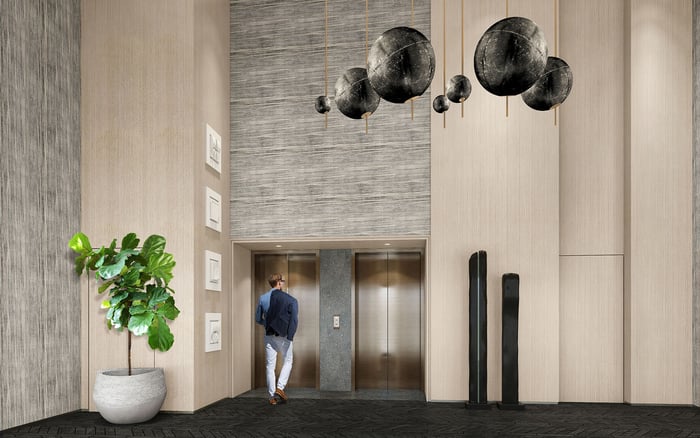
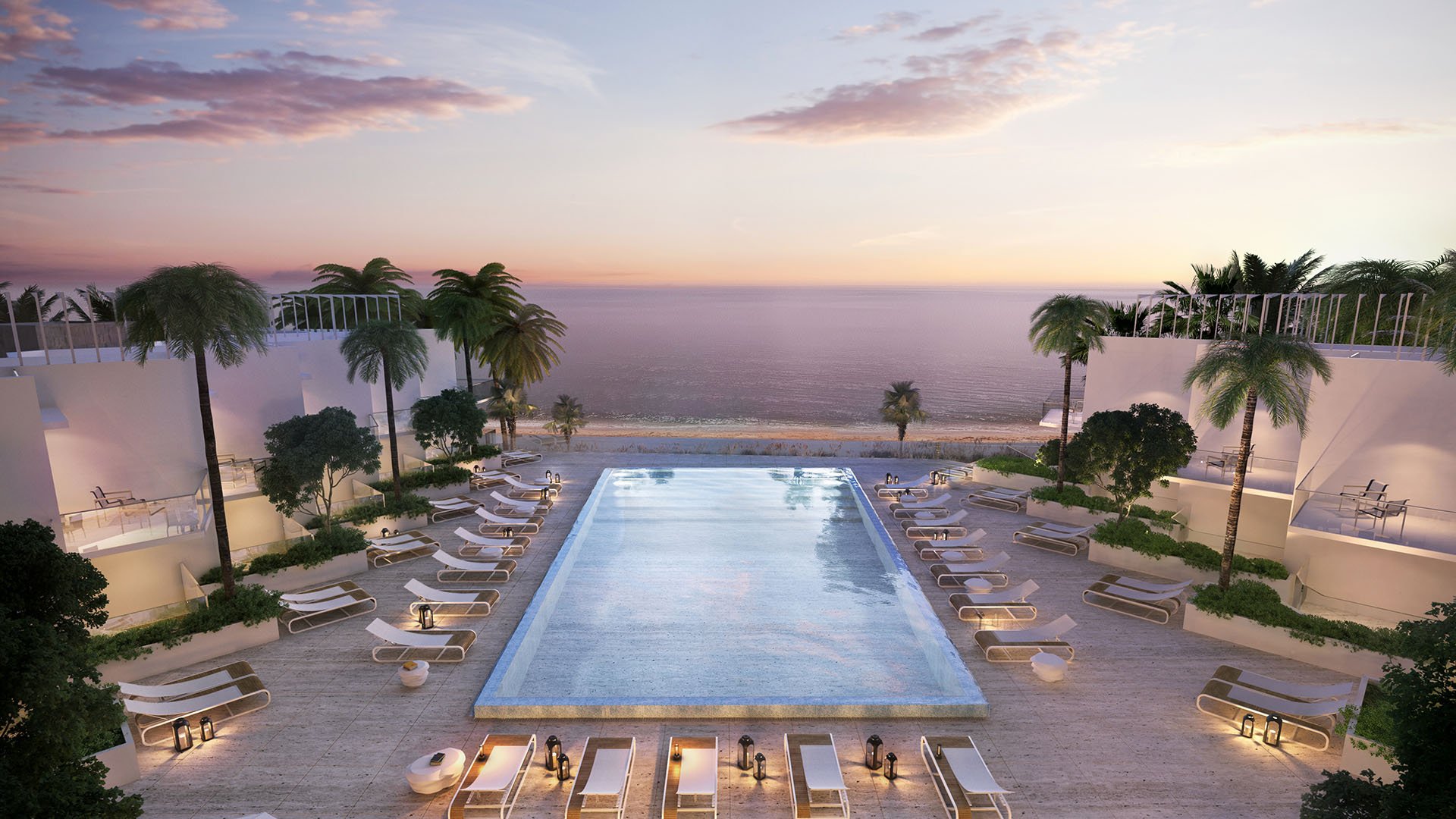
A well-run condominium can create the sensation of private living even where the beach itself is not fully private. Pool decks, lounges, wellness suites, resident-only service, porte cochère design, elevator privacy, and thoughtful staff training can shape the owner experience before one ever reaches the sand. In this model, the building becomes the private club, and the shoreline becomes the open-air extension of home.
In Sunny Isles Beach, St. Regis® Residences Sunny Isles represents the kind of branded residential environment that appeals to buyers who want a highly serviced home base in a coastal setting. That same buyer may still value the ability to walk the beach beyond the boundaries of a single property.
This hybrid approach is often the most resilient lifestyle choice. It allows owners to enjoy service and discretion when desired, while preserving the elemental pleasure of the ocean as something expansive rather than overly programmed.
Start with your calendar. If you are in residence for long weekends, school holidays, or the high season, ease may carry a premium. A private club or highly serviced oceanfront building can remove friction from limited time. If you are a daily user who walks, swims, or exercises at sunrise, public access may feel more natural and liberating.
Then consider your guests. Private club models often reward owners who host. They create a more polished experience for friends, visiting children, parents, and business guests. Public access favors owners who prefer informal plans and do not want to manage expectations around rules or reservations.
Next, review governance and cost. The most elegant lifestyle can become frustrating if the owner does not understand fees, usage policies, access rights, staffing standards, maintenance responsibilities, and the process for future changes. Buyers should ask precise questions and review the relevant documents with qualified advisors.
Finally, walk the property at different times. Morning, midday, weekend, and evening can reveal very different truths. A beach that feels serene on a weekday may feel animated on a holiday. A club that feels impeccable in season may operate differently during quieter months. Luxury is consistency, and consistency should be tested.
South Florida is not a single beach market. Miami Beach often attracts buyers who want culture, architecture, dining, and a strong sense of identity alongside the water. Fort Lauderdale can appeal to those who want a blend of beach, boating, and a more residential cadence, visible in the appeal of properties such as Four Seasons Hotel & Private Residences Fort Lauderdale.
Palm Beach buyers may prioritize discretion, tradition, landscaping, club culture, and a quieter social language. A residence such as Palm Beach Residences belongs in conversations where the beach is part of a broader expectation of refinement, service, and privacy.
The right model should match the buyer's preferred social temperature. Some owners want to feel gently removed from the world. Others want the pleasure of being near it, with the option to retreat upstairs to a beautifully managed residence. Both are valid. The mistake is assuming the more exclusive model is automatically the better one.
A private beach club is best understood as a lifestyle system. It offers control, service, predictability, and a sense of belonging. Public beach access is best understood as a lifestyle freedom. It offers openness, flexibility, neighborhood texture, and a direct relationship with the coast.
The most successful purchase begins by identifying which version of ease matters more. If ease means never thinking about towels, chairs, guests, or lunch, a private club environment may be worth the premium. If ease means walking out the door without a schedule, the public access model may be more emotionally satisfying.
In the ultra-premium market, the wisest buyers do not buy the idea of exclusivity. They buy the life they will actually live.
Is a private beach club always better for resale? Not always. Resale appeal depends on the full property experience, including location, views, services, governance, design, and buyer demand at the time of sale.
Does public beach access mean less privacy? It can mean a more active shoreline, but privacy may still be achieved through building design, amenities, staffing, elevation, and residence layout.
Who is the best fit for a private beach club? Buyers who value predictability, service, guest handling, and a quieter social environment often respond well to private club living.
Who is the best fit for public beach access? Buyers who enjoy spontaneity, walking, neighborhood energy, and fewer membership formalities may prefer public access.
Should I review beach access rules before buying? Yes. Buyers should review association documents, club policies, access arrangements, and local conditions with qualified advisors.
Can a condominium feel private without a private beach? Yes. Strong service, secure arrival, resident-only amenities, and thoughtful circulation can create a highly private residential experience.
Are private beach clubs more expensive to maintain? They may involve additional fees or operating costs, so buyers should understand what is included and how future expenses are handled.
Is a public beach better for families? It depends on the family's routine. Some prefer a managed club setting, while others value open space, easy walks, and casual access.
How should seasonal owners decide? Seasonal owners should prioritize ease, reliability, guest policies, and how the property functions during their most frequent months in residence.
What is the most important question to ask? Ask whether the beach experience supports the way you actually live, not simply the way the property is marketed.
For a tailored shortlist and next-step guidance, connect with MILLION.
If branded residences are on your mind — as a home or as an allocation — we would be glad to share what we are seeing, privately.
Begin a quiet conversation