South Florida’s coastline prices romance and scarcity, but the true spread between oceanfront and walk-to-beach living is revealed in total cost of ownership, resilience, and lifestyle friction.
In South Florida, “oceanfront” is often treated as a category of its own, with pricing that can feel detached from a comparable home or condominium just a block or two inland. Nationally, the typical waterfront home has been valued at roughly 116% more than the typical home overall, a premium that has grown meaningfully from about two decades ago. The takeaway for a luxury buyer is not the exact percentage-it’s the trajectory: the market has increasingly priced direct water adjacency as a distinct asset class.
But oceanfront is not a single experience. Marketing language commonly divides inventory into tiers such as beachfront, oceanfront, ocean view, and walking distance to the beach. Those labels can obscure real differences in access, the permanence of the view corridor, noise and wind exposure, and the operating costs that come with living closest to saltwater. For an ultra-premium buyer, the sharper comparison is not oceanfront versus non-oceanfront. It is oceanfront versus the best “walk-to-beach” product, where lifestyle can be similar while balance sheets and long-term optionality often diverge.
Oceanfront is fundamentally a bundle of three things: direct adjacency, direct access, and signaling. Walk-to-beach typically buys proximity and convenience without owning the shoreline edge itself.
At the luxury end, price tends to concentrate most intensely in direct-beach-access inventory. In Florida’s 30A market, beachfront homes were cited with a median list price around $9.37M (Jan 2026) and an average price per square foot around $2,756.95, while one-block-off “gulf-view” homes were discussed in a far lower band, roughly $2M to $4.5M. South Florida is not 30A, but the pattern translates: the last line of sand carries an outsize premium.
The walk-to-beach category is also popular because it is straightforward to shop for. “Walk to beach” is a widely used filter, and it captures the buyer who wants morning swims and sunset dinners without the ongoing complexity that comes with being on the front line of weather and salt.
In luxury real estate, acquisition is only the opening move. The deeper spread between oceanfront and walk-to-beach often lives in recurring costs-and in the variability of those costs.
A Miami example that modeled a $1M waterfront condominium estimated roughly $234K upfront between a 20% down payment and closing costs plus other fees. More importantly, the same scenario estimated monthly ownership costs of roughly $8,000 to $12,000 when taxes, HOA, insurance, flood insurance, utilities, and related line items were included. Over a 10-year hold, that analysis modeled a $3,000 to $5,000 per month carrying-cost gap between waterfront and non-waterfront scenarios, or roughly $360,000 to $600,000 before major repairs or special assessments.
Two buyer lessons follow.
First, the oceanfront premium should be underwritten as an operating business, not as a purely emotional upgrade. Second, volatility matters as much as the average. Oceanfront ownership is more exposed to sudden resets in insurance pricing, reserve funding requirements, and building maintenance cycles.
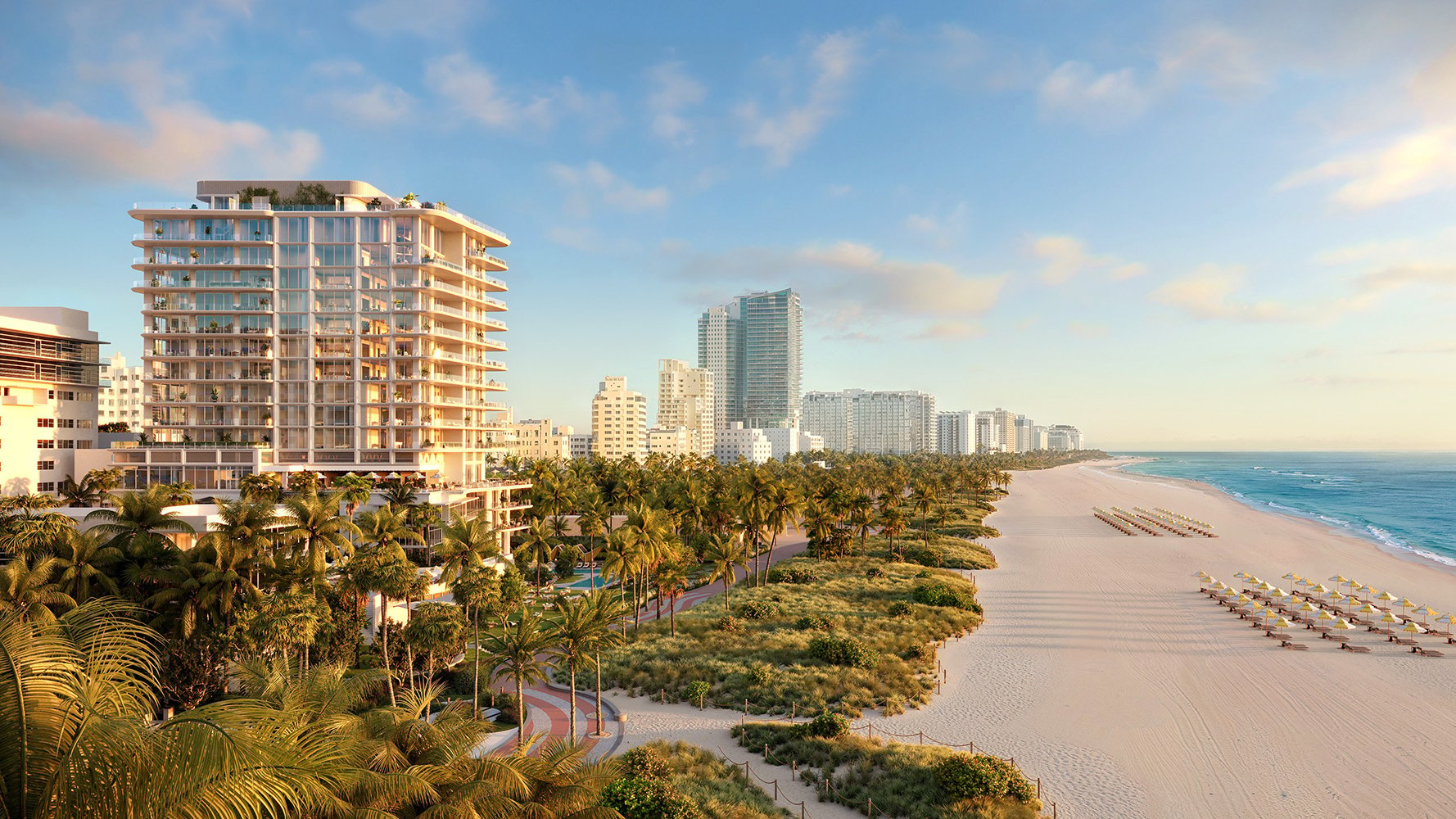
For buyers who want a turnkey profile with more predictable monthly cash flow, a newer, amenity-forward building can help, but it does not eliminate the macro categories of risk. For example, Miami Beach oceanfront product like The Perigon Miami Beach is designed for buyers who prioritize immediate proximity to the Atlantic and a full-service residential experience-yet the underwriting discipline still applies. Model the HOA, reserves, and insurance with the same rigor you would apply to any long-lived asset.
Coastal homes often face higher and more variable insurance pricing due to wind and hurricane exposure, and policies can carry separate wind or hurricane deductibles. Those deductibles are commonly structured as a percentage of the dwelling coverage rather than a flat dollar amount. For a luxury buyer with substantial replacement values, the difference between a flat deductible and a percentage deductible is not academic.
Flood insurance is also a distinct category from standard homeowners insurance and is often required by lenders in higher-risk flood zones. Even for cash buyers, flood coverage is part of prudent risk management, and it should be treated as a recurring operating cost rather than a discretionary add-on.
Walk-to-beach does not mean “no risk,” but it can mean fewer mandatory layers, more carrier flexibility, and in some cases a different deductible structure. In practice, the underwriting advantage is less about being carefree and more about having options.
South Florida’s condo market has shifted toward stricter reserve planning. Post-Surfside reforms require Structural Integrity Reserve Studies (SIRS) for many condo buildings, generally those that are three stories or higher, changing reserve funding expectations and contributing to higher HOA and reserve burdens.
Special assessments have become a major ownership risk, with large one-time bills tied to deferred maintenance, structural work, or reserve funding changes. Oceanfront buildings can be particularly vulnerable because the environment is harder on exteriors, glazing systems, and mechanical equipment.
If you are comparing oceanfront to walk-to-beach in condominium form, do not stop at the monthly HOA. Look for the story behind it: reserve posture, the cadence of major projects, and how the building’s exposure to wind and salt influences lifecycle costs.
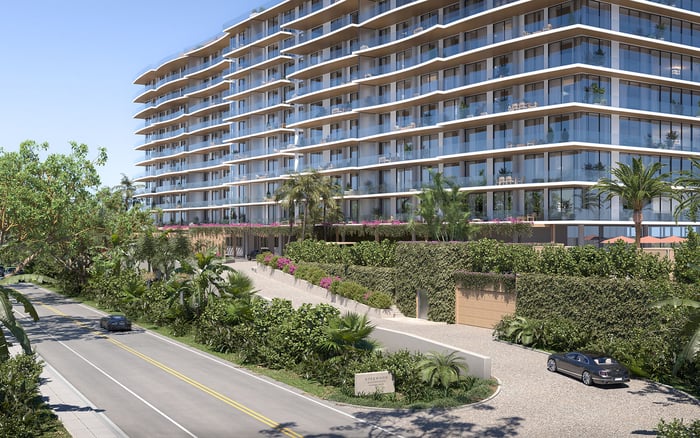
For buyers who want a coastal address but also value a more insulated ownership profile, a product set back from the surf line can sometimes deliver a calmer risk profile while still supporting a daily beach routine. The appeal is lifestyle with fewer cliff-edge variables.
Oceanfront environments accelerate wear. Salt air, humidity, and persistent wind can increase the frequency and cost of maintenance compared with homes farther inland. Metals corrode faster, exterior finishes require more attention, and HVAC equipment can live a tougher life.
This matters in single-family homes and condos alike. A house may offer greater control over timing and vendors, but it also concentrates responsibility: seawall considerations, exterior envelope upkeep, and storm preparation all land on the owner’s calendar. Condos spread that responsibility across the association, which can smooth the operational burden but can also amplify assessment risk when major systems come due.
Long-term coastal ownership is increasingly shaped by resilience decisions. “Hardening” shorelines, such as seawalls, can reduce natural buffering and in some contexts may worsen inland flooding impacts. The practical implication is not that seawalls are inherently wrong. It is that shoreline intervention is complex, and outcomes can be counterintuitive.
Sea-level rise projections for South Florida point toward material increases over coming decades, with financial impacts and adaptation costs tied to higher flooding frequency. Market pricing has already shown sensitivity to elevation and flood risk in parts of Miami-Dade and Miami Beach, indicating that climate risk can be capitalized into values.
For a buyer choosing between oceanfront and walk-to-beach, this becomes a question of where you want your risk concentrated. Oceanfront may hold the strongest scarcity value, but it can also sit at the center of resilience spend and regulatory change.
For second-home owners who plan to monetize occupancy, beachfront proximity can boost demand and nightly rates. The catch is that investors must model seasonality, operating expenses, and local rules that can cap achievable returns. Vacation rental management also carries meaningful fee loads, often a substantial share of gross revenue, which reduces the net benefit of an oceanfront rate premium.
In other words: oceanfront can be a top-line story and a bottom-line surprise. Walk-to-beach can sometimes deliver a more efficient net yield if acquisition costs and recurring costs are materially lower, even when nightly rates are slightly softer.
This is where product selection becomes strategic. A full-service, amenity-rich building may support owner usage and guest experience while simplifying operations. In Fort Lauderdale, Auberge Beach Residences & Spa Fort Lauderdale speaks to buyers who want a polished resort cadence; in Sunny Isles, Turnberry Ocean Club Sunny Isles aligns with buyers who want a statement tower and a true oceanfront posture. Either way, the underwriting should include management fees, furnishing cycles, insurance layers, and reserves.
The right choice is usually obvious once you decide which of these you are optimizing.
Access and immediacy: If you want to step from lobby to sand with no friction, oceanfront is hard to replicate.
Privacy and noise tolerance: Oceanfront can be more exposed to wind, beach activity, and seasonal density. Walk-to-beach may feel more residential and buffered.
Balance-sheet predictability: Walk-to-beach often offers more stability in insurance and maintenance, even if it sacrifices some prestige.
Exit flexibility: The deepest oceanfront demand can support resale liquidity, but buyers can also become more selective when insurance and HOA headlines intensify.
Emotional utility: If the sound of surf and horizon permanence is why you are buying, pay for it. Just be deliberate.
For those who want coastal energy with a slightly different risk profile, there are also buyers who choose bayfront or intracoastal living, prioritizing views and boating access over direct surf frontage. In Miami Beach, 57 Ocean Miami Beach fits the buyer who wants an intimate ocean-adjacent experience; elsewhere, different waterfront orientations may better match a boating-first lifestyle.
Is “ocean view” the same as oceanfront? No. Ocean view can be partial or obstructable, while oceanfront implies direct adjacency to the water.
Why does oceanfront command such a large premium? Scarcity and direct access are priced as unique assets, and the premium has grown over time.
Can walk-to-beach feel just as luxurious? Yes. Many buyers get the same daily beach routine while gaining quieter streets and flexibility.
What hidden costs are most common for oceanfront condos? Higher insurance exposure, reserve funding pressure, and potential special assessments are key items.
Are hurricane deductibles different for coastal homes? Often, yes. They can be structured as a percentage of dwelling coverage rather than a flat amount.
Is flood insurance separate from homeowners insurance? Typically, yes. Flood coverage functions differently and can be required in higher-risk zones.
Does salt air really change maintenance costs? Yes. Salt, humidity, and wind can accelerate corrosion and exterior wear, increasing upkeep.
Can an oceanfront property be a good rental investment? It can, but you must model seasonality, operating costs, and management fees that reduce net returns.
Do new condo reserve rules matter to luxury buyers? Yes. Reserve studies and funding expectations can raise HOA burdens and reshape long-term costs.
What is the simplest way to decide between oceanfront and walk-to-beach? Underwrite total cost of ownership, then choose the frontage level that matches your daily use.
When you're ready to tour or underwrite the options, connect with MILLION Luxury.
If branded residences are on your mind — as a home or as an allocation — we would be glad to share what we are seeing, privately.
Begin a quiet conversation