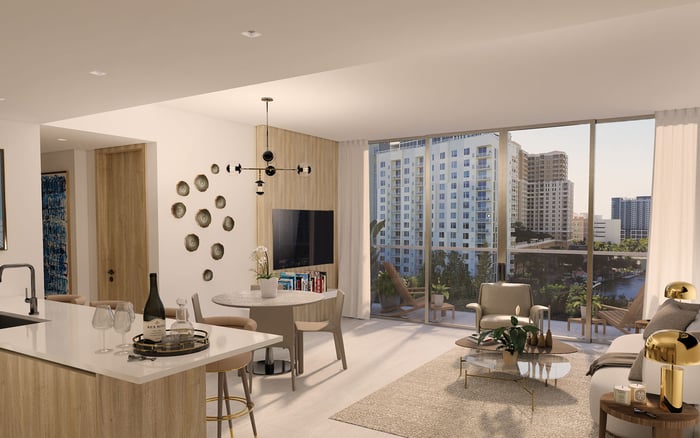
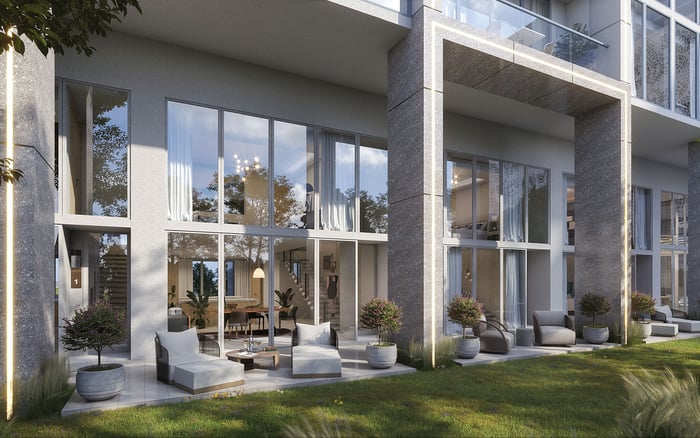
A discreet look at Andare Residences Fort Lauderdale and the broader luxury-condo question of who controls high-design interior fixtures when ownership documents, attachment, and association authority intersect.
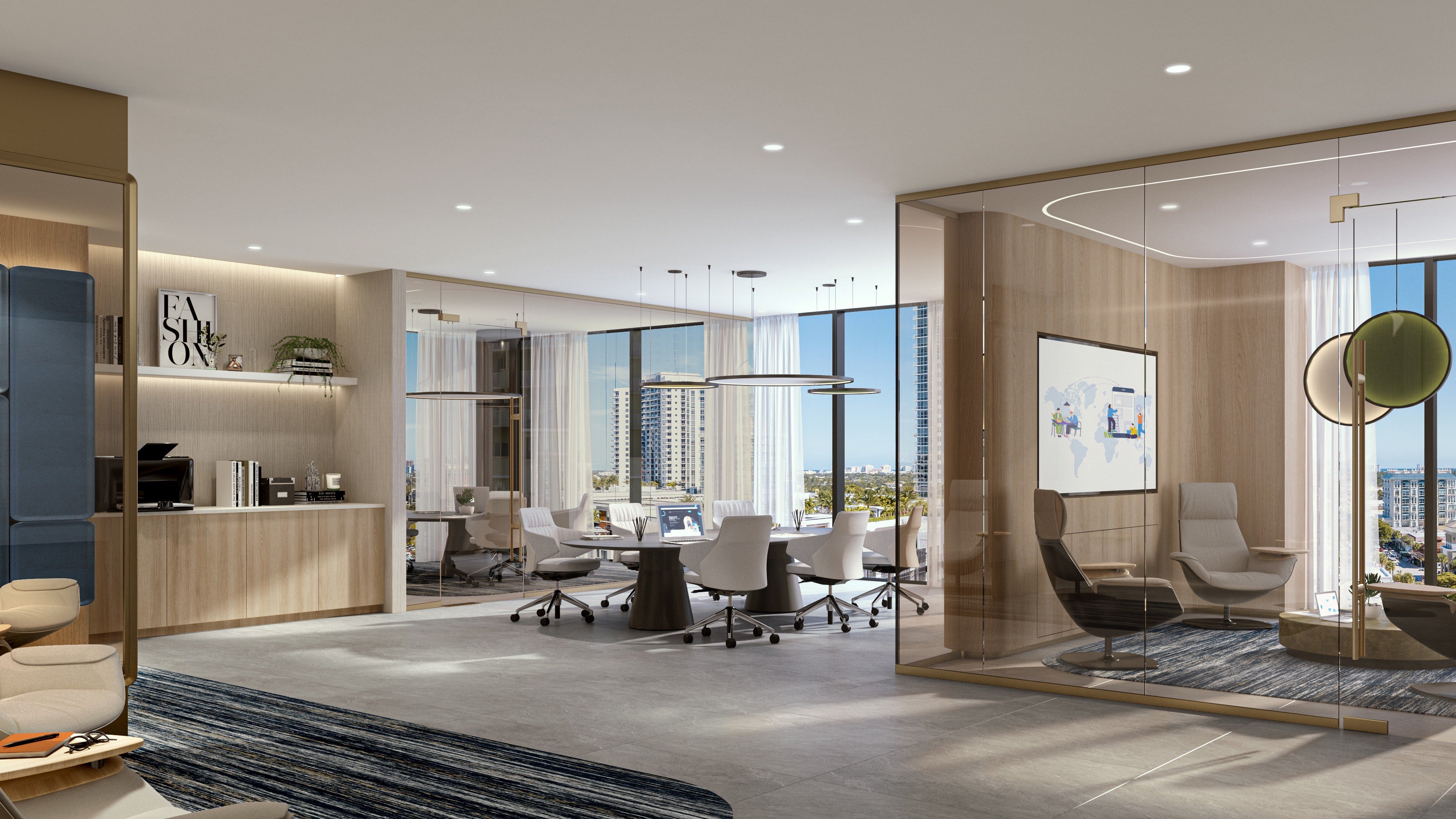
At the highest end of the South Florida condominium market, value often lives in details that feel almost private: the angle of morning light, the materiality of a wall finish, the scale of a dining niche, the way a fixture gives a room its first impression of the day. At Andare Residences Fort Lauderdale, “the ownership question behind breakfast-room light” is best understood through that lens: not as a documented public dispute, but as a refined buyer question about where design ends and legal ownership begins.
The current project-level context identifies Andare Residences Fort Lauderdale as a luxury residential development in Fort Lauderdale. It belongs to the Fort Lauderdale conversation, not Miami, not Palm Beach, and not a generalized South Florida category. That matters because buyers evaluating Broward luxury residences increasingly expect Miami-caliber design discipline while asking practical questions about documentation, control, replacement rights, and long-term association governance.
There is no established public controversy over a breakfast-room light, chandelier, or interior fixture at Andare Residences Fort Lauderdale. The more useful reading is subtler: if a fixture is central to the feeling of a residence, who owns it, who may alter it, and what happens when the original design intent meets a future owner’s taste?
In a single-family home, a buyer’s instinct is often straightforward: if it is attached, it usually conveys unless excluded. In a condominium-style residence, the analysis can be more layered. A fixture may sit inside a private unit, yet its status can still depend on the purchase agreement, unit specifications, condominium declaration, association rules, and the nature of the installation.
A breakfast-room light can read as a personal design choice while functioning as a developer-installed improvement. It may be hardwired into the ceiling, coordinated with a lighting plan, selected to complete an interior package, or treated as a replaceable decorative element. The answer rarely comes from appearance alone. It comes from the paper trail.
For buyers, this is not a minor point. Lighting shapes photography, resale presentation, everyday ritual, and the emotional quality of a room. A sculptural fixture over a breakfast table can become part of the residence’s identity, especially when it anchors an open-plan living sequence. Yet identity is not the same as ownership. In luxury real estate, that distinction can be expensive.
The central ownership question usually falls into one of three categories. First, the light may be treated as part of the private unit, giving the owner broad control subject to building rules, electrical standards, and any approval process for alterations. Second, the light or its related infrastructure could be connected to limited common elements or building systems, placing meaningful restrictions on changes. Third, it may be a developer-installed improvement governed by the contract documents and specifications delivered at purchase.
That third category is where luxury buyers should be especially attentive. In design-forward residences, developers often use finishes, appliances, lighting, and millwork to establish a coherent visual language. Buyers may reasonably assume the items they see are part of what they are buying, but the final answer depends on what is included, excluded, substituted, or reserved in the documents.
At Andare Residences Fort Lauderdale, the breakfast-room light should therefore be treated as an open ownership question unless the relevant condominium declaration, purchase agreement, unit specifications, and association rules resolve it. The absence of a public dispute does not make the question irrelevant. It simply makes diligence more important than assumption.
Fort Lauderdale’s luxury market has matured into a setting where buyers compare not only views and amenities, but also governance, finish packages, and the clarity of what conveys. A buyer considering Andare may also be evaluating the broader Fort Lauderdale field, from Four Seasons Hotel & Private Residences Fort Lauderdale to Riva Residenze Fort Lauderdale, where the same discipline applies: read the documents before falling in love with the room.
This is especially relevant in new-construction and pre-construction settings, where renderings, model residences, finish selections, and sales presentations can shape expectations before the final legal package is fully absorbed. For investment-minded buyers, fixture rights also matter because they affect future resale, staging, maintenance, insurance questions, and the ease of customizing a residence for a tenant or second-home use.
The Fort Lauderdale buyer is no longer simply asking, “Is it beautiful?” The more sophisticated question is, “What exactly am I acquiring, what may I change, and who has approval authority if I do?”
The first question is whether the breakfast-room light appears in the unit specifications, finish schedule, or any exhibit to the purchase agreement. If it does, the buyer should determine whether the item is identified generically, by model, by allowance, or as part of a broader lighting package. A generic description may leave room for substitution. A specific description may create a clearer expectation.
The second question is whether the fixture is permanently attached. Hardwiring alone may not answer the question, but it is relevant. If a fixture is integrated into ceiling systems, dimming controls, smart-home infrastructure, or fire and life-safety considerations, the association may have a role in how it is repaired or replaced.
The third question is whether alterations require approval. Even where the light is privately owned, a condominium association may regulate work affecting wiring, ceiling penetrations, contractor access, noise, insurance certificates, and debris removal. In a luxury building, control is often less about preventing personalization and more about preserving building standards.
The fourth question is what happens at resale. If an owner replaces a developer-selected light with a custom piece, does that custom piece convey to the next buyer, or is it excluded? The answer should be written clearly into the resale contract. Ambiguity at the breakfast table can become friction at closing.
The best luxury interiors encourage attachment. Buyers remember the breakfast room because it is where the day begins, where coffee meets skyline, where a residence becomes a life rather than a plan. That emotional response is part of the value proposition. But the more curated the interior, the more essential it becomes to distinguish experience from entitlement.
This is why the Andare question has relevance beyond one fixture. It points to a larger issue across high-design condominiums: when a building sells a lifestyle through carefully composed interiors, buyers must separate what is inspirational, what is included, and what remains subject to association authority.
A similar discipline applies when comparing other Fort Lauderdale offerings such as Sixth & Rio Fort Lauderdale and St. Regis® Residences Bahia Mar Fort Lauderdale. The names, settings, and design languages may differ, but the ownership inquiry remains constant: the documents define the asset more precisely than the mood board.
For Andare Residences Fort Lauderdale, the breakfast-room light should not be framed as a known legal fight or a verified association conflict. It is better understood as a useful prompt for sophisticated diligence. In a market where design can carry a premium, buyers should know whether a beloved fixture is part of the unit, a controlled component, or a developer-installed item subject to the final purchase materials.
The most elegant ownership experience is not merely visual. It is contractual, architectural, and operational at once. A residence feels effortless when the buyer has already asked the difficult questions quietly, before closing, before customization, and before a future resale turns a design detail into a negotiation point.
Is there a confirmed dispute about a breakfast-room light at Andare Residences Fort Lauderdale? No. The issue should be treated as an open ownership question, not a documented public controversy.
Why would a breakfast-room light raise an ownership question? In a condominium setting, a fixture may be part of the unit, tied to building systems, or included as a developer-installed improvement.
What documents usually control fixture ownership? Buyers should review the purchase agreement, condominium declaration, unit specifications, finish schedule, and association rules.
Does a permanently attached light automatically belong to the owner? Not always. Attachment is relevant, but the governing documents and building rules can still limit ownership or alteration rights.
Can an owner replace a breakfast-room fixture after closing? Often it may be possible, but approval, licensed electrical work, insurance requirements, and building procedures may apply.
Why is this especially important in luxury residences? High-design interiors use fixtures to create value and atmosphere, so unclear ownership can affect customization and resale expectations.
Is Andare Residences Fort Lauderdale a Miami property? No. It should be understood within the Fort Lauderdale luxury residential market.
Should buyers rely on renderings or model residences for fixture rights? No. Visual presentations can inform expectations, but the contract and condominium documents should govern what conveys.
How should sellers handle a custom light at resale? The resale contract should state clearly whether the fixture conveys or is excluded and replaced before closing.
What is the main lesson for buyers? Treat beautiful interior details as diligence items, not assumptions, especially when design and condominium governance intersect.
For a tailored shortlist and next-step guidance, connect with MILLION.
If branded residences are on your mind — as a home or as an allocation — we would be glad to share what we are seeing, privately.
Begin a quiet conversation