Miami Beach's historic districts are far more than a photogenic backdrop. For luxury homeowners and Pre-construction buyers, preservation rules shape every rebuild, addition and new tower in Miami Beach and beyond. This article explains how the Historic Preservation Board operates, what recent Oceanfront case studies reveal and how Coral Gables and Palm Beach apply their own versions of preservation. The result is a practical, aspirational guide to aligning design ambitions with long term value in South Florida's most desirable neighborhoods.
Miami Beach is often described as an open air museum of 20th century architecture, but for an ultra premium homeowner that phrase has very real consequences. From the pastel Art Deco hotels of South Beach to the MiMo resorts along Collins Avenue, decades of activism secured local protections that are now enforced by a powerful Historic Preservation Board. What began in the 1970s as a grassroots effort to stop demolition has matured into a sophisticated framework that shapes almost every meaningful rebuild, addition and new tower in the city. If you own or plan to acquire a luxury home here, preservation is not a backdrop. It is the invisible structure surrounding every design decision.
For buyers accustomed to blank slate development elsewhere, that can be a surprise. A waterfront parcel in a Miami Beach historic district may carry rights that feel tighter than its price tag suggests, while a restored hotel or villa may offer extraordinary character but require greater long term stewardship. The reward is a streetscape that changes carefully, not chaotically. The challenge is learning how local rules interact with your plans for a glass walled great room, a private pool terrace or a contemporary penthouse level addition. Understanding that interaction is now part of sophisticated South Florida portfolio strategy.
The key distinction in Miami Beach is that national recognition alone does not prevent demolition. The true protection comes from local designation and the city's Historic Preservation Ordinance. Within the ten local historic districts, significant exterior work, additions and new structures are reviewed by the Historic Preservation Board, a panel that includes architects, historians and design professionals. They look at height, massing, setbacks, materials and rhythm as seen from the public realm. In some cases they also review designated interiors, from iconic hotel lobbies to signature bars and lounges that have become part of the city's memory.
For an owner of a historic single family villa or a contributing apartment building, that usually means thinking in terms of addition rather than wholesale replacement. New square footage is often tucked behind the original facade or articulated as a clearly contemporary yet deferential wing. Rooflines are expected to maintain continuity along the street. A new stair tower or rooftop room may be possible, but often only if it sits back from the parapet so that the historic silhouette still reads clearly from the sidewalk or the beach. The intent is compatibility without imitation, so pastiche is discouraged even as proportion and scale are carefully controlled.
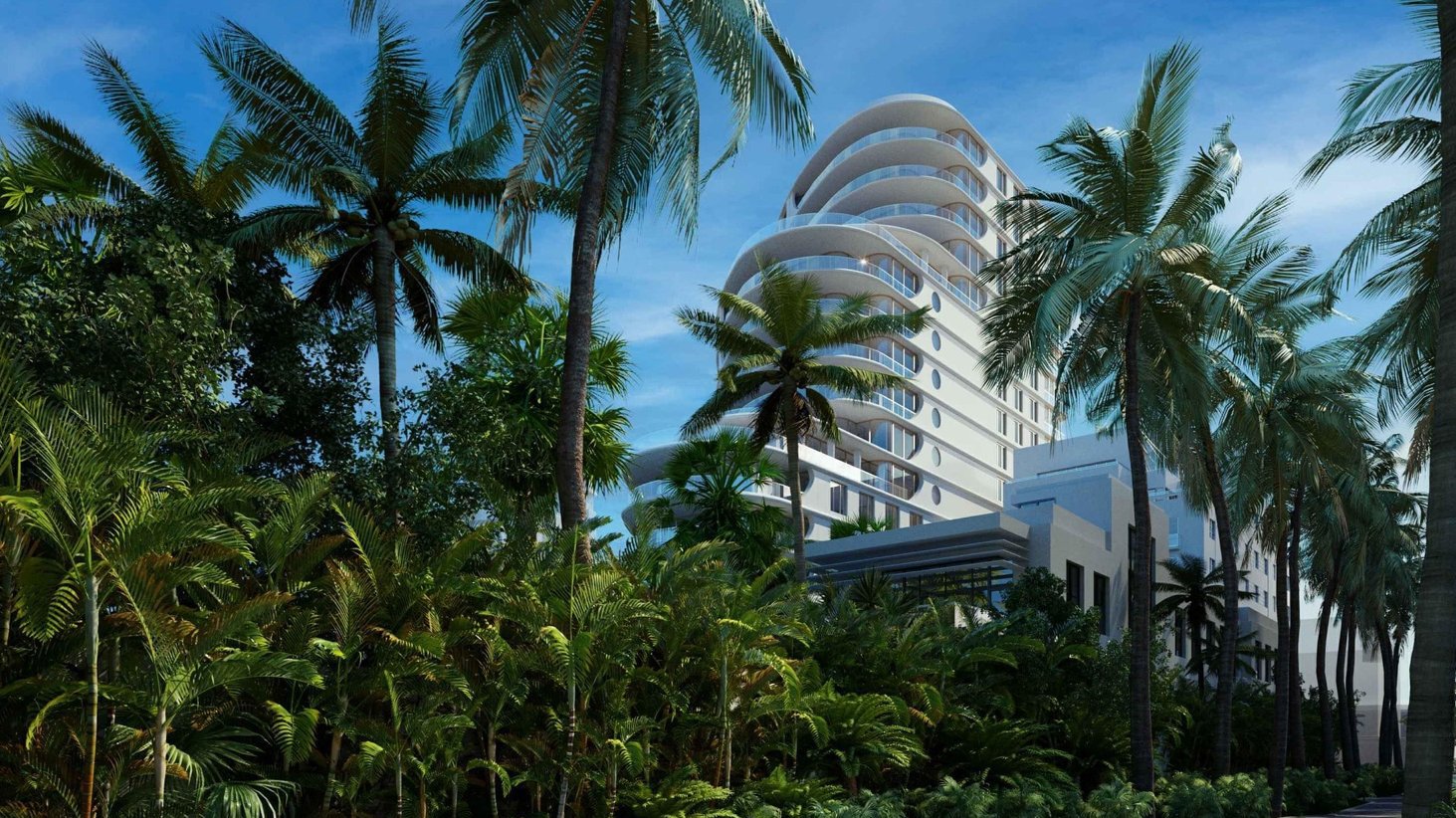
Luxury developers operating on larger Oceanfront sites work within the same philosophy, but the stakes are higher. A proposed tower might reach far above its historic neighbor, yet the board will push massing away from the street wall, require deep podium setbacks, or ask for a slimmer profile so that sunlight and key views are preserved. Even color can become a point of discussion, particularly when a contemporary glass building risks overpowering softer stucco and stone around it. Pre-construction buyers often benefit from this scrutiny, because schemes that feel too monolithic rarely survive the review process in their original form.
In return for preservation commitments, the city can offer some flexibility. Owners who restore a facade or rehabilitate a historically significant lobby may negotiate modest height or density bonuses, or use transfer of development rights to shift unused buildable area to another parcel. The mechanics are complex and highly site specific, but the broad pattern is clear. The more a project preserves and celebrates authentic fabric, the more willing regulators are to entertain creative solutions to unlock value. For a seasoned investor, the right combination of careful restoration and targeted new construction can produce an exceptional result that would not be possible in an unregulated setting.
Several recent and upcoming projects illustrate how this theory plays out at the highest level of the market. Along Collins Avenue, iconic resorts are being reimagined as ultra private residential enclaves, with historic buildings acting as the social heart and new towers as discreet vertical neighborhoods. The design teams read like a roll call of global talent, and the constant presence of the Historic Preservation Board has pushed them toward solutions that are more finely tuned than a typical ground up coastal tower.
At the Shore Club site, the historic 1930s hotel complex is being refashioned as a low key yet intensely serviced residence club. The approved plan keeps the most important Art Deco structures while introducing a new glass and stone tower that tops out below Miami's tallest skyline benchmarks. The new building is set back within the site so the original beachfront profile remains legible. For buyers, the result is a collection of large format homes aligned with a resort grade amenity program, wrapped inside a storied property that still feels intimately scaled. Shore Club Private Collections Miami Beach may read as one cohesive project, but it is the product of years of dialogue between developers, designers and preservation advocates.
Farther north, the transformation of the former Versailles Hotel into Aman Miami Beach shows how strict parameters can lead to quietly radical design. Here the landmark tower is being painstakingly restored as a hotel, while a separate companion building will house branded residences. Early schemes proposed a taller, bulkier structure, but neighbor feedback and board concerns led to a refined tower that aligns more sensitively with the existing skyline. The resulting ensemble preserves a beloved Art Deco profile on the ocean while delivering a limited collection of contemporary residences above a deeply layered spa and wellness experience, the hallmark of the Aman brand.
Not every negotiation revolves around a global flag. The approved residential tower behind the Sagamore Hotel, for example, emerged from a series of public hearings where neighbors worried about height and bulk on an already dense block. The board's final conditions included setbacks on the upper floors toward the ocean, a requirement to fully restore the existing hotel and a substantial financial contribution to nearby public realm improvements. For residents, that balance translates into new inventory with direct beach access and modern engineering, paired with a commitment that the original mid century hotel character will be maintained.
North Beach is seeing a similar pattern. Along Ocean Terrace and in neighboring blocks, developers are pairing restorations of Streamline and MiMo era hotels with contemporary residential components that rise behind or above the historic frontage. Glass towers sit back from the street line, preserving the human scale of the sidewalk while unlocking panoramic views for owners. The lesson for any luxury buyer is clear. In Miami Beach, new buildings in historic districts rarely erase the past. Instead they are choreographed additions to a long running architectural story.
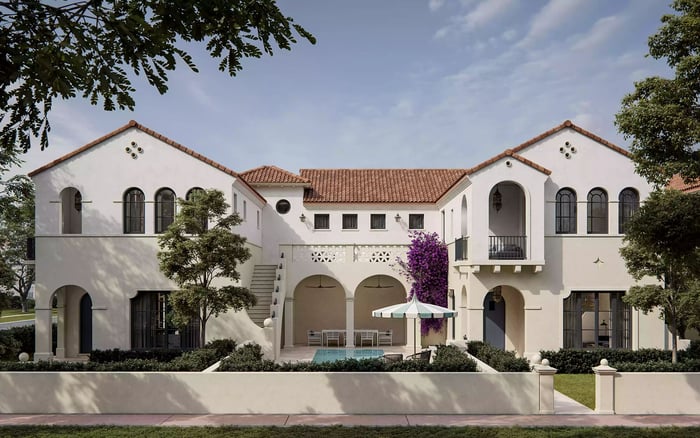
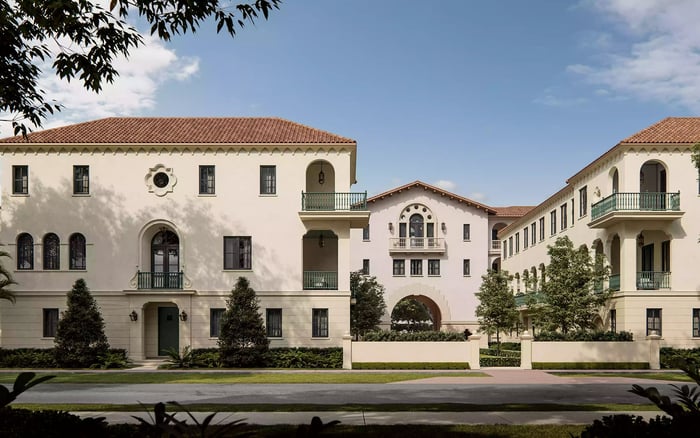
Miami Beach is not alone in treating historic architecture as a luxury asset. Coral Gables, laid out in the 1920s as a Mediterranean inspired garden city, has long required new buildings to fit within a highly curated visual language. There is a formal preservation ordinance for designated landmarks, but there is also a broader expectation, enforced by a design review board, that most infill will speak the same architectural dialect. Within Coral-gables, a mansion addition that ignores traditional roof pitches, arches or material palettes is unlikely to advance. The city even offers bonuses for projects that follow its Mediterranean guidelines closely, which means many high end homes and condominiums read as contemporary interpretations of a timeless theme.
On the barrier island of Palm Beach, the approach is even more stringent. A dedicated landmarks commission oversees changes to hundreds of protected houses, civic structures and scenic vistas. Building heights remain modest and demolition of significant architecture is discouraged. For owners, the message is consistent. The town will support sensitive expansions, seismic upgrades and discreet new pavilions, but will resist anything that disturbs the carefully composed street elevations and garden walls that define its character. The upside is a streetscape that feels remarkably cohesive, with few visual interruptions between 1920s estates and recent additions.
Branded projects have started to appear within these frameworks as well. Aman Palm Beach Residences is an example of how a global hospitality name can enter a highly regulated market by aligning itself with local heritage and landscape. In both Coral Gables and Palm Beach, developers courting the very top of the market understand that working with boards, not against them, is the only path to approval. That process may extend timelines, but it also produces homes that feel deeply rooted in their setting, which is increasingly what legacy families and global buyers are seeking.
Choosing a home within a protected historic district is as much a lifestyle decision as an investment thesis. On a practical level, historic fabric creates an atmosphere that no amount of new construction can imitate. Walking through a restored lobby with original terrazzo, arriving under a neon marquee, or looking out over a row of low stucco hotels that have framed the same views for generations reinforces the feeling of inhabiting a place with stories. For many buyers, the intangible pleasure of that daily experience is precisely what differentiates a Miami Beach apartment from a generic tropical pied a terre.
Scale is another distinction. Because historic zoning often caps heights or limits density, many of the most interesting projects have relatively few residences. Boutique buildings with twenty, thirty or fifty homes allow for larger floor plans, more privacy and a highly personalized service culture. Staff know owners by name, spaces are programmed around long term residents rather than transient hotel guests, and common areas can be curated like living rooms rather than lobbies. That intimacy carries particular appeal for buyers who intend to spend significant time in the city rather than treating it solely as an investment.
Historic contexts do impose some constraints. Façades and window systems may have to preserve original proportions, which can affect how far you push indoor outdoor thresholds or balcony enclosures. Rooftop amenities might need to be stepped back from the parapet so they are invisible from the street, even if that means a slightly smaller sky deck. Behind the scenes, however, most high end projects are essentially new construction within or behind an old shell. Owners still enjoy advanced building systems, discreet security, structured parking and robust storm hardening that meet present day codes.
Maintenance and governance deserve attention during due diligence. Regular facade inspections, specialized craftsmen and adherence to preservation conditions can translate into higher carrying costs. An owners association in a hybrid historic and new building may find itself budgeting for both day to day operations and long term restoration projects. For many ultra premium buyers that is an acceptable tradeoff for the stability these rules provide. They know that a neighbor cannot simply punch new openings in a wall or paint a bright new color without triggering review.
The neighborhood experience is also distinct. Historic South Beach and nearby pockets such as Sofi are more walkable and socially vibrant than many modern high rise districts. Cafes occupy ground floors of restored buildings, cultural tours trace the evolution of the skyline and there is a steady rhythm of events that keeps the streets lively. For some residents, sharing a postcode with nightlife, tourists and public life is part of the charm. Others may prefer quieter addresses along the Collins Waterfront or in nearby communities where towers stand apart on larger campuses. In either case, understanding how preservation, zoning and lifestyle come together is essential before committing to a property.
What does the Historic Preservation Board actually approve for a luxury home rebuild in Miami Beach?
The board reviews changes that affect the exterior appearance of properties in designated districts, including additions, major renovations and new construction. It focuses on massing, height, materials and how the project reads from public views, while ensuring that significant historic features are retained or restored.
Can I demolish a historic house and build new in Miami Beach?
Full demolition of a contributing historic structure is difficult and often only allowed when the building is proven unsafe or beyond reasonable repair. More commonly, owners retain key facades or volumes and insert new construction behind or above them, achieving contemporary layouts while respecting the protected character.
What should I consider when buying Pre-construction in a historic district?
Review how far along the approvals process the project is and study the conditions imposed by the Historic Preservation Board. Confirm that the design team has experience with historic contexts and understand any commitments the developer has made regarding restoration, streetscape improvements or public benefits, since these can shape long term value.
How do Coral Gables and Palm Beach differ from Miami Beach for rebuilds and additions?
Coral Gables focuses on maintaining a Mediterranean inspired citywide language, so many projects succeed by aligning with that style, even if they are not formally landmarked. Palm Beach tends to be more restrictive on height and demolition, with a commission that scrutinizes even subtle changes to landmarked estates, resulting in very controlled evolution of its neighborhoods.
Will living in a historic district limit how I renovate interiors?
Most preservation controls in South Florida concentrate on exteriors, but certain interiors such as grand lobbies can be designated and protected. Within your residence you typically have considerable freedom, yet building rules and preservation conditions may influence window replacements, visible structural changes or mechanical penetrations. For tailored guidance on specific properties, a confidential conversation with MILLION Luxury can help align your goals with what the regulations will support.
If branded residences are on your mind — as a home or as an allocation — we would be glad to share what we are seeing, privately.
Begin a quiet conversation