In 2025, Miami’s serious art collectors are increasingly choosing between three connected urban districts for their primary condo address: bayfront Edgewater, walkable Midtown and the immersive Miami Design District. Each offers a different balance of waterfront serenity, cultural access and branded architecture, from Aria Reserve Miami and EDITION Edgewater along Biscayne Bay to The Standard Residences nearby and the Jean-Georges anchored Miami Tropic Residences by the Design District. This guide compares lifestyle, buildings and buyer profiles so you can see which canvas best suits your art-focused way of living.
In 2025, Miami has fully matured into a global art and design capital. Art fairs, gallery openings and design events now run through the calendar, anchored by Art Basel, Design Miami and a growing constellation of satellite shows. For art-world buyers, that shift has turned a compact triangle of neighborhoods just north of Downtown into the city’s most strategic base: bayfront Edgewater, walkable Midtown and the tightly curated Miami Design District.
All three districts sit within a few minutes of each other, yet the experience of living in each feels distinctly different. Edgewater is about long Biscayne Bay horizons and resort-caliber towers that feel like private galleries in the sky. Midtown offers an urban village made for walking between studios, showrooms and rooftop lounges. The Design District is an immersive showcase, where architecture, fashion and public art blur together in a small, intensely designed grid.
For an art-focused buyer, choosing between them is less about good, better or best and more about lifestyle priorities. Do you want sunrise over the water and a quiet home for a museum-grade collection, a social base in the middle of the action, or a daily life completely embedded in high design and luxury retail? The following sections break down how each neighborhood lives, which flagship buildings matter, and the kind of collector each one tends to attract.
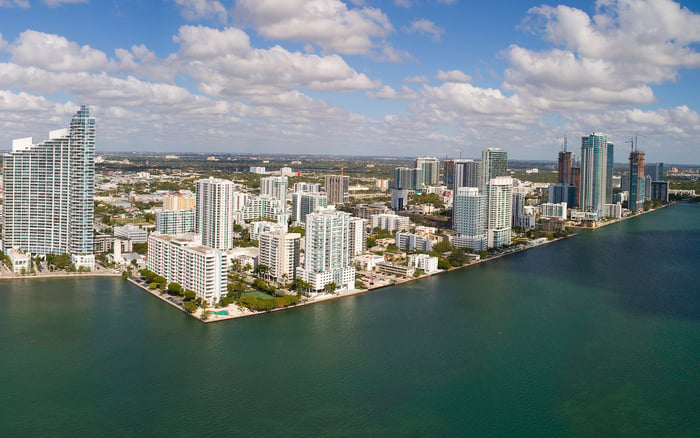
Edgewater stretches along Biscayne Bay just north of Downtown, a slim waterfront strip where glass towers rise directly over the water. The mood is quietly luxurious. Residents wake up to pastel sunrises, paddleboards sliding across the bay and the green expanse of Margaret Pace Park below. From here it is five to ten minutes by car to the Pérez Art Museum, the Frost Science Museum and the performance venues of the Arts and Entertainment District, while Wynwood, Midtown and the Design District sit just inland.
For many art-world buyers, the appeal begins with proportions. Edgewater condos tend to offer wide living rooms, deep bayfront terraces and walls of floor-to-ceiling glass that function as both frames for the view and natural backdrops for large-scale works. The neighborhood feels central yet buffered: you are close to the energy of exhibitions and fairs, but at night the soundtrack shifts to water and city lights rather than late-night street noise.
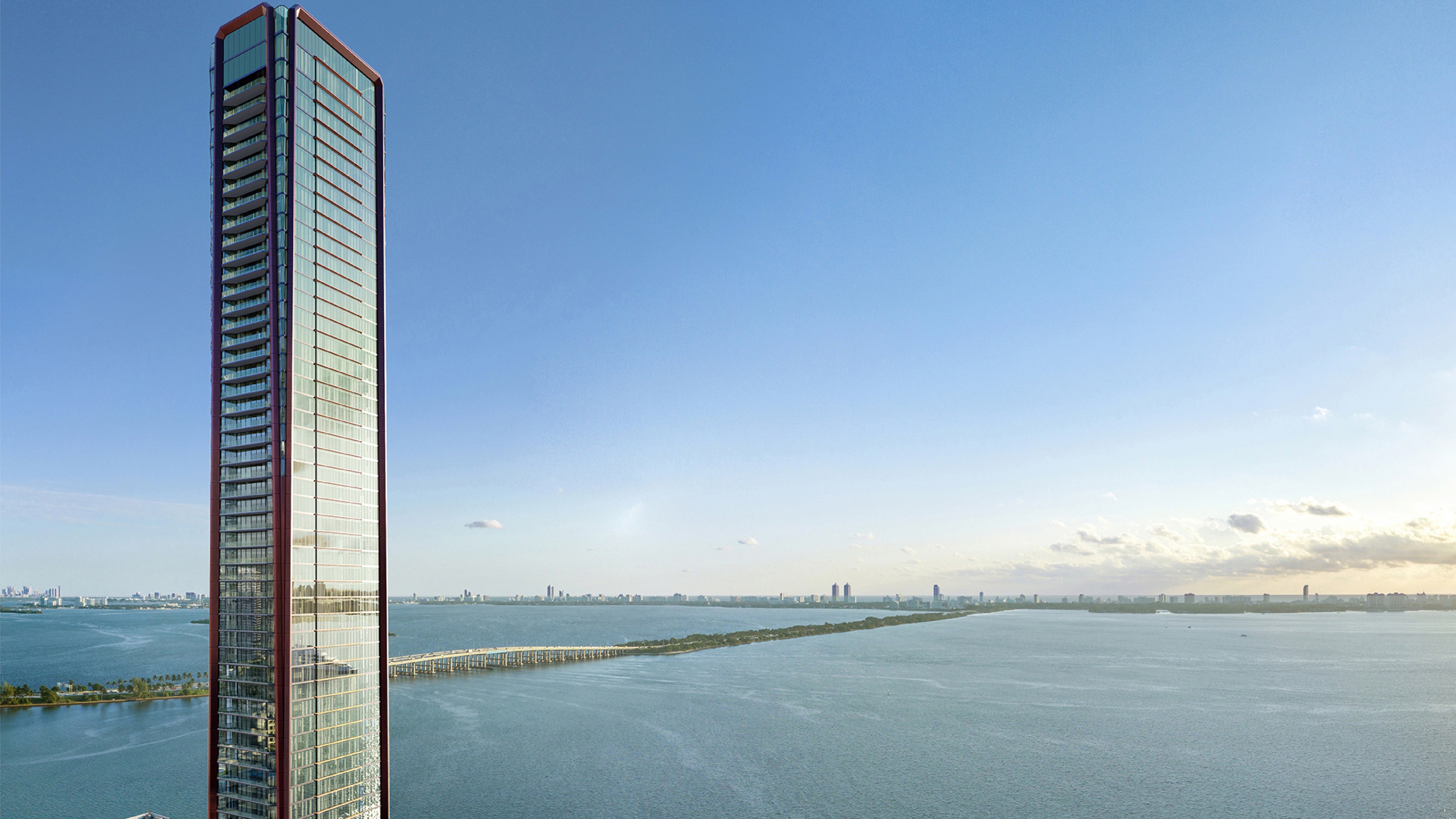
A key driver of this new skyline is Aria Reserve Miami, a pair of 62-story towers on one of the last remaining direct bayfront sites in the urban core. Marketed as the tallest residential waterfront dual towers in the United States, Aria Reserve Miami delivers exactly the sort of vertical statement many collectors expect today. The south tower, completed in 2025, offers 10-foot ceilings, private elevators, large flow-through residences and sweeping terraces that capture sunrise and sunset. More than two acres of amenities layer in resort-style pools, a waterfront park, water sports access and indoor wellness spaces that feel as curated as a boutique hotel. For a buyer who wants a contemporary canvas, the combination of scale, ceiling height and Biscayne Bay frontage is hard to replicate elsewhere in the city.
Just to the south, EDITION Edgewater brings the EDITION hotel brand’s hospitality DNA into a pure residential tower. Designed by Arquitectonica with interiors by Studio Munge, the roughly 55-story glass prism is planned with about 185 residences, nearly all enjoying panoramic bay and ocean views. The building is conceived as a calm, almost monochrome backdrop for sophisticated interiors and serious art. Owners can expect a generous amenities program that reads like a five-star resort: a double-height bayfront lobby, spa and wellness facilities, a cinema, multi-sport simulator, pickleball courts, fine dining, guest suites for visiting curators or friends, and a private baywalk connecting directly to Margaret Pace Park. For collectors who value service as much as space, this is Edgewater’s most hotel-like interpretation of home.
At the ultra-boutique end of the spectrum sits Villa Miami, a planned 55-story waterfront tower at 710 NE 29th Street. Here, the density drops dramatically: a limited collection of roughly 70-plus half-floor and full-floor residences, many between 3,000 and 6,000 square feet, each with private elevator entry and wraparound bay views. Architecture by ODP Architects and a cast-bronze inspired exoskeleton give the tower a sculptural presence on the skyline, while Major Food Group curates the entire lifestyle, from an on-site restaurant and private chef services to a Lake Como-style floating pool vessel on Biscayne Bay. A residents-only helipad and private dock speak to buyers who arrive by boat or helicopter, and who expect a building that functions more like a club than a conventional condominium.
Beyond these headliners, Edgewater is already home to design-forward towers like Elysee and Missoni Baia, each with their own aesthetic narrative and interior collaborations. Taken together, the district has become a favored address for buyers who want a primary residence or serious pied-à-terre with museum-scale walls, hotel-level services and the ability to step from a quiet, bayfront apartment into Miami’s cultural program in minutes.
Edgewater particularly suits collectors who prize privacy and water views, who travel often and want quick access to both airports, and who may entertain at home more than they host large parties out. Families and pet owners also gravitate here, thanks to the dog-friendly parkland and the ease of morning walks along the bayfront before the day’s fair openings begin.
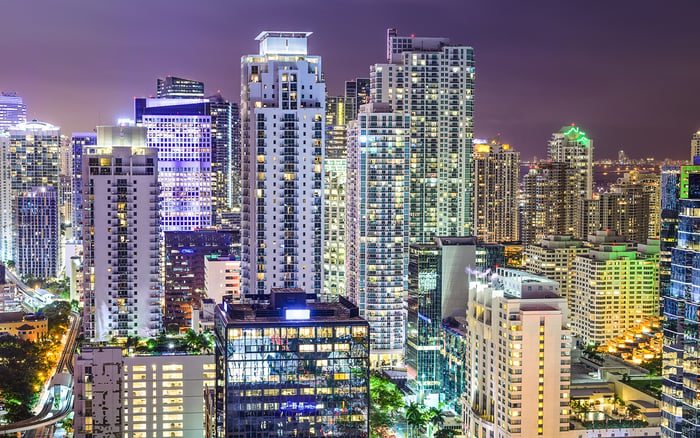
A few blocks inland, just across Biscayne Boulevard from Edgewater, Midtown offers an entirely different way to live in the same cultural ecosystem. Master-planned on former industrial land, the neighborhood was designed to be compact, human-scaled and walkable, with residential buildings wrapped around a grid of cafés, bistros, boutiques and casual public spaces. It is connected to the Design District on the north and Wynwood on the south, giving residents direct access to galleries, studios and art events without relying on a car.
On a typical day in season, Midtown’s sidewalks feel like a creative village. Collectors and advisors cross paths with designers, tech founders and visiting curators over coffee. The neighborhood hosts contemporary art fairs and pop-up exhibitions, and many residents walk or bike to openings in neighboring Wynwood or the Design District. For buyers used to New York’s SoHo or London’s Shoreditch, Midtown offers a familiar blend of street life, loft-style interiors and an informal yet polished social scene.
Condo product here reflects that mood. The Standard Residences, Midtown Miami is a 12-story, design-driven tower that serves as the hotel brand’s first purely residential project. Rather than grand ballrooms or valet courts sized for limousines, The Standard focuses on clever layouts and social spaces: studios to two-bedroom units delivered finished, flexible rental policies for owners who split their time between cities, a tropically landscaped rooftop with resort-style pool and bar, co-working lounges, a pickleball court, fitness and yoga studios, and a sunset terrace that acts as an open-air living room. For art professionals who come to Miami frequently for fairs and projects, the building feels like an always-on members’ club where neighbors share overlapping creative interests.
Around it, new projects and proposals are expanding Midtown’s inventory. Design-forward towers under planning continue to push architecture and amenities, often highlighting walkability as much as square footage. While Midtown is not directly on the water, higher-floor residences still capture long views toward Biscayne Bay and the skyline, and many buyers see that as a fair trade for being able to step out of their lobby and immediately into a network of galleries, restaurants and shops.
Daily conveniences are a major advantage. Within a short walk, residents can pick up groceries at national organic markets, browse furniture and lighting showrooms, book a class at a boutique fitness studio or meet friends for drinks at a neighborhood bar. An expansive padel club and sports-focused concepts serve buyers who see wellness and social sport as part of their lifestyle, and pet owners benefit from pocket parks and dog-friendly promenades. For a younger collector or for someone buying a second or third residence to use heavily during the art season, Midtown’s energy and practicality can be exactly the right fit.
The Miami Design District is the most curated of the three neighborhoods. Conceived as an epicenter for fashion, design, art and dining, its roughly 18-block grid is lined with flagship boutiques from the world’s top luxury houses, architect-designed façades, major public art installations and destination restaurants. Walking here feels less like passing storefronts and more like moving through an open-air museum, where everything from the paving to the parking garages has been intentionally designed.
For years, the Design District’s challenge for would-be residents was supply. This was primarily a commercial and cultural district with only a handful of residential options at its edge, such as Quadro and Baltus House. Those buildings introduced the idea of living next to the District’s galleries and showrooms rather than just visiting, but they were relatively modest in scale compared to the new generation of branded towers now being planned.
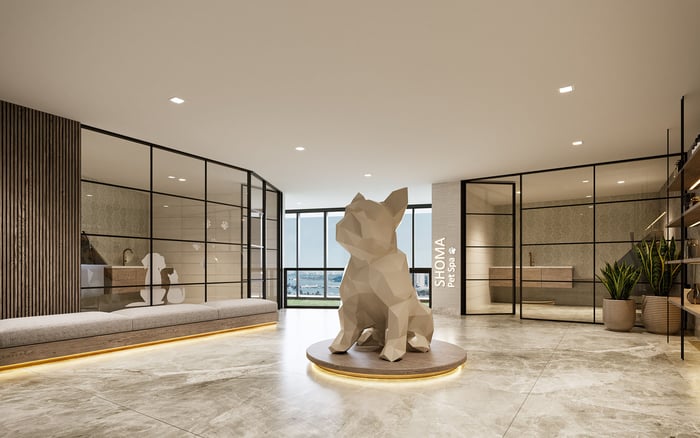
At the nexus of Midtown and the Design District, Miami Tropic Residences is the clearest expression of that next step. Developed by Terra and Lion Development Group with architecture by Arquitectonica and interiors by Yabu Pushelberg, this roughly 49-story tower will offer around 329 residences within easy walking distance of both districts. The project is anchored by Michelin-starred chef Jean-Georges Vongerichten, whose culinary vision informs everything from a private residents’ restaurant and poolside dining to pantry stocking and in-residence catering. Amenity levels are conceived almost like a cultural center: a private art gallery and sculpture garden, podcast and content studios, co-working spaces, a rooftop library, wellness and spa zones and terraces that look out to the skyline and bay. A dedicated crosswalk is planned to link directly into the heart of the Design District, effectively making the neighborhood’s plazas and art installations an extension of residents’ front yard.
Looking slightly ahead, Kolter Group’s planned twin-tower project often referred to as the Residences at the Design District is expected to bring a new layer of luxury to Biscayne Boulevard at the seam between Edgewater and the District. Early plans call for two approximately 20-story towers with around 164 residences, each designed with multiple exposures for light and views, plus amenity decks with pools, spa facilities, co-working spaces and even a full-size tennis court and indoor golf simulator. The vision is to create a sculptural pair of buildings that function as a gateway to the Design District while also offering resort-level comforts to residents who want to be steps from luxury retail and cultural programming rather than directly on the bay.
Living here is about immersion. A resident might leave home in the morning for a quick coffee and pass a dozen pieces of public art, a Buckminster Fuller dome, a façade by a star architect and window displays from the latest runway collections within a five-minute stroll. Groceries, galleries, private collections and Michelin-noted dining all sit within a compact radius. The trade-offs are part of the appeal: fewer super-tall condo towers, a more intimate scale, and the expectation of paying a premium price per square foot for such proximity. For the collector who sees their wardrobe, design objects and art as one continuous collection, the Design District feels less like a neighborhood and more like a curated lifestyle.
Taken together, Edgewater, Midtown and the Design District form Miami’s most art-centric residential cluster, yet each speaks to a different buyer profile.
Choose Edgewater if bayfront living and privacy are non-negotiable. Here, towers like Aria Reserve Miami, EDITION Edgewater and Villa Miami offer house-like square footage in the sky, long water views and amenity programs that can easily keep you on property for days. It suits buyers who travel often, who want fast access to both airports and who prefer to host dinners in a controlled, residential setting rather than always entertaining in restaurants.
Choose Midtown if you want to live inside the social fabric of Miami’s contemporary art scene. The neighborhood’s walkability means you can step out of your lobby and be in a gallery opening, a design talk or a casual wine bar in minutes. Buildings like The Standard Residences are designed for flexibility, making it easy to use an apartment part of the year, rent when you are away or maintain a creative live-work setup. This is also an attractive option for younger buyers who are building their collection and want everyday life to feel dynamic and connected.
Choose the Design District if your ideal day involves visiting galleries, trying a new tasting menu and browsing limited-edition furniture without ever getting in a car. Future-focused projects like Miami Tropic Residences and the planned twin towers on Biscayne Boulevard aim squarely at the connoisseur who values design as much as square footage. You may sacrifice a direct bayfront address, but gain immediate access to one of the most concentrated districts of luxury fashion, jewelry and art in the Americas.
For many high-end buyers, the answer is not strictly either-or. It is increasingly common to see portfolios that combine a primary residence in Edgewater with a smaller, highly walkable apartment near Midtown or the Design District for peak art weeks. Because the three neighborhoods sit so close together, a driver can move between them in ten minutes or less outside of rush hour, keeping your social life and collection management fluid across multiple properties.
Whichever neighborhood you favor, working with a specialist who tracks pre-construction timelines, inventory releases and off-market opportunities across these districts is essential. A seasoned advisor can help you align view corridors, building services, art-wall potential and even private storage options with the specific needs of your collection.
To explore tailored options across Edgewater, Midtown and the Design District and to see how these towers compare to the wider South Florida market, connect with the team at MILLION Luxury for confidential guidance.
Which neighborhood offers the best bay views for art collectors?
Edgewater is the clear choice for direct bayfront exposure. Towers like Aria Reserve Miami, EDITION Edgewater and Villa Miami sit directly on Biscayne Bay, with most residences oriented to maximize sunrise and sunset vistas. Midtown and the Design District can still deliver strong skyline and partial bay views from higher floors, but they prioritize walkability and cultural immersion over waterfront frontage.
Where should I live if I want to walk to galleries and Art Basel events?
Midtown and the Design District are ideal if you want to minimize car use during art season. From Midtown you can walk or bike to Wynwood, the Design District and many fair venues, while the Design District puts you among galleries and luxury boutiques all day. Edgewater residents typically enjoy a short drive or ride-share to the same events, returning home to a quieter bayfront environment at night.
How do price points compare between Edgewater, Midtown and the Design District in 2025?
As of late 2025, top-tier new and pre-construction towers in all three neighborhoods generally start in the low seven figures for smaller residences, with larger units and penthouses running well into the multi-million range. Bayfront projects like Aria Reserve Miami and Villa Miami tend to command a premium for direct water exposure, while ultra-boutique or chef-branded developments by the Design District also achieve high prices per square foot. Exact figures vary by line, floor and delivery timeline, so a building-by-building analysis is essential.
Are these neighborhoods suitable for families and pets?
Yes, though they offer different strengths. Edgewater feels most traditionally residential, with larger residences and green space at Margaret Pace Park for children and dogs. Midtown and the Design District provide a more urban, vertical lifestyle, but many buildings include kids’ rooms, play areas and pet-friendly policies, and families who value walkability and cultural access often find them appealing.
What is the most efficient way to compare specific buildings before committing?
Begin by ranking your non-negotiables: bayfront vs walkable, service level, rental flexibility, ceiling heights, parking arrangements and desired amenity mix. Then review shortlists of buildings in each neighborhood that match those criteria, paying attention to developer track record and delivery dates. Whenever possible, tour sales galleries, model residences and surrounding streets at different times of day to gauge light, noise and traffic. A specialist at MILLION Luxury can then prepare detailed side-by-side comparisons of your top choices, including off-market and pre-release opportunities.
If branded residences are on your mind — as a home or as an allocation — we would be glad to share what we are seeing, privately.
Begin a quiet conversation