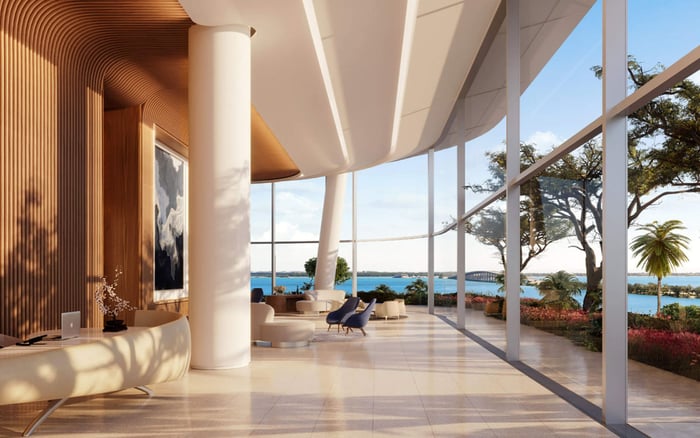
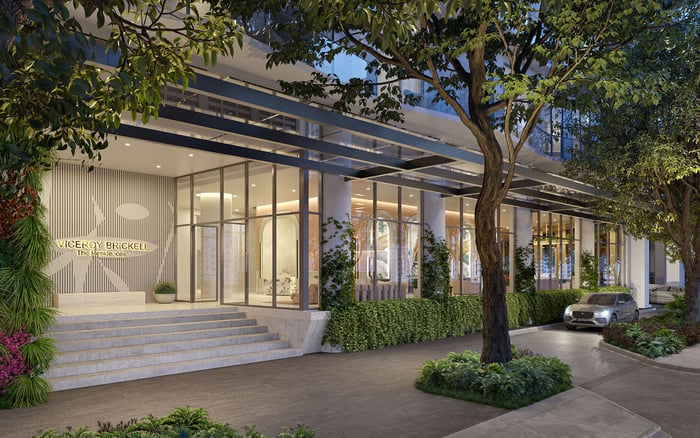
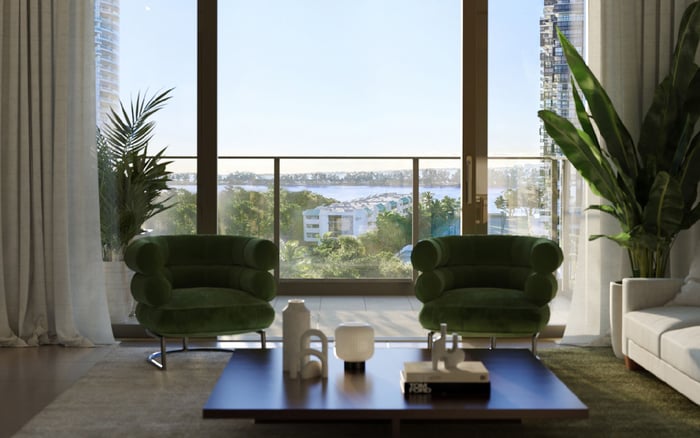
A buyer-focused guide to evaluating view-corridor risk at 888 Brickell by Dolce & Gabbana, from parcel mapping and legal protections to view premiums, resale liquidity, and the limits of high-floor security.
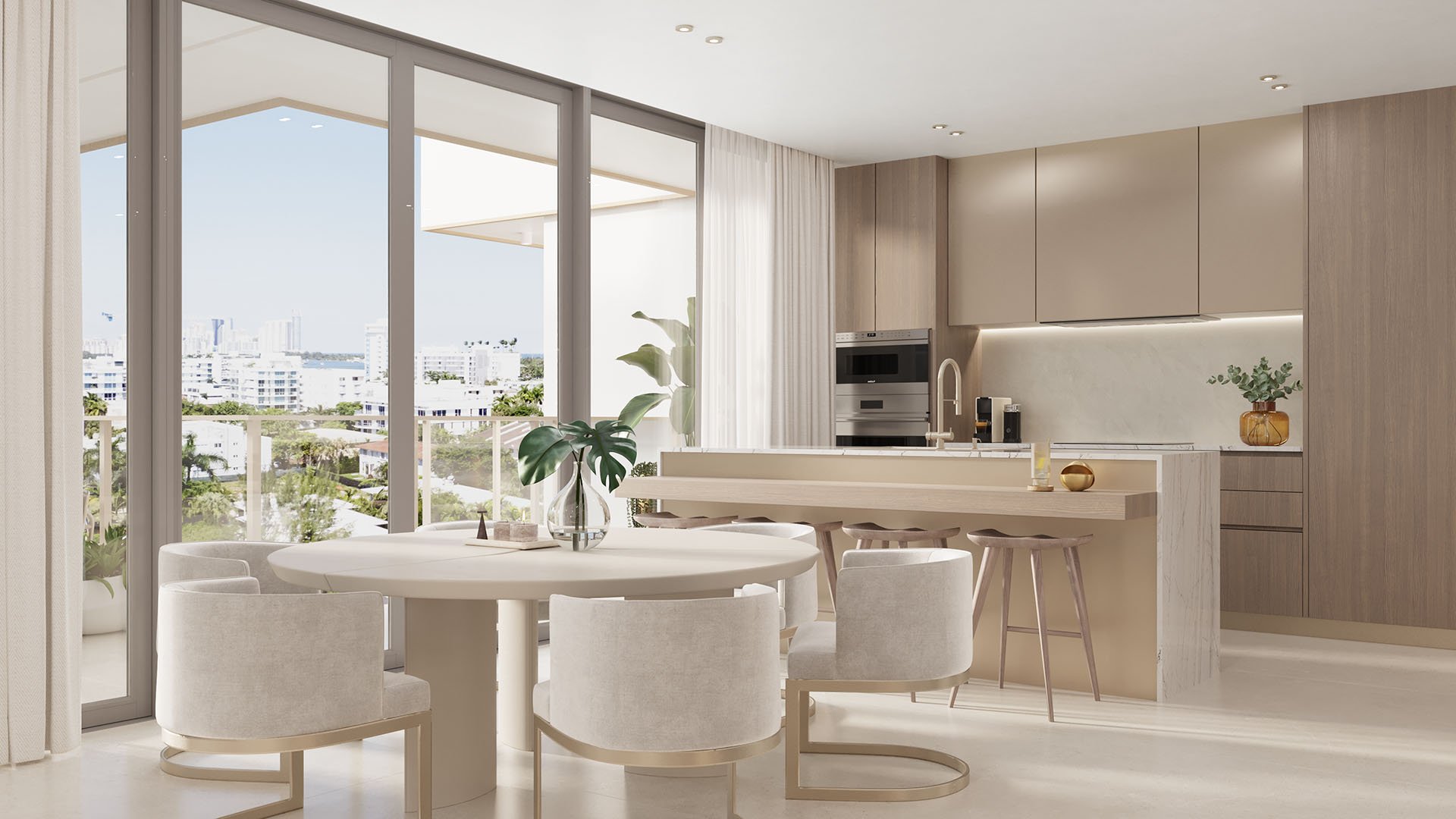
For a buyer considering 888 Brickell by Dolce & Gabbana, the initial appeal is clear: design pedigree, brand narrative, vertical living, and the prestige of a Brickell address. The more sophisticated question, however, is not simply what the view looks like today. It is what that view depends on.
In a dense, high-rise district, a view is not a static amenity. It is an exposure to future development. A water view, skyline view, sunset view, and city view may each carry a different risk profile, even within the same building. The most valuable diligence begins by separating the emotional pull of an image from the legal and physical conditions that allow that image to exist.
This is especially important in Brickell, where branded residences, finance-driven demand, and vertical redevelopment can converge on the same few blocks. Buyers comparing 888 Brickell by Dolce & Gabbana with other branded residences such as Cipriani Residences Brickell or St. Regis® Residences Brickell should treat view-corridor risk as part of the purchase analysis, not as an afterthought.
The first question is direct: which lines are most exposed to future construction? Not every direction carries the same level of risk. Views toward the interior urban grid may rely on parcels that are underbuilt, low-rise, surface-oriented, or otherwise capable of changing. Open water exposures may feel more durable, but even those should be evaluated by angle, distance, and what lies inside the view cone.
A buyer should ask the sales team or adviser to distinguish unit lines by exposure, not merely by floor. A high-floor residence facing a development-prone corridor may carry more risk than a slightly lower residence with a cleaner angle over a legally constrained space. The key is to avoid treating height as a cure-all. Higher floors can reduce obstruction risk, but they do not eliminate it if a future tower is comparable in scale or positioned directly in the line of sight.
This line-by-line review also matters for water-view premiums. If a premium is being paid for water, skyline, sunset, or city outlooks, those categories should be priced separately. A narrowed skyline view is not the same as a full obstruction in front of a primary room, and the market may respond differently to each.
A serious buyer should request a parcel-by-parcel map of the surrounding sites that could support future towers affecting views from 888 Brickell by Dolce & Gabbana. The map should identify low-rise buildings, parking fields, underbuilt parcels, and any sites where future vertical development could alter the visible corridor.
The question is not whether every nearby parcel will be redeveloped. The question is whether your view depends on parcels remaining as they are. If a view is open only because a neighboring site has not yet been built to its potential, then the buyer is paying for a condition that may be temporary.
For context, buyers often compare new Brickell offerings across several projects, including The Residences at 1428 Brickell and Baccarat Residences Brickell. That comparison should go beyond amenity decks and finish packages. It should include each building’s orientation, surrounding parcel conditions, and the vulnerability of its premium lines.
The most important question is whether the view is legally protected or simply available today. Buyers should ask whether any view easements, protected setbacks, public open spaces, or other legal constraints preserve a specific corridor. If the answer is no, the current openness may be a market condition rather than a protected property attribute.
This distinction should be made in writing. A buyer may love a rendering, a model-unit photograph, or a sales-gallery presentation, but those materials should not be mistaken for a guarantee of permanent views. The prudent request is written clarification that renderings, photography, and marketing visuals do not promise that the surrounding skyline will remain unchanged.
An attorney or experienced broker should review zoning, development rights, and known planning context around the building before a buyer relies on any advertised view. In dense luxury districts, design can be curated, but the skyline is negotiated by land, rights, timing, and future capital.
Renderings can be useful, but only if the assumptions are understood. Buyers should ask what height, massing, setback, and surrounding-building assumptions were used when any view imagery was prepared. Were nearby parcels shown as they exist today, or were possible future towers considered? Was the skyline modeled over a longer horizon, or presented only as a current-condition lifestyle image?
The answers may not produce certainty, but they will reveal the quality of the diligence. A sophisticated presentation should be able to explain which corridors are more resilient, which are more speculative, and which may be vulnerable to partial or full obstruction. The distinction matters. A partial obstruction might compress a skyline panorama while leaving light and distance intact. A full obstruction could place a future tower directly in front of a key room or terrace.
This is where the conversation shifts from aesthetics to asset protection. View is not simply a pleasure component. It can influence pricing, future resale, and the liquidity of a particular line when competing inventory comes to market.
Buyers should ask how view premiums are priced by floor, line, and exposure. If two residences differ materially in price because one offers a stronger corridor, the premium should be tested against obstruction risk. What portion of the price is attributable to the view? How would the residence compare if that view narrowed? Would the same buyer pool remain engaged if a future tower entered the frame?
The strongest approach is to ask for comparable examples in Brickell where later construction affected views and to understand how resale pricing reacted. The goal is not to predict a precise discount. It is to understand whether the premium being paid today has enough resilience if the surrounding city continues to rise.
This is particularly relevant for buyers who may own through multiple market cycles. A residence purchased primarily for lifestyle may still need to trade well later. Liquidity is often strongest when the view story is easy to explain, defensible, and less dependent on the status of neighboring underbuilt land.
Is view-corridor risk relevant at 888 Brickell by Dolce & Gabbana? Yes. It should be evaluated as both a luxury branded residence and a high-rise asset in a dense urban district.
Are higher floors automatically safer from obstruction? No. Higher floors may reduce risk, but they do not eliminate it if a future tower is comparable in height or directly aligned.
What is the first document a buyer should request? Ask for a parcel-by-parcel map showing nearby sites that could support future towers affecting the view.
Are renderings a guarantee of permanent views? No. Buyers should request written disclosures clarifying that imagery and sales materials do not guarantee future view conditions.
Which exposures require the most scrutiny? Interior urban-grid exposures often deserve close review, especially if open views depend on low-rise or underbuilt parcels.
Should water views and city views be analyzed separately? Yes. Water, skyline, sunset, and city views can each carry different obstruction risk and pricing implications.
What is the key legal question? Ask whether the view is protected by easements, setbacks, public open space, or other constraints, or whether it simply exists today.
Can view loss affect resale value? Yes. A loss or narrowing of view can affect both resale pricing and the liquidity of a specific unit line.
Who should review the view-risk issues? A buyer should involve a broker or attorney familiar with zoning, development rights, and planned projects around the building.
What is the best way to shortlist comparable options for touring? Start with location fit, delivery status, and daily lifestyle priorities, then compare stacks and elevations to validate views and privacy.
If you'd like a private walkthrough and a curated shortlist, connect with MILLION.
If branded residences are on your mind — as a home or as an allocation — we would be glad to share what we are seeing, privately.
Begin a quiet conversation