A buyer-focused guide to how timing, execution and project delivery can alter the true cost of a marina-adjacent luxury residence in South Florida.
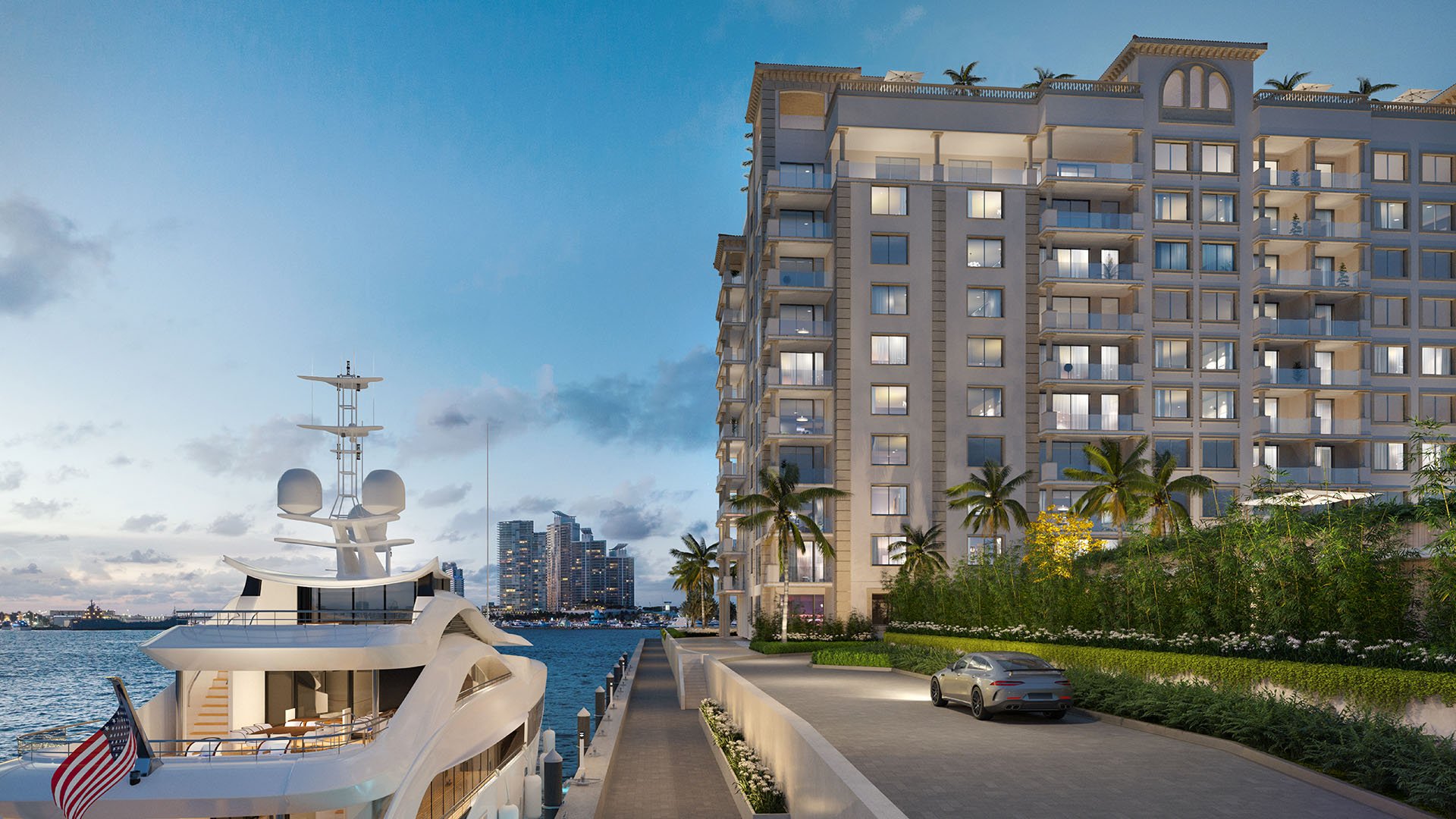
For a South Florida buyer, a marina-adjacent home often starts as a lifestyle decision. Morning light across a basin, proximity to open water, and the ability to move between residence, club, dining room and yacht with minimal friction all create a premium that is emotional as well as financial. Yet the real cost of that home is rarely captured by the purchase price alone.
In a new or recently delivered building, developer delivery risk can quietly change the economics. A residence that appears attractively priced at contract can become more expensive if completion timing shifts, amenity delivery is uneven, closing logistics become compressed or the buyer must bridge between a current home, a temporary residence and a future one. For marina-adjacent property, that exposure can be more pronounced because the value proposition is tied not only to the unit, but also to access, operations, surrounding improvements and the finished feel of the waterfront environment.
This is not a reason to avoid Pre-Construction. It is a reason to underwrite it with the same discipline one would bring to a private business acquisition. The questions are straightforward: what is being promised, what must be delivered for the premium to hold and what is the cost if the timeline changes?
Delivery risk is often discussed as if it were only about whether a building is finished. In practice, the more relevant issue for a high-net-worth buyer is whether the project is delivered in a way that preserves convenience, privacy, quality and optionality.
A delayed completion can add months of carrying costs elsewhere. A rushed closing window can force decisions around financing, furnishings, staff, family scheduling and vessel arrangements. A building that opens before its full service culture is mature may still be beautiful, but it may not yet feel effortless. For buyers accustomed to fully staffed estates, clubs and yachts, that difference matters.
In a Marina setting, the surrounding choreography is especially important. A buyer may be focused on the view, but the lived experience also depends on valet flow, guest arrival, dockside circulation, service access, security posture, construction staging nearby and the pace at which public and private areas settle into their final rhythm. Waterfront real estate asks the developer to deliver more than interiors. It asks for a complete edge condition between land and water.
That is why comparisons across buildings should include both finished and under-construction examples. A buyer considering St. Regis® Residences Bahia Mar Fort Lauderdale may evaluate not only the residence itself, but also how the broader waterfront promise aligns with timing, service expectations and long-term usability.
Time is the most underestimated variable in luxury New-construction. If completion is later than expected, the buyer may continue carrying an existing property, extend a rental, delay a sale, renew club arrangements or adjust yacht logistics. None of these line items may be dramatic on its own. Together, they can change the effective purchase basis.
The reverse can also be true. If a project closes earlier than a buyer expected, capital may need to be deployed sooner. Portfolio liquidity, loan pricing, currency planning, tax coordination and estate structuring may all come into play. For a cash buyer, timing still matters because capital has an opportunity cost. For a financed buyer, timing can influence rate strategy, appraisal timing and the relationship between deposit capital and closing capital.
The most careful buyers create a delivery cushion before signing. They ask what happens if completion occurs later than planned, what happens if closing is accelerated and what personal costs arise under each scenario. This is not pessimism. It is the difference between buying a residence and managing a position.
Fort Lauderdale buyers comparing riverfront, beachside and marina-adjacent inventory often see this clearly. A project such as Riva Residenze Fort Lauderdale may belong in a broader analysis of how waterfront lifestyle, access and delivery timing interact across the city.
The contract is where lifestyle language becomes financial reality. Sophisticated buyers should understand deposit timing, closing triggers, permitted extensions, default provisions, finish specifications, change-order procedures, association documents and the extent to which amenities or waterfront components are tied to the same delivery schedule as the residence.
A marina-adjacent buyer should also distinguish between visual proximity to water and any specific right to use water-related facilities. A view is not the same as dockage. A promenade is not the same as private access. A branded service environment is not the same as a mature operating culture on day one. If any element is central to the buyer’s valuation, it should be reviewed with particular care before the contract becomes binding.
The issue is not whether a sales presentation is elegant. Many are. The issue is whether the agreement, condominium documents and delivery framework support the premium being paid. In the luxury tier, ambiguity is expensive because buyers are not simply purchasing square footage. They are purchasing certainty, privacy and time.
Waterfront and marina-adjacent residences command attention because they compress leisure into daily life. But the premium is strongest when the building operates as intended. That includes arrival, parking, elevators, service entries, management responsiveness, amenity readiness and the quiet confidence that guests and crew know where to go.
In Bay Harbor Islands, for example, buyers weighing Onda Bay Harbor may think carefully about the relationship between waterfront setting, boutique scale and the expected cadence of completion. In Grove Isle, Vita at Grove Isle invites a similar buyer discipline around island living, privacy expectations and the transition from construction to daily use.
The most durable premiums are attached to buildings that feel resolved. A home may be legally delivered before it is socially and operationally settled. For an owner who plans to occupy immediately, that distinction can translate into inconvenience. For an Investment buyer, it can influence rentability, resale narrative and the first impression given to future prospects.
Strong locations can absorb a great deal, but they do not erase delivery risk. Brickell, Miami Beach, Fort Lauderdale, Bay Harbor Islands and other prime South Florida markets each have buyers who value waterfront access, design and service. Yet a strong submarket does not make every timeline equal, and it does not make every delivery experience interchangeable.
A buyer should ask whether the developer has aligned the promise with the practical realities of the site. Is the residence meant for seasonal use, full-time living or a lock-and-leave rhythm? Will the buyer need immediate marina convenience, or is the water view the primary driver? Is the purchase meant to replace a single-family waterfront home, complement a yacht-based lifestyle or serve as a long-term hold?
These answers shape risk tolerance. A seasonal owner may tolerate some early-stage operational settling if the long-term asset is compelling. A full-time resident relocating from an estate may be far less tolerant of incomplete common areas, unresolved service routines or ongoing construction noise. The same project can carry different real costs for different buyers.
Before committing to a marina-adjacent home, the buyer should model the total cost under multiple timing outcomes. The base case is the expected closing. The stress case is delayed delivery. The liquidity case is early or compressed closing. Each version should include housing overlap, taxes, insurance, financing, furnishings, moving, vessel logistics, professional fees and the value of the buyer’s time.
Next, the buyer should review what features are essential to the premium. If the answer is a particular view corridor, private outdoor space, marina access, branded service, wellness programming or proximity to a preferred club or school, those items should be separated from general marketing language and reviewed in writing.
Finally, the buyer should think ahead to resale. Future buyers will ask the same questions: was the building delivered cleanly, does it operate well, does the waterfront experience feel complete and does ownership feel effortless? A well-delivered project can support confidence. A poorly sequenced one can make even an exquisite residence feel costlier than it first appeared.
What is developer delivery risk? It is the risk that timing, construction completion, amenities or operations differ from what a buyer expected when signing a contract.
Why does it matter more near a marina? Marina-adjacent value often depends on access, arrival, water views, service flow and surrounding completion, not just the residence itself.
Can delivery delays change the real cost of a home? Yes. Delays can add carrying costs, temporary housing, financing friction and logistical expenses that are not reflected in the purchase price.
Is Pre-Construction always riskier than resale? It carries different risks. Resale offers more visible certainty, while Pre-Construction requires deeper review of contracts, timing and developer execution.
Should buyers focus only on the unit specifications? No. Common areas, arrival sequence, management, amenities and waterfront functionality can all affect the lived experience and resale perception.
How should a buyer evaluate a promised marina lifestyle? Separate views, access, dockage, services and nearby improvements, then confirm which elements are documented and which are aspirational.
Does a strong location offset delivery risk? A strong location helps, but it does not eliminate timing risk, operational uncertainty or the cost of an uneven handoff.
What should seasonal buyers consider? They should evaluate whether the building will be fully usable during their intended months of occupancy and whether early operations will feel settled.
What should Investment buyers watch most closely? They should consider timing, rentability, carrying costs, first impressions and whether the finished property will support a clear resale story.
What is the best way to reduce delivery risk? Model several timing scenarios, review the contract carefully and compare the project’s promise with the practical requirements of your lifestyle.
For a confidential assessment and a building-by-building shortlist, connect with MILLION.
If branded residences are on your mind — as a home or as an allocation — we would be glad to share what we are seeing, privately.
Begin a quiet conversation