A discreet buyer’s guide to bridge-clearance diligence for Key Biscayne waterfront real estate, with questions for vessels, tides, access routes, insurance, dock planning, and resale positioning.
For a Key Biscayne buyer, the water is not a backdrop. It is often the reason to buy. Yet the most elegant bayfront terrace, the most discreet arrival sequence, and the most generous private dock can lose practical value if a vessel cannot move comfortably through the bridges and channels that shape daily boating life.
Bridge clearance is not a decorative detail. It is a use-case question. A center console, a flybridge yacht, a sportfishing boat with outriggers, a sailboat, and a tender with a hardtop each create different answers. The right question is not simply, “What is the bridge clearance?” It is, “What is the clearance along my intended route, under the conditions in which I actually plan to use the boat?”
That nuance matters in luxury real estate because buyers are not only acquiring a residence. They are buying a rhythm: morning runs by water, spontaneous lunch in another neighborhood, evening returns after dark, guest arrivals, service access, and the quiet confidence that a prized asset can move when desired.
Before falling in love with a waterfront address, assemble a precise vessel profile. Ask for the boat’s air draft, including antennas, radar arrays, hardtops, outriggers, towers, canvas, removable equipment, and any future modifications under consideration. If the vessel is not yet purchased, define the largest realistic boat you may own during your hold period.
This is where many buyers under-ask. A listing may reference boating access, but that phrase can mean very different things. It may be ideal for a tender, comfortable for a center console, limiting for a larger yacht, or incompatible with a sailboat. The meaningful diligence question is whether the property supports your boating plan, not whether it merely sounds nautical.
Buyers comparing the island lifestyle with other prestige waterfront enclaves may consider Oceana Key Biscayne for the Key Biscayne condominium context, then evaluate how a separate docked-vessel strategy would be handled if boating is central to the purchase.
A bridge-clearance answer is only as useful as the route it describes. Ask your broker, marine consultant, or captain to identify the precise path from the property or dock to open water, preferred cruising grounds, fuel, service, and any marina you expect to use. Then ask which bridges, overhead structures, channel restrictions, and timing variables affect that path.
The best question is practical: “If I leave from this address on a typical boating day, where do I encounter my first constraint?” A buyer should know whether the constraint appears immediately, only on a secondary route, only at certain tides, or only for a particular class of vessel.
For some households, a bridge limitation is acceptable because the primary boating asset is kept at a club, marina, or full-service facility elsewhere. For others, the residence itself must function as the operational base. Those are very different ownership models, and they should not be conflated during negotiations.
Clearance is not a single, static number in the way a ceiling height might be. The apparent room beneath a bridge can vary with water levels, vessel load, equipment configuration, and operational judgment. A boat riding higher or lower than expected can change the margin. A tower that folds may solve a problem, while a fixed radar arch may create one.
Ask whether the vessel can pass comfortably, not merely theoretically. A luxury buyer should avoid a lifestyle that depends on nervous inches, perfect timing, or repeated equipment adjustments. The most valuable boating setup is one that feels natural. If every departure requires choreography, that friction belongs in the valuation.
This is especially relevant for buyers moving from urban condominiums such as Una Residences Brickell, where the water view may be immediate but boat logistics are often separated from the residence. In Key Biscayne, the emotional appeal of proximity can make operational details feel secondary. They should be primary.
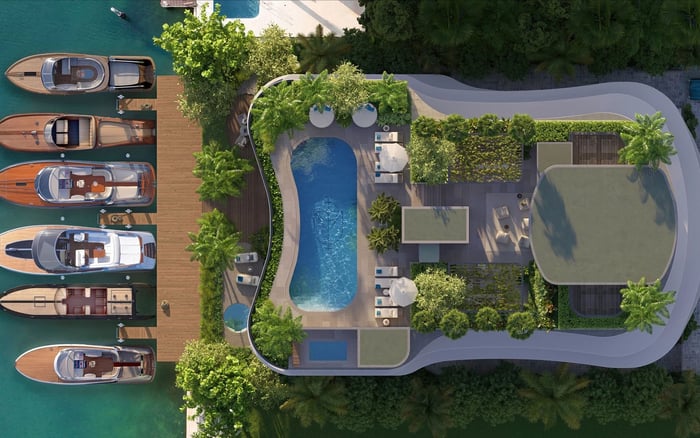
A dock, lift, seawall, or boat slip can be highly desirable, but the presence of boating infrastructure does not answer the bridge question. Ask what size vessel the dock can physically accommodate, what approvals or association rules apply, what insurance considerations may be relevant, and whether the route from that dock suits your vessel.
For single-family buyers, this may involve seawall condition, dock design, lift capacity, setback rules, and future improvement flexibility. For condominium buyers, it may involve assigned slips, waitlists, guest docks, tender storage, association policies, and service access. In both cases, bridge clearance is only one layer in a broader boating-use analysis.
A polished waterfront amenity can be seductive, but ownership quality depends on the least glamorous details: turning radius, depth, current, wind exposure, maintenance access, and the ability to reach fuel or service without inconvenience.
Key Biscayne offers a distinct island sensibility: private, established, recreational, and deeply tied to Biscayne Bay. Still, luxury buyers often compare it with Fisher Island, Coconut Grove, Miami Beach, Surfside, Bay Harbor Islands, Fort Lauderdale, and Palm Beach. Each market offers a different relationship between residence, dockage, bridge exposure, and open-water access.
For example, a buyer drawn to an island-resort setting might also study The Residences at Six Fisher Island, while someone prioritizing a lush waterfront village atmosphere may consider Vita at Grove Isle. These comparisons are not interchangeable, but they help clarify what the buyer values most: privacy, yacht convenience, beach access, schools, club life, or proximity to the city.
The point is not to make every waterfront market compete on the same terms. It is to isolate your non-negotiables before Key Biscayne’s lifestyle appeal takes over the conversation.
Bridge-clearance diligence should be documented. Ask for written confirmation of the assumptions being used: vessel dimensions, route, tide conditions, bridge locations along the route, and any known operational limitations. If a captain or marine professional provides input, keep it with your acquisition file.
Important questions include: What is the maximum air draft that works comfortably on the preferred route? Are there alternate routes? What happens at higher water? Does the boat need equipment lowered? Is nighttime navigation materially different? Where is the nearest practical fuel and service option? Can guests or crew operate the route without stress?
These questions are not adversarial. They are the language of a serious buyer. The most resilient purchases tend to be those in which beauty and utility are reconciled before contract, not discovered after closing.
A property with clear, well-documented boating utility can appeal to a more confident buyer pool. Conversely, a residence marketed broadly as waterfront may face narrower demand if buyers later learn that larger vessels, certain tower configurations, or preferred routes are constrained.
This does not mean a constrained property is weak. It may be exceptional for a smaller boat, a paddle-and-tender lifestyle, or an owner who keeps a yacht elsewhere. The issue is transparency. The more clearly the property’s marine profile is understood, the more elegantly it can be positioned.
A buyer should ask, “If I sell in five years, how will the next buyer understand the boating story?” If the answer is simple, documented, and aligned with the property’s natural audience, bridge clearance becomes a managed variable rather than a hidden objection.
What bridge-clearance question should I ask first? Ask whether your specific vessel can travel the preferred route comfortably under realistic conditions, not just whether boating access exists.
Is bridge clearance the same for every boat? No. Air draft, towers, antennas, outriggers, load, and removable equipment can all affect whether a vessel can pass safely.
Should I rely on listing language about waterfront access? Treat it as a starting point only. Confirm the route, vessel profile, dock conditions, and any operational limits before relying on it.
Does a private dock guarantee useful boating access? No. A dock may be valuable, but bridge clearance, depth, turning room, rules, and service access still need review.
When should I involve a captain or marine consultant? Involve one before contract if boating is central to the purchase. Their practical route review can prevent expensive surprises.
Can tides affect bridge clearance? Yes. Water levels can change the usable space beneath a bridge, so ask how conditions may affect your typical departures and returns.
What if I plan to buy a larger boat later? Diligence should consider your future vessel, not only your current one. A home that works today may not suit tomorrow’s boat.
Do condominium buyers need to ask the same questions? Yes. Ask about slip rights, association rules, guest docks, tender storage, waitlists, and the route from any assigned access point.
Can bridge limits hurt resale? They can narrow the buyer pool if not clearly understood. Transparent documentation helps position the property accurately.
Is Key Biscayne still attractive if my boat stays elsewhere? Yes. Many buyers value the island lifestyle even if their primary yacht is kept at a separate marina or full-service facility.
To compare the best-fit options with clarity, connect with MILLION.
If branded residences are on your mind — as a home or as an allocation — we would be glad to share what we are seeing, privately.
Begin a quiet conversation