Elevator redundancy is less about spectacle than continuity. For staff-ready South Florida residences, the number, placement, and separability of lifts can shape privacy, operating discipline, and the real cost of ownership.
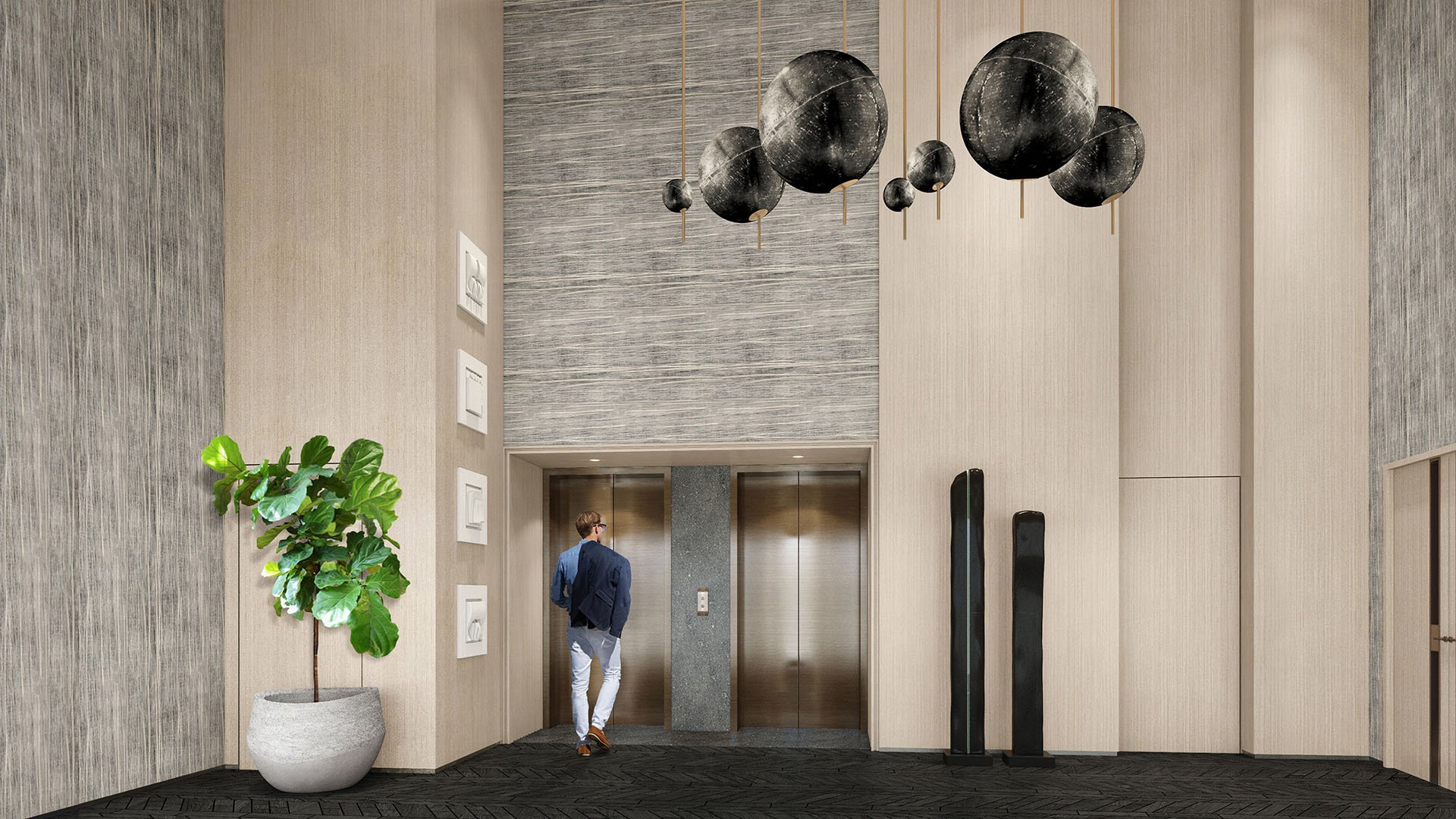
In South Florida, the most expensive residence is not always the one with the highest price per square foot. For a staff-ready household, the deeper cost is often operational: how easily the home can be run, how discreetly people and goods can move, and how rarely the owner’s day is interrupted by maintenance, deliveries, security, catering, housekeeping, family logistics, or guests.
Elevator redundancy sits quietly at the center of that equation. It is not simply a question of whether a residence has a private elevator. The more revealing question is what happens when one elevator is occupied, reserved, being serviced, or simply inconvenient for the task at hand. In a residence designed for serious use, vertical circulation becomes infrastructure, as consequential as parking, service entries, back-of-house storage, and staff accommodations.
This is why sophisticated buyers increasingly evaluate lift strategy with the same care they once reserved for views and finishes. A redundant elevator plan can protect privacy, reduce friction, and make a residence feel composed even when it is fully staffed, fully entertained, and fully lived in.
A staff-ready home runs on parallel rhythms. Owners may be arriving from dinner while housekeeping is turning bedrooms. A chef may need to move provisions from a garage or service area while guests are using the main arrival sequence. A driver, nanny, estate manager, personal trainer, or security professional may need access without passing through the residence’s most social rooms.
When all of those movements depend on one vertical route, the home becomes vulnerable to bottlenecks. The issue is not always dramatic. More often, it is subtle: waiting, rescheduling, awkward crossings, or service work pushed into less convenient hours. Over time, those compromises become a real cost, measured in staff hours, owner frustration, and diminished privacy.
In a Brickell tower environment, for example, residences such as St. Regis® Residences Brickell invite buyers to think beyond skyline drama and ask how daily arrivals, service calls, and guest flow are separated in practice. The right answer depends on the residence, but the question itself is essential.
Elevator redundancy can take several forms. It may mean multiple elevators serving a residence or a limited group of residences. It may mean a dedicated service elevator distinct from the primary arrival path. It may mean separate staff and owner circulation within a larger private home. In some cases, it may mean a private elevator paired with a secondary route, allowing the household to keep functioning when one access point is unavailable.
For buyers, the key is to separate prestige language from practical capability. A private elevator lobby can be elegant, but it does not automatically solve the service problem. A separate service elevator can be valuable, but only if it connects logically to the rooms and storage zones where staff actually work. A secondary stair can be useful, but only if it is realistic for day-to-day operations and not merely a code or emergency feature.
The strongest residences treat vertical circulation as an ecosystem. Main arrivals feel calm and ceremonial. Service movement feels efficient and invisible. Staff can work without crossing the owner’s life unnecessarily. Guests are not made aware of the machinery behind the experience.
Before falling in love with a lobby or a terrace, a buyer should walk the residence as if it were already occupied. Where does luggage go after airport arrival? How do groceries reach the kitchen? Can a housekeeper access linen storage without entering a formal entertaining zone? Can a chef receive provisions during a dinner party? Can service professionals move through the building without becoming part of the owner’s social choreography?
These questions are especially relevant in Miami Beach, where lifestyle expectations often include entertaining, wellness routines, beach days, family guests, and seasonal hosting. At The Perigon Miami Beach, the conversation for a serious buyer should include not only the residence’s aesthetic appeal, but also how the building’s vertical logic supports the household behind the scenes.
The same discipline applies across Sunny Isles Beach, Fisher Island, Palm Beach, Coconut Grove, Fort Lauderdale, and Boca Raton. The geography changes, but the operating question is constant: can the residence support a polished life without requiring constant improvisation?
The real cost of a staff-ready residence includes the time required to operate it. If deliveries must be scheduled around owner arrivals, if staff must wait for shared access, or if vendors need more supervision because movement through the residence is exposed, the property is quietly extracting time from the household.
Redundancy can reduce that cost. It can make staff scheduling more flexible. It can allow maintenance to occur with less disruption. It can protect a formal entertaining sequence while work continues elsewhere. It can also preserve the emotional quality of ownership, because the home feels serene even when many people are making it function.
This is not a call to overbuy. More elevators are not automatically better. Each lift carries its own implications for space planning, association costs, maintenance expectations, and long-term management. The point is alignment. A rarely used pied-à-terre may not require the same circulation strategy as a full-time, staff-supported residence with children, guests, pets, wellness professionals, and frequent entertaining.
This is where the most disciplined clients slow down. They ask whether the residence can sustain the life they intend to lead, not merely photograph the life they hope to project.
In a high-rise, elevator redundancy is often about shared building infrastructure, private access, and the relationship between owner and service paths. In an estate or single-family home, it may be about internal residential lifts, separate staff stairs, garage-to-bedroom movement, or the ability to support multigenerational living without compressing everyone into one route.
The hierarchy of movement matters. Owners should have the most composed path. Guests should have the most intuitive path. Staff should have the most efficient path. Vendors should have the most contained path. When those paths are blurred, the residence may still be beautiful, but it becomes harder to operate discreetly.
On Fisher Island, where privacy is part of the underlying value proposition, projects such as The Residences at Six Fisher Island make this question especially important. The highest expression of privacy is not isolation. It is choreography that allows service and hospitality to happen without spectacle.
Sunny Isles Beach presents a different but equally relevant lens. In tall oceanfront living, buyers evaluating Bentley Residences Sunny Isles should consider how vertical movement supports the household from parking to residence to amenity use. The more elevated the lifestyle promise, the more important it is that the infrastructure keep pace.
A buyer does not need to become an engineer to underwrite elevator redundancy well. The best questions are practical. Which elevators serve the residence? Which routes are available to staff? How are deliveries handled? What happens during service or maintenance? Are there peak times when wait times or access conflicts become likely? Can vendors reach mechanical, storage, kitchen, or utility areas without crossing primary living spaces?
The answers should be tested on a plan and, whenever possible, through an in-person walk-through. Marketing language may describe privacy, but circulation proves it. A residence that feels effortless during a showing should also feel effortless during a catered dinner, a family arrival, a housekeeping rotation, and a service appointment.
For South Florida’s most discerning buyers, elevator redundancy is not a minor technicality. It is a way of pricing composure. A home that moves people well often lives better, staffs better, and protects its owner’s time more effectively than one that simply looks more dramatic on arrival.
Why does elevator redundancy matter in a luxury residence? It protects privacy and continuity by giving owners, guests, staff, and service providers more than one way to move through the property.
Is a private elevator the same as elevator redundancy? Not necessarily. A private elevator can enhance arrival, but redundancy depends on whether there is a workable secondary or service path.
What is the main risk of having only one vertical route? One route can create delays, awkward crossings, and scheduling friction when the residence is actively staffed or frequently entertained.
Should every South Florida buyer prioritize multiple elevators? No. The priority depends on how the residence will be used, including staffing, guest frequency, family needs, and service expectations.
How should buyers evaluate service access? They should trace how groceries, luggage, staff, vendors, and maintenance teams move from arrival points to working areas.
Does elevator redundancy affect resale appeal? It can matter to buyers who value privacy and operational ease, especially in residences intended for full-time or staff-supported living.
Is this more important in towers or single-family homes? It matters in both. Towers rely on building circulation, while large homes depend on internal routes and separation of household functions.
Can too many elevators be inefficient? Yes. Additional lifts can affect space planning and management, so the goal is appropriate redundancy rather than unnecessary complexity.
What should be reviewed before signing a contract? Buyers should review elevator access, service routes, delivery procedures, maintenance protocols, and how each path connects to daily living areas.
What is the simplest test for a staff-ready residence? Imagine a busy day with guests, deliveries, housekeeping, and owner arrivals occurring at once, then ask whether the home still feels calm.
When you're ready to tour or underwrite the options, connect with MILLION.
If branded residences are on your mind — as a home or as an allocation — we would be glad to share what we are seeing, privately.
Begin a quiet conversation