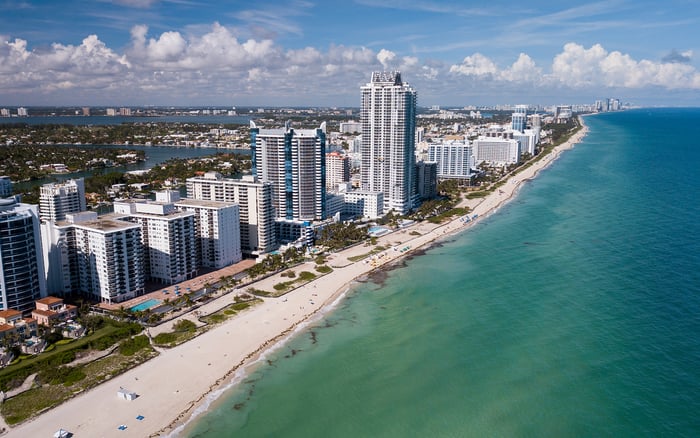
A discreet buyer’s guide to the homestead questions luxury purchasers should raise before committing to Miami Beach real estate, from residency intent and title structure to legacy planning and liquidity.

For the luxury buyer, Miami Beach is rarely a simple acquisition. It may be a primary residence, a seasonal address, a family gathering point, a privacy asset, or part of a broader wealth plan. That is why homestead strategy should not be treated as paperwork after closing. It belongs in the earliest conversation, ideally before the offer is structured.
The essential question is not only whether a residence is beautiful. It is whether the ownership plan, personal intent, title structure, tax posture, and estate considerations are aligned before money becomes hard and timing compresses. A buyer considering The Perigon Miami Beach, for example, may be focused on architecture, views, and service. The more strategic buyer also asks how the purchase will function inside a long-term personal balance sheet.
This is not a substitute for legal or tax advice. It is a buyer’s framework for conversations with counsel, a CPA, a wealth advisor, and a trusted real estate advisor before selecting the final structure.
The first question is deceptively simple: will this Miami Beach home be a true primary residence, a second home, or an asset used in another manner? The answer can influence the entire discussion. A buyer who plans to relocate personal life, family routines, and financial identity to South Florida is in a different position from a buyer who wants a winter residence while maintaining a principal life elsewhere.
Ask your advisory team to define the practical indicators that support your intended use. Where will you spend meaningful time? Where will essential records point? How will family, business, and travel patterns be documented? Luxury buyers often lead complicated lives across multiple jurisdictions, and ambiguity can create future friction.
For residences such as Shore Club Private Collections Miami Beach, the lifestyle proposition may be immediate. Homestead planning asks a colder question: does the way you intend to live match the way you intend to own?
Title is not merely administrative. It is one of the most consequential decisions in a luxury purchase. Ask whether the property should be held individually, jointly, through a trust, through another structure, or through a combination your advisors consider appropriate. Each path may carry different implications for privacy, financing, succession, control, and potential homestead treatment.
Do not wait until closing week to resolve this. By then, lender requirements, transfer logistics, entity documents, and estate planning coordination can collide. The better approach is to ask early: if this residence is expected to serve as a primary home, does the proposed title structure support that objective? If the buyer is married, has children from prior relationships, or uses trusts in other assets, the question becomes even more delicate.
A high-service condominium such as The Ritz-Carlton Residences® Miami Beach may feel turnkey from a lifestyle perspective. Structurally, however, the ownership decision still deserves bespoke review.
Many buyers think of homestead strategy as a yes-or-no issue. In practice, timing can be just as important. Ask what needs to happen before closing, immediately after closing, and during the first ownership year. Ask whether any deadlines, documentation steps, or residency signals should be managed in sequence.
The luxury market often moves on compressed timelines. A waterfront condominium may be identified during a short visit, negotiated quickly, and scheduled for closing while the buyer is still coordinating a sale, financing, family logistics, or a move from another state or country. That pace can be efficient, but it can also create gaps if homestead planning is left behind.
Waterfront buyers are especially prone to focusing on the sensory details: sunrise exposure, terrace depth, marina proximity, beach access, and arrival experience. Those factors matter. Yet the quiet administrative calendar can matter as well.
Homestead strategy is not only about the buyer’s current year. It can also intersect with succession, inheritance, family protection, and control. Ask your estate attorney whether the desired ownership plan is consistent with your will, trust documents, marital planning, and family objectives.
This question is particularly important for buyers acquiring a Miami Beach residence as the family’s emotional center. A property may be intended as a gathering place for children and grandchildren, or as a long-term anchor for a spouse. The legal structure should reflect that intention without creating avoidable conflict later.
For some buyers, the correct answer may be simple. For others, particularly those with blended families, international assets, business holdings, or philanthropic commitments, the answer may require refinement. The point is not to complicate the purchase. It is to prevent the residence from being planned in isolation.
Even the most personal residence is still an asset. Ask how the homestead strategy interacts with future liquidity. If you decide to sell, refinance, gift, transfer, or change use, what should be reviewed before acting? If the residence becomes less central to your life, how should the advisory team revisit the structure?
Investment thinking is not limited to rental yield or appreciation. In the ultra-premium market, investment also means optionality, clean documentation, and the ability to make decisions without discovering that the original structure no longer fits.
A buyer comparing oceanfront Miami Beach with nearby enclaves may evaluate a residence through a lifestyle lens first. The disciplined buyer also asks how a future sale or change in residency might affect the overall plan.
A homestead conversation should not be delegated to one person by default. Ask who needs to participate. At a minimum, many luxury buyers will want input from a real estate attorney, tax advisor, estate planning counsel, and wealth advisor. If financing is involved, the lender’s requirements should also be coordinated early.
The most common mistake is sequential advice. One professional gives an answer, then another revises it, and then the contract timeline forces compromise. A better structure is a short, focused advisory call before the offer or during the inspection and diligence period. The goal is not to debate theory. The goal is to align title, intent, documentation, and timing.
The best purchasing decisions tend to share a common quality: they make room for elegance and discipline at the same table.
Miami Beach carries its own rhythm. Condominium rules, building culture, service expectations, privacy priorities, and neighborhood identity all shape the lived experience. Homestead strategy should be considered alongside these realities, not apart from them.
Ask whether the building’s policies match your intended use. Ask whether your travel pattern is consistent with the way you are describing the residence. Ask whether family members will use the home, whether staff or advisors need access, and whether any planned renovations or furnishing timelines affect occupancy expectations.
The most sophisticated buyers do not separate lifestyle from structure. They understand that a residence in Miami Beach is at once a personal sanctuary, a family platform, and a strategic asset.
Before signing, ask these questions in writing:
What is my intended use of the property? Who will own it? Does the title structure align with my estate plan? What must be completed before closing? What must be documented after closing? Who is responsible for filings, calendar items, and follow-up? What happens if my use changes in the future? How does the plan affect privacy, financing, family control, and exit flexibility?
None of these questions diminish the romance of buying in Miami Beach. They protect it. When the legal, tax, and ownership strategy is clarified early, the buyer can return attention to the qualities that drew them to the property in the first place: light, water, architecture, service, and a more intentional way of living.
Should I discuss homestead strategy before making an offer? Yes. The earlier the conversation begins, the easier it is to align title, timing, and advisory input before the closing calendar accelerates.
Is homestead strategy only a tax issue? No. It may also touch estate planning, ownership structure, family objectives, privacy, and future flexibility.
Can a second home be treated the same as a primary residence? Not necessarily. Ask your advisors to evaluate how your actual use and documentation support the role you intend for the property.
Does title structure matter for a luxury condo purchase? Yes. Individual ownership, joint ownership, trusts, and other structures should be reviewed before the contract is finalized.
Who should advise me on homestead questions? A real estate attorney, CPA, estate planning counsel, and wealth advisor can each play a distinct role.
Should international buyers ask different questions? They should ask how residency intent, ownership structure, tax exposure, and estate planning interact across jurisdictions.
Can I change my strategy after closing? Possibly, but changes may require legal, tax, lender, and documentation review. It is better to plan correctly at the outset.
Do condominium rules affect the conversation? They can. Building policies, access, occupancy patterns, and family use should be considered alongside the ownership plan.
Is Miami Beach different from other South Florida markets? The core questions are similar, but Miami Beach lifestyle patterns, building cultures, and buyer profiles often make planning more nuanced.
What is the best way to shortlist comparable options for touring? Start with location fit, delivery status, and daily lifestyle priorities, then compare stacks and elevations to validate views and privacy.
For a tailored shortlist and next-step guidance, connect with MILLION.
If branded residences are on your mind — as a home or as an allocation — we would be glad to share what we are seeing, privately.
Begin a quiet conversation