A discreet buyer-oriented look at why Faena Residences Miami Downtown Miami, St. Regis® Residences Brickell, and The Surf Club Four Seasons Surfside can sit together on an ultra-luxury South Florida short list.
For a certain South Florida buyer, the first short list is rarely built around square footage alone. It is built around rhythm, privacy, access, and the more revealing question of how a residence will feel on a Tuesday morning as much as on a holiday weekend. That is why Faena Residences Miami Downtown Miami, St. Regis® Residences Brickell, and The Surf Club Four Seasons Surfside may reasonably sit together in one buyer’s early study.
They are not interchangeable. The value of placing them side by side is not to force a direct comparison, but to sharpen priorities. Downtown Miami, Brickell, and Surfside each answer a different version of the luxury question. One leans into the cultural and urban core. One speaks to the polished cadence of the financial district. One expresses the coastal discretion associated with Surfside at the highest end of the market.
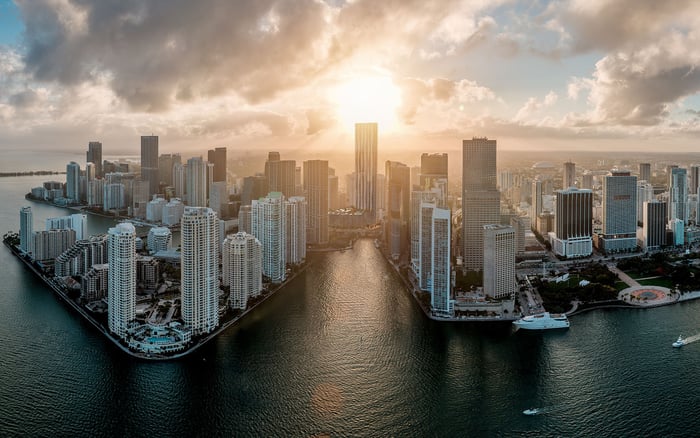
Downtown Miami offers a more urban reading of South Florida luxury. Buyers considering Faena Residences Miami Downtown Miami are often testing whether they want proximity to city energy, dining, performing arts, waterfront movement, and the broader momentum of Downtown Miami. The decision is less about choosing a view in isolation and more about embracing a metropolitan pattern of living.
For international buyers, second-home owners, and residents who divide time among business, culture, and leisure, this setting can be compelling. It places the home within a vertical city narrative, where arrival, hospitality, and daily convenience matter. The buyer question becomes: do I want a residence connected to Miami’s evolving urban center, with the city’s pace close at hand?
This is also where design identity matters. In the ultra-premium segment, buyers often evaluate not only finishes, but the broader atmosphere of a building. A residence can be technically luxurious and still not feel personal. Downtown projects must therefore be considered through architecture and lifestyle together, especially when a buyer wants a home with a recognizable point of view.
Brickell attracts a different kind of scrutiny. It is a recognizable high-rise business address in South Florida, and for many buyers, Brickell means efficiency. St. Regis® Residences Brickell may enter the conversation when the purchaser wants a more formal residential experience within a district associated with finance, dining, and urban access.
For some, Brickell is about the weekday. It can suit buyers who want a primary residence close to professional life, or a Miami base that supports meetings, dinners, and a vertical luxury experience. The area tag is not incidental here. Brickell carries a distinct buyer psychology: polished, convenient, energetic, and increasingly international.
The St. Regis® name also frames expectations around service culture. Buyers studying branded residences should look beyond the nameplate and ask how the brand experience is expressed day to day. The more sophisticated question is not whether a project is branded, but whether the service model, privacy profile, and operational tone align with the owner’s habits.
In a broader short list, Brickell can serve as the control point. If a buyer feels energized by the district’s pace, that is telling. If the same buyer finds it too public or too urban, that is equally useful. Either way, Brickell sharpens the decision.
Surfside offers a quieter lens. The Surf Club Four Seasons Surfside belongs in a different emotional register than Downtown Miami or Brickell. A buyer looking at Surfside is often asking about calm, beach proximity, privacy, and a more residential coastal atmosphere. The setting carries less of the daily business intensity and more of the resort-residential feeling associated with established oceanfront living.
That does not make it less serious as a real estate decision. In many cases, it makes the evaluation more personal. Coastal buyers tend to focus on how the property handles arrival, privacy, outdoor transition, and the feeling of leaving the city behind. The right Surfside buyer may value restraint over spectacle and continuity over novelty.
This is why The Surf Club Four Seasons Surfside can function as an important counterweight in a South Florida search. It gives the buyer a way to measure whether the ideal residence should be close to the center of Miami’s action or slightly removed from it. That distinction can determine not only the building choice, but the quality of daily life.
A disciplined buyer should avoid comparing these three only by price, floor level, or unit size. Those variables matter, but they come later. The first filter should be lifestyle architecture. Where do you want to wake up? How often do you host? Do you want a residence that feels connected to an urban grid, a financial district, or the shoreline?
The second filter is arrival. Luxury buyers often know within minutes whether a property’s approach, lobby experience, service tone, and neighborhood transition feel natural. The best residence is not always the most dramatic. It is the one that makes the owner’s life feel more composed.
The third filter is time horizon. A primary residence, seasonal home, and legacy hold may all require different answers. Downtown Miami may appeal to a buyer who wants exposure to the city’s growth and cultural center. Brickell may appeal to the buyer who prioritizes access and a refined urban routine. Surfside may appeal to the buyer who wants scarcity of setting and coastal quiet.
These three projects can also help frame what else belongs in the conversation. A buyer drawn to Brickell but open to neighboring alternatives may also study residences such as Una Residences Brickell, while someone focused on the larger Downtown Miami skyline may consider how other vertical luxury projects fit their appetite for scale, design, and city connection.
A buyer leaning coastal might compare Surfside with Miami Beach, Bal Harbour, Sunny Isles Beach, or select island settings, depending on the desired balance of privacy and convenience. The goal is not to tour everything. It is to identify the three or four environments that genuinely match how the buyer lives.
This is where an advisor’s role becomes especially important. At the highest end, inventory, timing, negotiation posture, and private availability can influence what is truly possible. But before those mechanics begin, the buyer needs clarity. Faena Residences Miami Downtown Miami, St. Regis® Residences Brickell, and The Surf Club Four Seasons Surfside are useful precisely because they clarify different paths.
The right short list should feel edited. It should include contrast, but not confusion. These three names allow a buyer to compare Downtown Miami energy, Brickell precision, and Surfside discretion within one coherent South Florida framework.
For some buyers, the conclusion will be immediate. The city will feel right, or the coast will. For others, the process will reveal a more nuanced answer: an urban primary residence with a coastal weekend preference, a branded service environment over a boutique atmosphere, or a desire for privacy that outweighs proximity. The value of the exercise is not merely to select a project. It is to define the life the residence is meant to support.
Why would a buyer compare these three projects together? They represent different South Florida living patterns: Downtown Miami energy, Brickell access, and Surfside coastal discretion.
Is this comparison mainly about price? No. Price matters, but the first decision is usually lifestyle fit, neighborhood rhythm, privacy, and service expectations.
Who might prefer Downtown Miami? A buyer who wants cultural access, city movement, and a more metropolitan residential experience may gravitate toward Downtown Miami.
Who might prefer Brickell? Brickell may suit buyers who value business-district convenience, dining access, and a polished high-rise environment.
Who might prefer Surfside? Surfside may appeal to buyers who prioritize oceanfront calm, privacy, and a quieter coastal residential setting.
Are branded residences always the best choice? Not automatically. The brand should be evaluated through service quality, operational tone, privacy, and how the experience fits daily life.
Should a second-home buyer think differently than a primary resident? Yes. A second-home buyer may prioritize ease, atmosphere, and seasonal use, while a primary resident may focus more on daily convenience.
How many properties should be on an initial short list? A focused short list is usually more productive than a broad one, especially when the buyer has already defined lifestyle priorities.
Can these projects point to other neighborhoods? Yes. They can help a buyer decide whether to explore more of Brickell, Downtown Miami, Surfside, or other coastal enclaves.
What is the main lesson from studying this trio? The strongest purchase decision begins with clarity about how the residence should support the buyer’s actual life.
When you're ready to tour or underwrite the options, connect with MILLION.
If branded residences are on your mind — as a home or as an allocation — we would be glad to share what we are seeing, privately.
Begin a quiet conversation