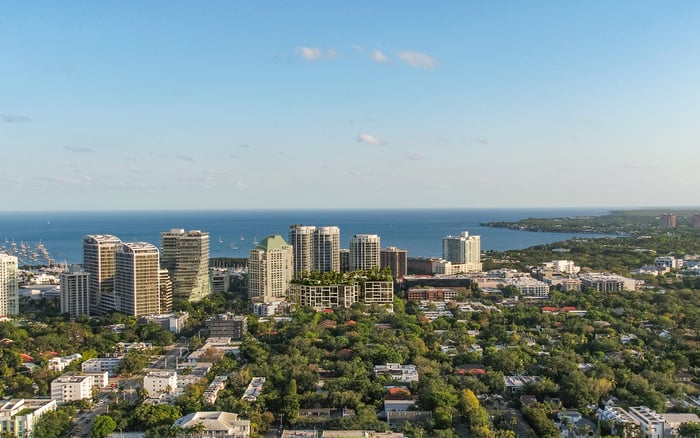
A discreet cash-buyer guide to Arbor Coconut Grove, framed around privacy, greenery, walkable routines, and lifestyle value rather than speculative flash.
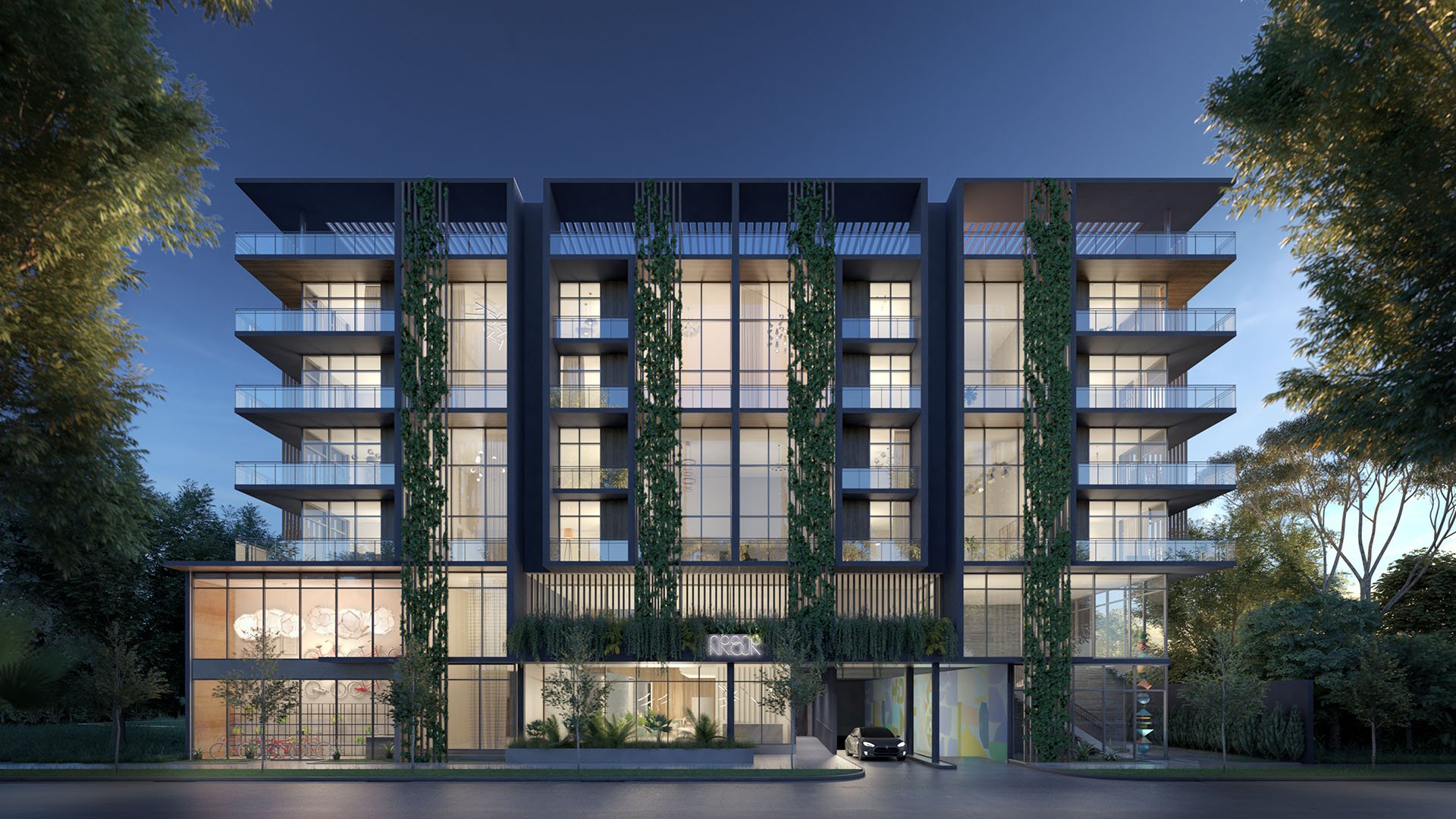
For affluent buyers able to purchase without financing friction, the central question is often not how much residence they can acquire. It is what kind of life that residence quietly supports. Arbor Coconut Grove is compelling in that context because it does not try to compete with Miami’s most vertical, high-gloss trophy towers. Its appeal is more measured: privacy, landscaping, neighborhood scale, and a calmer daily rhythm within Coconut Grove.
That distinction matters. Cash buyers often have the freedom to choose certainty over spectacle. They may already own elsewhere, be relocating within Miami, or be selecting a second residence for long-term personal use. For them, Arbor is less about a headline purchase and more about fit. It belongs in the conversation for buyers who want Coconut Grove’s village identity without necessarily requiring direct bayfront positioning or branded-resort intensity.
Arbor also sits comfortably in a new-project discussion without relying on a conventional skyscraper narrative. The proposition is intimate, residential, and intentionally local.
The most persuasive way to understand Arbor is through lifestyle return per dollar. In Miami’s luxury market, cash buyers can easily spend more for water frontage, hospitality branding, or skyline height. Arbor asks a different question: how much daily pleasure comes from greenery, scale, walkability, and a settled neighborhood atmosphere?
Coconut Grove has long appealed to buyers who want privacy without isolation. It is associated with a recognizable neighborhood identity and a rhythm that can feel very different from denser Miami districts. Arbor’s positioning draws from that atmosphere. Rather than leaning on a tower-style development model, it is framed as a residence that reflects the Grove’s greenery and scale.
That is especially relevant for cash buyers weighing opportunity cost. If the goal is pure visual drama, other Miami submarkets may offer taller statements. If the goal is a more composed everyday life, Arbor’s quieter profile becomes part of its value.
Arbor is best understood as a low-rise, village-adjacent option in a market increasingly defined by dramatic height and branded identity. That does not make it less luxurious. It makes it more specific. The luxury here is not only in finish or amenity, but in the feeling of returning home to a more contained residential setting.
This is where the boutique nature of the offering becomes important. Boutique does not simply mean small for its own sake. In Coconut Grove, it can mean a closer relationship to streets, trees, sidewalks, and the low-slung residential character that continues to distinguish the neighborhood from Miami’s denser urban corridors.
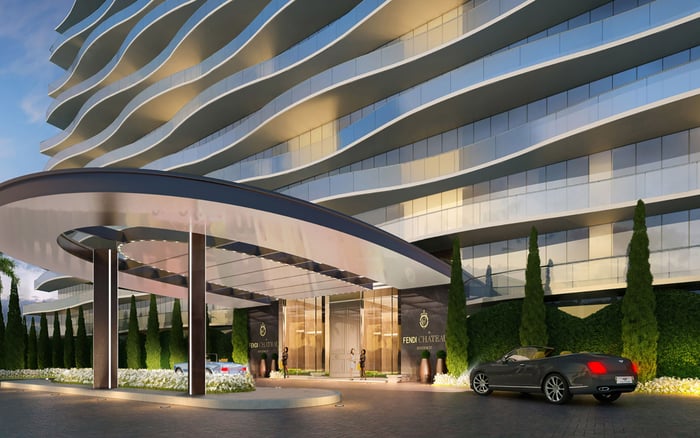
A buyer considering Four Seasons Residences Coconut Grove may be drawn to a different expression of Grove luxury, while Arbor speaks to those who want the neighborhood’s quieter DNA to remain central. The comparison is not about declaring one superior. It is about identifying which version of Coconut Grove best matches the owner’s daily rhythm.
For many cash buyers, the decision is made in the ordinary hours. Morning coffee, a walk through the neighborhood, a drive that does not begin with a garage queue, a sense that errands and meals can unfold with less urban abrasion. Arbor’s promise is tied to that village-adjacent routine.
Coconut Grove’s appeal is partly emotional, but not vague. Buyers are often drawn to privacy, mature landscaping, and a recognizable neighborhood pattern. Arbor fits that map by emphasizing calm and proximity to the Grove experience rather than resort-scale programming. Its lifestyle is less about arriving for a weekend performance and more about being embedded in a place.
That makes Arbor particularly relevant for families, downsizers, and high-net-worth owners who already understand Miami and want a more settled base. It is not the loudest purchase in the market, which may be precisely the point.
Within Coconut Grove, Arbor occupies a nuanced position. It is described as more elevated than older, less-amenitized condo inventory, yet not in the direct-bayfront trophy tier. That middle ground can be strategically attractive for buyers who want a newer, more considered residential experience without paying principally for waterfront drama.
The best comparisons are boutique infill residences and other neighborhood-scaled projects, not large resort-style towers. A buyer studying The Well Coconut Grove may be focused on wellness-led living, while someone looking at Ziggurat Coconut Grove may be exploring another interpretation of Grove intimacy and design. Arbor belongs in this broader conversation about how Coconut Grove is evolving from bohemian enclave to polished luxury residential destination.
This evolution is delicate. The strongest new residences in the Grove are not those that erase the neighborhood’s identity. They are the ones that translate it. Arbor’s value is tied to that translation: greenery, proportion, privacy, and a sense of everyday ease.
Financing can amplify emotion, timing, and market speculation. Cash often does the opposite. It clarifies. A cash buyer can look past short-term noise and ask whether the property will be used, enjoyed, and understood over time.
For Arbor, that is the right lens. The purchase case is not primarily leverage-driven upside. It is certainty, simplicity, privacy, and long-term use. A buyer who does not need to stretch may prefer a residence that feels right every day rather than one designed to impress occasionally.
This is also why Arbor may appeal to ultra-high-net-worth buyers who are not chasing the largest possible statement. In a market where visibility is easy to buy, discretion can feel more rare. Coconut Grove already supports that preference, and Arbor’s scale reinforces it.
Low-rise, neighborhood-scaled luxury product is inherently scarce in Coconut Grove. The area’s character is not easily replicated because it depends on a blend of mature greenery, residential history, village life, and limited opportunities for appropriately scaled development.
That scarcity does not mean every buyer should choose Arbor. A waterfront collector may want a different asset. A skyline-oriented buyer may prefer Brickell. A hospitality-loyal owner may prioritize a branded residence. But for the buyer who values calm, intimacy, and the Grove’s established identity, Arbor occupies a thoughtful lane.
Lifestyle is sometimes treated as a softer metric, but for cash buyers it can be the most disciplined one. If a residence supports how the owner truly wants to live, it reduces friction every day. In that sense, Arbor’s restraint is not a compromise. It is the strategy.
Is Arbor Coconut Grove best understood as an investment play? It is better understood as a lifestyle-first purchase, especially for cash buyers who prioritize privacy, calm, and long-term use.
What type of buyer is most likely to appreciate Arbor? Arbor is likely to appeal to high-net-worth and ultra-high-net-worth buyers seeking a settled Coconut Grove lifestyle.
How does Arbor differ from Miami trophy towers? Arbor emphasizes low-rise scale, landscaping, and neighborhood rhythm rather than height, spectacle, or resort-style intensity.
Is Arbor positioned in the direct-bayfront trophy tier? No. It is framed as an elevated Coconut Grove condo option, but not as a direct-bayfront trophy product.
Why is Coconut Grove important to this purchase decision? Coconut Grove offers a distinct neighborhood identity that many affluent buyers value when seeking a more residential Miami rhythm.
Does Arbor fit a walkable lifestyle? Arbor is positioned around proximity to the Grove village experience, with routines that can feel more residential and walkable than those in denser Miami districts.
Should Arbor be compared with branded towers? Not primarily. It is more appropriately compared with boutique Coconut Grove infill residences and neighborhood-scaled luxury projects.
What is the main lifestyle advantage for cash buyers? The advantage is simplicity: a quieter residence that supports daily use without relying on speculative flash or leverage-driven upside.
Is Arbor a good fit for buyers seeking discretion? Yes. Its appeal is tied to privacy, greenery, and a calmer residential profile within Coconut Grove.
What should buyers verify before making a decision? Buyers should confirm current availability, pricing, residence details, amenities, and contract terms before moving forward.
When you're ready to tour or underwrite the options, connect with MILLION.
If branded residences are on your mind — as a home or as an allocation — we would be glad to share what we are seeing, privately.
Begin a quiet conversation