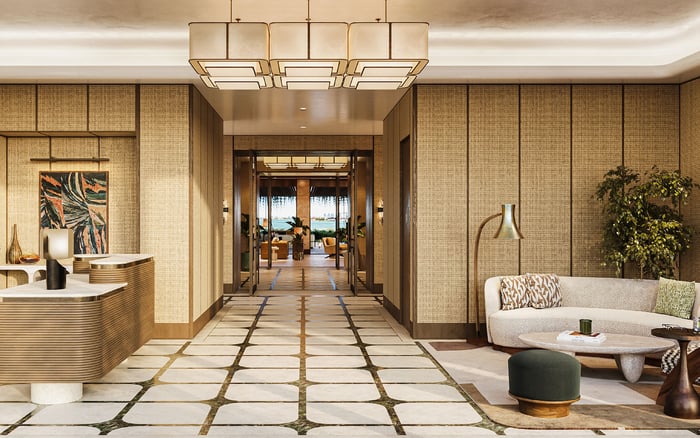
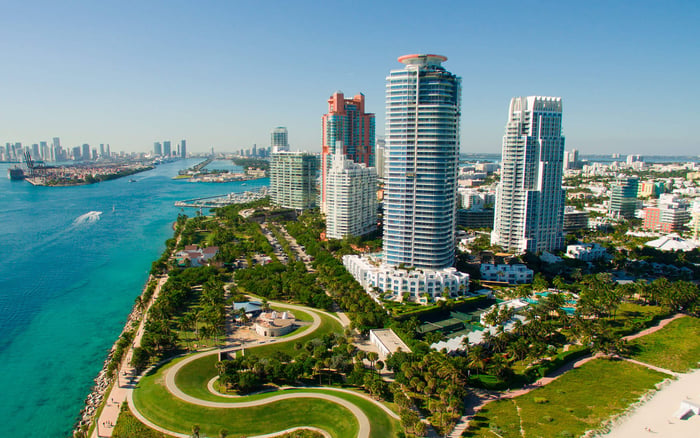
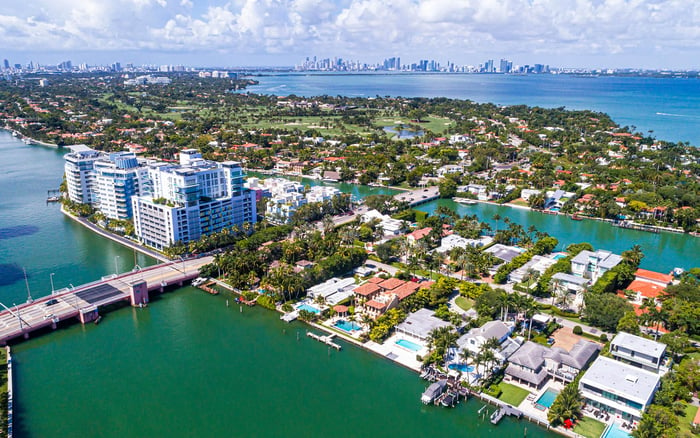
For full-time residents, genuine pet-friendliness in a luxury building is measured less by permission and more by infrastructure, climate responsiveness, service depth, and policy clarity. In South Florida, the best buildings treat pets as part of everyday residential life with relief areas, wash stations, shaded or cooled spaces, trusted service coordination, and rules that reduce friction for everyone in the building.
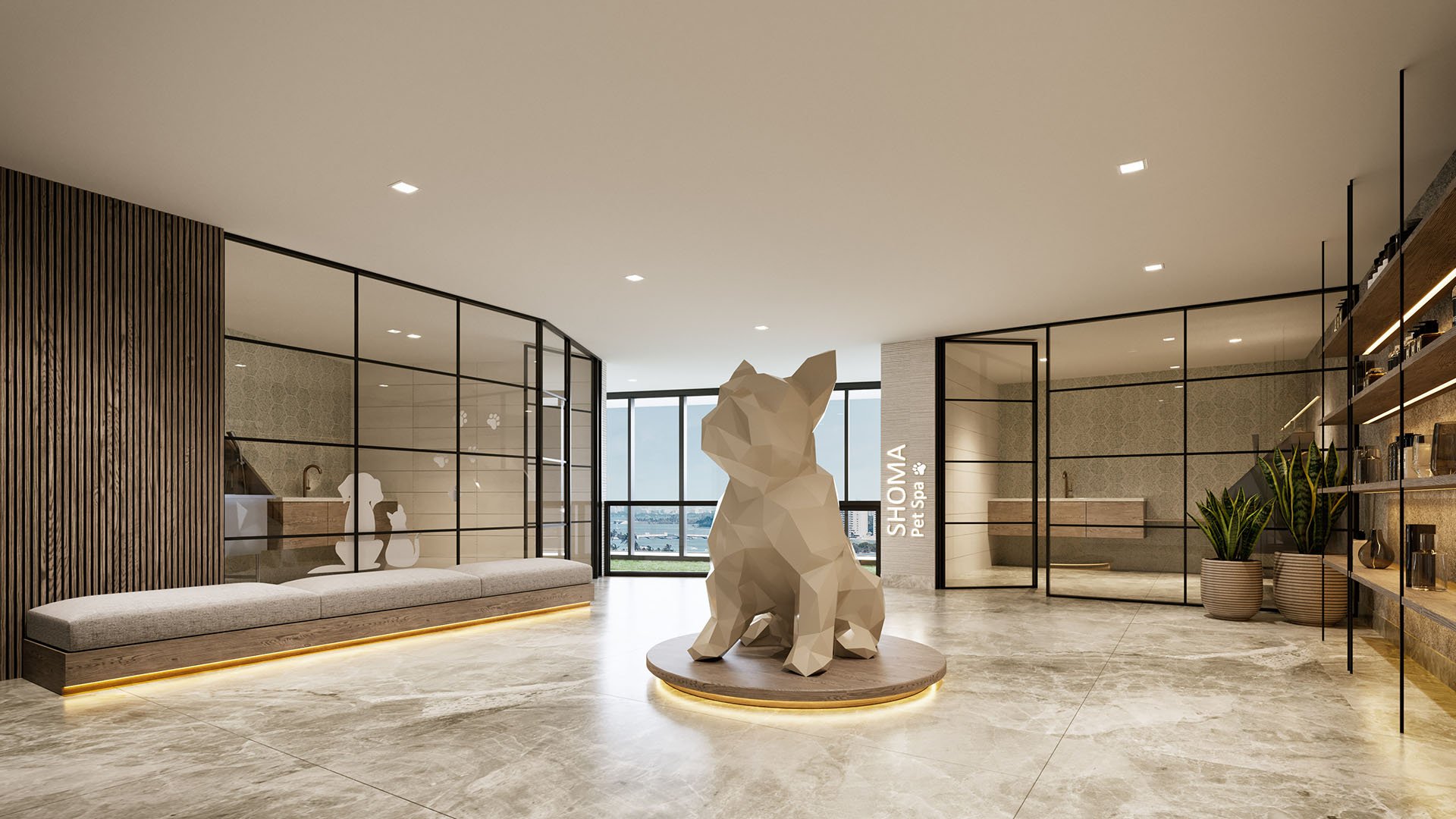
In South Florida’s upper tier of residential living, the phrase pet-friendly is often applied too loosely. A building may allow animals and still make everyday life inconvenient for residents who live there year-round. For a full-time owner or renter, genuine pet-friendliness is not a courtesy. It is an operating philosophy expressed through design, staffing, policy, and climate-conscious planning.
The distinction becomes clear in daily routines. A permissive building may simply allow dogs under certain conditions. A genuinely pet-friendly building integrates pet life into the property itself, with relief areas, dog runs, wash stations, grooming space, and practical circulation that does not turn every walk into a logistical exercise. In a vertical market, convenience matters. If every outing requires a long elevator ride and a trip to the street, the building is merely tolerant, not truly supportive.
This is why buyers considering refined waterfront and urban projects such as 2200 Brickell or 57 Ocean Miami Beach should ask not simply whether pets are accepted, but how the building anticipates pet ownership as part of everyday residential life.
For pet owners in mid-rise and high-rise buildings, the most valuable feature is often not glamour but access. Relief areas positioned close to residences, or at least on an easily reachable amenity level, materially improve quality of life for both pet and owner. The same is true of dedicated dog runs and clearly designed pet circulation routes that keep movement simple and discreet.
This matters especially for residents with demanding schedules, older dogs, puppies, or households managing frequent daily walks. A building that requires repeated trips to street level for every basic need may still look polished on a tour, but over time it can feel poorly resolved. By contrast, a building that has quietly integrated pet relief and wash zones into the architecture tends to function better for full-time use.
Pet-wash stations are another revealing detail. In a coastal market, where sand, rain, and humidity are part of daily life, a proper rinse area near the return path from outdoors is not indulgent. It is simply intelligent residential planning. The same practical thinking often aligns with the broader design language seen in projects like The Well Coconut Grove, where wellness-minded living shapes how amenities are conceived.
A luxury building in South Florida cannot be considered genuinely pet-friendly if it ignores heat. Pet spaces need shade, ventilation, and cooling, because the local heat index can become unsafe quickly. This is not a seasonal concern. For much of the year, the combination of sun, humidity, and reflective surfaces can make exterior areas uncomfortable or even hazardous for dogs.
That reality heightens the value of climate-controlled pet lounges and indoor play spaces. During periods of extreme heat, heavy rain, or storm activity, indoor exercise areas become more than a convenience. They provide continuity for residents who cannot suspend a pet’s daily routine every time the weather shifts. For full-time households, resilience is a luxury.
In neighborhoods where residents expect elevated wellness infrastructure, this standard feels increasingly intuitive. Consider the appeal of projects such as Rivage Bal Harbour or Alba West Palm Beach. Even when a buyer is primarily evaluating architecture, views, or service, the same lens should extend to pet spaces: are they usable at 2 p.m. in August, during a thunderstorm, or after a sandy waterfront walk?
For full-time residents, operational support is often a stronger signal than marketing language. A building that can coordinate dog walking, pet sitting, or related concierge support offers something far more meaningful than a simple pets-allowed designation. It acknowledges the reality that many owners travel, work long hours, or need trusted help woven into daily life.
The best version of this is structured rather than casual. Licensed, insured third-party walkers or sitters coordinated through staff are generally more reassuring than informal hallway recommendations. Buildings that can also help direct residents toward grooming, veterinary referrals, and emergency-care coordination tend to be more functional over the long term.
This service layer is where genuine luxury reveals itself. Not in theatrics, but in reduced friction. Residents should be able to leave for a business dinner, a weekend away, or an unexpected schedule change knowing the building can help them navigate pet care with discretion and reliability.
Pet-friendly design is also material design. Hard, durable, easy-clean flooring generally performs better than carpet in shared residential settings, especially in corridors, elevators, and pet-dedicated spaces. Finishes should feel elegant, but they also need to withstand moisture, wear, and frequent cleaning.
Indoor air quality matters just as much. Strong ventilation and sensible material choices help manage odors and airborne irritants, preserving a fresher residential environment for pet owners and non-pet owners alike. This is a subtle but essential distinction in luxury buildings, where comfort is expected to feel effortless.
Waste management is another sign of seriousness. Clear disposal systems, easy access to waste stations, and common-area etiquette standards reduce tension between neighbors. A building that supports pets while keeping hallways, lobbies, and shared outdoor spaces orderly is far more livable than one that leaves expectations vague.
One of the least glamorous but most important hallmarks of a truly pet-friendly building is transparent policy. Residents should understand deposits, recurring fees, size or breed restrictions if they exist, guest-pet rules, common-area expectations, and enforcement procedures before move-in. Clarity is not anti-luxury. It is part of luxury.
The strongest buildings increasingly favor behavior standards and responsible ownership over broad, imprecise restrictions. That creates a more intelligent framework for long-term living. It also helps prospective buyers evaluate whether a building’s culture suits their household.
Just as important, incident procedures and liability rules should be easy to understand. In a dense residential environment, everyone benefits when the building has established protocols for conflicts, accidents, noise, and shared-space conduct. A polished lobby cannot compensate for ambiguous management.
A luxury tower can provide excellent in-building support, but pets also live in the neighborhood beyond the amenity deck. Access to nearby parks and open space remains an important part of the equation, particularly for larger dogs or highly active households. The surrounding streetscape, green space, walkability, and available exercise options all shape whether a building feels practical for permanent residence.
That is why discerning buyers should evaluate pet life at two scales: inside the building and around it. An address may offer fine amenities but still be less comfortable for a daily walking routine than a location with easier outdoor access and a calmer rhythm.
For pet owners in towers, emergency planning deserves more attention than it typically receives. Clear evacuation rules, accessible exits, and staff who understand how to assist in urgent situations are part of a fully resolved residential experience. This becomes even more important during storm season, when households need clarity rather than improvisation.
A genuinely pet-friendly building prepares for real life, not just ideal conditions. That includes heat, rain, travel schedules, accidents, cleaning demands, and emergency scenarios. When a property addresses those realities with quiet competence, pet-friendliness becomes something far more substantial than a marketing phrase.
What is the difference between pet-friendly and pet-permitted? Pet-permitted means animals are allowed. Pet-friendly means the building is designed and operated to support everyday pet life with amenities, services, and practical rules.
Why are relief areas so important in luxury towers? In vertical living, nearby relief areas reduce the burden of constant trips to street level. They make daily routines easier for residents and healthier for pets.
Do indoor pet spaces really matter in South Florida? Yes. Indoor lounges or play areas are especially valuable during extreme heat, storms, and heavy rain, when outdoor activity may be limited.
What services should full-time residents look for? Dog walking, pet sitting, concierge coordination, grooming access, and veterinary or emergency referrals are among the most useful features.
Are pet-wash stations actually useful or just decorative? They are highly practical, especially in coastal environments with sand, humidity, and frequent rain. They help keep residences and common areas cleaner.
Should buyers focus on pet policy before signing? Absolutely. Fees, restrictions, guest-pet rules, and enforcement procedures should all be clear before move-in.
Can a building be luxurious but still poor for pet owners? Yes. Beautiful finishes and service may not compensate for weak pet infrastructure, limited access, or unclear operational rules.
Do materials and ventilation affect pet-friendliness? Yes. Durable surfaces and strong ventilation improve cleanliness, odor control, and comfort throughout shared spaces.
How important is the neighborhood outside the building? Very important. Nearby parks, open space, and walkable streets often determine how easy daily exercise will be.
What is one sign a building takes pet ownership seriously? Clear systems. When amenities, rules, service coordination, waste handling, and emergency planning work together, the building is truly designed for pet households.
For a tailored shortlist and next-step guidance, connect with MILLION Luxury.
If branded residences are on your mind — as a home or as an allocation — we would be glad to share what we are seeing, privately.
Begin a quiet conversation