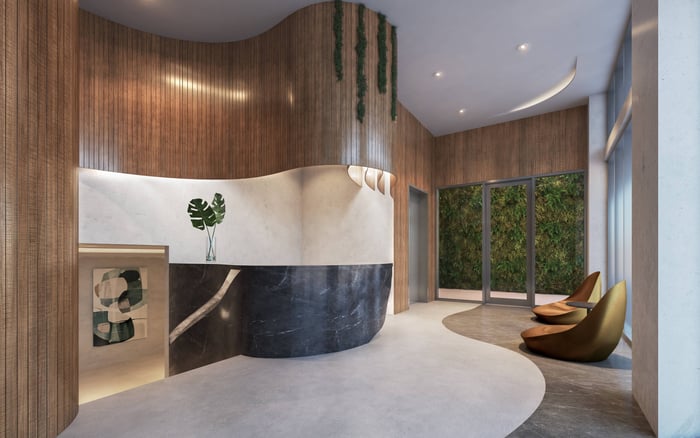
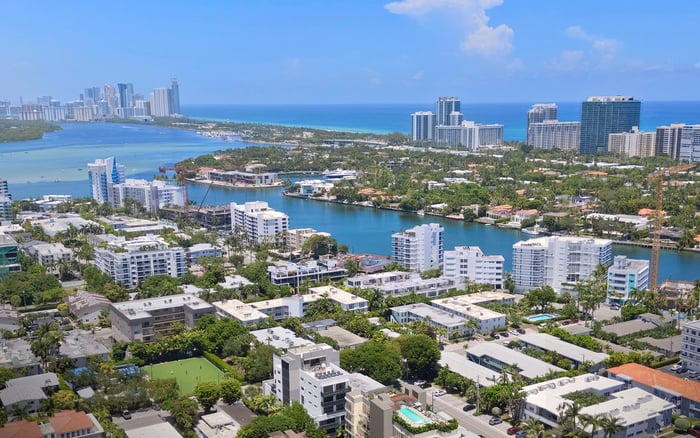
A buyer-focused guide to evaluating commercial-tenant noise at The Well Bay Harbor Islands through the lenses of privacy, service quality, and long-term resale strength.
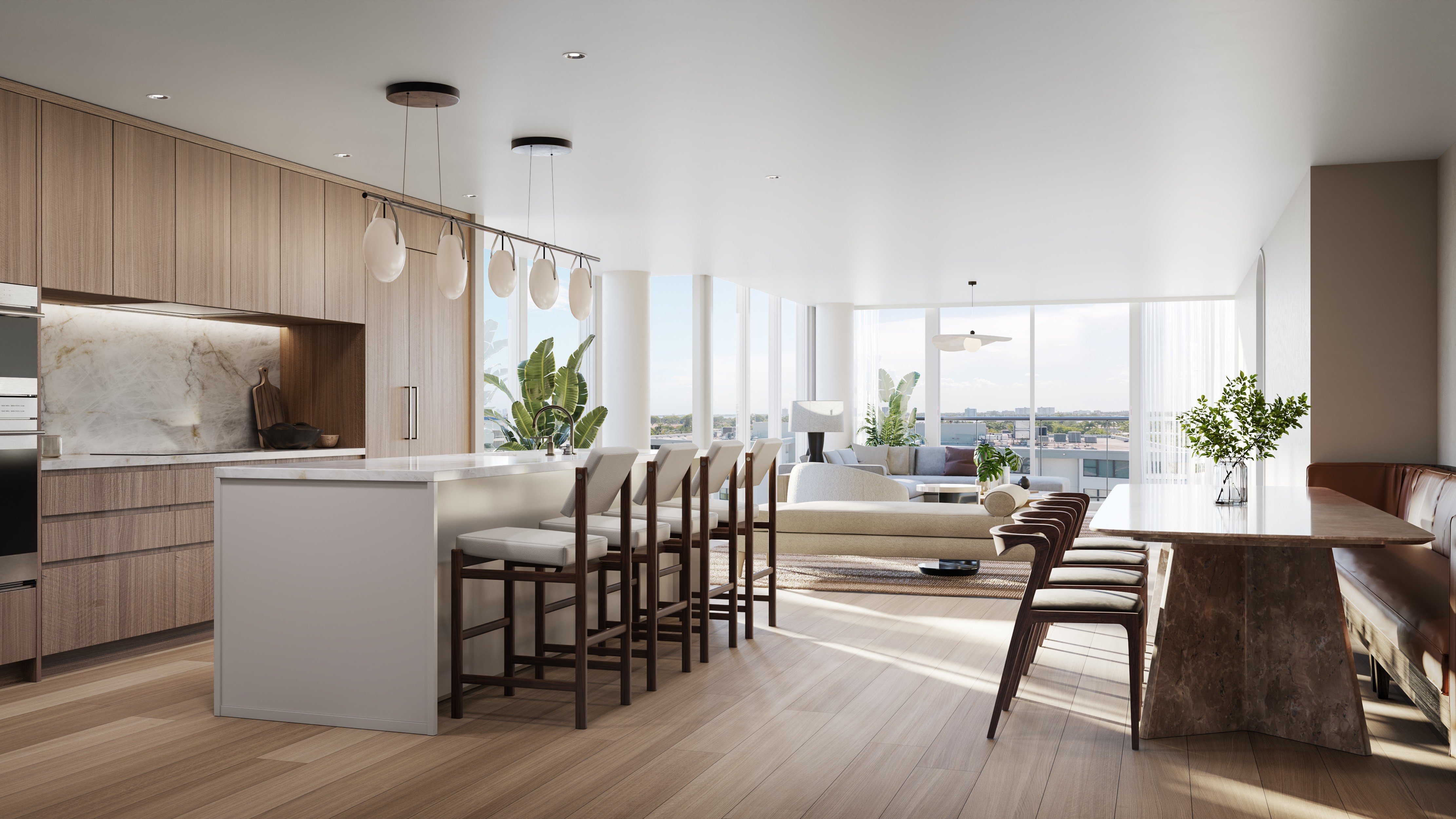
The Well Bay Harbor Islands sits at the center of a broader South Florida shift: luxury residences are no longer defined solely by square footage, views, finishes, and valet service. Increasingly, the most coveted addresses promise a daily rhythm shaped by wellness, hospitality, treatments, café culture, and curated convenience. For many buyers, that is precisely the appeal. The building becomes less a static tower than a private lifestyle environment.
Yet that same promise creates a more sophisticated diligence question: can active commercial programming coexist with the privacy standard expected in an ultra-luxury home? The answer is not a simple yes or no. It depends on the specific residence, its exposure, the commercial tenants, the operating rules, and the discipline of building management.
For buyers considering The Well Bay Harbor Islands, the right frame is not suspicion. It is precision. Commercial activity can add value when it is beautifully controlled. It can also create friction if noise, deliveries, music, events, or equipment operations reach private residential space. In this sense, acoustic performance belongs beside architecture, amenity design, wellness branding, and views as a serious component of value.
Commercial noise is often discussed too narrowly, as if the only question is whether a room is quiet during a showing. In a luxury mixed-use setting, the issue is broader. It should be evaluated as three linked risks: in-unit privacy, perceived service quality, and resale.
In-unit privacy is the first threshold. A buyer should ask whether sounds from restaurants, wellness facilities, boutique retail, service corridors, mechanical systems, or exterior gathering areas can be heard inside the residence, on terraces, or in bedrooms during the hours that matter most. The concern is not merely volume. It is repetition, timing, and whether the sound feels inconsistent with the promise of a sanctuary.
Service quality is the second risk. A beautifully branded building can feel less refined if commercial operations appear unmanaged. Deliveries at inconvenient times, music that travels, staff circulation in the wrong places, or event activity that feels too visible can subtly alter the owner experience. In ultra-premium real estate, the perception of control is part of the product.
Resale is the third risk. Future buyers may discount residences with perceived nuisance or privacy issues, even when the rest of the asset is compelling. The strongest position is often held by units that capture the convenience of wellness-oriented programming without being directly exposed to its most active edges.
Buyers should resist judging the entire development with one broad conclusion. Noise risk is unit-specific. The relevant questions are stack, line, and exposure.
A residence directly above or near programmed ground-floor or mezzanine-level activity may carry a different risk profile from one set farther away, oriented toward a calmer exposure, or buffered by other uses. Low floors may offer immediacy and convenience, but they can also require closer review when active commercial spaces sit below or nearby. High floors may feel more removed, though exposure, terrace orientation, and mechanical placement still matter.
This is why a buyer should evaluate the actual line, not just the brand. Where are the bedrooms? What is below the primary suite? Does the terrace face a café, entry sequence, wellness deck, or service zone? Is the residence above retail, adjacent to equipment, or aligned with areas that may host regular programming? These questions are especially important in Bay Harbor, where boutique scale and walkable convenience can place residential and lifestyle functions in closer relationship.
The same discipline applies across South Florida. In Brickell, Miami Beach, Bal Harbour, and other experience-driven markets, buyers increasingly compare buildings not only by amenity menus but by how quietly those amenities are operated. The luxury is not simply having services nearby. The luxury is having them nearby without feeling exposed to them.
A serious buyer should visit at more than one time of day. A quiet weekday morning may not reveal the same conditions as an evening, weekend, or active wellness schedule. If access allows, spend time in the residence with doors closed, then again on the terrace. Listen from bedrooms, living areas, and any rooms intended for work, sleep, or recovery.
Pay attention to character as much as volume. Low-frequency mechanical hum, amplified music, voices from outdoor seating, rolling carts, door closures, and delivery activity each affect a home differently. A single sound heard once may be irrelevant. A recurring sound at the same hour may become part of daily life.
Ask direct operational questions. What are the intended commercial uses? What rules govern music, events, deliveries, trash removal, loading, and exterior seating? Are there limits on operating hours? Who enforces the rules? What remedies exist if a tenant becomes disruptive? In a wellness-branded setting, the difference between a serene amenity ecosystem and an overactive commercial environment often lies in management discipline.
Buyers should also request the governing documents that address commercial operations, noise rules, hours of use, enforcement rights, and resident protections. Legal structure matters because today’s tenant mix may evolve. A buyer is not only purchasing the current atmosphere. They are purchasing the rules that will govern future operations.
If diligence leaves unanswered questions, the risk should not be ignored. It should be priced. That does not mean walking away from an otherwise exceptional residence. It means recognizing that privacy is part of value.
A unit with direct exposure to active commercial programming may still be highly desirable if the convenience is meaningful and the acoustic separation is strong. Conversely, a residence with excellent finishes and branding may deserve a more conservative offer if future buyers could question its privacy. The issue is not whether mixed-use wellness living is good or bad. The issue is whether the specific home delivers the quiet expected at its price point.
For many buyers, the ideal outcome is a residence that benefits from wellness, café, treatment, and hospitality-style services close to home while remaining physically and acoustically removed from the busiest functions. That combination can support both daily enjoyment and long-term market confidence.
The Well Bay Harbor Islands reflects a regional appetite for residences that feel curated, serviced, and restorative. New-construction buyers increasingly want more than a lobby and pool. They want a residential environment with a point of view. Wellness branding can be powerful because it speaks to how owners want to live, not just what they want to own.
Still, the more programmed a building becomes, the more important operations become. A quiet luxury residence depends on thoughtful separations: residential arrivals that feel private, commercial circulation that is controlled, deliveries that are managed, equipment that is isolated, and rules that are enforceable. Commercial convenience should never dilute residential calm.
This is where experienced buyers have an advantage. They know the brochure shows the aspiration, while the documents and walk-throughs reveal the practical experience. They ask how the building will function at full use, not only how it presents when empty or freshly staged.
The best way to evaluate commercial-tenant noise at The Well Bay Harbor Islands is to treat it as part of luxury due diligence, not as an afterthought. Test the exposure. Study the stack. Ask how the commercial spaces will operate. Review the rules. Understand enforcement. Then decide whether the residence offers the right balance of access and privacy.
For the right unit, wellness-oriented mixed use can be a genuine advantage. It can make daily life more convenient, more serviced, and more aligned with the way many South Florida buyers now live. But the premium should be paid for a home that feels private, not merely branded. In the highest tier of the market, quiet is not empty space. It is a form of service.
Is commercial-tenant noise automatically a problem at The Well Bay Harbor Islands? No. The issue should be evaluated unit by unit, with attention to stack, line, exposure, and operating rules.
Which commercial uses deserve the closest review? Restaurants, wellness facilities, boutique retail, programmed hospitality spaces, deliveries, music, and mechanical equipment all deserve careful attention.
Are lower floors always riskier? Not always, but low floors near active commercial or mezzanine-level uses usually require more careful acoustic diligence.
Can higher floors still be affected by commercial activity? Yes. High floors may be more removed, but terrace orientation, sound travel, and equipment placement can still matter.
What documents should a buyer request? Review documents governing commercial operations, noise rules, hours of use, enforcement rights, deliveries, and resident protections.
Why does noise matter for resale? Future buyers may discount a residence if they perceive privacy, nuisance, or service-control issues.
How should a buyer test the residence? Visit at different times, listen from bedrooms and terraces, and compare conditions during active and quiet periods.
Can wellness programming improve value? Yes, when it adds convenience and service while preserving the privacy and calm expected in a luxury residence.
What is the strongest resale profile? A residence that enjoys convenient access to services without direct exposure to disruptive commercial activity is typically best positioned.
Should unresolved acoustic concerns affect the offer? Yes. If questions remain after diligence, buyers should reflect that uncertainty in pricing and negotiation.
If you'd like a private walkthrough and a curated shortlist, connect with MILLION.
If branded residences are on your mind — as a home or as an allocation — we would be glad to share what we are seeing, privately.
Begin a quiet conversation