
A discreet buyer’s guide to separating true pet-forward condominium design from amenity language that photographs well but may not perform day to day.
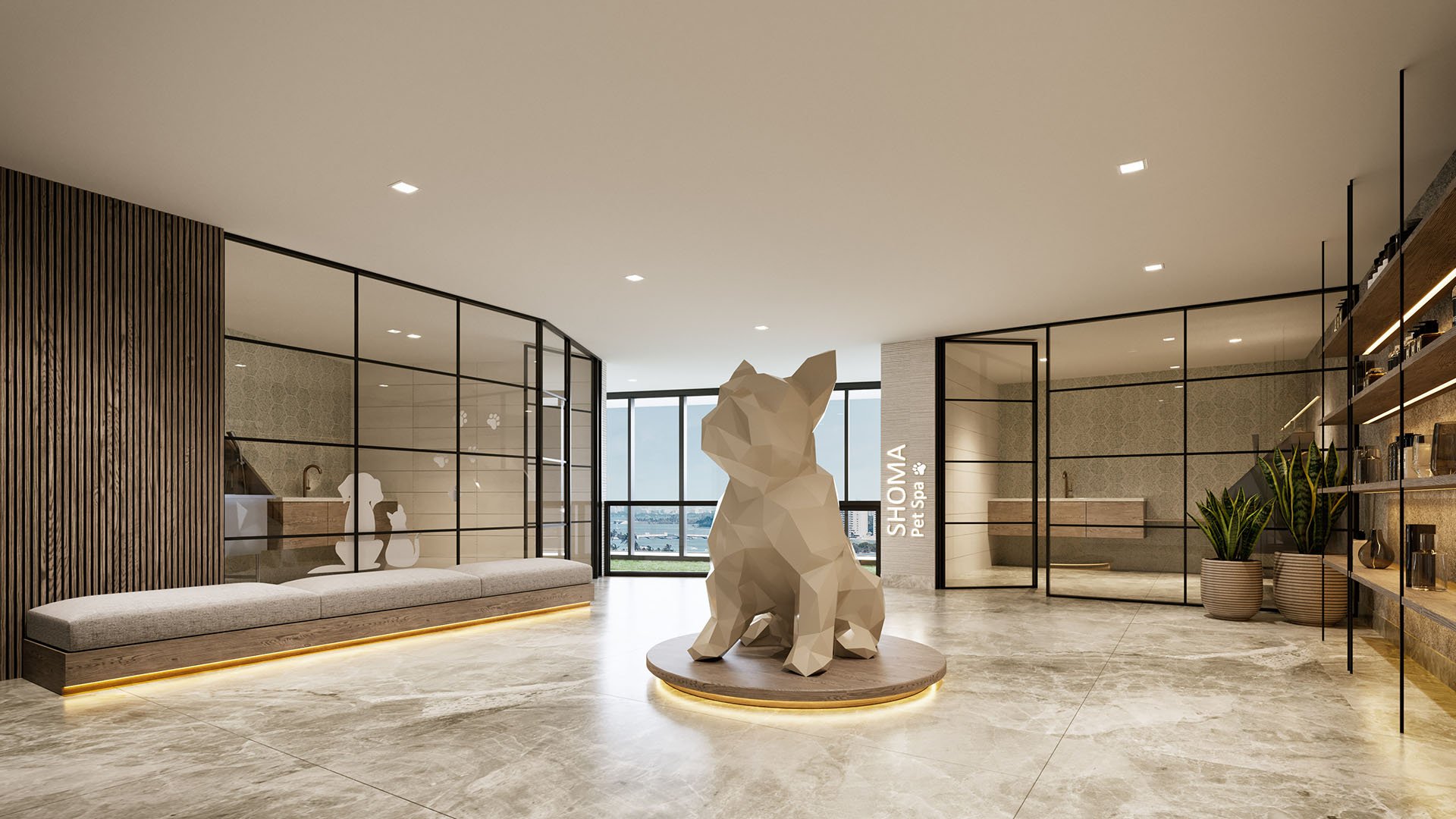
In South Florida luxury real estate, pet language has become part of the amenity vocabulary. A residence may be described as pet-friendly, pet-forward, or thoughtfully designed for animal companions. Yet the phrase that deserves the closest reading is often the most practical one: pet relief area.
For many buyers, especially those considering high-floor living, waterfront towers, or full-service residences with valet and lobby protocols, this small amenity can shape the daily rhythm of ownership. It is not simply a convenience for late evenings or summer rain. It is a test of whether a building has accounted for the lived reality of dogs, owners, staff, elevators, cleaning crews, neighboring residences, and common-area etiquette.
Marketing theater begins when the amenity exists more vividly in renderings than in operations. A green patch on a deck, a line in a brochure, or a charming pet photo near the pool does not establish quality. What matters is whether the area is hygienic, accessible, discreet, durable, and governed by rules that still make sense after the first year of occupancy.
For buyers weighing pets as part of a primary residence decision in Brickell, Miami Beach, Sunny Isles, or another dense luxury market, the right question is not whether a building allows dogs. The sharper question is whether the building has designed for them with the same seriousness it applies to arrival, wellness, parking, and security.
A genuine pet relief area should be easy to describe beyond its existence. If the answer stops at “there is one,” the buyer should slow down. The most revealing details are mundane: surface material, drainage, odor control, water access, cleaning frequency, disposal stations, lighting, hours, and proximity to elevator banks.
A polished sales narrative may emphasize convenience, but daily use depends on operational discipline. Artificial turf without a clear cleaning protocol can become a liability. A landscaped corner without drainage may look pleasant in a presentation but perform poorly in humid weather. A rooftop location may sound elevated, yet feel inconvenient if access requires a long internal path, a separate elevator transfer, or passage through social amenity areas.
Ask the same questions you would ask of a pool deck, fitness center, or private dining room: Who maintains it? How often? Under whose budget? Is it monitored? Is there a rulebook? Has the association or building management planned for heavy use? The answers reveal whether the amenity is a designed system or a decorative claim.
The best pet relief areas are not necessarily the largest or most photogenic. They are positioned with intelligence. A proper location respects the owner’s privacy, avoids unnecessary lobby exposure, minimizes conflict with residents who do not own pets, and allows staff to maintain the space without disrupting other amenities.
In a vertical building, the path matters. Imagine returning from dinner, stepping off the elevator, and needing a quick late-night walk. If the pet route moves through a formal lobby, past dining spaces, or across a pool deck, the amenity may create social friction. If it is too remote, it may not be used consistently. If it is too visible, it may feel awkward in a white-glove environment.
Buyers should walk the route physically whenever possible. Start at the residence door, continue to the elevator, proceed to the relief area, and return. Consider the route in rain, after dark, during guest arrivals, and when service staff are active. A pet amenity that looks minor on a floor plan can become central to everyday comfort.
The word luxury should raise the standard for pet facilities, not soften it. In a refined building, hygiene is not an afterthought. It is the amenity. Odor, standing water, poor lighting, and visible wear quickly undermine the mood of even the most elegant property.
The strongest pet relief areas typically have clear separation from leisure zones, resilient surfaces, access to water, appropriate drainage, disposal points, and maintenance procedures that are visible enough to build confidence but discreet enough not to disturb residents. The goal is not extravagance. The goal is consistency.
This is where marketing theater often reveals itself. A brochure may show a dog against a green surface, but it may not explain how waste is handled, where odors move, or how frequently surfaces are refreshed. A buyer does not need to be adversarial. A calm, specific question is enough: “Please walk me through exactly how this area is maintained.” A serious building will have an answer.
Pet policies deserve the same attention as floor plans and views. Weight limits, breed restrictions, number-of-pet limits, leash requirements, elevator rules, service access, guest pet rules, and cleaning fees can all affect the practical value of a pet relief area. A beautiful amenity paired with restrictive rules may not support the lifestyle the buyer expects.
The reverse is also true. Sensible rules can protect the building’s atmosphere and preserve value. A well-run residence balances freedom for pet owners with comfort for non-pet owners. The most refined buildings avoid ambiguity. They set expectations early, enforce them evenly, and make the pet route feel integrated rather than merely tolerated.
Look carefully at whether the language is permissive or conditional. “Pet-friendly” may sound generous, but the governing documents and house rules carry the weight. Buyers should understand not only what is allowed today, but also how policies may be amended in the future.
A listing label such as dog park can be useful, but it is not a substitute for evaluation. Some buildings promote an outdoor pet zone, while others imply broader pet amenities through lifestyle imagery. The distinction matters. A dog run, a relief terrace, and a pet washing room are different features serving different needs.
A dog run supports exercise and socialization. A relief area supports quick, sanitary use. A grooming station supports maintenance after beach walks or rainy days. When these terms are blurred, buyers may assume a level of convenience that is not actually present.
In high-density neighborhoods, nearby public green space does not automatically solve the issue. Elevators, weather, nighttime comfort, traffic, and building etiquette still matter. A private in-building solution may be valuable, but only if it is designed and managed with discipline.
New-construction pet amenities often appear beautifully in renderings because they are easy to visualize: green turf, skyline, happy dog, polished deck. The challenge is that renderings cannot prove operations. Until a building is open and occupied, buyers may need to evaluate the logic of the plan rather than the performance of the finished space.
For pre-completion residences, ask where the pet relief area sits in relation to elevators, residences, amenity terraces, service corridors, and drainage systems. Ask whether materials and cleaning protocols have been specified. Ask how the future association budget will handle replacement, sanitation, and repairs. These questions are not minor. They go directly to whether the amenity will remain elegant after repeated daily use.
The more premium the building, the more discreetly practical the answer should be. A serious response will not rely on adjectives. It will explain access, maintenance, rules, and resident experience.
The most efficient due diligence is a short set of precise questions. Where is the pet relief area located? What surface is used? How does it drain? Who cleans it, and how often? Are there disposal stations and water access? Is the space ventilated or open-air? What are the hours? Is it lit at night? Which elevator route is expected for pets? Are there size, number, or breed restrictions? Is the amenity completed, under construction, or merely planned?
Then ask the question that often clarifies everything: “If I live on an upper floor and need to use it late at night, what is the exact route?” If the answer is uncertain, the amenity may not be as seamless as represented.
Luxury buyers are accustomed to evaluating view corridors, ceiling heights, kitchen systems, parking, privacy, and service. Pet relief deserves the same rigor because it affects daily life with unusual frequency. The best version is not theatrical. It is clean, close, quiet, and governed with taste.
A pet relief area should not be treated as a novelty amenity. For the right household, it is infrastructure. It can enhance comfort, protect interior finishes, reduce stress in bad weather, and make vertical living feel more humane. But it can also be overmarketed, underdesigned, or poorly maintained.
The distinction is found in specifics. If the building can explain the surface, drainage, cleaning, route, rules, and resident experience, the amenity may deserve real weight in the decision. If the conversation remains visual and vague, it is probably theater.
In South Florida’s most competitive luxury corridors, refinement is increasingly measured by how well a building handles ordinary moments. A truly elegant pet amenity does not announce itself loudly. It simply works.
What is marketing theater around a pet relief area? It is promotional language or imagery that makes a pet amenity appear more useful, refined, or complete than its actual design and operation support.
Is a pet relief area the same as a dog park? No. A relief area is typically for quick sanitary use, while a dog park or run is more focused on movement, play, and socialization.
What should I ask first when touring a pet-friendly condo? Ask where the pet relief area is located and request the exact route from the residence, including elevator and common-area access.
Why does drainage matter so much? Drainage affects odor, cleanliness, surface durability, and whether the area remains usable after repeated daily use or wet weather.
Should I rely on renderings for pet amenities? Renderings can show intent, but they cannot prove maintenance, hygiene, access, or long-term resident experience.
Can pet rules reduce the value of the amenity? Yes. Limits on size, number, access hours, elevator use, or guest pets can materially affect how useful the amenity is for your household.
Is an indoor pet relief area better than an outdoor one? Not automatically. The better choice depends on ventilation, cleaning, drainage, location, lighting, and how the space is managed.
How can I tell if the building is serious about pet owners? Serious buildings can explain procedures clearly, from cleaning frequency and disposal stations to access routes and rule enforcement.
Should non-pet owners care about this amenity? Yes. Poorly managed pet areas can affect odor, common-area etiquette, staffing demands, and the overall residential atmosphere.
What is the simplest way to avoid being misled? Treat the pet relief area as building infrastructure, not a lifestyle image, and verify how it works in ordinary daily conditions.
If you'd like a private walkthrough and a curated shortlist, connect with MILLION.
If branded residences are on your mind — as a home or as an allocation — we would be glad to share what we are seeing, privately.
Begin a quiet conversation
.jpg&width=700&height=438&fit=cover)