A practical editorial guide for family buyers evaluating aging-in-place wellness in South Florida condominiums, from floor plans and amenities to staffing, privacy, and long-term neighborhood fit.
For family buyers in South Florida, the most sophisticated condominium decision is not defined only by view corridors, finishes, or the prestige of an address. It is also measured by how gracefully a residence can support different stages of life. Aging-in-place wellness begins with a simple question that carries complex implications: can a home remain elegant, practical, and emotionally comfortable as mobility, routines, family roles, and care needs evolve?
This is not a niche concern reserved for later life. It is a present-day planning discipline for families purchasing with parents, adult children, visiting relatives, or long-term household staff in mind. A condo that performs beautifully for a holiday weekend may not work as well for someone recovering from surgery, managing fatigue, welcoming grandchildren, or preferring quieter circulation through the home.
In the ultra-premium market, the strongest answer is rarely visible in a single amenity photograph. It reveals itself in the sequence of arrival, the relationship between bedroom wings, the quality of elevator access, the discretion of service, and the ease with which wellness can be embedded into daily life without making the home feel medical.
Aging-in-place wellness is often reduced to a checklist of grab bars and wider doors. Those details can matter, but the broader concept is more refined. It is about preserving autonomy, reducing friction, supporting restoration, and making family life easier without diminishing beauty.
For a luxury condo buyer, this means evaluating the residence as a living system. Does the primary suite feel private without being isolated? Can a guest suite become a comfortable space for a parent or caregiver if needed? Is there enough separation for multigenerational stays without creating awkward distance? Are the transitions from elevator to entry, entry to living area, and living area to terrace intuitive and calm?
Wellness also includes sensory comfort. Light, acoustics, airiness, shade, temperature control, and the ability to retreat from social areas all influence how a home feels over time. A glamorous room can become tiring if it is difficult to navigate, overly exposed, or dependent on stairs and complicated thresholds.
The most future-ready residences tend to avoid theatrical inconvenience. Families should study the plan before they fall in love with the rendering. Long, narrow corridors can become tiring. Split bedrooms can be excellent when they provide privacy, but less ideal if they separate someone from household support. Open kitchens are convivial, yet the best versions also allow for unobtrusive service and easy movement.
Terraces deserve careful attention. In South Florida, outdoor living is central to the condominium experience, but family buyers should consider how easily a terrace is reached, whether thresholds feel smooth, and whether shaded seating can support longer, quieter use. A dramatic terrace that feels difficult to access may become ornamental rather than essential.
Bathrooms are another point of quiet importance. A spa-like bath should be evaluated for comfort as much as aesthetics: clear circulation, intuitive storage, calm lighting, and a shower configuration that can adapt to changing needs. The ideal is not institutional. It is serene, generous, and forgiving.
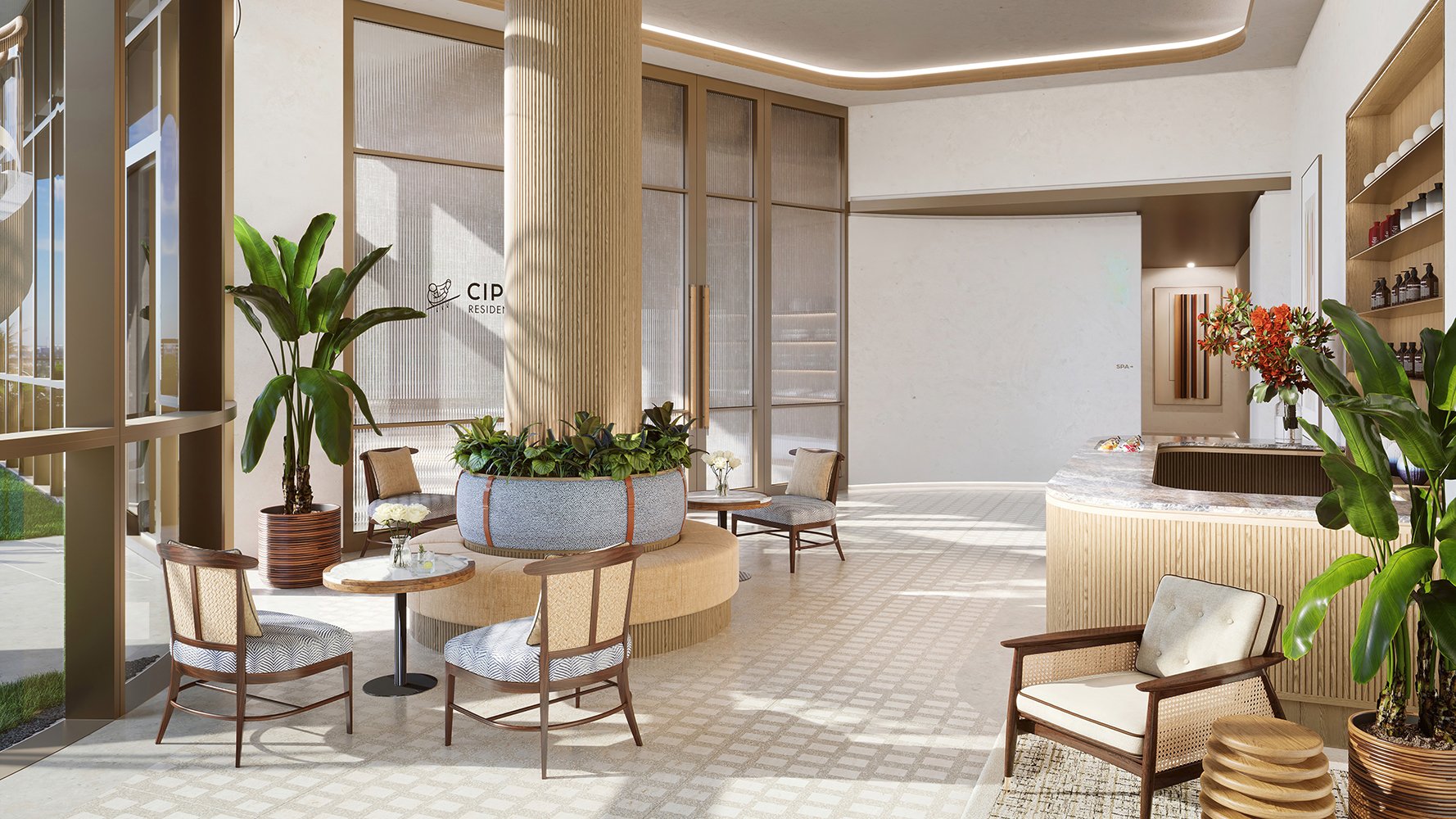
Wellness amenities are most valuable when they become part of a repeatable daily rhythm. A gym that requires a complicated journey through the building may be used less often. A pool deck that feels too exposed may not become a restorative refuge. A spa program that is beautiful but difficult to book can lose practical relevance.
Family buyers should ask how amenities function at different times of day and across different generations. A parent may value a quiet lounge, shaded garden, or calm pool environment more than a high-energy social room. Adult children may want fitness, dining convenience, and flexible work areas. Grandchildren may make family-friendly circulation, easy parking procedures, and durable common spaces more important than expected.
The strongest buildings allow wellness to feel natural rather than scheduled. Movement, rest, privacy, and connection should all be available without turning the building into a resort that overwhelms residents who simply want ease.
In aging-in-place decisions, staffing and operations can matter as much as architecture. A well-run lobby, thoughtful valet sequence, responsive management, and discreet security culture can reduce stress for everyone in the household. The goal is not dependence. It is confidence.
Families should observe how a building handles arrivals, packages, guests, service providers, and emergencies. A gracious condominium has a choreography that feels nearly invisible. That matters for older residents, but also for busy adult children coordinating appointments, family visits, household help, or seasonal transitions.
Privacy is equally important. Aging well at home should not mean living publicly. Consider whether service access, elevator landings, amenity routes, and staff interactions preserve discretion. In premium buildings, the most valuable service often feels anticipatory rather than intrusive.
A building cannot solve every lifestyle question. Neighborhood fit shapes whether aging-in-place feels effortless or limiting. Family buyers comparing Brickell, Aventura, Surfside, Fort Lauderdale, Palm Beach, and Coconut Grove should think beyond brand recognition and ask how each location supports daily life.
Urban districts may offer energy, dining, and convenience, but families should weigh pace, traffic patterns, and the feel of arrival. Quieter coastal or village-like settings may provide a softer rhythm, though buyers should still assess access to family, services, cultural routines, and the social life they actually want.
The right neighborhood is the one that reduces dependence on heroic planning. If every errand, visit, appointment, or dinner requires coordination, the residence may feel less livable over time. If the surrounding environment supports familiar habits, family rituals, and dignified independence, the home becomes more resilient.
Before making an offer, family buyers should move through the residence slowly and imagine several versions of the future. One version includes active hosting. Another includes recovery after a procedure. Another includes a parent staying for a season. Another includes adult children using the home as a family base.
Ask whether the residence can flex without renovation. Ask whether furniture placement can create clear paths. Ask whether a secondary bedroom could function as a calm suite for longer stays. Ask whether the building’s wellness amenities are easy to reach, easy to reserve, and comfortable for different personalities.
It is also worth discussing rules and operations in detail. Pet policies, guest procedures, service elevator access, renovation rules, parking, and staff coordination can affect family life. These are not glamorous subjects, but they often determine whether a beautiful condo remains beautiful in practice.
The most compelling aging-in-place condo does not announce itself as such. It feels polished, calm, and deeply considered. It gives a family room to host and room to retreat. It offers amenities that support health without making wellness feel performative. It respects privacy while making help accessible. It allows a residence purchased today to remain relevant as the family changes.
For South Florida buyers, this is a particularly elegant form of due diligence. It shifts the conversation from square footage alone to the lived intelligence of the home. The best condominium is not merely the one that impresses during a showing. It is the one that continues to serve the family quietly, beautifully, and without friction.
What does aging-in-place mean in a luxury condo? It means choosing a residence that can support comfort, autonomy, and changing needs over time without feeling clinical or compromised.
Should younger family buyers care about aging-in-place features? Yes. These choices also help with guests, parents, children, recovery periods, and long-term resale appeal to practical buyers.
Which rooms matter most for aging-in-place planning? The primary suite, bathrooms, kitchen, entry sequence, terraces, and guest suites usually deserve the closest review.
Are wellness amenities enough to make a condo age-friendly? No. Amenities help, but layouts, elevator access, staffing, privacy, and neighborhood convenience are just as important.
How should families evaluate a condo floor plan? Walk through daily routines on paper, including arrival, rest, meals, outdoor time, guests, and possible caregiving needs.
Is a larger condo always better for multigenerational living? Not always. Intelligent separation, circulation, storage, and privacy can matter more than raw square footage.
Why does building staff matter in this decision? Thoughtful operations can make arrivals, guests, deliveries, service providers, and unexpected needs feel easier and more discreet.
What should buyers ask about terraces? Ask whether access feels easy, seating can be shaded, thresholds are comfortable, and the outdoor area will be used often.
Can an elegant condo still be practical for aging-in-place? Yes. The strongest residences combine refined design with subtle adaptability, calm circulation, and daily ease.
When should families discuss these needs with an advisor? Early in the search, before preferences harden around views or finishes that may not support long-term comfort.
For a discreet conversation and a curated building-by-building shortlist, connect with MILLION.
If branded residences are on your mind — as a home or as an allocation — we would be glad to share what we are seeing, privately.
Begin a quiet conversation