For ultra-prime buyers, staff parking is not a minor operational detail. It can influence daily privacy, service quality, carrying costs, and the long-term desirability of a South Florida trophy penthouse.
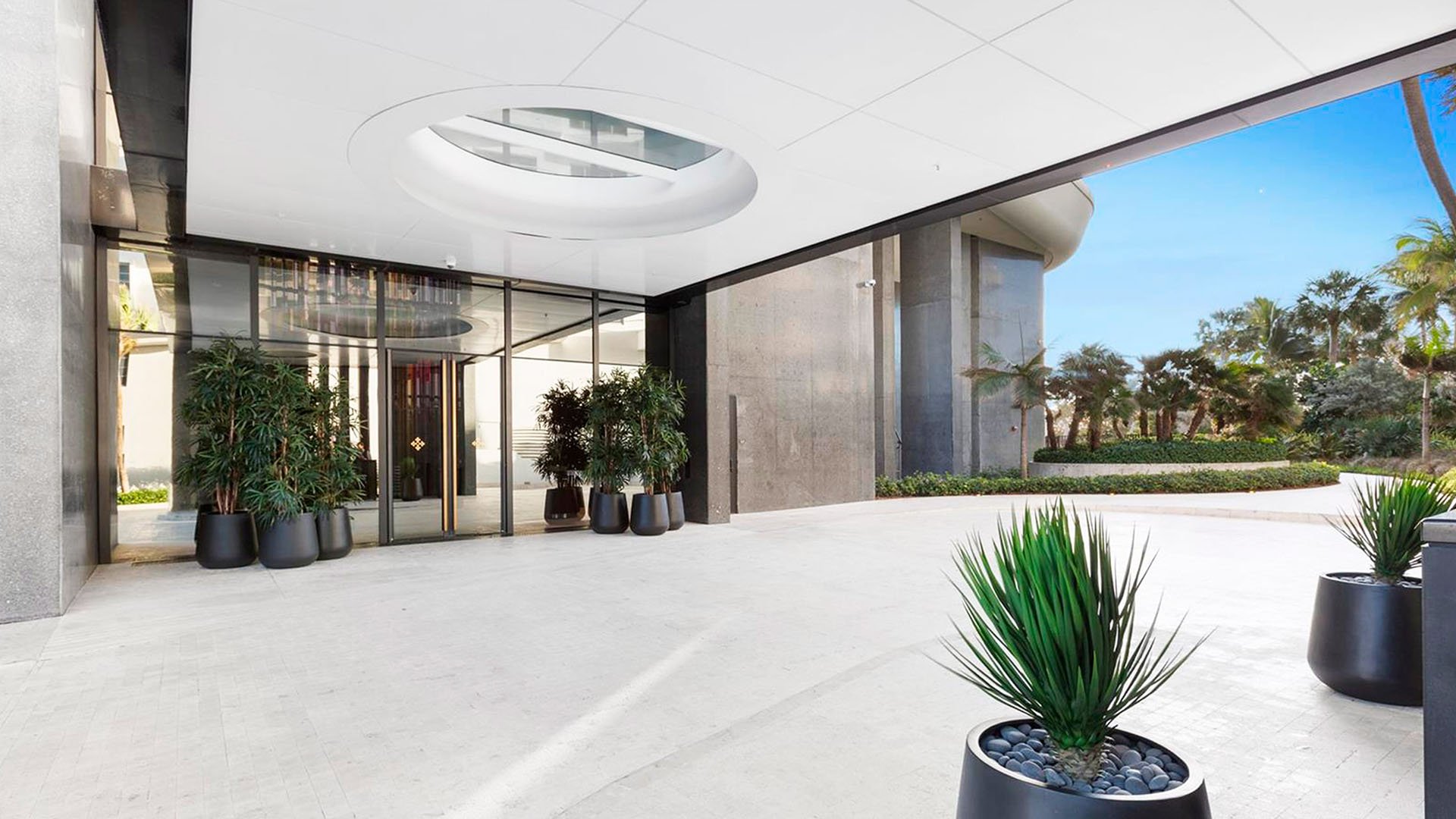
A South Florida trophy penthouse is usually evaluated from the top down: skyline, water view, terrace depth, ceiling height, elevator privacy, finishes, and the quality of the resident experience. Yet the true cost of ownership often begins at grade, in the choreography of arrivals. For a household that relies on a chef, housekeeper, nanny, driver, personal assistant, trainer, stylist, security professional, dog walker, or rotating service vendors, staff parking protocols can be as consequential as an additional room.
The issue is not whether a building has parking. It is how parking is governed. A protocol that seems manageable during a single showing can become expensive when repeated twice a day, five days a week, across multiple staff members and service providers. The friction may appear as valet charges, lost time, scheduling conflicts, interrupted privacy, or the quiet inconvenience of essential staff entering through a route that does not match the household’s rhythm.
In the best buildings, the arrival sequence feels invisible. In less compatible settings, it becomes a recurring tax on attention.
The first question is simple: where does staff park, and under what rules? A buyer should understand whether staff may use assigned resident spaces, guest parking, valet, loading areas, or a separate service zone. They should also clarify whether overnight parking is allowed, whether recurring staff can be registered, and whether vendors must be announced for every visit.
For a penthouse with full-time household support, details matter. Can a chef arrive before breakfast service without disrupting the front desk? Can a nanny park during school pickups and weekend coverage? Can a driver wait discreetly without circulating through the garage? Can a house manager coordinate deliveries without creating repeated valet movements? None of these questions is glamorous, but each affects how a residence actually lives.
This is especially relevant in dense urban settings such as Brickell, where buildings like The Residences at 1428 Brickell sit within a highly choreographed vertical lifestyle. When the surrounding neighborhood is active, the internal building protocol becomes the private household’s buffer against outside congestion.
Parking policy rarely appears as a headline in a penthouse valuation, but it can influence a buyer’s willingness to pay. A residence that accommodates daily staff without drama offers a different ownership experience than one that requires constant exception requests. The difference may not appear as a line item in the asking price, but sophisticated buyers tend to price friction instinctively.
That friction has layers. There is the direct cost of valet or parking arrangements. There is the opportunity cost of staff time lost to access delays. There is the management cost of coordinating multiple people through a tightly controlled front desk. There is also the lifestyle cost: a home that should feel effortless can begin to feel administered.
For buyers comparing waterfront and urban residences, the protocols can separate two otherwise similar properties. A Miami Beach penthouse at The Perigon Miami Beach may appeal to one household rhythm, while a mainland tower may suit another. The point is not that one is inherently better. The point is that service logistics should match the way the owner lives.
Staff parking is also a privacy issue. A household that relies on regular support often wants the service experience to be discreet, not theatrical. If staff must repeatedly pass through public resident areas, wait at the porte cochere, or negotiate access in front of guests, the residence loses some of its composure.
The most refined protocols create separation without making service feel secondary. There is a difference between discreet access and inconvenient access. Ultra-premium buyers should look for a building culture that respects both residents and the professionals who support their homes. A poorly designed process can produce staff turnover, vendor hesitation, and avoidable tension with management.
On Fisher Island, where privacy is a defining part of the ownership proposition, a residence such as The Residences at Six Fisher Island naturally invites questions about arrival management, household staffing, and the daily movement of service professionals. The more private the setting, the more important it becomes to understand how privacy is operationalized.
For many trophy penthouse owners, the residence is part home, part hospitality operation, and part family office asset. Staff parking protocols should therefore be reviewed with the same seriousness as insurance, building reserves, elevator access, and terrace maintenance.
A practical review includes recurring staff registration, vendor access windows, parking validation policies, guest parking limits, garage clearance, electric vehicle charging access, waiting zones for drivers, and delivery procedures. Buyers should also ask how the building handles holidays, events, storms, and peak occupancy periods, when garages and valet operations are under the most pressure.
In Sunny Isles Beach, where oceanfront towers often serve buyers with seasonal households and frequent guests, St. Regis® Residences Sunny Isles illustrates why a buyer may want to think beyond the assigned spaces attached to the residence. The relevant question is broader: can the building support the household’s full operating pattern?
A penthouse that is difficult to staff can narrow its future buyer pool. The next owner may have different tastes in furniture or finishes, but ultra-prime households often share a need for reliable service access. If the parking protocol is restrictive, unclear, or dependent on informal exceptions, that uncertainty may become part of the negotiation.
This is why buyers should not treat staff parking as a closing-week detail. It belongs in the early due diligence conversation, ideally before emotional commitment hardens around the view. Review the rules, ask scenario-based questions, and understand which accommodations are written policy rather than courtesy. Courtesy can change with management. Written protocol has more durability.
In Bal Harbour, a property such as Rivage Bal Harbour may draw attention for its setting and residential character, but an experienced buyer will still ask how the everyday mechanics work. The most elegant home is the one that continues to feel elegant on an ordinary Tuesday morning.
Why does staff parking matter for a trophy penthouse? It affects daily service, privacy, timing, and household efficiency. For staffed residences, those factors can meaningfully change the ownership experience.
Should staff parking be reviewed before making an offer? Yes. It is best addressed early, while the buyer still has negotiating flexibility and can compare buildings on practical lifestyle terms.
Is valet access enough for household staff? Sometimes, but not always. Buyers should confirm costs, wait times, recurring access procedures, and whether valet use is appropriate for daily staff.
Can parking protocols affect resale value? They can influence desirability among buyers with staffed households. A smoother service model may make a penthouse easier to live in and easier to position later.
What should seasonal owners ask about staff parking? They should ask how the building handles peak occupancy, guest arrivals, vendors, holidays, and extended periods when multiple staff members may be present.
Do drivers need different rules than housekeepers or chefs? Often they do. A driver may need a waiting area or repeat access, while household staff may need predictable entry for longer shifts.
Are vendor rules as important as employee rules? Yes. Designers, florists, caterers, trainers, and maintenance providers can create frequent access needs that should be supported by clear protocols.
Should buyers ask for written parking policies? Yes. Written policies reduce ambiguity and help distinguish formal rights from informal building courtesies.
What is the biggest red flag? A protocol that depends on repeated exceptions. If daily living requires constant approval, the home may carry hidden operational friction.
Can a great view offset weak staff parking? For some buyers, perhaps. For a fully staffed household, however, operational ease is part of the luxury proposition itself.
When you're ready to tour or underwrite the options, connect with MILLION.
If branded residences are on your mind — as a home or as an allocation — we would be glad to share what we are seeing, privately.
Begin a quiet conversation