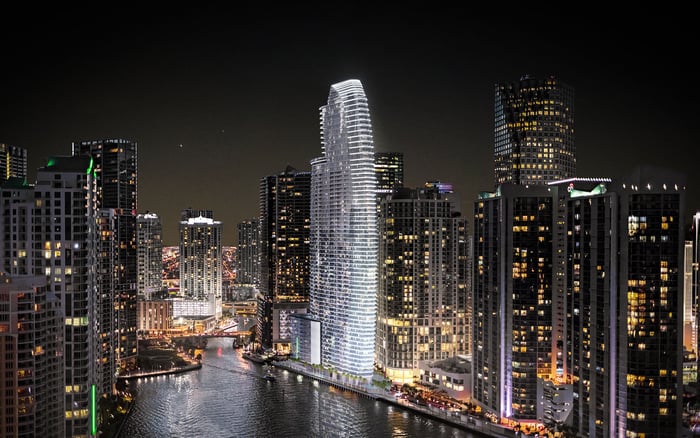
A discreet buyer’s guide to two of Miami’s most brand-forward towers, focusing on how deposits are staged, how escrow is governed in Florida, and what “hotel services” can mean for day-to-day ownership.

In Miami’s current cycle of ultra-premium development, the most consequential decision is often not whether you prefer Biscayne Bay views or a riverfront address. It’s how you commit capital-and what, exactly, you’re buying beyond the walls of the residence.
Two projects capture this moment with unusual clarity: Waldorf Astoria Residences Downtown Miami, a supertall statement on Biscayne Boulevard, and Faena Residences Miami Downtown Miami, a two-tower vision shaped by a lifestyle-forward brand on the Miami River. Both appeal to buyers who value design, discretion, and service. Yet the deposit cadence, escrow mechanics, and operational DNA can be materially different.
This guide translates common buyer concerns into a practical framework: how deposits are staged, what escrow protections generally mean in Florida, and how “hotel services” or “programming” can influence everything from staffing to privacy.
Waldorf Astoria Residences Miami is planned in Downtown Miami on Biscayne Boulevard. The tower is widely recognized for its stacked, offset glass “cubes.” Operationally, the building combines private residences with an on-site Waldorf Astoria hotel component-an arrangement that often imports a high-touch service culture into day-to-day residential life.
Faena Residences is marketed as a two-tower luxury residential project on the Miami River. One of the most defining elements described in marketing is a skybridge connecting the towers. From a buyer’s standpoint, a skybridge is more than a visual signature: it suggests where amenities and circulation may concentrate, which can influence visitor flow and the practical realities of privacy.
If you’re cross-shopping the broader Downtown and Brickell orbit, it can be useful to sanity-check alternatives with different ownership profiles. For example, Aston Martin Residences Downtown Miami is often considered by buyers who want iconography and waterfront presence in the Downtown sphere, while 2200 Brickell can appeal to those prioritizing a more residential tempo within Brickell.
In South Florida luxury, deposit schedules function as a kind of underwriting narrative. They reveal capital strategy-but they also define the buyer’s required liquidity and timeline discipline.
For Waldorf Astoria Residences Miami, deposit schedules are commonly marketed as staged installments prior to closing, followed by the balance due at closing. The exact cadence and percentage triggers can vary by unit and by the executed purchase agreement.
For Faena Residences, marketing commonly describes an initial reservation/contract structure followed by additional staged payments tied to construction milestones, with a larger share due before closing than some competing projects. As with any preconstruction purchase, the precise triggers and totals can vary with the purchase agreement and addenda.
How should a luxury buyer interpret the difference in staging?
First, think in terms of opportunity cost. A lower pre-closing commitment can preserve flexibility for buyers who prefer to keep more capital liquid for portfolio allocation, business needs, or other acquisitions. A higher pre-closing commitment can be acceptable when it aligns with strong conviction in the end product and a preference for certainty of close over optionality.
Second, think in terms of planning milestones. Deposit “events” don’t just move funds; they force decisions. Each trigger can accelerate financing readiness, the sale of an existing home, international tax timing, and the household logistics of a future move.
Luxury buyers often treat escrow as a binary-either it exists or it doesn’t. In reality, escrow is a defined legal framework with rules for how deposits are held and handled.
Condo deposits in Florida are governed by Florida Statute 718.202. This is not a substitute for counsel reviewing the condo documents, but the existence of a statutory regime is central to risk assessment because it establishes requirements around the handling of purchaser deposits in condo sales.
Practically, your diligence should stay focused on three contract-sensitive areas:
The escrow language itself and how it aligns with the statute.
Any provisions describing whether and when deposits may be accessed or applied.
The buyer’s remedies around delays, outside dates, and what happens if milestones shift.
These are not “brochure” issues. They live in the purchase agreement exhibits and the condo documents. At this level, details that appear minor-such as how a milestone is defined or how notice is delivered-can become decisive.
The most meaningful comparison between these projects is not limited to architecture. It’s the service model.
Waldorf Astoria’s residential offering emphasizes hotel-style services and amenities as a core component of ownership. For the buyer, that can translate into a more institutional operating rhythm: a service culture that is trained, standardized, and built to deliver consistency. In many hotel-adjacent buildings, the true luxury isn’t spectacle-it’s reliability, staffed discretion, and the ability to live with minimal friction.
Faena positions its Miami River residences around lifestyle programming and amenity concepts that are brand-driven. This can appeal to buyers who want an expressive residential environment, with curated moments and a sense of cultural identity woven into the building’s social fabric.
Neither model is universally superior. Each simply optimizes for a different definition of luxury:
If “luxury” means predictable service, a hospitality operating mindset can be a decisive advantage.
If “luxury” means a lived-in aesthetic and cultural atmosphere, a programming-forward brand can feel more aligned.
The practical note for any buyer: service intensity often correlates with ongoing operating costs. The key question isn’t whether fees exist; it’s whether the services you will actually use are the ones being staffed for.
For sophisticated buyers, the cleanest comparison comes down to a short set of checklists.
Capital and timing
Contract protections
Operations and lifestyle
If your search expands beyond Downtown and the Miami River, lifestyle contrasts can become even more pronounced. Buyers who want a distinctly wellness-oriented residential proposition often look at The Well Coconut Grove as a counterpoint, particularly when “services” means daily practice as much as concierge support.
What’s the core difference between Waldorf Astoria and Faena in a preconstruction context? The comparison usually comes down to deposit staging, escrow language in the contract package, and whether you prefer hotel-style services or lifestyle programming.
Are deposit schedules standardized across every unit in a tower? Not always; percentages and milestone triggers can vary by unit and by the executed purchase agreement and addenda.
What does “pre-closing deposits” mean in practice? It refers to the portion of the purchase price paid in installments before closing, typically tied to contract signing and construction milestones.
How are condo buyer deposits generally handled in Florida? Condo deposit handling is governed by Florida Statute 718.202, and the purchase agreement and condo documents should spell out how deposits are held and released.
What should buyers look for in the escrow section of a contract? Focus on where deposits are held, what conditions (if any) allow release, and what rights and remedies apply if timelines shift.
Why do “outside dates” and delay provisions matter? They define what happens if construction timelines move, including notice requirements and potential buyer remedies depending on the contract terms.
How can a hotel component affect the ownership experience? It can influence staffing, service culture, shared-space dynamics, and the overall operating rhythm of the building.
What is “lifestyle programming,” and why does it matter for privacy? Programming can increase events and visitor flow in shared spaces, which may be a benefit or a drawback depending on your preference for discretion.
Do higher service levels always mean higher monthly costs? Service intensity often correlates with operating costs, so buyers should evaluate whether the staffed services align with how they will actually live.
What’s the cleanest way to compare two branded projects before committing funds? Use a side-by-side checklist for deposit milestones, escrow/remedy language, and the service model you’ll rely on week to week, then have counsel review the full document set. For tailored guidance on Miami’s most discreet residential options, connect with MILLION Luxury.
If branded residences are on your mind — as a home or as an allocation — we would be glad to share what we are seeing, privately.
Begin a quiet conversation