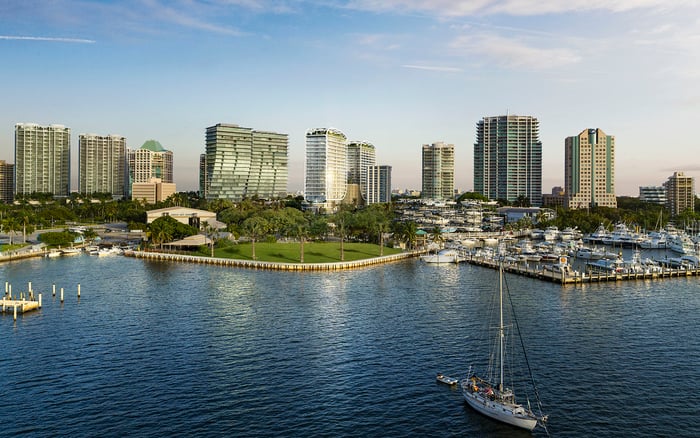
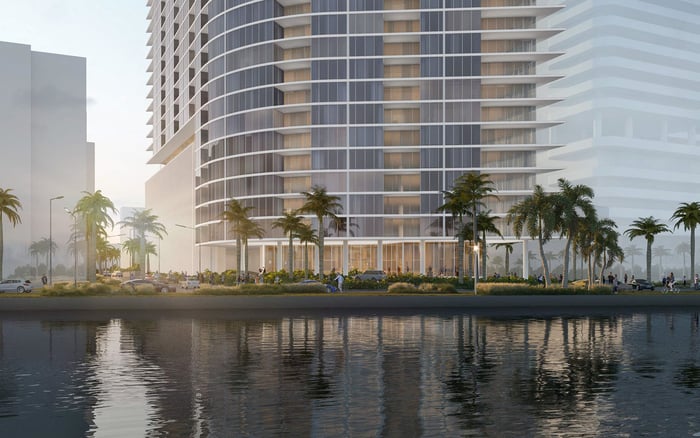
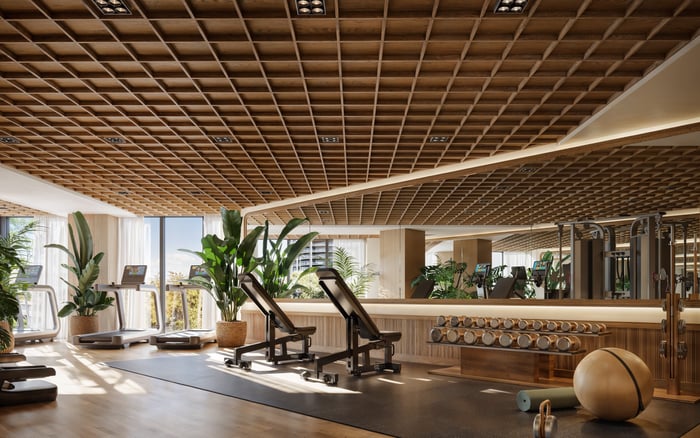
Wellness has become a primary value driver in South Florida luxury real estate, moving beyond the gym-and-spa era into whole-building ecosystems that prioritize air, water, light, acoustics, and restorative programming. As the wellness real estate category scales globally, buyers in Miami Beach, Brickell, Coconut Grove, and West Palm Beach are increasingly underwriting health performance the way they once underwrote views, brand, and service. Here are the ten trends defining 2026, plus how to evaluate them with the discernment a top-tier purchase requires.
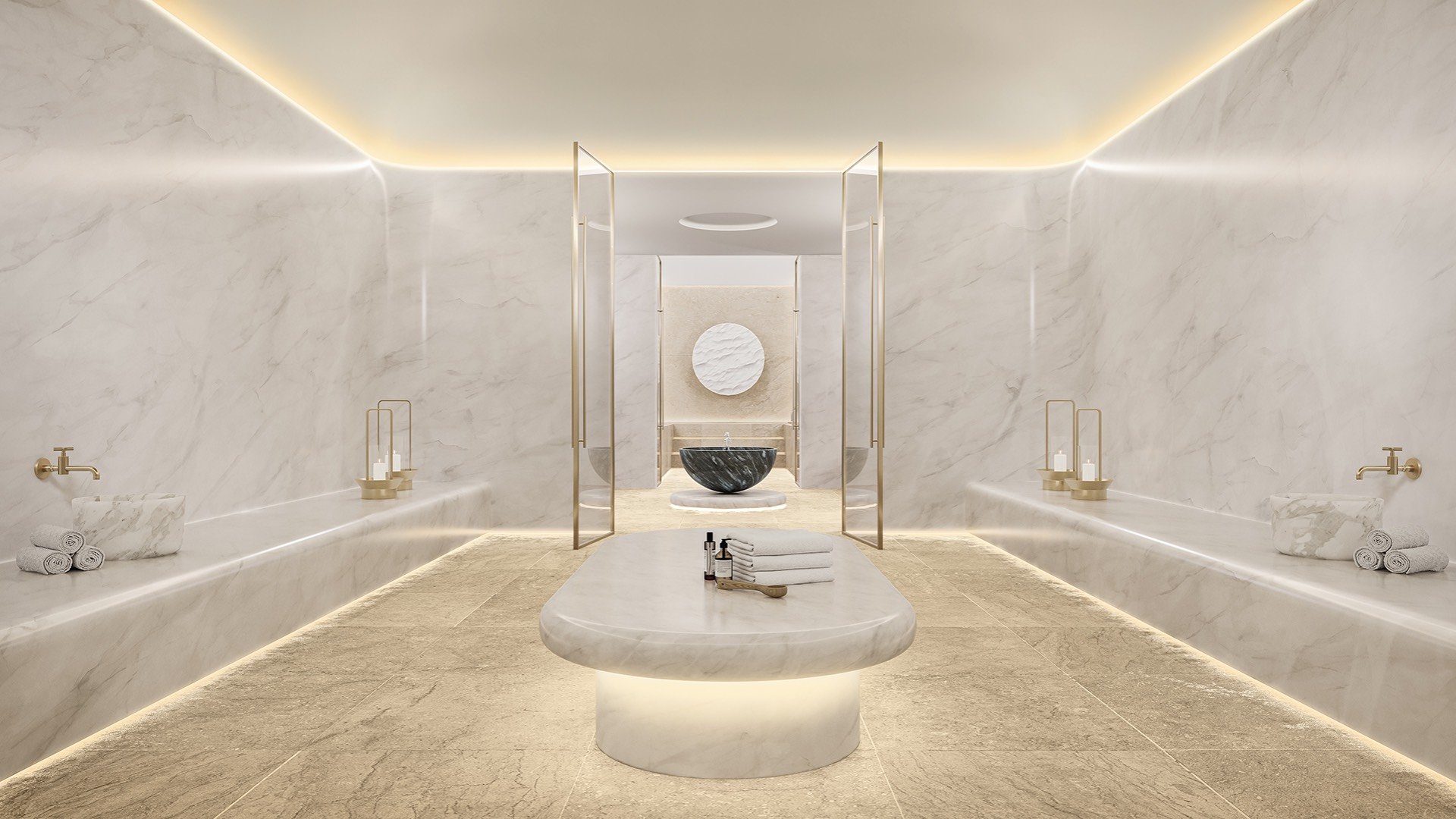
Wellness real estate has moved from trend to category. Globally, the sector reached $548 billion in 2024, up from $225 billion in 2019, and it continues to expand at a pace that outstrips broader construction growth. For South Florida buyers, that acceleration has created a new competitive frontier: buildings are no longer differentiated only by architecture, service, and view corridors, but by how convincingly they support sleep, recovery, calm, and longevity. In South Florida, the logic is straightforward. A climate built for outdoor movement, a buyer base that treats health as an asset, and a growing inventory of ultra-premium residences means wellness is increasingly underwritten as part of the purchase decision. And because wellness-focused residential properties have been associated with meaningful price premiums in many middle and upper market segments, the feature set is now being designed with the same rigor as a lobby, a marina, or a private club.
1. Total-home wellness ecosystems, air, water, light, sound, nature
The defining shift is holistic: wellness is no longer the fitness room downstairs. The most compelling buildings treat air quality, water quality, circadian-friendly lighting, sound comfort, and biophilic elements as an integrated system. Buyers should look for a coherent strategy across the residence, not a scattered menu of buzzwords.
2. Hotel-grade spa rituals brought into residential life, recovery as a service
Luxury wellness is becoming operational, not just architectural. Think structured programs, resident-facing rituals, and recovery environments that feel like a private membership rather than an amenity floor. In Coconut Grove, Four Seasons Residences Coconut Grove signals this direction through a more immersive spa-and-wellness ethos designed to make high-touch recovery feel routine.
3. Measurable wellness, not vibes, certifications and performance signals
As wellness claims proliferate, buyers are demanding clearer signals that imply standards, verification, and repeatable outcomes. Certification frameworks with defined rating levels have become a shorthand for health-focused building performance. Even when a building is not certified, the strongest offerings speak in the same plain language: filtration, ventilation, lighting strategy, and material choices that can be explained without ambiguity.
4. Acoustic wellness and “sound comfort”, the new privacy
Noise is no longer treated as a minor inconvenience. It’s increasingly understood as a wellness variable because it influences stress and sleep. For luxury buyers, acoustic comfort also equals discretion: stronger isolation and absorption can make a high-rise live more like a private home. Ask how the building addresses sound transmission between residences, mechanical noise, and common-area spillover, and then measure it against how you actually live, entertain, and work.
5. Air as an amenity, whole-home purification and particulate control
Indoor air quality has become a core luxury specification. Whole-home purification is framed around reducing particulates and allergens, especially relevant in humid, coastal environments where residents move between open-air terraces and conditioned interiors. The best implementations are integrated and quiet, not a portable device that becomes visual clutter.
6. Water wellness, filtration, taste, and daily rituals
Water strategy is increasingly treated as part of the residential health stack. In 2026, the aspiration is not only better-tasting drinking water, but a consistent, confidence-inspiring experience across kitchen, bath, and spa-style programming. Buyers should clarify whether water claims reflect building-level systems or isolated point-of-use add-ons.
7. Contrast therapy goes residential, cold plunge and temperature precision
Cold plunge and contrast therapy have been positioned as modern recovery rituals, with newer systems emphasizing precise temperature control, filtration, and app-connected tracking. In South Florida’s luxury landscape, the deciding factor is placement and privacy: is the experience designed for calm, or does it feel like a novelty squeezed beside a crowded pool deck?
8. Mind-body studios replace oversized gyms, breathwork, Pilates, mobility
The “bigger gym” era is giving way to more intentional programming: spaces for yoga, Pilates, breathwork, and mobility alongside strength and cardio. For buyers, the metric is usability. A thoughtfully scaled studio, well lit and acoustically considered, often outperforms a cavernous facility that photographs well but rarely feels inviting.
9. Smart-home health monitoring, the quiet rise of supportive living
Smart-home health monitoring is emerging as a bridge between luxury and longevity. Consumer-focused systems increasingly combine sensors and automation to track health-related signals and support aging-in-place or chronic-condition management. In ultra-premium residences, the advantage is discreet integration: technology that supports wellbeing without turning the home into a clinic.
10. Biophilic design becomes a baseline, calmer interiors, not just greenery
Biophilic design is linked in research literature to improved wellbeing outcomes, including stress reduction and mental health benefits, through increased exposure to natural elements. In 2026 luxury, biophilia is not limited to a few lobby plants. It shows up in materiality, daylight choreography, landscape views, and transitions between indoor and outdoor spaces.
Different neighborhoods express wellness in different ways, and sophisticated buyers evaluate fit as much as finish. In Brickell, wellness is often engineered into vertical living for high-output schedules. Buildings compete on filtration, lighting, recovery suites, and the ability to move from residence to training to meetings with minimal friction. If your day oscillates between intensity and restoration, the neighborhood’s new luxury product is designed to meet you there, including options like 2200 Brickell that signal a more residential, lifestyle-forward interpretation of the district. In Miami Beach, wellness tends to be sensory: ocean air, walkability, and the psychology of light and horizon. Here, acoustic comfort and privacy become decisive, especially in boutique formats where a calmer building culture can be part of the value proposition. For a wellness-oriented beach lifestyle, 57 Ocean Miami Beach is the kind of address buyers consider when they want the Beach experience with a more intimate residential cadence. In Coconut Grove, wellness reads as nature-forward and grounded. The lifestyle is less about spectacle and more about daily rituals that feel private: shaded streets, parks, water access, and a preference for buildings that emphasize calm materials and effortless indoor-outdoor living. The neighborhood’s appeal is that it makes wellness feel like the default, not an added feature, which is why The Well Coconut Grove resonates with buyers who want health embedded into how the building is conceived. In West Palm Beach, the conversation often blends waterfront serenity with a more club-like amenity culture. The strongest projects treat wellness as both programming and place: spaces for recovery, movement, and quiet that can support a full day without leaving the property. Buyers drawn to this energy frequently explore Alba West Palm Beach for its fit within a lifestyle that balances discretion, design, and daily wellbeing.
In 2026, the most common mistake is paying for wellness language instead of wellness performance. A disciplined evaluation keeps the purchase grounded. First, separate architectural wellness from operational wellness. Beautiful spaces matter, but programming and maintenance determine whether they remain restorative or become underused showpieces. Ask what is staffed, what is self-serve, and what is realistic for your routine. Second, pressure-test the fundamentals: air movement, filtration strategy, humidity control, and noise mitigation. These elements shape sleep and day-to-day comfort, and they’re difficult to retrofit. Third, evaluate light as a lived experience across the day. Look for residences that feel bright without glare, and that transition elegantly into evening to support calmer sleep cues. Finally, prioritize privacy. The highest form of wellness in luxury living is often the ability to recover without being observed: discreet arrival sequences, quiet elevators, thoughtful layouts, and acoustic integrity.
Wellness is not a single amenity that goes out of fashion. It is an infrastructure story: better air, stronger sound comfort, better light, and more usable recovery spaces age well because they elevate daily life. As the category grows and buyers become more fluent, the market tends to reward residences that can articulate their wellness value in tangible terms. In South Florida, where new development competition is constant, wellness-forward design is becoming one of the more durable differentiators. It also aligns with a broader shift in luxury: the home is expected to support multiple roles, retreat, studio, office, and recovery environment, without compromising aesthetics.
What is “wellness real estate” in luxury terms? It refers to homes designed to support health through air, water, light, acoustics, and restorative amenities.
Are wellness features associated with higher prices? Wellness-focused residential properties have been associated with price premiums in many market segments.
Which building elements matter most for sleep quality? Start with acoustics, air quality, and lighting strategy, then evaluate bedroom placement and privacy.
Is acoustic design really a wellness feature? Yes. Noise can affect stress and sleep, so sound comfort is increasingly treated as a health variable.
What should I ask about air quality in a condo? Ask how air is filtered and circulated, and whether purification is integrated and quiet in daily use.
Do cold plunge amenities add real value? They can, when designed for privacy and maintained properly; otherwise they risk becoming a novelty.
How is biophilic design expressed beyond plants? Through daylight, natural materials, landscape views, and seamless indoor-outdoor transitions.
Does smart-home health monitoring belong in a luxury residence? It can, if it is discreet and supports supportive living without feeling clinical or intrusive.
How can I compare wellness claims between buildings? Look for measurable strategies and consistent execution, not just a long amenity checklist.
Which South Florida areas align best with wellness living? Brickell, Miami Beach, Coconut Grove, and West Palm Beach each offer a distinct wellness lifestyle. For a private consultation on wellness-forward residences across South Florida,
For tailored guidance, speak with MILLION Luxury.
If branded residences are on your mind — as a home or as an allocation — we would be glad to share what we are seeing, privately.
Begin a quiet conversation