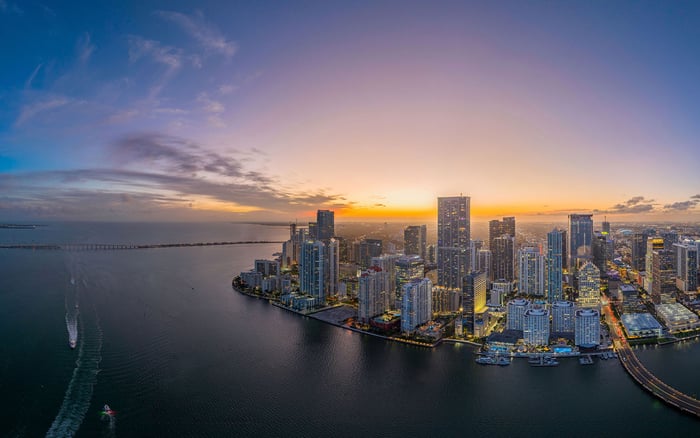
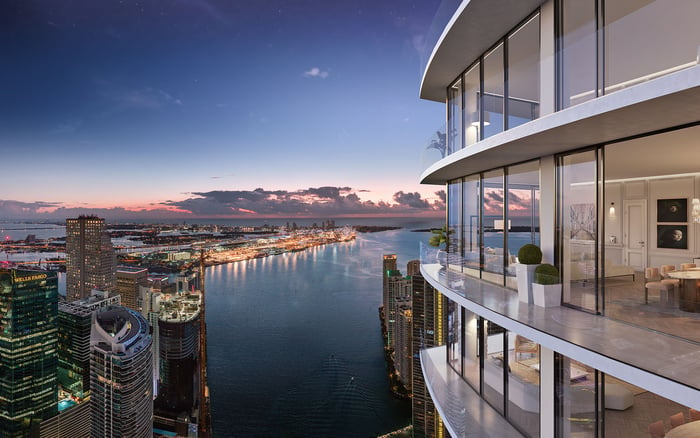
In South Florida’s luxury market, retirees and young families can look at the same home and see two entirely different outcomes. This guide breaks down the decision framework that matters most at the high end: taxes and long-term wealth planning, maintenance and predictability, proximity to healthcare and schools, and the layouts and amenities that make daily life effortless. Use it to calibrate your priorities and match them to the right property type, neighborhood feel, and building profile.
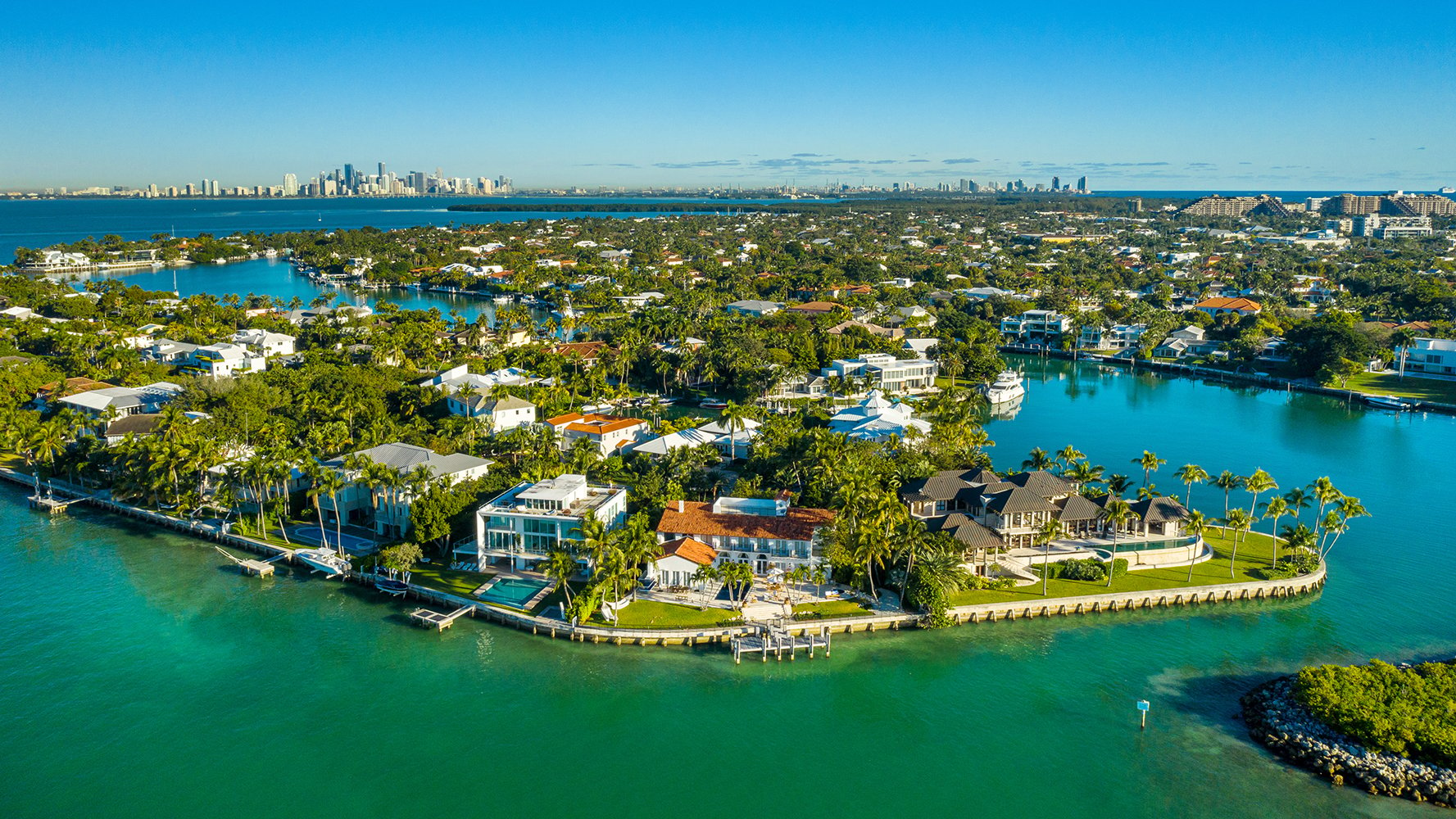
Luxury in South Florida does not map to a single buyer profile. Retirees and young families can arrive with equally strong purchasing power, yet their definition of a “good” home often diverges as soon as you look beyond finishes and views.
Retiree households tend to prioritize simplicity, predictability, and longevity: a home that feels effortless today and still functions seamlessly tomorrow. Young families, by contrast, often optimize for rhythm-schools, parks, safe independence for kids, and the daily loop between practices, appointments, and weekends on the water.
This guide helps you pressure-test what matters most, then translate those priorities into the right property type, neighborhood character, and building profile across Miami-Dade, Broward, and Palm Beach.
For affluent households selecting a primary residence, Florida’s tax posture is part of the overall lifestyle equation. The absence of a state individual income tax remains a consistent draw for high earners establishing a long-term base in South Florida. Florida also does not levy a state estate tax, and there is no state inheritance tax-an important consideration for families planning across generations.
On the property-tax side, Florida’s Homestead Exemption can reduce a primary residence’s taxable assessed value, helping lower property taxes for qualifying residents. For those who qualify, Miami-Dade also offers an additional Senior Exemption for residents age 65 and older, subject to income and residency requirements.
The practical takeaway is not a promise of savings, but a framework. For retirees, exemptions can make “aging in place” more comfortable. For families, they can support a higher-cost neighborhood choice by easing long-term carrying costs. In both cases, the home should be underwritten as a multi-year decision-not a single-season purchase.
At the luxury end, the condo-versus-home decision is less about square footage and more about who you want managing your time.
Many retiree buyers prefer low-maintenance living, gravitating toward condos or managed communities where exterior maintenance and building operations are handled by the association. That preference often aligns with a desire for predictable monthly costs and professional HOA or community management-specifically to reduce surprise maintenance burdens.
Single-family homes typically offer greater autonomy, privacy, and the ability to customize. They also require more upkeep and more decision-making, from landscaping to roof timelines to storm preparation. Condos shift much of that operational complexity to the association in exchange for shared rules, shared systems, and recurring fees.
In practice, an active retiree who travels frequently may view a full-service tower as a form of risk management. A young family may view a single-family home as breathing room and a steadier routine for children-even if the homeowner responsibilities are heavier.
Retirement in South Florida is often framed as leisure, but the most sophisticated buyers treat it as design-designing the next decade so it’s easy to live well.
Healthcare proximity and age-supportive services are frequently prioritized. The goal is not only to be near top-tier care, but to reduce the friction of accessing it. Location choices are often driven by the ability to keep the same doctors, minimize travel time for appointments, and maintain a social life without long drives.
Social programming matters, too. Luxury retirement communities are often chosen for built-in clubs, events, and fitness classes that help reduce isolation and keep daily life engaged. Golf can also be a core lifestyle driver: Florida is a major golf destination, and many communities are built around access to the game and its social orbit.
For long-range planning, some affluent retirees evaluate a continuing care retirement community model, which can provide a spectrum of care from independent living through higher-care levels. The appeal is continuity: a plan to remain in one community as needs evolve.
In Miami’s urban core, a managed luxury condominium can also operate like a private club with vertical convenience. For example, 2200 Brickell suits buyers who want refined city living, a lock-and-leave mindset, and the ability to trade upkeep for service. In West Palm Beach, Alba West Palm Beach similarly aligns with a retiree preference for convenience and an amenity-forward routine near dining, culture, and waterfront walks.
Families often buy a neighborhood first and a house second. School access and quality are central for many, not only for education but for the lived geography of a family’s week: pickup lines, after-school programs, sports, and friendships that form within a tight radius.
In Miami, neighborhoods frequently cited as family-friendly include Coconut Grove, Coral Gables, and Pinecrest, reflecting demand for parks, a stable residential feel, and the sense that daily life can be handled without constant cross-city navigation. In Palm Beach County, Jupiter is also often highlighted for families seeking a coastal lifestyle paired with parks and a strong community cadence.
Security and reduced through-traffic can matter as much as the home itself. Gated or security-focused neighborhoods often attract families because they can reduce cut-through driving and increase perceived safety for children’s outdoor independence.
Space planning has evolved as well. Multigenerational living is influencing luxury floorplans, increasing demand for secondary suites, guest wings, and flexible layouts that allow privacy for grandparents or extended family without forcing anyone into a compromised routine.
For families who want an elevated, managed lifestyle without losing neighborhood texture, Coconut Grove offers a compelling middle ground. Four Seasons Residences Coconut Grove can appeal to parents who want service and walkability while staying close to parks and a community-centric environment.
New construction tends to attract luxury buyers who want modern systems, warranties, and contemporary layouts, including open plans and tech-ready infrastructure. Retirees may value reduced immediate maintenance and the confidence that major building components are newer. Families may value the same advantages for a different reason: fewer home disruptions during busy years, and layouts that support supervision, gathering, and flexible use.
A useful way to evaluate new versus resale is to ask a simple question: do you want to renovate a lifestyle, or buy one that is already engineered? For many buyers, the premium paid for newer systems is as much about time as it is about design.
South Florida offers multiple luxury “modes,” and each one resonates differently depending on life stage.
Brickell is efficient, vertical, and optimized for convenience. It suits buyers who want dining, fitness, and waterfront access without heavy reliance on a car. Miami Beach brings a more resort-like sensibility; for some buyers, that translates into a daily vacation feeling. Sunny Isles can skew toward oceanfront high-rise living and second-home ease.
West Palm Beach has been rising in prominence as a luxury destination and has experienced significant high-end appreciation over the past decade. For buyers, that momentum can read as a vote of confidence in the area’s long-term relevance-while still offering a different pace than Miami.
On the oceanfront, a boutique-feeling building can deliver a heightened sense of privacy that appeals to both demographics, for different reasons: retirees may want calm, while families may want controlled access and a smaller social field to navigate. 57 Ocean Miami Beach fits buyers who want Miami Beach energy nearby but prefer a more discreet residential tone at home.
Luxury buyers can save time by aligning tours to a few non-negotiables.
First, decide whether you are buying convenience or control. If you travel frequently, prefer a managed environment, or want to minimize household administration, a full-service condo is often the cleanest answer. If privacy, outdoor space, and customization are the priority, a single-family home or a low-density community often wins.
Second, map your “essential triangle.” Retirees often build it around healthcare, friends, and the airport. Families often build it around schools, parks, and the places children spend time every day.
Third, underwrite predictability. Retirees frequently prioritize predictable monthly costs and professional management. Families may accept more variability, but should still account for the hidden time cost of upkeep.
Finally, review the floorplan for your real life. Multigenerational flexibility, guest privacy, and work-from-home separation can matter as much as the primary suite.
For buyers who want a clean, high-design coastal lifestyle with a managed profile in Broward, 2000 Ocean Hallandale Beach can suit a lock-and-leave posture while keeping the oceanfront as a daily anchor.
Is Florida’s lack of state income tax a meaningful factor for luxury buyers? Yes. It can materially shape long-term net cost for households relocating primary residency.
Does Florida have a state estate or inheritance tax? Florida does not levy a state estate tax and has no state inheritance tax.
What is the Homestead Exemption and who uses it? It is a primary-residence exemption that can reduce taxable assessed value for qualifying owners.
Is there a senior property-tax exemption in Miami-Dade? Miami-Dade offers an additional Senior Exemption for qualifying residents age 65 and older.
Why do many retirees prefer condos in South Florida? Condos can deliver low-maintenance living where exterior upkeep and operations are handled by the association.
What do young families typically prioritize when choosing a neighborhood? School access and day-to-day logistics often drive decisions as much as the home itself.
Which Miami neighborhoods are often considered family-friendly? Coconut Grove, Coral Gables, and Pinecrest are frequently cited for a stable residential feel and parks.
Do gated communities matter for family buyers? They can. Reduced through-traffic and a security-focused environment may increase perceived safety.
Why is multigenerational space becoming more important in luxury homes? Flexible layouts support privacy and comfort for grandparents or extended family under one roof.
Is new construction mainly about aesthetics? Not only. Many buyers value newer systems, warranties, and modern layouts that reduce near-term disruption.
For a tailored shortlist and next-step guidance, connect with MILLION Luxury.
If branded residences are on your mind — as a home or as an allocation — we would be glad to share what we are seeing, privately.
Begin a quiet conversation