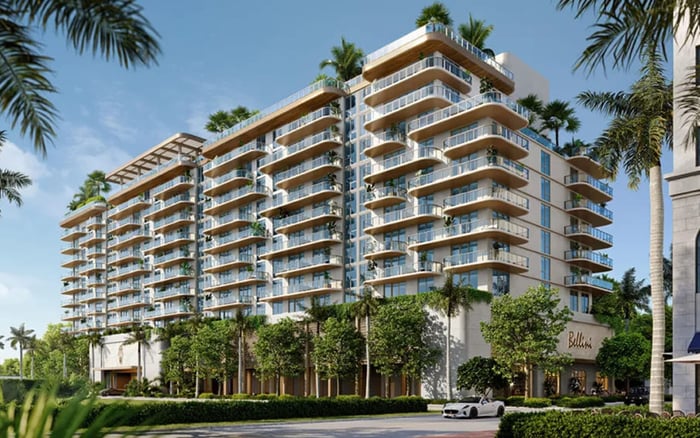
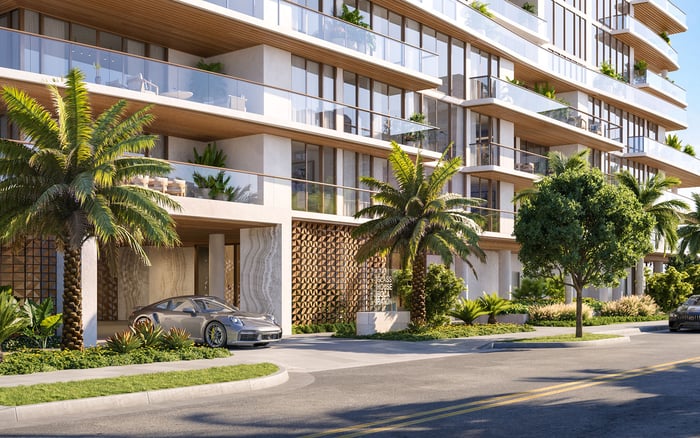
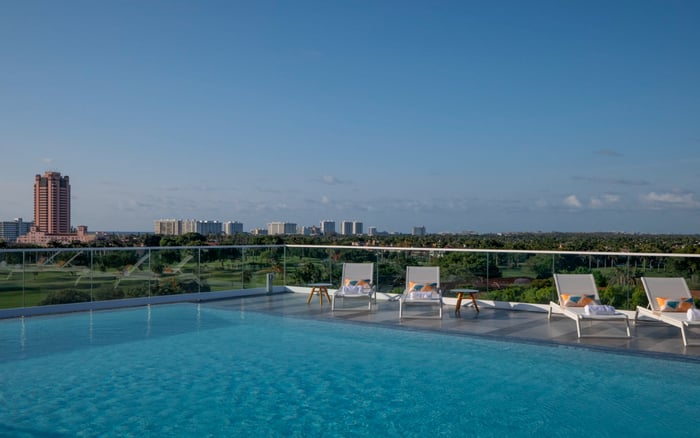
Three downtown Boca Raton condo concepts are defining the next wave of ultra-luxury: a multi-tower campus at Alina, a scarce glass-forward boutique at Glass House, and a hotel-branded ecosystem at the Residences at Mandarin Oriental. This comparison focuses on lifestyle fit, delivery timing, and what “value” means at the top of the market, without treating these homes as interchangeable.
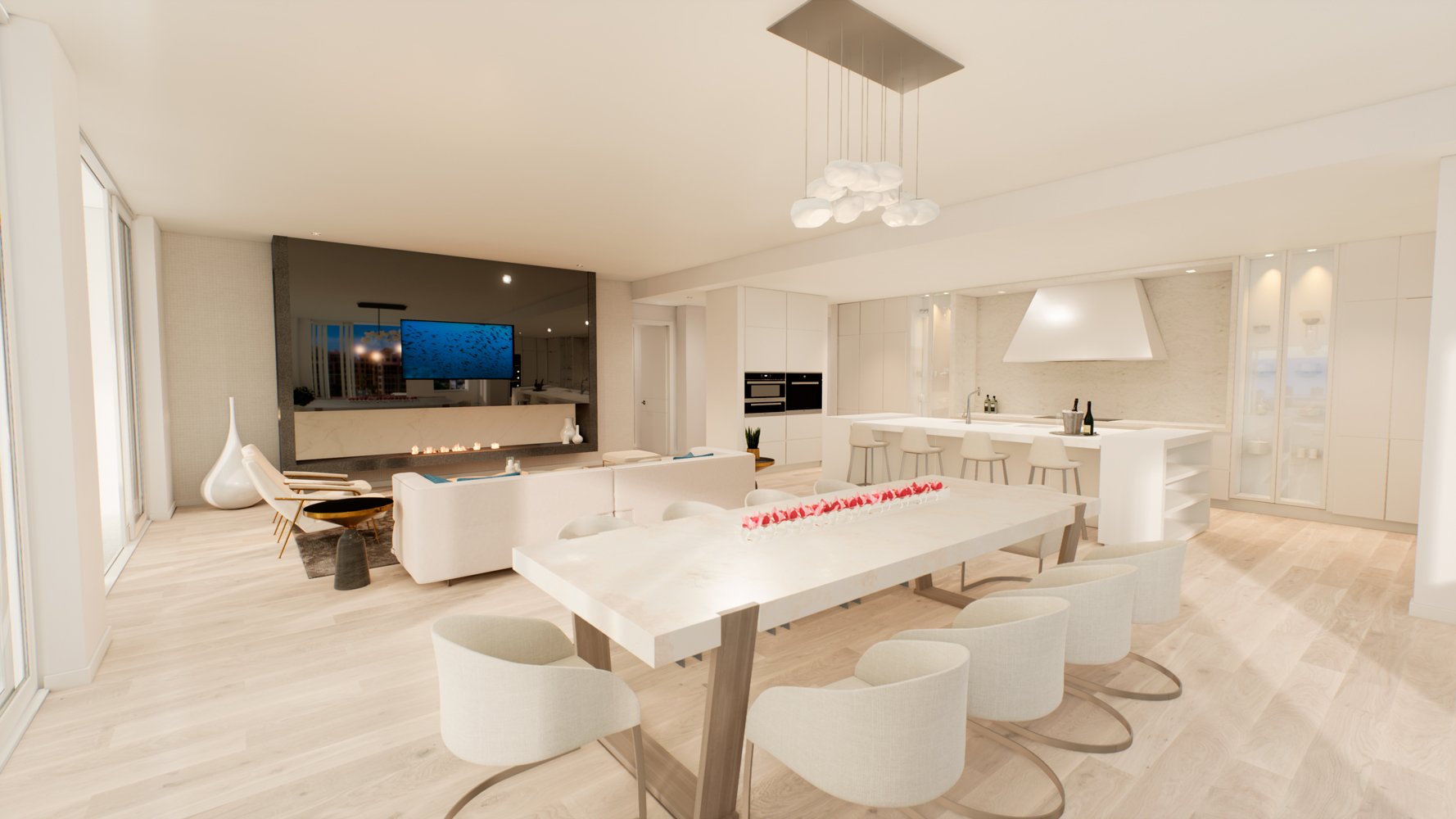
At the ultra-premium end of Boca Raton, three names surface repeatedly in serious buyer conversations: Alina, Glass House, and the Residences at Mandarin Oriental. They’re often grouped together because they speak to the same discerning purchaser, but they are not interchangeable. Each reflects a different philosophy of what luxury should feel like in everyday life.
One is a master-planned, multi-building environment designed to operate as a full-scale residential address. One is deliberately rare: a limited collection of large residences wrapped in a modern, glass-forward architectural expression. The third connects ownership to a hospitality flag, appealing to buyers who want the cadence and service culture of a five-star hotel integrated into home life.
If you’re choosing among them, the most useful framework isn’t price per square foot or a single “best building” verdict. It’s alignment between your lifestyle and the building’s operating model: privacy versus social energy, simplicity versus a broader amenity ecosystem, immediate utility versus the anticipation of future delivery.
Alina Residences is a three-tower luxury condominium community in downtown Boca Raton with 303 total residences across Alina 200, Alina 210, and Alina 220. The core advantage is scale: a campus-like setting that reads as a complete neighborhood within the downtown fabric.
Alina 200 delivered first with 121 residences and is fully sold out-an important marker because it established a lived-in precedent for the address. A buyer evaluating Alina today isn’t only buying a plan, a rendering, or a promise. They’re stepping into a community that has already demonstrated absorption and a clear market position.
The second tower reinforces that momentum. Alina 210 received an occupancy permit in early 2025, enabling move-ins and closings-often a decisive point for buyers who want their next residence on an actionable timeline.
From a product standpoint, Alina offers multiple layouts and sizes, including large penthouses. The brand language centers on upscale finishes and indoor-outdoor living, consistent with what luxury buyers typically prioritize in Boca: seamless terrace life, well-considered interiors, and an arrival experience that feels elevated without being performative.
For readers who want an on-site overview, explore Alina Residences Boca Raton.
Glass House Boca Raton sits at 280 E Palmetto Park Road and is built around a clean, rare proposition: only 28 residences. In a market where many luxury towers lean on scale, this one makes scarcity the primary value driver.
Architecturally, it’s positioned as Boca Raton’s first modern “glass” residential building-an explicit commitment to expansive glazing and a contemporary profile. That intent carries through to the residence program: floor plans emphasize large terraces and indoor-outdoor living, with an exterior envelope designed to soften the boundary between interior rooms and the city’s light.
Timing is part of the appeal. The city approved the project in September 2024, and it officially broke ground in April 2025. Completion is projected for 2027-a timeline that suits buyers who can wait for a fresh delivery and who value being early in a boutique building’s lifecycle.
The building frames its amenities in a boutique-luxury lane, highlighting rooftop and wellness-style features such as a pool and fitness rather than an expansive resort campus. For many buyers, that’s precisely the point: less sprawl, more calm, and fewer neighbors.
A deeper look at the concept and positioning is available at Glass House Boca Raton.
The Residences at Mandarin Oriental, Boca Raton are part of Via Mizner and are tied to a Mandarin Oriental hotel component. The residence tower is planned as 89 residences in downtown Boca Raton, and the defining promise is not only a refined building, but a branded lifestyle ecosystem.
For certain buyers, the brand association is the point: hospitality-grade service, an elevated sense of arrival, and a daily rhythm that feels closer to a private hotel than a conventional condominium. This is especially relevant for a second-home profile where the owner prioritizes ease, consistency, and the comfort of a recognized luxury standard.
On timing, the ownership entity tied to the hotel project has been publicly associated with a Chapter 11 filing while still pursuing a 2026 completion target. This doesn’t have to be a deal-breaker, but it does call for a more deliberate approach-close attention to purchase structure, milestones, and how your timeline aligns with the broader project arc.
For an overview of the address and concept, see The Residences at Mandarin Oriental Boca Raton.
In downtown Boca, timing isn’t a footnote-it can be the strategy.
If you want to be living downtown sooner, an occupancy-permit milestone meaningfully changes the conversation. Alina 210’s early-2025 occupancy permit offers a clearer path to move-in than a project still working toward completion. That can matter for relocations, seasonal plans, or buyers who prefer to avoid extended pre-delivery holding periods.
If you’re planning ahead, Glass House’s projected 2027 completion can be compelling because it provides a longer runway-particularly for buyers coordinating the sale of a primary home, restructuring holdings, or simply preferring to step into a newly delivered, boutique environment.
For the Residences at Mandarin Oriental, the buyer question is less “is it worth it?” and more “does the branded lifestyle justify accepting a more complex development narrative?” Buyers who answer yes typically do so because the service-and-status proposition is central to their ownership thesis.
Luxury amenities are no longer judged by volume alone. They’re judged by how they behave.
Alina’s multi-tower, master-planned format tends to resonate with buyers who want a full-scale residential address: a sense of community and the breadth that comes with a larger development footprint.
Glass House speaks to the opposite impulse. With 28 residences, the most valuable amenity may be the building’s quiet. Its rooftop and wellness-style features reinforce a curated approach-what you need, without inheriting the traffic patterns of a larger property.
Mandarin Oriental’s model is distinct again. The premise is that hospitality itself is an amenity, and that a hotel component can elevate daily living through service, programming, and operational polish.
If you’re comparing buildings in other parts of South Florida for reference, it can help to observe how scale changes the tone of ownership. Some Miami Beach addresses deliver a very specific, high-profile social energy, while others lean into seclusion. A glance at Apogee South Beach can help illustrate how top-tier product can be engineered to feel private even within a celebrated neighborhood.
The cleanest way to decide is to start with your own operating preferences.
Alina tends to suit buyers who:
Glass House tends to suit buyers who:
The Residences at Mandarin Oriental tend to suit buyers who:
At the top of the Boca Raton condo market, price is rarely explained by finishes alone. It’s shaped by narrative, certainty, and scarcity.
Alina’s position is strengthened by the existence of multiple phases and by the first tower’s full sellout. That kind of absorption can read as a vote of confidence-especially for buyers who think in terms of resale liquidity and long-term desirability.
Glass House uses an almost contrarian lever: 28 residences. Scarcity creates its own pricing logic, particularly when the unit program is large-format and the building’s identity is clearly differentiated.
The Residences at Mandarin Oriental add brand gravity. In many luxury markets, branded residences command a premium because the buyer isn’t only purchasing real estate, but a service standard and a reputation that can travel with them.
In other South Florida submarkets, similar dynamics show up in different forms. Brickell, for example, has evolved into a global stage for branded and design-forward towers. If you want a comparative lens on how branding and high-design can shape buyer demand, consider the positioning of 888 Brickell by Dolce & Gabbana.
Once you’ve narrowed to finalists, the last mile is often emotional-but it should be supported by practical questions:
There is no universal winner. There is only the most coherent match between how you live and how the building is designed to perform.
Which option offers the most privacy day to day? Glass House’s 28-residence scale is purpose-built for a quieter, boutique experience.
Which project is already established as a downtown Boca luxury address? Alina’s first tower delivered with 121 residences and fully sold out, setting a track record.
Is Alina already allowing move-ins? Alina 210 received an occupancy permit in early 2025, enabling resident move-ins and closings.
When is Glass House expected to be completed? Completion is projected for 2027, commonly cited as Q2 2027.
Where is Glass House located? The site is 280 E Palmetto Park Road in downtown Boca Raton.
How many residences are planned at the Residences at Mandarin Oriental, Boca Raton? The residence tower is planned as an 89-residence building tied to a hotel component.
What is the biggest differentiator of Mandarin Oriental residences versus a traditional condo? The primary appeal is a hotel-branded lifestyle ecosystem where hospitality is central to ownership.
Do all three emphasize indoor-outdoor living? Yes-each is marketed around terrace life and indoor-outdoor flow, expressed in different ways.
Which choice best suits a buyer who wants a larger community feel? Alina’s three-tower, master-planned format reads more like a residential campus.
Is there anything buyers should watch closely with the Mandarin Oriental project? The ownership entity has been publicly associated with a Chapter 11 filing while still targeting 2026.
When you're ready to tour or underwrite the options, connect with MILLION Luxury.
If branded residences are on your mind — as a home or as an allocation — we would be glad to share what we are seeing, privately.
Begin a quiet conversation