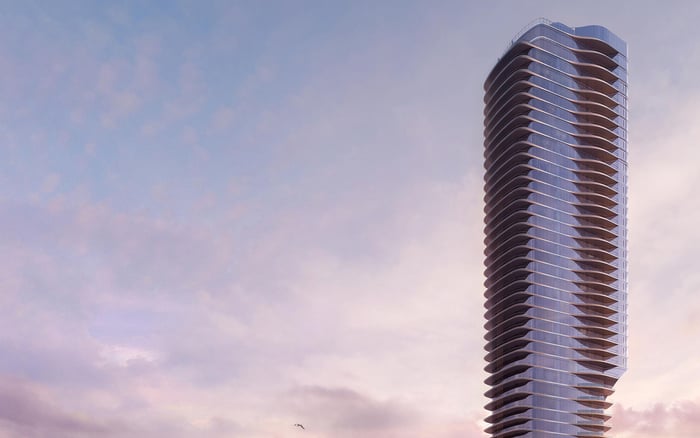
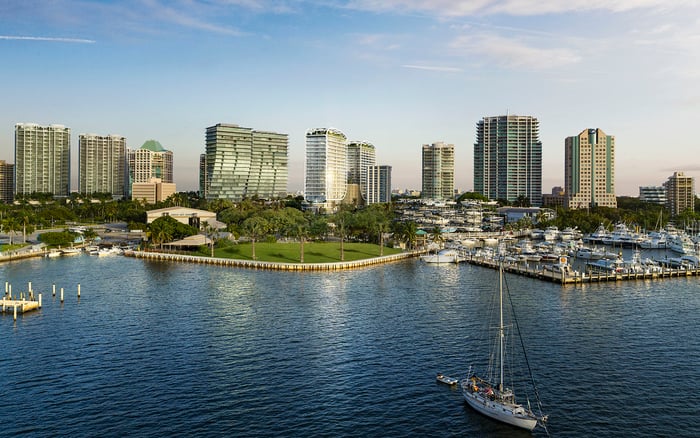
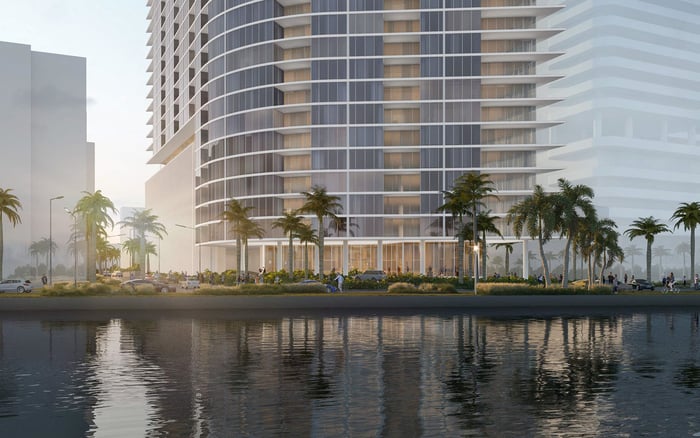
South Florida’s luxury market enters 2026 with more million-dollar listings than any U.S. metro, a deep all-cash buyer base, and renewed international demand. Yet the defining feature is selectivity: high-end homes are taking longer to trade, and buyers are increasingly underwriting lifestyle, tax positioning, and long-hold value rather than headline momentum. Here is what disciplined buyers and sellers should watch across Miami, Fort Lauderdale, West Palm Beach, and Naples.
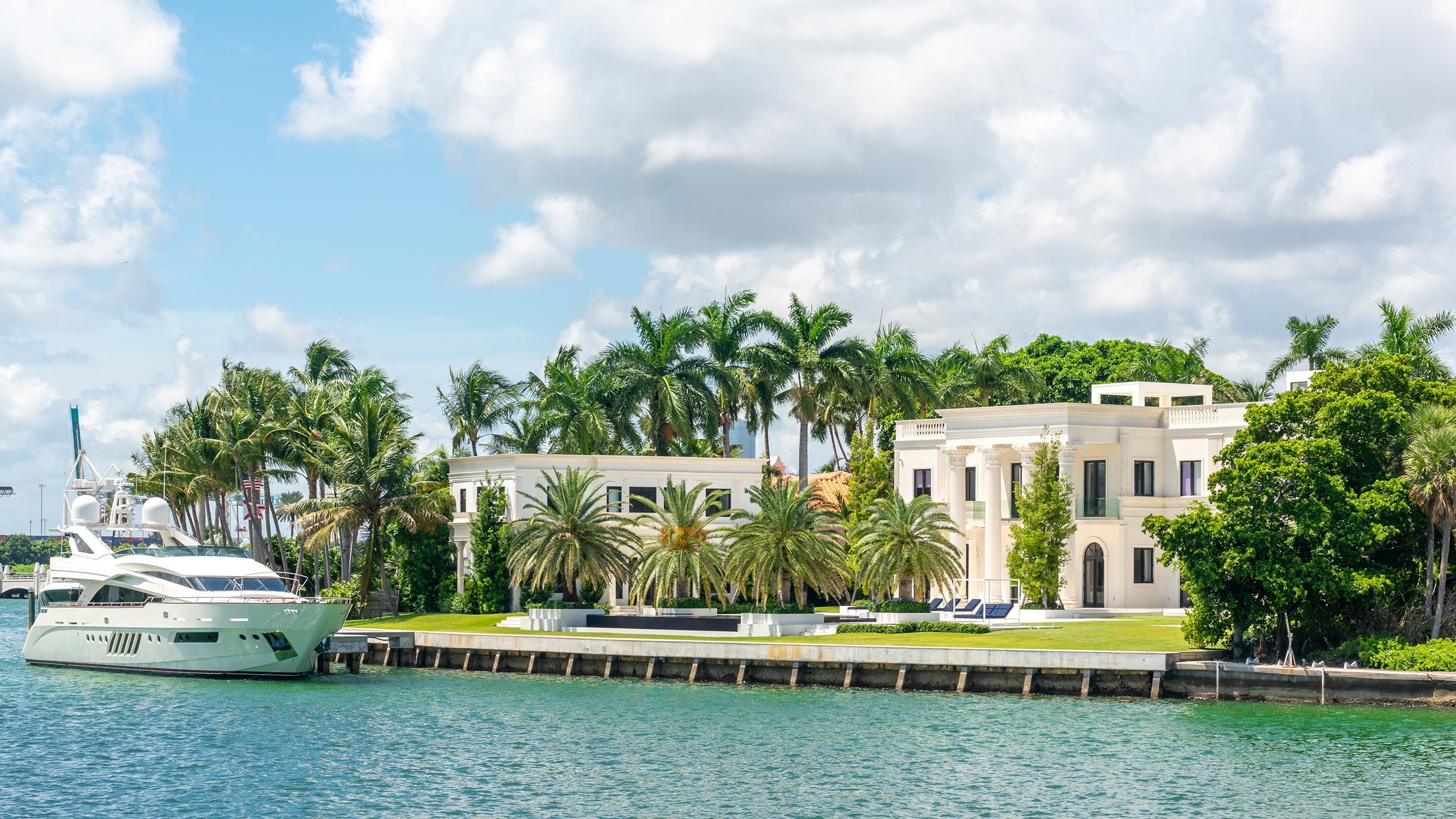
For years, South Florida’s luxury story centered on a migration wave and a waterfront renaissance. In 2026, the narrative tightens: the region has become the country’s deepest marketplace for million-dollar inventory, and the buyer pool is showing higher standards.
In December 2025, the Miami-Fort Lauderdale-West Palm Beach metro became the No. 1 U.S. metro for the most million-dollar homes for sale, overtaking New York for the first time in at least a decade. That leadership is not just about volume. Luxury listings in the tri-county metro are priced at 4.9 times the local median listing price-an even sharper luxury-to-mainstream gap than the national pattern.
At the same time, the top end is moving more slowly: luxury listings (the top 10 percent) took a median 93 days to sell. This reads less like weakness and more like a recalibration. With more choices on the table, the market rewards properties that are easy to underwrite-irreplaceable location, coherent design, and pricing that aligns with today’s willingness to wait for the right home.
South Florida’s luxury market is still powered by three overlapping cohorts: cash-heavy local and domestic buyers, international households, and long-duration capital that is comfortable underwriting lifestyle alongside return.
International residential purchases in South Florida reached $4.4 billion in 2025, up from $3.1 billion in 2024, with international buyers representing 15 percent of the region’s total dollar volume. That scale is exceptional in a U.S. context, especially alongside a national figure cited at 2 percent for the same period. In 2025, about 51 percent of South Florida international residential transactions were all-cash, underscoring a reality luxury sellers already know: clean offers are meaningful leverage.
Even domestically, cash remains prominent. Miami-Dade County posted a 40 percent cash-sales share in December 2025, compared with a national average of 27 percent. That differential matters-it cushions the luxury segment against rate volatility and elevates the role of non-price terms, including deposit structure, inspection posture, and closing timelines.
International demand is also broadly diversified, led by Colombia (15 percent), Argentina (12 percent), Mexico (7 percent), Brazil (7 percent), Venezuela (5 percent), and Canada (5 percent). For buyers, this mix signals resilience: the market is not dependent on a single channel, and trophy inventory can find a global audience when it is positioned with precision.
In 2025, South Florida recorded the second-most $10 million-plus home sales in its history, totaling 361 sales-behind only 2021. That confirms a functioning trophy tier. The lesson heading into 2026, however, is that liquidity is earned.
A longer median time to sell at the luxury end suggests “market price” is no longer a single point. It is a band-shaped by view corridors, floor height, privacy, and the credibility of the home’s execution. Sellers who price above that band are not necessarily wrong; they are simply choosing a longer marketing runway.
For buyers, selectivity is an advantage. It creates room to negotiate around value-adds that used to be brushed aside: upgrade credits, furniture inclusion, post-occupancy agreements, and contingencies that are narrowly written but meaningful.
Miami’s luxury condo market continues to concentrate in neighborhoods where walkability, dining, and waterfront access intersect with new construction and branded service.
In Brickell, Greater Downtown Miami reached $937 per square foot in the first quarter of 2025, alongside a 9.6 percent year-over-year increase in luxury condo sales. The nuance matters: higher price density can coexist with rising inventory when the market is functioning as a global asset class.
For buyers seeking a private, amenity-forward residential experience-rather than a typical high-rise cadence-properties like 2200 Brickell capture the neighborhood’s current thesis: close to the core, with a more residential tone.
In the same conversation, Brickell’s brand-led new development pipeline continues to signal where upper-end demand is clustering. 888 Brickell by Dolce & Gabbana fits what today’s luxury buyer often prioritizes: strong identity, hospitality cues, and a resale narrative that travels internationally.
In the $2 million-plus condo segment in Miami Beach, price gains were described as moderate overall in the third quarter of 2025, with South Beach posting a 37 percent year-over-year rise in price per square foot. That divergence clarifies where buyers are still willing to stretch: walkability, culture, and the ability to stay anchored to the city’s social calendar.
Ultra-luxury in Miami Beach is also a privacy purchase. When the priority is South of Fifth proximity, low-density living, and a trophy-level sense of arrival, Apogee South Beach reflects the type of asset that tends to trade on rarity rather than broader market cycles.
For buyers who want Miami Beach energy without the tallest-tower posture, 57 Ocean Miami Beach aligns with the quieter end of the oceanfront spectrum, where lifestyle is the amenity.
Palm Beach County has seen luxury prices rise 187.3 percent over the past decade-the highest growth among major U.S. metros in a national analysis. West Palm Beach, in particular, has been re-rated: luxury prices increased from a $1.35 million median in 2015 to $4.04 million by October 2025.
The result is a market that increasingly attracts buyers who might once have focused strictly on coastal Miami or the island of Palm Beach. They are paying for a different expression of luxury: a quieter, legacy-leaning lifestyle with growing architectural ambition.
Within West Palm Beach’s newer residential profile, Alba West Palm Beach represents the city’s modern coastal direction, while South Flagler House West Palm Beach speaks to the enduring draw of Flagler Drive frontage and its long-hold appeal.
On the Gulf Coast, Naples-Marco Island stands out for its luxury-to-median pricing multiple, with luxury listings priced at 5.0 times the local median listing price. Yet Naples also posted a median 66 days on market for luxury homes, the fastest among markets with comparable luxury-to-median multiples.
By November 2025, Naples had 2,213 active $1 million-plus listings, up 3.5 percent year-over-year and up 13.8 percent month-over-month, and $1 million-plus homes made up 35.8 percent of all listings. Notably, the pace of luxury sales improved meaningfully, with luxury homes selling 23.5 percent faster year-over-year.
For the 2026 buyer, Naples offers a distinct advantage: a luxury market deep enough to shop with discipline, yet still moving with purpose when a home is properly positioned.
Luxury real estate in Florida often functions as a balance-sheet decision as much as a lifestyle one. Two planning themes are especially relevant heading into 2026.
First, Florida’s homestead and property-tax structure includes the Save Our Homes cap, limiting annual assessment increases on homesteaded property to 3 percent or CPI, whichever is lower. For primary residents with a long hold, the compounding effect of that cap can materially change the true cost of ownership versus non-homesteaded property.
Second, federal estate and gift tax exemption levels are scheduled to drop after 2025 as the 2017 tax law provisions sunset. For high-net-worth families, real estate and domicile decisions increasingly move in tandem with broader estate-planning timelines.
None of this replaces the fundamentals of buying well. It simply means that for many households, the most sophisticated “amenity” is optionality: the ability to own in a jurisdiction and structure that supports the next decade.
The luxury buyer’s advantage in 2026 is optionality. South Florida now offers an unusually wide spectrum of product: branded towers, low-density beachfront, pied-a-terre formats, and legacy markets that reward patience.
For buyers, the best outcomes tend to come from three moves:
Define the non-negotiables early. View, privacy, and walkability are value drivers that remain liquid.
Underwrite the resale story at purchase. A property with a globally legible identity-whether location or brand-is easier to exit.
Negotiate beyond price. In a selective market, terms can be as valuable as a discount.
For sellers, the thesis is straightforward: the market will pay for excellence, but it will not pay for ambiguity. Presentation, pricing discipline, and a clean path to closing are the levers that matter most.
Why is South Florida considered a leading luxury market right now? The region holds the largest supply of million-dollar listings in the U.S., supported by deep cash and international demand.
Are luxury homes taking longer to sell in South Florida? Yes. High-end listings have been taking longer on market, reflecting buyer selectivity and expanded choice.
How important are all-cash buyers in Miami-Dade? Cash is a major force, with Miami-Dade posting a higher cash-sales share than the national average.
How significant is international demand in South Florida luxury? International buyers account for a meaningful share of dollar volume, and many purchases are all-cash.
Which countries are most represented among foreign buyers? Top buyer origins include Colombia, Argentina, Mexico, Brazil, Venezuela, and Canada.
What is driving Brickell’s pricing power? Price density is supported by lifestyle convenience and continued interest in luxury condominiums.
Is Miami Beach still seeing strong luxury condo performance? The overall segment shows moderate gains, but prime pockets can see outsized increases in price per square foot.
Why has West Palm Beach luxury grown so quickly? Over the past decade, the area has been repriced upward as demand broadened for Palm Beach County lifestyles.
What makes Naples different from other luxury markets? Naples combines a large luxury “wealth gap” with comparatively fast luxury selling timelines.
Does Florida’s homestead cap matter for luxury owners? For primary residents, the Save Our Homes cap can reduce long-term property-tax growth versus non-homesteaded property.
For a discreet conversation and a curated building-by-building shortlist, connect with MILLION Luxury.
If branded residences are on your mind — as a home or as an allocation — we would be glad to share what we are seeing, privately.
Begin a quiet conversation