Sunny Isles Beach evolved from mid-century “Motel Row” into one of South Florida’s most vertically luxurious oceanfront addresses, defined by branded residences, design-forward towers, and amenity innovation. Today, buyers weigh privacy, service, and long-term value against a more selective, slower luxury market cycle and a pipeline that still hints at even taller ambitions.
Sunny Isles Beach has worn more than one identity, which is precisely what makes it legible to luxury buyers today. In the 1950s and 1960s, Collins Avenue became known as “Motel Row,” a stretch of more than 30 themed, two-story properties built for affordable, middle-class beach vacations. The architecture leaned into Miami Modern whimsy and roadside theater: sculptural facades, novelty motifs, and visual cues designed to be remembered at 35 miles per hour.
That era left a cultural residue - less in the buildings themselves, many of which were later demolished, and more in the underlying idea that Sunny Isles has long been curated for a specific kind of visitor. The difference now is permanence. Where Motel Row optimized for turnover, today’s oceanfront optimizes for residence: larger floor plans, privacy, and services that allow a second home to function like a primary.
A pivotal shift came when Sunny Isles Beach incorporated as an independent municipality in 1997, giving the city greater local control over planning and redevelopment. Over the following decades, low-rise hospitality stock was decisively replaced by high-rise residential towers - effectively transforming a budget-tourism corridor into one of the region’s most concentrated luxury condo submarkets.
Sunny Isles Beach is narrow, linear, and intensely oceanfront. That geography creates a market where much of the premier inventory sits within a short walk of the Atlantic, and where views are not merely a premium but an expectation. In that environment, luxury is differentiated less by proximity and more by three drivers: building identity, service model, and product scarcity.
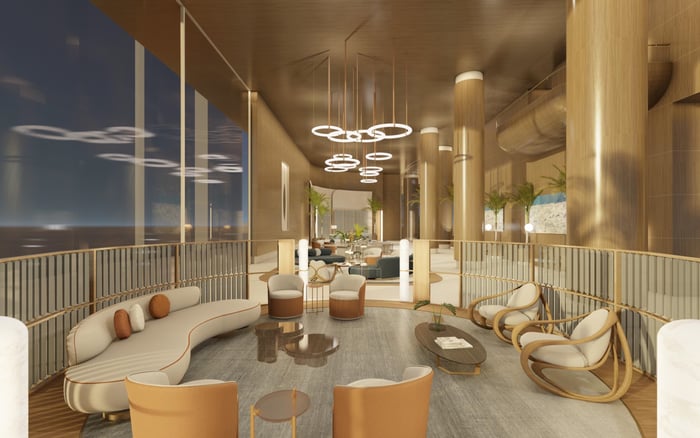
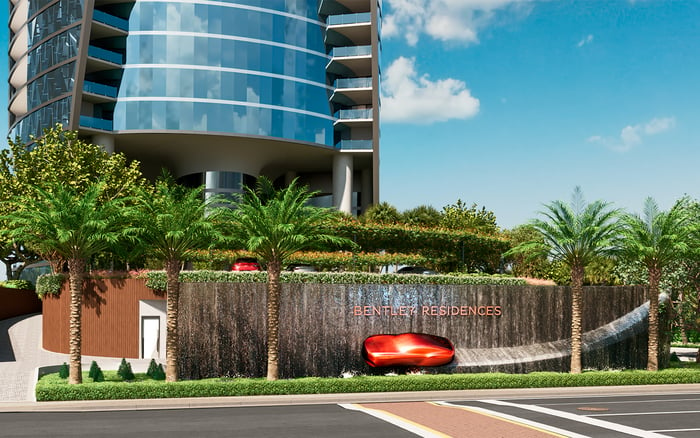
Building identity increasingly comes through branding and design authorship. Buyers aren’t simply looking for “new”; they want a crisp aesthetic proposition paired with a hospitality-caliber operational promise. That’s why branded offerings matter in Sunny Isles: they translate a familiar global standard to a specific coastline and reduce the friction of ownership for people who split time between cities.
Service model shapes the lived reality of vertical living. Concierge depth, arrival sequence, and amenity programming can make a tower read like a private club rather than just an address. In a market that matured quickly, that distinction becomes central to value retention.
Then there is scarcity. Even as towers proliferate, true trophy inventory remains constrained by the fundamentals that limit any beachfront market: finite shoreline, finite frontage, and finite lines with the “right” exposure.
Sunny Isles’ design story didn’t begin with glass curtain walls. During the Motel Row period, architecture functioned as signage - properties leaned into sculptural and themed elements for instant recognition. In a curious way, that instinct returns in today’s skyline, not as kitsch, but as brand expression.
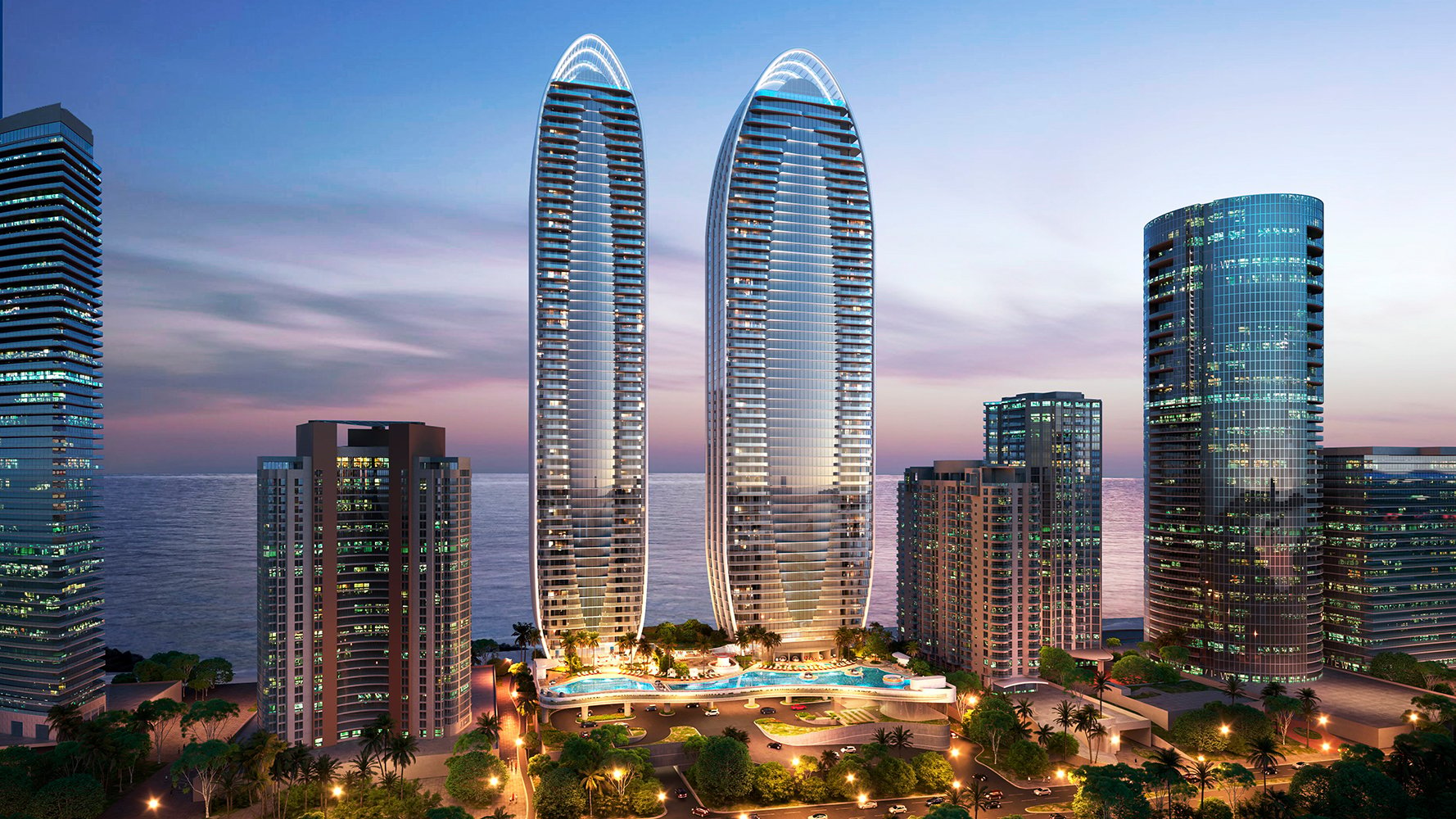
Modern towers compete through silhouette, interiors, and amenity theater. The market has embraced residences that anchor themselves in an interior language, a signature material palette, or a clear story about arrival, parking, and how the home is serviced.
Some buildings are defined by design pedigree, such as Herzog & de Meuron at Jade Signature, which advanced a “houses in the sky” idea rather than a conventional condominium narrative. Others become known for a single amenity invention that turns into market shorthand. The clearest example is the Porsche Design Tower’s “Dezervator” car-elevator concept, which made the sky-garage a conversation piece and reset what buyers imagined a tower could physically do.
Every market has a moment when the skyline shifts from aspiration to inevitability. In Sunny Isles, one early inflection point was the three-tower Trump Towers development along Collins Avenue. Its scale and visibility helped normalize the idea that Sunny Isles was no longer a motel strip with a few outliers, but a corridor of high-rise residential ambition.
That period also coincided with increasingly sophisticated oceanfront assemblages and with developers who became synonymous with the city’s vertical growth. The result is today’s landscape: an address where buyers can choose between design-forward minimalism, brand-driven service, and hyper-amenitized resort living - often within a few blocks.
For global buyers, branded residences operate as a trust mechanism. A brand implies a service standard and a level of predictability in staffing, finishes, and lifestyle expectations. In Sunny Isles, that matters because the buyer profile often includes second-home owners who value low-friction ownership as much as the view.
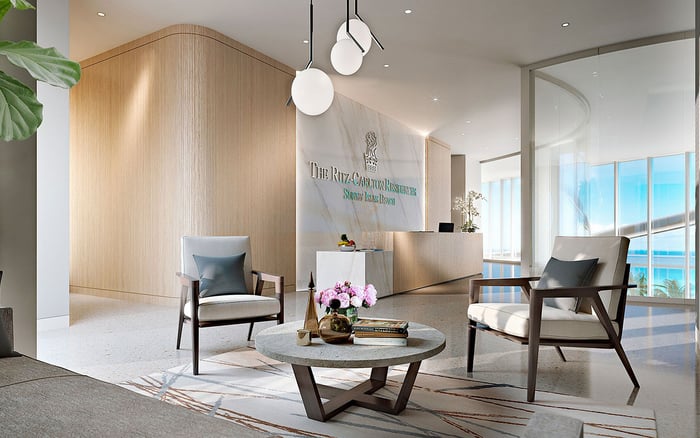
Two projects illustrate how this plays out at the highest end: The Ritz-Carlton Residences® Sunny Isles and St. Regis® Residences Sunny Isles. The appeal is not only the name. It’s the choreography of arrival, the expectation of service, and the social signal of a building that feels curated rather than merely constructed.
Branding also affects resale liquidity. When the luxury segment slows and days on market lengthen, towers with a clear identity and a coherent service proposition can stay more resilient in buyer attention - even if price discovery takes longer.
Sunny Isles’ luxury segment has recently shown softer momentum, with year-over-year median pricing pressure and longer marketing times at the high end. In practice, that reads less like a retreat and more like a return to selectivity.
For buyers, a slower tempo can be constructive. It creates space to evaluate building operations, reserve posture, and lifestyle fit. It also re-centers negotiation on the elements that most influence vertical luxury: privacy, elevator experience, floor plan efficiency, and the intangible feel of the amenity deck at different times of day.
In this climate, the strongest outcomes often come from being ruthlessly specific: not “Sunny Isles,” but a particular exposure; not “high floor,” but a line with the right sightlines; not “new building,” but a building with the service depth that matches how you actually live.
Even with a skyline that already feels fully realized, Sunny Isles continues to attract mega-project interest. A proposed 62-story, roughly 820-foot condominium tower planned for 19051 Collins Avenue has been discussed as a future tallest for the city if built, with completion targeted in the early 2030s under the proposal.
Whether or not that specific tower reaches delivery, the signal is clear: the market still believes in the address at a scale that few beachfront cities can support. For today’s buyers, that pipeline matters because future supply can influence view corridors, neighborhood density, and the competitive set for resale.
For those who want to compare Sunny Isles’ branded-residence model to Miami Beach’s own trophy evolution, it is also worth tracking how ultra-premium inventory is positioning across the causeways, including The Ritz-Carlton Residences® Miami Beach and Shore Club Private Collections Miami Beach. Miami Beach has its own scarcity dynamics and has recently been in the spotlight for publicly disclosed, headline-level penthouse pricing that underscores how far the upper end of the condo market can stretch.
Sunny Isles can feel deceptively simple: ocean on one side, Intracoastal on the other, towers in between. The reality is that outcomes hinge on details.
First, scrutinize the service ecosystem. A lobby can be beautiful and still feel transactional; the best buildings feel anticipatory. Second, confirm the building’s identity: is it design-led, brand-led, or amenity-led - and does that align with your priorities? Third, measure daily privacy. In a dense vertical market, elevator banks, resident-to-guest ratios, and arrival sequence shape tranquility as much as square footage.
Finally, consider your time horizon. In a softer luxury market, it can be tempting to optimize purely for price. Yet the residences that remain most defensible over time are those with an enduring proposition: a clear aesthetic, a coherent service standard, and a location within the location.
Sunny Isles Beach began as a place you visited for a week; it has become a place designed to be lived in for years.
What was “Motel Row” in Sunny Isles Beach? In the 1950s and 1960s, Collins Avenue hosted more than 30 themed motels for affordable beach vacations.
Why did Sunny Isles shift from motels to luxury towers? Large portions of the motel corridor were demolished and redeveloped into high-rise residential buildings over time.
When did Sunny Isles Beach become its own city? Sunny Isles Beach incorporated as an independent municipality in 1997.
What made the Rascal House significant? Opened in 1954, it became a major social hub and operated until it was demolished in 2006.
Are branded residences a meaningful advantage here? They can be, because branding often signals a defined service model and a consistent ownership experience.
What is the Porsche Design Tower known for? It is known for the “Dezervator” car-elevator concept that lifts vehicles to resident sky garages.
Did Trump Towers influence Sunny Isles’ luxury boom? Yes, the three-tower Trump Towers development helped establish an early wave of large-scale luxury condos.
Is the Sunny Isles luxury market moving quickly right now? The high end has shown slower momentum recently, with longer marketing times and more selective buyers.
What future development could reshape the skyline? A proposed 62-story, roughly 820-foot tower at 19051 Collins Avenue has been discussed as a potential tallest.
How should a buyer compare Sunny Isles to Miami Beach trophy living? Focus on service standards, privacy, and scarcity, since both markets reward buildings with clear identity.
For a confidential assessment and a building-by-building shortlist, connect with MILLION Luxury.
If branded residences are on your mind — as a home or as an allocation — we would be glad to share what we are seeing, privately.
Begin a quiet conversation