A discreet, buyer-oriented guide to childproofing South Florida luxury condos, with special focus on high-floor window and balcony risk, HOA constraints, and code-aligned upgrades for windows, furniture, pools, and cords.

South Florida’s most desirable condo lifestyle is also, by design, a high-exposure environment: expansive glazing, operable sliders, and terraces that pull the horizon into everyday life. For families, visiting grandchildren, or buyers planning ahead, that same architectural openness calls for a quieter layer of discipline.
One statistic should frame the conversation: children in apartment buildings experience window-fall incidents at about five times the rate of children in other residence types, with most victims under age 3. The conclusion is not to fear the skyline; it is to engineer it. In practice, the highest-return childproofing steps in a condo are the ones that reduce fall potential without compromising the home’s design intent.
In ultra-premium buildings, the most effective approach is “buyer-grade”: code-aware, professionally installed where needed, and compatible with HOA governance. Aim for solutions that read as intentional-not improvised.
In Florida, window fall protection requirements can apply in residential occupancies when two conditions are present: the interior sill is less than 36 inches above the floor and the window is more than 72 inches above exterior grade. When that scenario exists, compliant fall protection generally relies on limiting openings so a 4-inch sphere cannot pass, using ASTM F2090-compliant fall-prevention devices, or using window opening control devices (WOCDs) that limit opening to 4 inches.
In design terms, the “4-inch rule” is the benchmark that guides hardware selection and acceptance. The most important buyer takeaway is not the product category-it’s the performance: the opening must be limited in a way that meaningfully reduces a child’s ability to pass through.
Two practical points matter in a luxury condo:
First, do not treat screens as safety. Window screens are not designed to prevent falls and should not be relied on as a child-safety device, even when they feel taut or substantial.
Second, confirm adult release for emergency scenarios. Any device that limits opening should still be releasable by an adult for emergency egress while maintaining the intended child-safety limit during daily use.
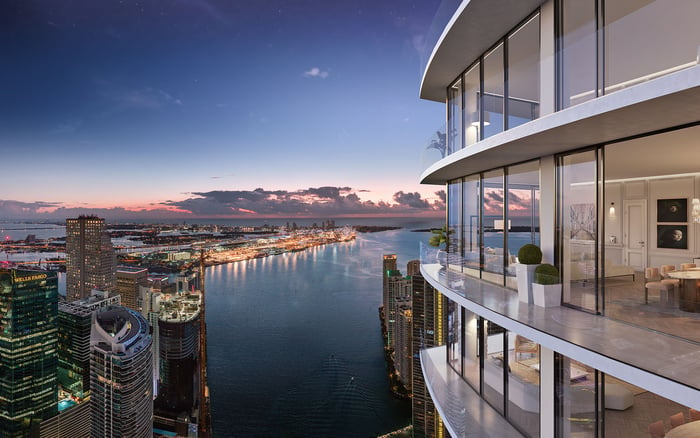
If you are touring high-floor residences in Brickell or Miami Beach, this is a particularly relevant diligence item because floor-to-ceiling glazing often sits close to finished floors, and operable panels vary by manufacturer and vintage. In buildings such as Una Residences Brickell or Five Park Miami Beach, the right question is not “Are the windows safe?” but “How is window opening controlled, and what modifications are permitted?”
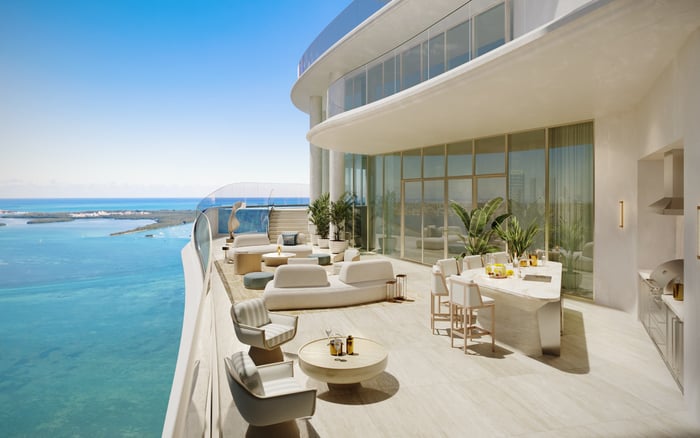
Balconies are central to South Florida luxury, and most new construction leans into deep terraces that function as outdoor rooms. While specific railing details vary by building, the strategy stays consistent: reduce climbability, limit access, and avoid creating unintended footholds.
From a buyer standpoint, evaluate:
Because balconies and exterior elements can be governed by community rules and HOA policies, confirm what modifications are permitted before you purchase or install any add-on safety system. In many buildings, the board’s intent is aesthetic uniformity and structural consistency, which can affect everything from netting to door alarms.
For buyers prioritizing outdoor space in areas like Sunny Isles, where high-floor terraces are part of the value proposition, plan these conversations early. Touring a residence at Turnberry Ocean Club Sunny Isles with a family lens means evaluating terraces as thoughtfully as the kitchen.
Luxury interiors often feature large-format casegoods, floating consoles, and statement televisions. For toddlers, those become climbing invitations.
A straightforward best practice is anchoring furniture and TVs to help prevent tip-over incidents involving children climbing. Federal performance requirements also exist for clothing storage units to reduce tip-over risk, but even with better-built pieces, installation and placement still matter.
What “buyer-grade” looks like:
In a condo, anchoring may require care around concrete, post-tension slabs, or wall assemblies. Have a qualified professional evaluate the substrate so you do not trade safety for unintended building damage.
In high-end homes, the most consequential hazards can be the least conspicuous. Cord management is one of them.
For window treatments, the most conservative approach is to go cordless because cords can pose a strangulation risk to young children. This is especially relevant in bedrooms, nurseries, and any room with low window benches or daybeds.
Also consider baby monitors and charging cords. Monitor cords can present a strangulation hazard and should be kept well away from cribs and sleep areas. In a luxury condo where outlets are often placed for clean sightlines, it is easy to route cables in ways that look tidy but drift into a child’s reach.
If you are designing or renovating in Coconut Grove, where many buyers value warm, residential layouts as much as skyline views, build cord-free thinking into the finish plan early. Homes near the bay in buildings like Four Seasons Residences Coconut Grove often blend indoor and outdoor living; the more effortless the lifestyle, the more important it is that safety is integrated rather than added later.
A premium kitchen has more drawers, more under-sink storage, and more specialty appliances. With young children, access control becomes the theme.
Use safety latches or locks on cabinets and drawers to restrict children’s access to hazards such as cleaners or sharps. This is particularly important for under-sink areas and any pantry zone that stores household chemicals.
For outlets, choose protections carefully. Small removable outlet plugs can become a choking hazard if a child removes and mouths them. In many cases, the best solution is an approach that does not rely on tiny detachable pieces.
In bathrooms, water safety is not only about bathtubs. Keep bathroom doors closed, consider toilet locks, and never leave children unattended around any water sources, including tubs, showers, and even partially filled basins.
A further refinement for scald prevention is temperature discipline. Some pediatric safety guidance commonly recommends setting hot water to about 50°C (122°F) and testing bathwater before placing a child in. In a luxury condo with high-capacity water heaters and strong pressure, this small calibration can meaningfully reduce risk.
In South Florida, pools are not an amenity. They are part of the weekly rhythm. For families, the pool deck deserves the same attention as the residence.
Florida’s Residential Swimming Pool Safety Act requires new residential pools to have at least one safety feature intended to reduce child drownings. While a condo’s pool is a common element rather than a private backyard installation, the buyer implication is clear: ask how the property controls access and what barriers or alarms are in place.
Where gates exist, the standard is specific: pool gates must be self-closing and self-latching, and open outward away from the pool. During a tour, observe this in real time. A gate that “usually closes” is not the same as a gate that closes and latches reliably.
For buyers in Fort Lauderdale evaluating resort-caliber buildings such as Auberge Beach Residences & Spa Fort Lauderdale, treat the pool deck as a true security perimeter: ask about access hours, wristbands or key systems, and whether there are child-focused rules that are enforced, not just posted.
In single-family homes, childproofing is often a weekend project. In condos, it is a governance project.
Many safety elements intersect with building rules: windows and façade-adjacent modifications, balcony attachments, exterior door hardware, and even certain alarm devices. Confirm what modifications are permitted, because approvals can turn on aesthetics, structural concerns, and liability.
A practical way to proceed:
When you walk a condo with a family lens, look past the staging and focus on interfaces.
The most refined childproofing is the kind you do not notice. It protects without interrupting the architecture.
Do window screens count as child fall protection? No. Screens are not designed to prevent falls and should not be relied on as a safety device.
What is the “4-inch rule” I keep hearing about? It is a common safety benchmark where openings are limited so a 4-inch sphere cannot pass.
When does Florida require window fall protection in homes? In certain residential scenarios, it can apply when the sill is under 36 inches and the window is high above exterior grade.
Are window opening control devices (WOCDs) acceptable? They can be, when they limit the opening to 4 inches and can be released by an adult for emergency needs.
Can I install balcony safety netting in a condo? Possibly, but it should be professionally installed and you should confirm HOA rules before modifying exterior-adjacent elements.
What is the fastest way to reduce tip-over risk? Anchor TVs and tall furniture, especially dressers and media consoles in bedrooms and dens.
Should I use small outlet plugs to childproof outlets? Use caution: small removable plugs can become a choking hazard if a child removes and mouths them.
Are corded blinds a real hazard in luxury homes? Yes. Choosing cordless window coverings is a cleaner look and reduces strangulation risk.
Where should baby monitor cords be placed? Keep monitor cords well away from cribs and sleep areas to reduce strangulation risk.
What pool gate features should I look for at amenities? Gates should be self-closing, self-latching, and open outward away from the pool.
If you'd like a private walkthrough and a curated shortlist, connect with MILLION Luxury.
If branded residences are on your mind — as a home or as an allocation — we would be glad to share what we are seeing, privately.
Begin a quiet conversation