A practical buyer lens on two hospitality-linked South Florida residences, focused on verifying smart-home infrastructure, data governance, and service-response standards before treating branding as operational proof.
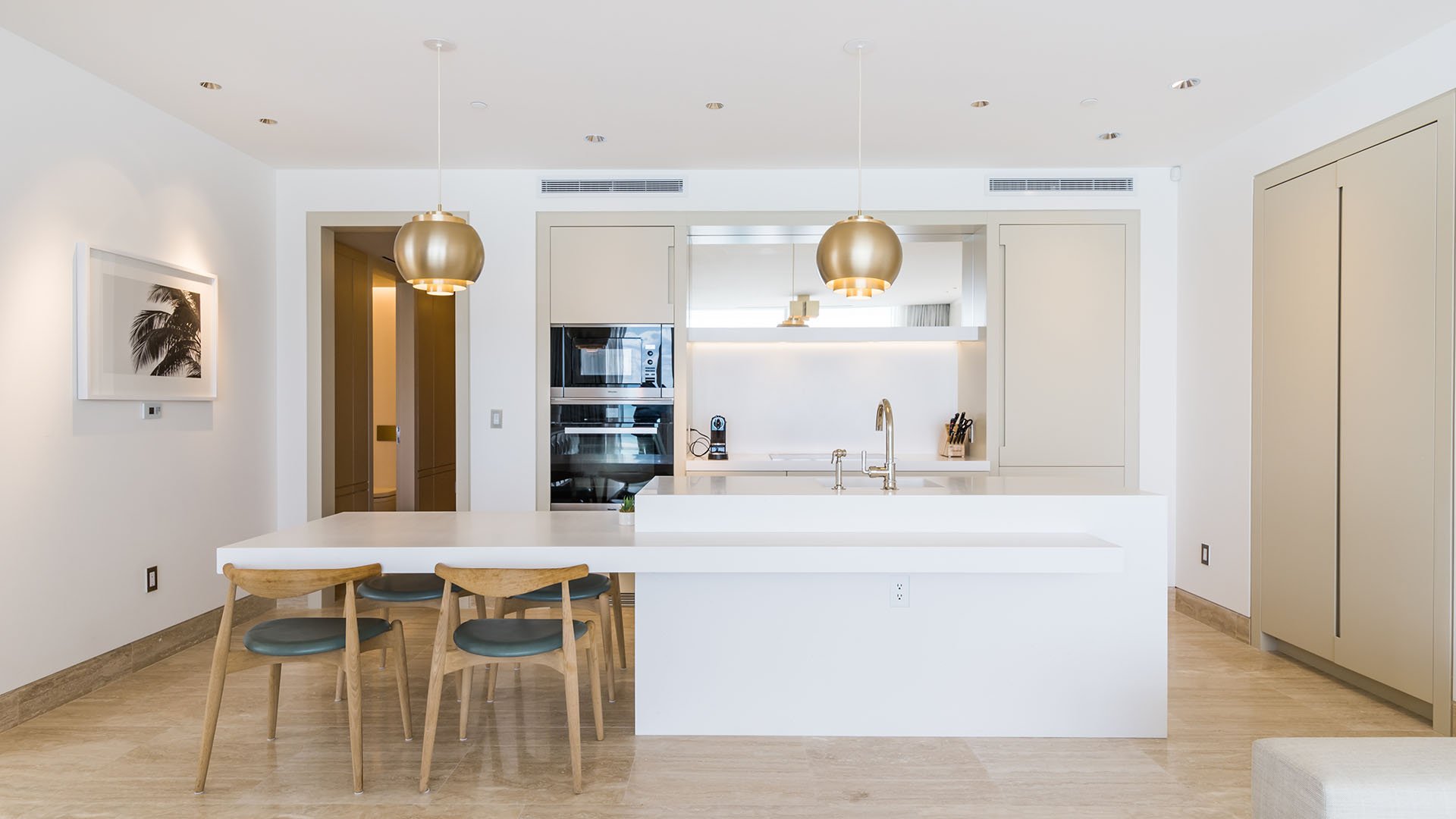
The question behind The Ritz-Carlton Residences® Miami Beach and The Surf Club Four Seasons Surfside is not simply which address feels more polished. At this tier, refined finishes, hospitality language, and a coastal setting are expected. The more practical buyer question is quieter and more consequential: what happens after closing, when the residence must function as a private operating system for daily life?
For a buyer evaluating Miami Beach and Surfside, smart-home readiness should not be inferred from a luxury name. Neither property should be described as having a specific named smart-home platform, vendor, or control system unless those details are confirmed in current buyer documents. That distinction matters. A residence may present as modern while still requiring verification of wiring, network ownership, device transfer, access permissions, and support protocols.
This is where the comparison moves beyond atmosphere and into control. The buyer is not only acquiring rooms, views, and services. The buyer is acquiring a set of operational dependencies that may affect privacy, maintenance, convenience, and long-term investment value.
In an ultra-premium condominium, smart-home language can mean many things. It may refer to lighting scenes, motorized shades, climate interfaces, audiovisual wiring, access systems, or the ability to integrate future devices. It may also mean very little unless the specific infrastructure is documented.
For The Ritz-Carlton Residences® Miami Beach, a careful buyer should request technology schedules, low-voltage or as-built plans, network ownership details, device-transfer procedures, and association rules before relying on any smart-home claim. Buyers comparing other Ritz-Carlton-branded residences, including The Ritz-Carlton Residences® Pompano Beach, should apply the same documentation standard. For The Surf Club Four Seasons Surfside, the same standard applies. The question is not whether the residence feels technologically current during a showing. The question is whether the system can be owned, understood, maintained, upgraded, and transferred cleanly.
A practical review should identify which devices are part of the unit, which systems are part of the building, and which elements depend on third-party accounts or prior-owner credentials. It should also clarify whether the association controls any shared technology layer, whether upgrades require approval, and whether a buyer can bring in preferred low-voltage or cybersecurity specialists after closing.
For resale buyers, this review is especially important. Devices may have been customized, replaced, disconnected, or left in a partially functional state. A polished interface is not enough. The buyer should know who has administrative access, what warranties remain, and what documentation will be delivered at closing.
Privacy in a branded residence is not limited to discretion at the front desk. It increasingly includes digital privacy. Access credentials, guest permissions, smart locks, cameras, Wi-Fi networks, resident apps, service requests, package notifications, and amenity reservations can all create data trails.
The property-specific information for The Ritz-Carlton Residences® Miami Beach does not establish detailed resident-technology privacy terms, app data practices, or cybersecurity disclosures. The same is true for The Surf Club Four Seasons Surfside. That does not imply a problem. It means privacy should be treated as a buyer diligence topic, not a branding assumption.
A sophisticated purchaser should ask who collects resident technology data, where it is stored, who can access it, how long it is retained, and what happens when ownership changes. If a residence uses integrated access systems or resident-facing digital services, the buyer should understand how permissions are revoked for prior owners, contractors, guests, domestic staff, and vendors.
In luxury real estate, privacy is often framed as a lifestyle attribute. In practice, it is also a governance issue. The strongest position is to request written terms before closing, then align device ownership and account administration with the buyer’s own privacy expectations.
Service is central to both properties’ appeal, but service responsiveness should be separated from service atmosphere. A gracious lobby experience does not answer how quickly a technology failure, climate-control issue, access problem, or maintenance request will be resolved.
The property-specific information does not provide measurable response data for either The Ritz-Carlton Residences® Miami Beach or The Surf Club Four Seasons Surfside. There are no verified average response times, work-order turnaround standards, concierge escalation protocols, or resident satisfaction metrics in the material. As a result, declaring a technology or service winner would be premature without current documentation.
A buyer should ask for the actual service framework. How are work orders opened? Who triages urgent issues? What is handled by building staff, and what is pushed to an outside vendor? Are technology problems treated as maintenance, concierge matters, or owner responsibility? Are there written escalation standards for after-hours events?
The most elegant service culture is the one that stays composed under friction. For owners who use a residence seasonally, lend it to family, or depend on staff access, response structure is not a minor detail. It is part of the livability of the asset.
The better comparison is not a verdict. It is a document request. For both The Ritz-Carlton Residences® Miami Beach and The Surf Club Four Seasons Surfside, buyers should evaluate five categories before making assumptions: installed technology, network control, privacy governance, transfer procedures, and service escalation.
The first category is physical infrastructure. Confirm wiring, panels, access points, smart devices, and any integrated controls. The second is ownership. Determine whether networks and credentials belong to the unit owner, association, building operator, vendor, or prior owner. The third is privacy. Review resident-technology terms and account permissions. The fourth is transfer. Ensure passwords, administrator rights, warranties, and manuals move cleanly. The fifth is service. Ask how issues are logged, timed, escalated, and closed.
This kind of diligence does not diminish the emotional appeal of either property. It protects it. When the technology works, the privacy rules are clear, and service pathways are documented, the residence feels effortless for the right reasons.
For a buyer weighing Surfside against Miami Beach, the choice may ultimately come down to lifestyle fit, ownership priorities, and the quality of documentation available at the time of purchase. The central point is simple: smart-home readiness, data privacy, and service responsiveness belong in the negotiation room, not only in the marketing conversation.
Is there a confirmed smart-home platform for The Ritz-Carlton Residences® Miami Beach? A specific named platform should not be assumed unless it is verified in current buyer documents.
Is there a confirmed smart-home platform for The Surf Club Four Seasons Surfside? A specific named platform should not be assumed without written confirmation from applicable transaction materials.
Which property is the better technology choice? There is no supportable winner without current technology schedules, system documentation, and service metrics.
What should a buyer request before relying on smart-home claims? Request technology schedules, low-voltage plans, as-built documentation, network details, device-transfer rules, and association requirements.
Why does device transfer matter at closing? Smart devices may remain connected to prior-owner accounts unless administrator rights, passwords, and permissions are reset properly.
Should privacy be reviewed like a legal issue? Yes. Resident apps, access systems, service requests, and shared networks can involve data collection and permissions.
Are service-response times publicly established for these properties? No measurable response-time standard is established in the property-specific material for either residence.
Does hospitality branding guarantee better service responsiveness? Branding may suggest a service culture, but buyers should still request written escalation and work-order standards.
How should resale purchasers approach older smart-home installations? They should verify current functionality, ownership of accounts, remaining warranties, and whether systems have been modified.
Why is investment value connected to technology readiness? Clear systems, privacy controls, and service processes can reduce friction for future owners and preserve confidence.
To compare the best-fit options with clarity, connect with MILLION.
If branded residences are on your mind — as a home or as an allocation — we would be glad to share what we are seeing, privately.
Begin a quiet conversation