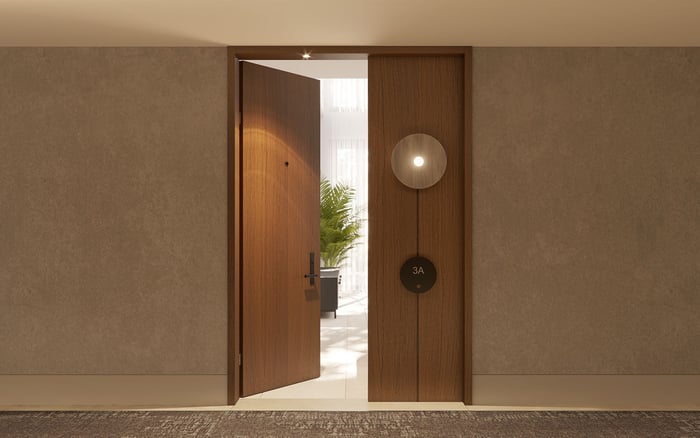
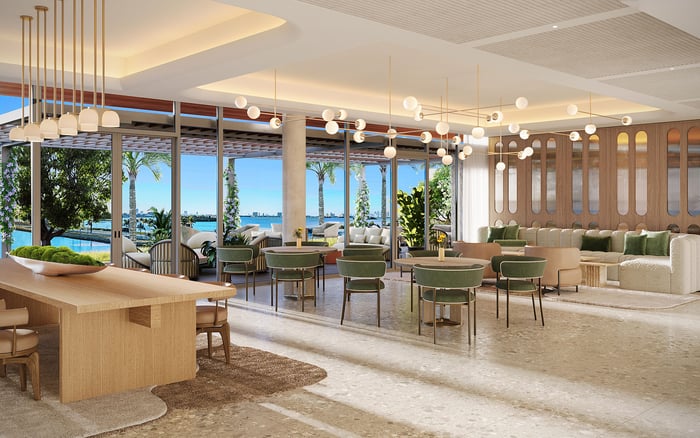
At the ultra-premium end of South Florida real estate, connectivity is no longer a convenience; it is a core building system, as fundamental as glazing specifications or elevator performance. Buyers who live globally and work fluidly between boardrooms, family offices, and residences increasingly evaluate a tower’s digital backbone with the same rigor they apply to views, service, and privacy. For the new generation of branded residences, the conversation is also shifting from speed alone to security, resilience, and day-to-day usability: secure Wi-Fi that behaves like a private network, fiber that supports multiple concurrent 4K streams and video calls, and infrastructure designed to evolve without opening walls or disrupting finishes. This editorial looks at how high-speed fiber optics and cyber security tend to be integrated in a modern luxury residential context, and what discerning buyers should ask when considering **The Residences at Mandarin Oriental, Miami** as well as other top-tier Miami and South Florida addresses.
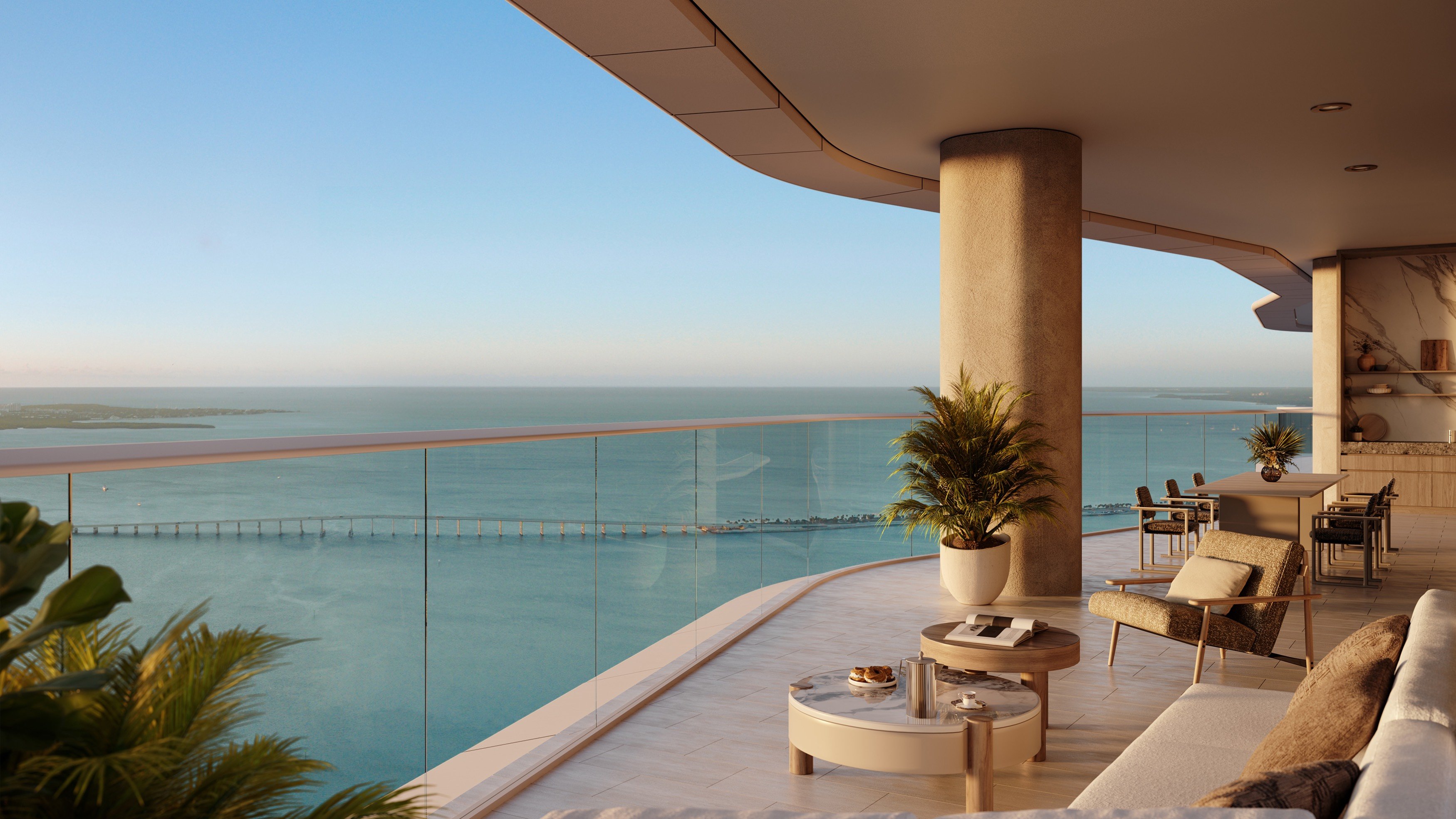
Luxury living in Miami has long been defined by the intersection of design, service, and location. Today, a fourth pillar has quietly joined them: the building’s digital infrastructure. High-speed fiber and intentional cybersecurity are no longer “tech upgrades.” They shape the everyday experience of living well-especially for households running multiple businesses, traveling continuously, or managing high-profile schedules.
In practical terms, the modern luxury residence is a dense technology environment. Even in a minimalist home, there may be several televisions, tablets, laptops, phones, smart speakers, cameras, doorbells, motorized shades, lighting scenes, water-filtration monitoring, and fitness equipment that streams training sessions. Add staff devices, guests, and a few bandwidth-heavy applications, and the baseline requirement becomes clear: the network must be fast, stable, and secure-without turning the owner into an IT department.
At The Residences at Mandarin Oriental, Miami, buyers are not simply looking for “good Wi‑Fi.” The expectation is hospitality-grade performance with residential discretion: connectivity that works everywhere, supports sophisticated automation, and protects privacy.
Fiber optics matter because they change the physics of how data moves through a property. Compared to older copper-based approaches, fiber can deliver higher throughput with significantly more headroom-critical in a residence where usage spikes in bursts: a video call in one room, streaming in another, cameras uploading, and cloud backups running quietly in the background.
In a luxury building, “fiber” can mean very different things. The buyer-focused question is simple: where does the fiber actually go?
First, confirm whether fiber is delivered only to a building telecom room, to each residence, or deeper into the unit to a structured media panel that can distribute data efficiently. The closer fiber comes to the residence’s internal distribution point, the easier it is to deliver a robust, low-latency experience throughout the home.
Second, ask how the in-residence network is intended to be built: pre-wired ethernet to key locations, ceiling points for discreet access points, and dedicated runs for smart-home controllers. In premium residences, the goal is to conceal infrastructure while improving performance-and that typically requires planning from the beginning, not after move-in.
Finally, focus on upgradeability. Fiber is compelling because it is inherently future-friendly: in many cases, higher speeds can be achieved by updating endpoint equipment rather than opening walls. The most sophisticated buyers look for an architecture that can evolve without becoming a renovation project.
Many residents think of cybersecurity as something that lives on personal devices. In reality, the most fragile layer in a smart home is often the network itself: weak passwords, consumer-grade routers, poorly secured IoT devices, and a single flat network that allows a compromised gadget to “see” everything else.
In a high-end residence, the goal is security by design. That typically includes:
Network segmentation: separate networks for owner devices, guest access, and smart-home devices, so a single breach does not cascade.
Managed access: centralized control over who can connect, with the ability to disable access quickly when staff changes or a device is lost.
Secure remote connectivity: safe ways to access cameras, automation systems, or home servers while traveling-without exposing the residence to the public internet.
Routine patching and lifecycle management: a plan for keeping routers, access points, and connected devices updated, not just phones and computers.
For privacy-minded households, cybersecurity also means limiting data exhaust. The most discreet approach is often to reduce unnecessary cloud dependencies where possible and keep sensitive controls local-while still supporting the convenience expected in a hospitality-led lifestyle.
In a branded setting, the owner experience sits between a private home and a five-star property. That has implications for both security posture and expectations. It’s reasonable to assume a prestigious brand implies stronger technology governance, but the right move is to verify what is included and what is optional.
Buyers should clarify the boundary between building systems and the individual residence. Common-area Wi‑Fi and operational systems (such as access control and cameras) should be architected so they never become a pathway into private residences. Likewise, the residence network should not hinge on a single consumer device that is inherently difficult to secure.
The discussion should also include physical security as it relates to cybersecurity. Where is network equipment housed within the residence? Is it located in a lockable panel? Are there provisions for clean cable management so equipment can be serviced without disturbing high-finish millwork? These details may feel tactical, but they are exactly where luxury living stays seamless-or becomes frustrating.
In Brickell, where many owners split time between Miami and other global cities, a residence often needs to be “always ready,” even when vacant. Projects such as 2200 Brickell and The Residences at 1428 Brickell reflect a buyer base that expects modern building systems, concierge-level responsiveness, and a lifestyle that assumes constant connectivity.
A sophisticated fiber connection is only as strong as what happens after it enters the home. The highest-performing residences tend to follow a consistent pattern.
A structured network core: a dedicated location for routing, switching, and security equipment, ideally with surge protection and thoughtful ventilation. In a luxury interior, this is typically concealed yet serviceable.
Wired where it matters: key endpoints benefit from hardwired ethernet, including televisions, office workstations, and access points. Wired backhaul reduces strain on Wi‑Fi and delivers steadier performance.
Wi‑Fi designed, not improvised: multiple discreet access points tuned to the layout, materials, and interference patterns of a high-rise. Concrete, metal, and glass can all alter signal behavior-especially in tower environments.
Smart-home devices treated as “untrusted” by default: segmentation preserves convenience without granting broad access across the residence.
For buyers, the takeaway is straightforward: confirm the residence can support this architecture cleanly. The goal is not complexity-it’s invisibility, where the experience is effortless and the technology never announces itself.
In South Florida, resilience belongs in the luxury conversation. Connectivity should be evaluated alongside power continuity and building operational planning.
At the residence level, a well-designed network can remain functional during brief interruptions with battery backup for key equipment such as the router, security gateway, and essential access points. For owners who rely on the home as a working base, even a short outage can be disruptive.
At the building level, ask how critical systems are supported. Elevators, life-safety, and access control are obvious, but connectivity also touches daily functionality: intercom, package systems, and security monitoring. Resilience is not a single feature; it is an ecosystem of planning.
Coastal markets like Hallandale and the oceanfront corridor add another layer of expectation: second homes that must perform reliably when the owner is away. In that spirit, residences such as 2000 Ocean Hallandale Beach reflect a buyer mindset that values quiet performance and continuity, not just beautiful finishes.
High-net-worth households tend to value outcomes over tools. When connectivity is mission-critical, service becomes part of the specification.
The right questions are: Is there an approved ecosystem of integrators familiar with the building? Are there pathways for adding enterprise-grade security gateways, private Wi‑Fi, or custom automation? Can the building accommodate discreet equipment upgrades without prolonged approvals or disruptive work?
A branded residence lifestyle often includes a higher baseline of service and coordination, and that should extend into the technology layer. The strongest implementations are those where ownership, property management, and integrators coordinate without friction-while preserving privacy.
In Miami Beach, many owners balance entertaining with discretion. A strong network makes it easy to host without exposing personal devices-and to keep automation dependable even when the home is full of guests. Properties such as Five Park Miami Beach sit within a market where lifestyle and performance are expected to coexist.
When evaluating The Residences at Mandarin Oriental, Miami, the most effective approach is to treat connectivity as a design and security brief-not a utility question. Consider addressing these topics during due diligence:
Fiber delivery and internal distribution: confirm how high-speed service is delivered to the residence and how it is intended to be distributed inside the home.
Network segmentation capability: ensure there is a clean way to separate owner, guest, and smart-home devices.
Space for a secure network core: identify where equipment will live so it can be secured, maintained, and concealed.
Smart-home integration readiness: verify that the residence supports the wiring and access points required for reliable automation and coverage.
Operational privacy: clarify how building systems interact with residence systems, and how access is controlled.
Upgrade and lifecycle planning: understand how technology can be refreshed over time with minimal disruption.
For the ultra-premium buyer, the objective is a home that feels calm and effortless. The technology should disappear into the architecture-while still meeting the realities of modern work, travel, and security.
What does fiber-optic internet change for a luxury residence? It increases speed headroom and stability, especially when many devices are active at once.
Is fast Wi-Fi the same as having fiber? No. Fiber is the building’s data backbone; Wi‑Fi performance depends on in-home design.
Why is network segmentation important in a smart home? It limits risk by keeping guest and IoT devices from accessing sensitive personal devices.
What is the biggest cybersecurity vulnerability in most homes? A flat, poorly managed network where one compromised device can reach everything else.
Should a luxury buyer plan for wired ethernet even with strong Wi-Fi? Yes. Wired connections improve reliability for offices, media, and access points.
How can owners keep connectivity working during short outages? Use battery backup for core network equipment so essential connectivity stays online.
Do smart-home devices increase privacy risk? They can, unless they are segmented and managed with secure access and updates.
What should buyers ask about building-level systems and privacy? Ask how common-area networks and operational systems are isolated from residences.
Can a residence be “future-proof” for higher speeds later? Often, yes, if fiber and structured wiring allow upgrades without opening walls.
Is cybersecurity a one-time setup or an ongoing practice? Ongoing. Security depends on updates, credential management, and controlled access.
For a tailored shortlist and next-step guidance, connect with MILLION Luxury.
If branded residences are on your mind — as a home or as an allocation — we would be glad to share what we are seeing, privately.
Begin a quiet conversation.jpg&width=700&height=438&fit=cover)