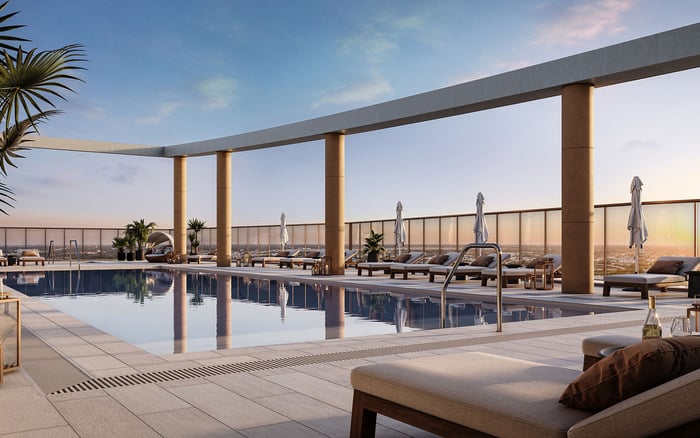
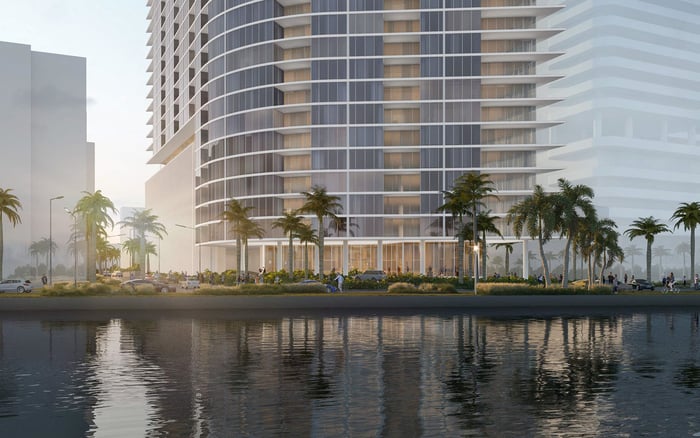
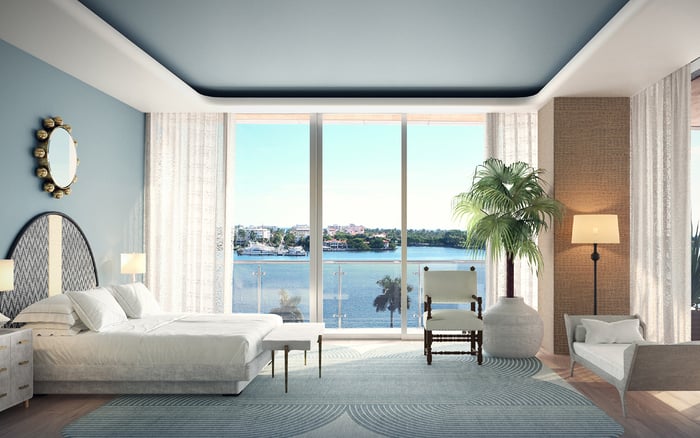
Wraparound terraces are not a single feature so much as a lifestyle instrument: they change how a residence hosts, circulates, photographs, and feels across seasons. In West Palm Beach, the conversation often narrows to two distinct expressions of the idea, **[Forté on Flagler West Palm Beach](https://www.millionluxury.com/west-palm-beach/forte-on-flagler-west-palm-beach)** and **[Shorecrest Flagler Drive West Palm Beach](https://www.millionluxury.com/west-palm-beach/shorecrest-flagler-drive)**, both positioned to capture the rituals of the waterfront, sunrise light, and the tempo of Flagler Drive. For an owner who actually entertains, scale is only the entry point. The more decisive question is whether the terrace reads like an outdoor room with choreography: guest flow, furniture planning, service access, wind comfort, sightlines, and the psychological ease that lets a host stay present. Below is a buyer-oriented framework for comparing wraparound terraces as event platforms, with an emphasis on what matters when the guest count climbs and the evening stretches past the last course.
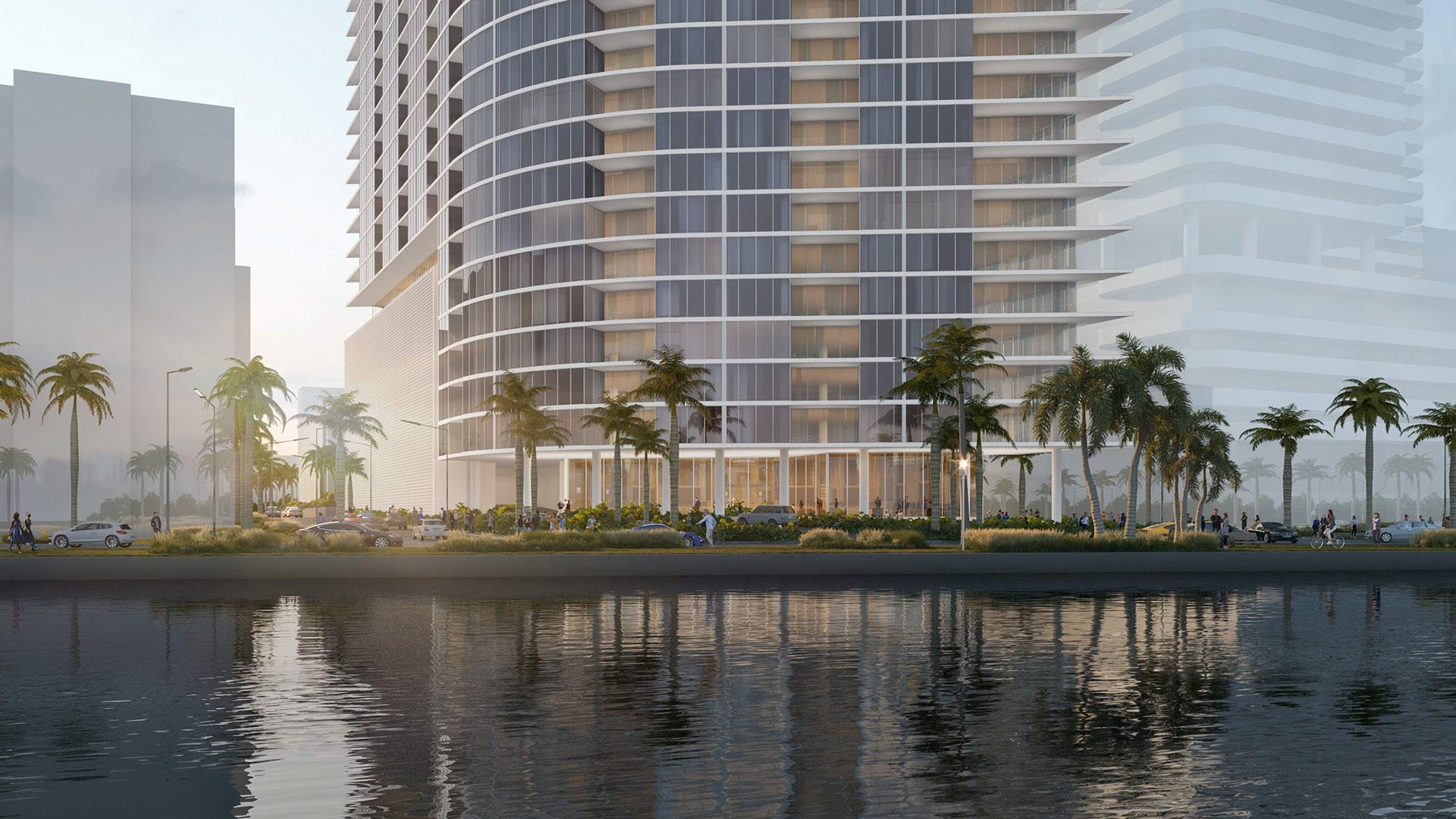
A wraparound terrace turns an apartment from a single outdoor appendage into a perimeter experience. For hosting, that delivers three advantages that are hard to replicate with a standard linear balcony.
First, circulation. Guests can move without bottlenecking at one door or clustering in a single zone. Second, sightlines. Corners introduce diagonal views that make an event feel expansive, even when the gathering is intimate. Third, programmability. A wraparound terrace can hold multiple “scenes” at once: a quiet conversational pocket, a standing cocktail rail, and a dining zone that still feels connected to the interior.
In West Palm Beach, terraces are not merely aesthetic. They function as infrastructure for a social calendar that blends private dining, family milestones, and client-facing entertaining. The result is a more architectural way of shopping: you are not only buying views, you are buying how the home performs as a venue.
At a glance, Forté on Flagler West Palm Beach and Shorecrest Flagler Drive West Palm Beach belong in the same conversation because each aligns with a waterfront-forward lifestyle and an approach to outdoor living that feels continuous with the interior.
But “wraparound” is not a uniform promise. One residence may offer a dramatic corner that reads best in photography, while another delivers a more continuous perimeter that is easier to furnish-and more reliable to host on. For an event-minded buyer, the comparison becomes far more useful when you translate it into performance questions rather than marketing language.
Treat the terrace as a platform with constraints: corner geometry, the ratio of covered to open sky, the number and placement of doors, and the way building massing shapes wind. These factors determine whether the terrace is an occasional backdrop or a dependable extension of daily life.
When buyers say they want a large terrace, they usually mean one of four things. Naming what you mean makes the comparison between buildings sharper.
1) Usable width, not just length.
A terrace can wrap the unit and still feel narrow, limiting it to a standing rail. For seated dining, the real test is whether furniture can be placed while maintaining comfortable passage behind chairs.
2) A true corner moment.
The corner is where wraparound terraces become cinematic. For hosting, it matters because it becomes a natural focal point-often the first place guests gravitate toward. The strongest corners feel wide enough to hold a sofa grouping without turning into a corridor.
3) Indoor-outdoor connectivity.
Multiple access points create flexibility. A single door concentrates traffic and makes service awkward. More than one opening lets a host separate arrival flow from dining flow, which is often the difference between a relaxed dinner and a constant shuffle.
4) Microclimate control.
A terrace can be large and still underperform if it is punishing in afternoon sun or consistently windy. Hosting requires comfort across the hours you actually use it: late-afternoon cocktails, evening dining, and weekend mornings.
If you entertain often, also think about where cushions and accessories live, where lighting naturally lands at night, and where planters or screens could sit without making the space feel crowded.
Before you decide which building feels “bigger,” decide which format you host most often.
Cocktail-forward evenings (12 to 25 guests).
The terrace performs best when it supports a continuous loop and includes at least one corner that can hold a high-top cluster or lounge grouping. Inside, you want a strong bar moment with a direct path to the terrace so you are not running drinks through a seating area.
Seated dinners (8 to 16 guests).
The priority is a dining zone that does not interrupt circulation. A wraparound terrace can place dining on one exposure and lounge on another, helping the night unfold in chapters. If you host seated dinners regularly, favor a terrace segment that can accept a long table with clearance.
Weekend hosting (family plus guests).
The terrace needs quieter secondary zones. A wraparound layout can create a “kids corner” or a coffee perch that feels separate from the main entertaining area. Here, the ability to furnish multiple micro-rooms can matter more than raw size.
Across all three, the best terraces read as outdoor rooms-not simply outdoor edges.
With Forté on Flagler West Palm Beach, the buyer profile often skews toward residents who want a polished, lock-and-leave lifestyle while still expecting the home to carry formal entertaining. In that context, evaluate the wraparound terrace by how cleanly it integrates with the interior. The most successful hosting residences tend to show a clear relationship between the kitchen, living room, and the primary terrace access point.
On your walkthrough, concentrate on corner geometry and the “largest rectangle” you can claim on the terrace. Large gatherings rarely use every linear foot; they rely on the most coherent zones. If the terrace wraps but is heavily segmented by structural turns, planters, or door placement, you may end up with several small areas that are less efficient for a single event.
Also note how the terrace reads at night. Evening entertaining benefits from balanced lighting, and wraparound layouts can create shadow pockets when light sources are not well positioned.
With Shorecrest Flagler Drive West Palm Beach, the emotional appeal for many buyers is waterfront energy paired with a residential, private feel. From a hosting standpoint, prioritize the terrace’s ability to stage arrival and manage flow. If guests typically gather outside first, the terrace should feel like the first room-not a destination reached only after moving through the entire living area.
Pay close attention to wind behavior on the day of your tour. Wraparound terraces can be excellent for cross-breezes, but wind that feels pleasant for two can become disruptive for twenty-especially when napkins, candles, and floral elements are in play. The strongest event terraces include at least one zone that feels naturally sheltered.
Finally, assess how the terrace frames views from inside. Hosting is as much about what guests see while circulating through the interior as it is about the view at the edge.
Flagler Drive’s waterfront context is more than a backdrop; it shapes event pacing. Guests naturally drift toward the view, and a wraparound terrace can create a loop that keeps energy moving. That matters because stagnation is the enemy of a well-hosted evening.
Privacy is the counterweight. Wraparound terraces can feel more exposed because they present more perimeter. Consider how railing transparency, neighboring sightlines, and building spacing affect comfort when you host. If you prefer discretion, you may favor terraces that can be screened with greenery without losing their sense of openness.
If you’re comparing across West Palm Beach, it can help to calibrate your expectations by visiting another waterfront lifestyle concept such as Alba West Palm Beach-not as a substitute, but as a reference point for how terrace design and amenity culture shape entertaining patterns.
Some buyers assume building amenities can replace private outdoor space. In practice, frequent hosts often prefer a private terrace for a simple reason: control. You control music, timing, staff movement, and the intimacy of the guest list.
A wraparound terrace becomes especially valuable when you want a venue that feels personal rather than public-the kind of evening where relationships deepen because the environment is calm and unmistakably yours. That is also why buyers drawn to the most lifestyle-driven buildings across South Florida often still insist on meaningful private outdoor space. Even where vertical glamour dominates, terraces remain a social differentiator.
For a broader South Florida perspective on terrace-forward living, it can be useful to see how a distinctly different urban setting approaches indoor-outdoor life, such as 2200 Brickell, where balcony culture meets a more metropolitan rhythm.
When you tour Forté and Shorecrest, bring the evaluation down to decisions you will feel on the night you host.
Measure with your eyes in furniture modules.
Picture a six-foot sofa, two lounge chairs, and a coffee table. Then picture a 10-person dining table. Can both exist without forcing circulation into a narrow lane?
Stand at the threshold.
The first step onto the terrace should feel generous. If it feels tight, guests will hover inside and the terrace will underperform.
Locate the service path.
You want a clean route for trays, ice, and clearing plates. If staff or hosts must cross the main seating zone repeatedly, the evening will feel busy.
Listen.
Wraparound terraces can hold sound differently. Notice whether street noise or neighboring terraces feel intrusive.
Confirm comfort across exposures.
One side may be ideal for morning coffee while another is best for sunset. For hosting, you want at least one consistently comfortable zone.
The decision is less about which terrace is “bigger” and more about which terrace is more predictable.
Choose the residence whose wraparound terrace offers a primary entertaining zone that feels obvious and easy to furnish. The best host homes require the least improvisation. If you find yourself mentally rearranging everything to make a dinner work, it’s a signal the terrace is impressive but not necessarily event-ready.
Be equally honest about your entertaining style. Some hosts want a terrace that invites guests to circulate and explore. Others want a central salon, with the terrace as a framed extension for air and view. Both can be luxury-the right answer is the one that matches how you naturally host.
If your calendar includes more destination-style weekends and longer stays, it can be instructive to compare the role of outdoor space in a resort-context project like 57 Ocean Miami Beach, where the terrace functions as part of a broader coastal lifestyle. That contrast can clarify whether your ideal terrace is more “venue” or more “retreat.”
What makes a wraparound terrace better for entertaining than a standard balcony? It improves circulation and creates multiple zones, so gatherings feel effortless.
Is terrace “scale” mainly about square footage? No. Usable width, layout coherence, and door placement often matter more.
How should I evaluate a corner section of the terrace? Test whether it can hold a lounge grouping without turning into a passageway.
What’s the biggest hosting mistake buyers make with terraces? Overvaluing dramatic views while ignoring wind, sun exposure, and furniture fit.
Do multiple terrace doors really matter for events? Yes. They reduce bottlenecks and make serving and clearing feel discreet.
How can I tell if wind will be an issue on a wraparound terrace? Visit on a breezy day and look for at least one naturally sheltered zone.
Is a wraparound terrace still useful if I host mostly indoors? Absolutely. It expands the visual and social footprint of the main living areas.
Should I prioritize a covered portion of the terrace? If you host regularly, coverage increases comfort and protects furnishings.
Can building amenities replace a private event-ready terrace? Not fully. A private terrace offers control, privacy, and consistent access.
What’s the simplest way to compare Forté and Shorecrest for hosting? Choose the one with an obvious main outdoor “room” that is easy to furnish.
For a confidential assessment and a building-by-building shortlist, connect with MILLION Luxury.
If branded residences are on your mind — as a home or as an allocation — we would be glad to share what we are seeing, privately.
Begin a quiet conversation