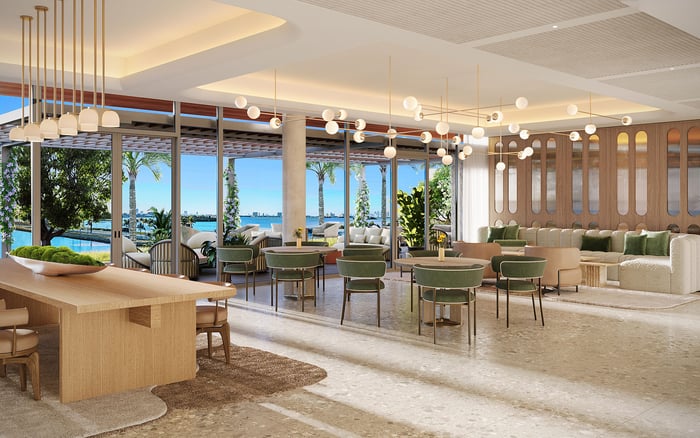
A discreet, buyer-oriented guide to what “private biometric security” can realistically mean in South Florida’s most privacy-forward residential environments, and how to evaluate it during due diligence.
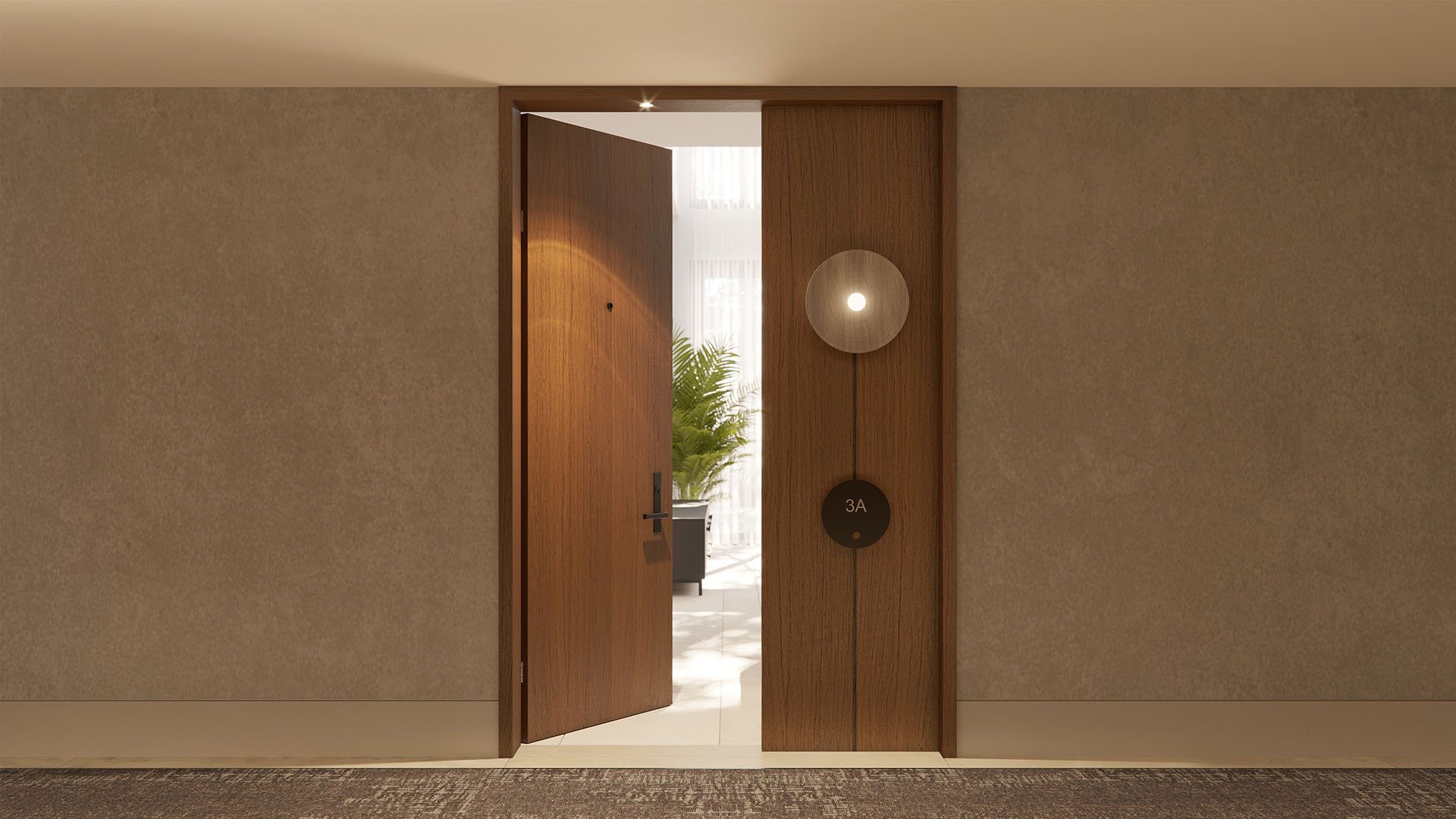
In South Florida’s ultra-premium market, privacy is no longer a preference. It is a lifestyle requirement shaped by global mobility, high-profile schedules, and the practical realities of waterfront living. That is why “private biometric security protocols” have become a quiet differentiator in the newest and most carefully managed residential developments.
Biometrics, in this context, is not a single gadget at a door. At its best, it functions as a design philosophy: identity verification that reduces friction for residents while tightening the perimeter for everyone else. The strongest implementations are nearly invisible. Residents move through lobbies, elevators, and private corridors with a smooth, predictable flow, while visitors are routed through deliberate checkpoints that preserve calm and prevent overlap.
Because individual buildings vary in what they disclose publicly, the most practical approach for buyers is to understand the framework: where biometrics are typically deployed, what “private” should mean operationally, and how to evaluate claims during tours and legal review.
A development can market biometric access and still fall short of a truly private protocol. For buyers, the difference is how identity, circulation, and staff procedure work together.
1) Identity verification with clear boundaries.
The strongest systems authenticate residents and authorized staff while keeping guests on a separate, managed path. That typically means residential elevator banks and private corridors that are not casually accessible from public amenity zones.
2) Layering beyond a single checkpoint.
Biometric readers can be placed at key transition points such as controlled entry doors, package rooms, and resident-only elevator call systems. The protocol matters as much as the hardware: what happens when access fails, how exceptions are handled, and whether staff can override access without compromising the audit trail.
3) Discretion-first staffing.
Technology should reinforce-not replace-a well-trained front-of-house team. In the luxury tier, the tone is hospitality, but the function is security.
4) Data governance.
“Private” must also cover how biometric data is stored, administered, and deleted. Buyers should expect clear answers on whether templates are kept locally on-site or managed by a vendor, and what options exist for residents who prefer alternatives.
5) Redundancy and continuity.
A biometric layer is only as strong as the building’s plan for power interruptions, network failures, and emergency egress. The most refined properties treat these scenarios as part of the resident experience-not an afterthought.
Below are six developments aligned with the direction of privacy-forward living in South Florida, where biometric protocols are increasingly positioned as one layer within a broader, private security environment. The key takeaway is not any single feature, but how each property’s scale, resident profile, and operational posture can support higher-touch, more controlled access.
1. 888 Brickell by Dolce & Gabbana - high-design tower with controlled resident flow
A fashion-branded, ultra-luxury concept tends to attract a global resident profile with heightened privacy expectations and tightly curated arrival routines. In that setting, biometric access matters most when it supports resident-only circulation, reduces lobby dwell time, and limits cross-traffic between private and publicly activated spaces.
The essential buyer question is how the building separates hotel-style activity from residential quiet. At its best, biometrics enable seamless resident movement while keeping guest access intentionally managed.
2. Five Park Miami Beach - park-front living with a privacy-first arrival experience
Miami Beach’s most sophisticated new residential environments often succeed by mastering transitions: street to lobby, lobby to elevator, elevator to residence. When biometrics are deployed thoughtfully, they reduce the number of “decision points” a resident must endure while still enforcing a firm boundary for non-residents.
For buyers, due diligence should focus on whether the protocol is built around resident anonymity: limited exposure in common areas, controlled visitor routing, and staff procedures that protect privacy without creating friction.
3. The Perigon Miami Beach - boutique-luxury posture that can support tighter controls
Boutique ultra-luxury buildings often have a built-in advantage: fewer units can allow higher-touch operations, clearer visibility into who belongs, and more consistent execution of protocols. In that context, biometric layers can be deployed with greater precision, reinforcing the feeling that each access point is intentional.
Buyers should evaluate how visitors, vendors, and service deliveries are handled, since those are the pressure points where privacy can erode. The strongest protocols preserve discretion while remaining effortless day to day.
4. Turnberry Ocean Club Sunny Isles - resort-grade services with resident-only separation
Sunny Isles properties often blend resort energy with private ownership. In that environment, the strongest posture is less about restriction and more about managing overlap-ensuring residents have a predictable, private path that does not mingle with transient activity.
Biometrics can be an effective layer when paired with staff-controlled access, monitored entry points, and clearly segmented vertical circulation. Buyers should ask how resident-only elevator access is enforced and how after-hours access is managed.
5. 2200 Brickell - low-density scale that favors discreet verification
In Brickell, the most privacy-forward residential experiences are often found where scale remains restrained and circulation stays simple. Low-density design can make biometric access feel more natural, because clean boundaries can be enforced with fewer public touchpoints.
The buyer lens should be operational: who administers the system, how resident access is onboarded, and what the backup procedure is if a reader is offline. A truly private protocol feels steady even when technology is not.
6. 2000 Ocean Hallandale Beach - beachfront living where access control is part of daily calm
Oceanfront properties come with distinct security realities, from beach adjacency to increased guest traffic in surrounding areas. A private biometric protocol can support a calmer ownership experience by tightening points of entry while allowing residents to move effortlessly between lobby, amenities, and residence.
Buyers should consider how amenity access, deliveries, and service staff are managed. The strongest approach keeps resident paths private and consistent, using technology to reduce unnecessary interaction while maintaining accountability.
In practice, biometrics deliver the most value at moments where luxury can otherwise become exposed.
Resident arrival.
A refined arrival sequence is not only about finishes and lighting. It is about time, control, and predictability. When biometrics are in place, they should reduce bottlenecks and minimize the need to state identity out loud.
Elevator control and floor access.
Vertical circulation is the spine of privacy. Buyers should look for strategies that prevent casual access to residential floors and avoid shared corridors with high-traffic amenity zones.
Packages, service, and vendors.
The most common privacy failures happen behind the scenes. A building can have a secure front door and still operate with a porous service routine. Ask how deliveries are authenticated, logged, and routed.
Amenity zoning.
In some properties, amenities function as social theaters. In others, they are sanctuaries. The more public the amenity program, the more important it is that resident-only corridors and elevator banks remain protected.
If you are comparing neighborhoods, the principles stay consistent even as the lifestyle shifts. In Brickell, high-rise density makes circulation design paramount, and projects like 888 Brickell by Dolce & Gabbana and 2200 Brickell reflect a market where controlled arrival is a premium expectation. In Miami Beach, the strongest privacy posture is often the one that feels effortless within a highly activated environment-which is why buyers gravitate toward settings like The Perigon Miami Beach.
Biometrics can sound definitive, but the real differentiators are contractual, operational, and architectural. Before you commit, press for clarity in the areas that matter most.
Data handling and resident choice.
What is collected, where it is stored, and who can access it should be clear. Ask whether biometric enrollment is mandatory, whether alternatives exist, and how deletion works at resale.
Administration and audits.
Who manages permissions: on-site management, a third-party vendor, or both? Is there a clean audit trail for overrides? In luxury environments, security is as much about accountability as it is about convenience.
Failure modes.
If the system is down, what happens next? A strong protocol has a graceful fallback that does not compromise privacy. Buyers should understand how staff verifies identity during outages.
Construction and retrofits.
Some buildings are designed for layered access from day one; others add technology later. Purpose-built integration typically reads as more discreet and is easier to maintain.
Visitor protocol.
The most important test is often simple: how does a guest reach your door? The fewer ambiguous steps-and the more intentional the routing-the stronger the privacy posture.
For buyers who prioritize ocean-adjacent calm with controlled entry, 2000 Ocean Hallandale Beach is a useful reference point for how beachfront living can still feel insulated. For those comparing the resort corridor, Turnberry Ocean Club Sunny Isles sits in a market where clear separation between residents and visitors is not optional.
Private biometric security protocols are best understood as a layered experience: architecture that controls movement, staffing that preserves discretion, and technology that verifies identity without adding friction. In South Florida’s top-tier developments, the winning formula is rarely the most visible. It is the one that makes privacy feel like the default setting.
What counts as “biometric” access in a luxury condo? Typically face, fingerprint, or similar identity verification used for entry or controlled areas.
Is biometric access safer than key fobs? It can be, especially when paired with audit trails and layered checkpoints beyond the lobby.
Where is biometric data usually stored? It varies by building and vendor, so buyers should ask whether storage is local or cloud-based.
Can residents opt out of biometrics? Some properties allow alternatives; confirm policies in writing before you commit.
Do biometrics replace staffed security? In ultra-luxury settings, they should complement staff, not substitute for human oversight.
What areas commonly use biometric controls? Entry doors, resident elevators, select amenity zones, and service areas are common touchpoints.
How should buildings handle biometric system outages? There should be a documented fallback that verifies identity without opening access broadly.
Will biometrics slow down guests and service providers? Well-designed protocols manage guests smoothly while keeping residential areas separated.
Does biometric access increase resale value? It can support value when it measurably improves privacy and operations, not just marketing.
What is the first question to ask on a tour? Ask to walk the guest route versus the resident route and see how separation is enforced.
If you'd like a private walkthrough and a curated shortlist, connect with MILLION Luxury.
If branded residences are on your mind — as a home or as an allocation — we would be glad to share what we are seeing, privately.
Begin a quiet conversation