A buyer-oriented guide to navigating Edgewater’s next wave of waterfront new construction, with an emphasis on deposit structures, construction financing signals, delivery milestones, and ownership costs that can reshape real returns.
Edgewater has quietly become one of Miami’s most strategically positioned waterfront addresses: close enough to the Design District, Wynwood, and the Downtown core to feel effortless, yet residential enough to register as a true neighborhood. That duality is exactly why pre-construction here is drawing buyers who want near-term lifestyle value with long-term scarcity.
The market context matters. In Q2 2025, Edgewater posted a median condo sale price around $1.575M, with a median price per square foot around $902 and roughly 96 median days on market. Translation: this remains a high-value submarket, but liquidity has normalized. For pre-construction buyers, that puts more emphasis on contract terms and project execution than on momentum alone.
The most sophisticated Edgewater purchasers are underwriting three variables in parallel: (1) deposit exposure and timing, (2) construction financing and delivery signals, and (3) ongoing ownership costs - especially condo fees.
In pre-construction, the “price” is only one part of the investment. The deposit schedule is the other - and it often reveals more about the developer’s capital stack and leverage than any marketing deck.
Edgewater’s current pipeline spans dramatically different deposit expectations. Boutique product can require meaningful skin in the game early, while large-scale developments may offer milestone-based structures that feel manageable at each step but accumulate quickly. Either way, deposits directly affect your optionality.
For example, Cove Miami is commonly marketed with a 40% total deposit before closing, typically staged across milestones, with the balance due at closing. In contrast, Villa Miami is marketed with a higher pre-closing requirement that can reach 50% via multiple milestones - a structure more consistent with ultra-luxury positioning.
A larger deposit is not inherently “worse.” It can signal a tighter, higher-end inventory strategy and a buyer base that is less rate-sensitive. But it does increase the cost of waiting. If flexibility is part of your thesis, be clear about how long that capital will sit while the project moves through its construction cycle.
Two legal mechanics are worth keeping front of mind. Florida condo purchases often include a 15-day rescission period after receipt of required documents, and deposits are generally handled through escrow structures governed by statute and contract language. In plain terms: scrutinize release conditions and escrow provisions with the same intensity you apply to the floor plan.
In Edgewater, pre-construction risk often compresses to one question: has construction financing been secured, and at what scale relative to the project?
When financing is publicly disclosed, it can reduce certain execution risks because the project has a defined runway. It does not eliminate timeline variability, scope changes, or macro disruptions - but it does remove one of the most common pre-construction failure points: stalled projects awaiting capital.
Two recent examples sharpen the point. Cove Miami’s developer group secured a $170M construction loan, a meaningful signal that the project has moved from intention to funded execution. Villa Miami secured $285M in construction financing after groundbreaking, providing its own level of capital certainty.
For buyers, the practical implication is not simply “loan equals safety.” It is about your probability-weighted timeline. A funded build can still slip, but it is less likely to remain in a prolonged pre-construction holding pattern.
Projected completion dates help with planning, but they are not what determines move-in readiness or closing cadence. The milestones that matter most are tangible and observable: groundbreaking, topping off, and temporary certificate of occupancy.
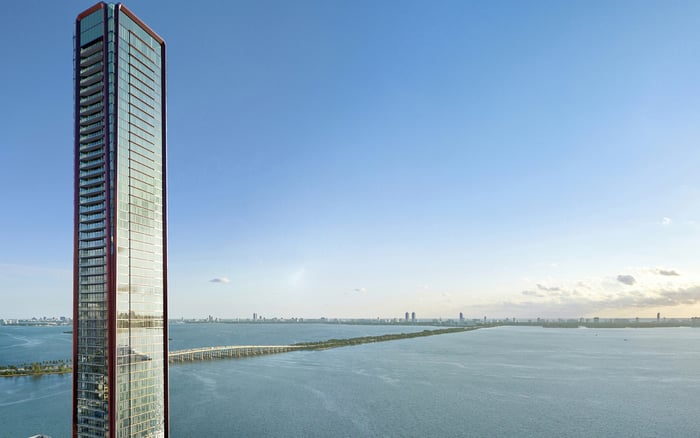
On that front, Edgewater has had several headline indicators. Aria Reserve Miami is a twin-tower condominium development at 725 NE 24th St. The South Tower received a Temporary Certificate of Occupancy in June 2025, and the North Tower topped off in July 2025. Those are the kinds of markers that move a project from “concept risk” into execution - highly relevant for buyers coordinating schools, staffing, furnishing timelines, or the sale of an existing residence.
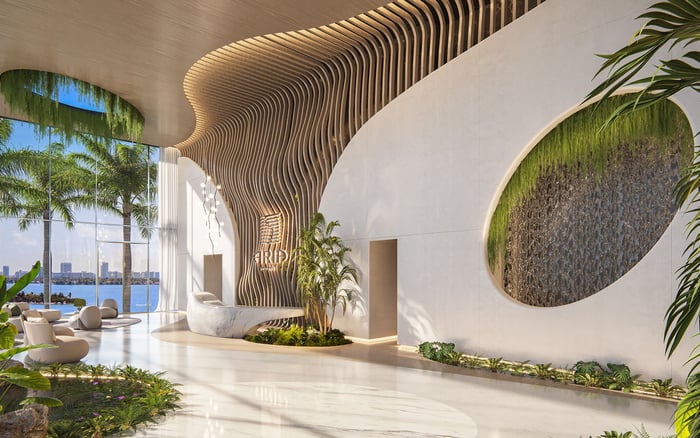
Aria Reserve is also marketed at approximately 782 residences, positioning it as a large-scale community within Edgewater. That scale has implications: more inventory can create more variability in resale competition later, but it can also support broader amenities and an on-site experience that reads as resort-like.
Edgewater’s current new-development mix can be read as three distinct plays.
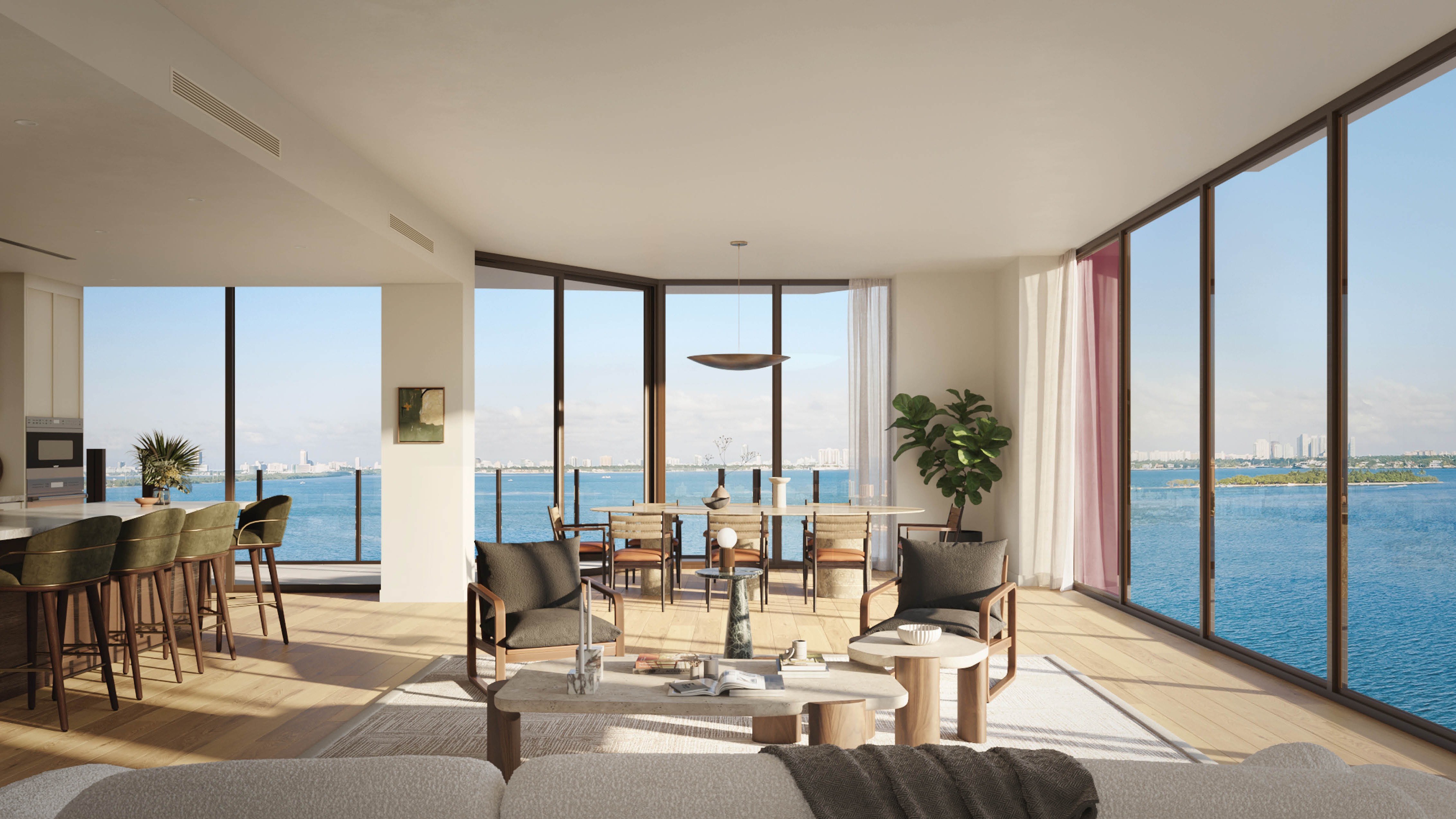
First is large-scale waterfront living, where the building itself functions like a neighborhood. Aria Reserve is marketed with flow-through east-to-west layouts that emphasize sunrise and sunset exposure, with large terraces as a signature feature. That orientation is a lifestyle proposition, but it is also a value proposition: light and cross-breeze are not just pleasant - they are enduring differentiators.
Second is boutique waterfront ownership. Cove Miami, at 456 NE 29th St, is a 40-story project with 134 residences. The boutique argument is straightforward: fewer neighbors, fewer units that directly compete with yours, and a building identity that can stay crisp over time.
Third is ultra-luxury hospitality-forward living. Villa Miami, at 700 NE 29th St, is positioned as an ultra-luxury tower with 70 residences across 56 stories, developed by Terra and One Thousand Group and branded and activated with Major Food Group. That “activation” language matters. It signals an experience designed to operate more like a private club than a conventional condo - something that can influence both demand and the cost structure of ownership.
Even in the luxury segment, monthly carrying cost is now part of every serious underwriting. In Florida, condo fee pressure has been widely covered as costs rise around insurance, reserves, and regulatory changes. You can love the residence and still misprice the true cost of holding it.
For pre-construction buyers, this is doubly important because you are typically committing capital before the steady-state budget is fully seasoned. A prudent approach is to model a range for monthly fees rather than a single number, then test your comfort level against the high case. This is particularly relevant for amenity-rich buildings where service levels are a feature, not an afterthought.
Pre-construction buyers often cannot rely on normal mortgage contingencies, and underwriting can be difficult because the property is not yet complete. That does not mean financing is unavailable. It means your planning needs to be earlier, more conservative, and less dependent on last-minute rate optimism.
At the luxury end, many buyers approach the purchase as a capital allocation decision first and a loan decision second. If you intend to finance, treat the deposit schedule and anticipated closing window as a liquidity calendar. Align reserves accordingly so you are never forced into a suboptimal loan structure simply to meet a deadline.
Edgewater is a compelling primary-residence story, but many buyers are also comparing it to Miami Beach for a different kind of prestige and rhythm. For those weighing a pied-à-terre lens, Setai Residences Miami Beach represents the Miami Beach archetype: a brand-driven, hospitality-calibrated experience where service and address are inseparable.
The practical takeaway is not that one submarket is “better.” It is that you should buy the operational model you actually want. Edgewater’s best new construction tends to emphasize view corridors, indoor-outdoor living, and proximity to the city’s cultural spine. Miami Beach often emphasizes service, beach adjacency, and the ritual of arrival.
Luxury buyers rarely “win” pre-construction by shaving a small percentage off the headline price. They win by improving the risk-adjusted outcome.
Three leverage points are common:
Because these terms are contract-defined, the most valuable work happens before signature, not after. In Edgewater - where projects range from boutique to mega-scale - that contract discipline is a differentiator.
What is the most meaningful “delivery” milestone for a buyer? A Temporary Certificate of Occupancy is a practical signal of initial move-in readiness.
Is a larger deposit always a red flag? Not necessarily; it can reflect ultra-luxury positioning, but it reduces flexibility.
How common are milestone-based deposits in Edgewater pre-construction? Very common, with deposits typically staged from contract through later build phases.
How many residences are planned at Aria Reserve? It is marketed at roughly 782 residences, with some variance across materials.
What is a key boutique alternative to large-scale towers in Edgewater? Cove Miami is positioned as a smaller-scale waterfront building with 134 residences.
Why do buyers care about construction financing announcements? Secured financing can reduce execution uncertainty by defining a funded construction runway.
Does construction financing guarantee the completion date? No; it can lower certain risks, but schedules can still shift.
What is the rescission period for certain Florida condo purchases? Florida law provides a 15-day rescission period after receiving required documents.
Why are condo fees such a major variable in Florida now? Insurance, reserves, and regulatory changes can materially increase monthly ownership costs.
How should buyers think about financing a pre-construction condo? Plan early and conservatively, since typical mortgage contingencies may not apply.
For a confidential assessment and a building-by-building shortlist, connect with MILLION Luxury.
If branded residences are on your mind — as a home or as an allocation — we would be glad to share what we are seeing, privately.
Begin a quiet conversation