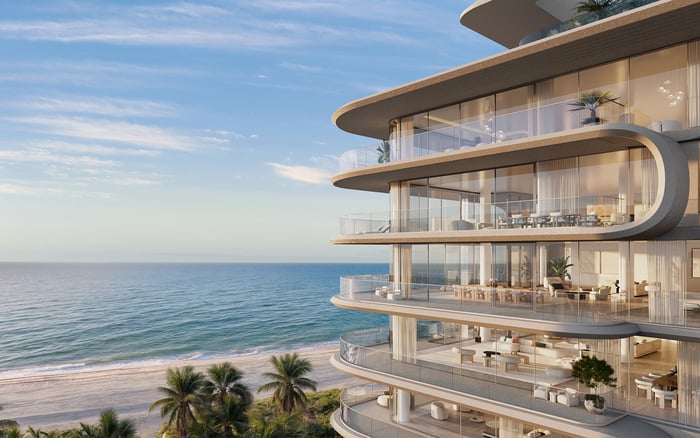
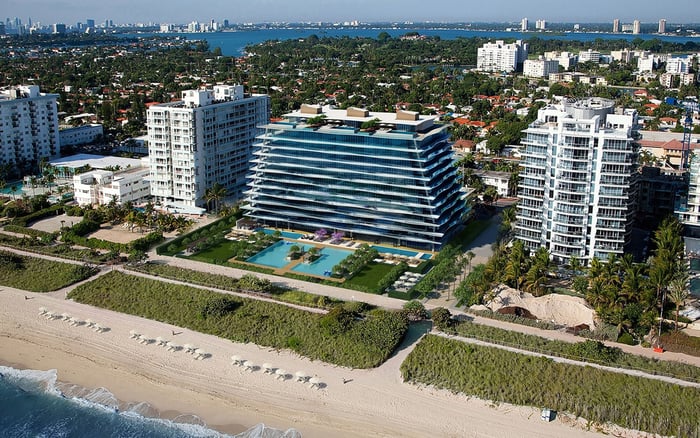
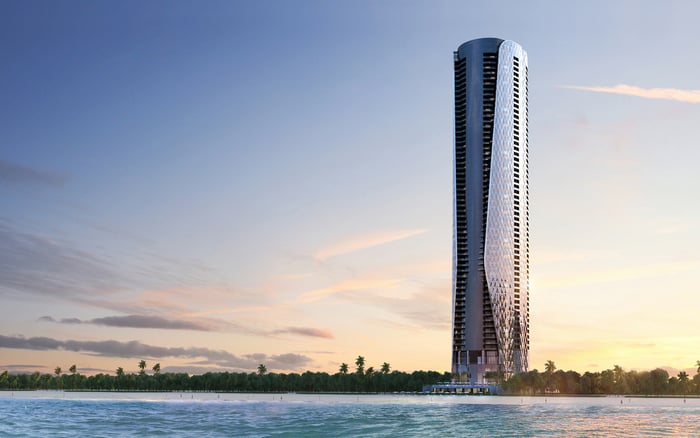
A discreet look at how two oceanfront Surfside addresses frame luxury through service: one already operating at boutique scale, the other promising hospitality-forward residence management on a much larger amenity footprint.
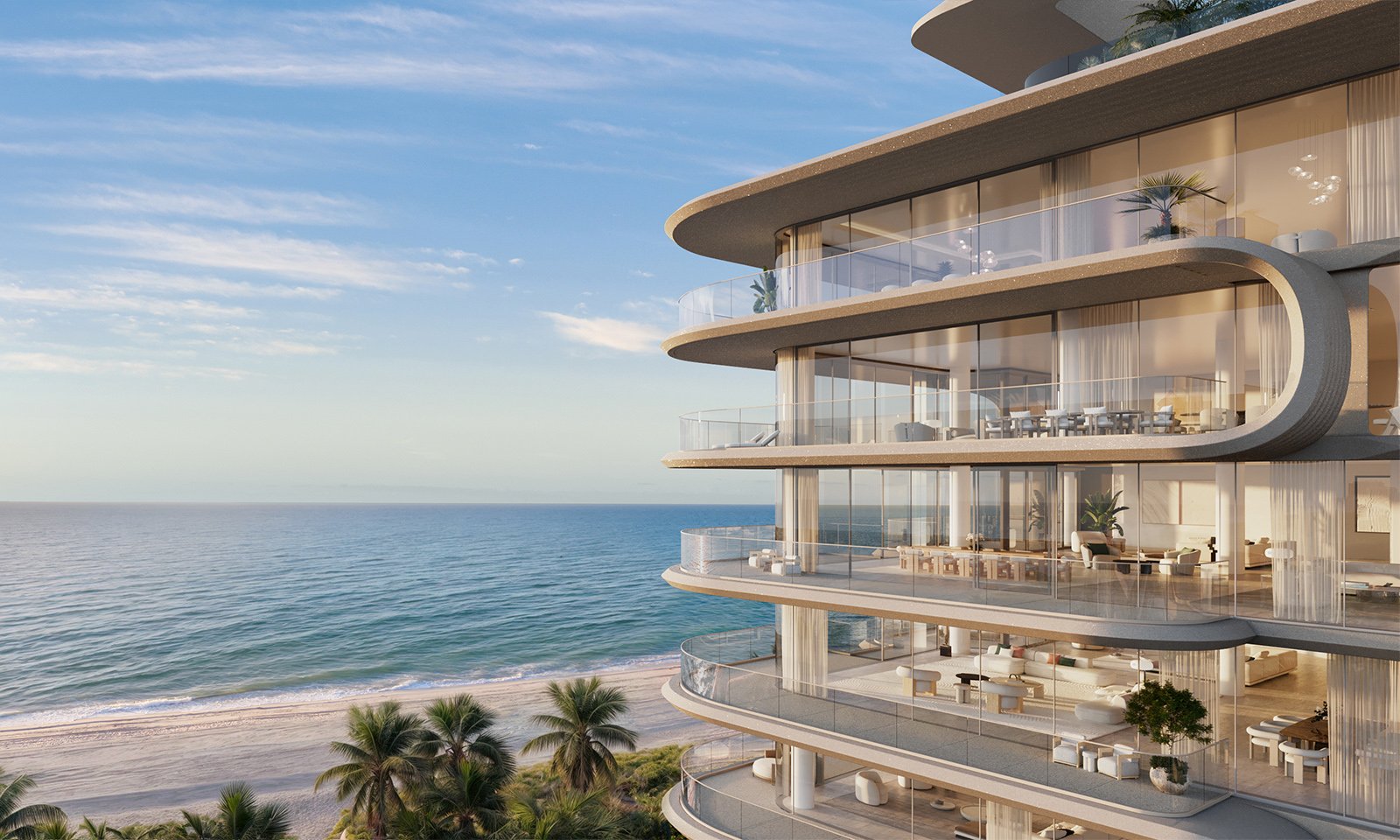
In Surfside, the most meaningful differentiator between ultra-luxury oceanfront residences is increasingly not the view line or the ceiling height. It’s operations. The question sophisticated buyers ask - quietly, and early - is simple: who is actually running the building, and what does “full service” mean on an ordinary Tuesday?
Two projects illustrate the spectrum particularly well. Arte Surfside is delivered and operating: a boutique condominium with a small number of residences and an intentionally intimate staffing model. The Delmore Surfside is planned and marketed at a far larger amenity scale, with a residence-manager and butler-service narrative that reads closer to private-club hospitality.
Both sit in the same rare coastal geography of Surfside, yet they represent two distinct theories of luxury: one built on consistency and familiarity, the other built on breadth, programming, and spectacle. For buyers, the most practical way to compare them is to evaluate the service model as rigorously as the floor plan.
Arte Surfside is already a real building with real rhythms. Delivered in 2020 and comprising 16 residences within a 12-story oceanfront structure, it naturally leans toward a “know-your-name” environment. In small buildings, service isn’t only about staffing levels; it’s about continuity. The same faces recur, preferences are remembered, and the margin for operational drift is smaller.
Arte markets 24-hour doorman and concierge service, establishing a baseline expectation of always-on front-of-house coverage. It also emphasizes privacy and security through private elevator entry, including a marketed fingerprint-recognition access feature. For many ultra-high-net-worth buyers, that combination can matter more than another amenity room: arrival feels controlled, predictable, and discreet.
Where Arte’s model becomes especially tangible is in wellness and beachfront execution. The amenity set is built for daily use, not occasional tourism: an indoor heated 75-foot lap pool, a fitness center, and a dedicated yoga studio support a lifestyle where training and recovery can become routine. Spa facilities such as sauna and steam rooms reinforce the same thesis.
Beach service, meanwhile, is an operations story. When a building offers resident setups like loungers, umbrellas, and cabanas, it’s committing to staffing and coordination outdoors. That commitment is easy to market and difficult to deliver gracefully over time. Arte’s boutique scale can be an advantage here: fewer residences can mean less friction at peak hours, and service can feel closer to a private beach house than a resort.
The Delmore is not yet delivered, and its projected completion has been publicly disclosed as 2029. That matters, because service at this level isn’t simply a list of amenities - it’s an operational culture built over years, including hiring, training, vendor selection, and the day-to-day discipline of management.
What’s marketed is ambitious. The project is being developed by DAMAC International and designed by Zaha Hadid Architects, with interiors by Hirsch Bedner Associates. It also promotes more than 55,000 square feet of amenities - a clear signal of a hospitality-scale footprint rather than a typical condominium amenity deck.
On the service side, the language is telling. The Delmore positions support around a “residence manager” and “butler service,” suggesting an approach closer to residence management than conventional concierge. The nuance matters: a concierge typically coordinates, while a residence manager is often expected to orchestrate, preserve continuity, and serve as a single point of accountability.
The Delmore also promotes a signature suspended “sky pool” concept. Even before debating aesthetics, buyers should recognize the operational implications: specialty maintenance, safety protocols, and a high expectation of flawless uptime. Projects that trade in headline amenities must operationalize them the way a hotel would.
A dedicated sales and marketing team has also been publicly discussed in connection with The Delmore, reflecting the project’s global UHNW targeting. International demand can be a strength, but it can also shape the service mix toward second-home usage patterns: greater emphasis on turn-key arrivals, pre-stay preparation, and “lock-and-leave” readiness.
At MILLION Luxury, we see the most sophisticated buyers treat service as both a balance-sheet item and a lifestyle variable. When comparing an operating boutique building with a preconstruction, hospitality-forward concept, these questions tend to clarify value.
First, what is the service promise that is already proven? In an operating building like Arte, the concierge and beach routines exist now, and owners can evaluate cadence and responsiveness. In a planned building like The Delmore, the promise remains a plan until it’s staffed, trained, and managed under real occupancy.
Second, how does privacy scale? Arte’s small residence count supports familiarity and control. Larger amenity footprints and more complex programming can introduce more touchpoints, more vendors, and more back-of-house movement. None of that is inherently negative, but privacy is an operational outcome - not an architectural drawing.
Third, how is “wellness” defined? Arte’s wellness read is straightforward and daily: lap pool, yoga, fitness, sauna, and steam. The Delmore markets wellness and fitness programming components such as yoga and Pilates studios, consistent with a hospitality-forward approach - which may imply scheduled classes, curated programming, and a more social rhythm.
Fourth, what does the staffing model imply for monthly costs? Even without quoting numbers, the logic is plain: a 55,000-plus-square-foot amenity ecosystem with specialized features tends to require more staffing, more maintenance, and more vendor oversight. Boutique buildings concentrate spend into fewer, simpler spaces and often rely on repetition and consistency to deliver luxury.
Fifth, who is accountable? A “residence manager” framework can create a clear line of responsibility, but it still depends on execution and management quality. In boutique settings, accountability can feel immediate because there is nowhere to hide. In hospitality-scale settings, accountability has to be designed into the organization.
Surfside has long appealed to buyers who prioritize quiet, walkability, and a sense of separation from the louder portions of Miami Beach. In that context, boutique service often reads as the most authentic expression of luxury: fewer residences, fewer unknowns, and a shorter distance between request and response.
Miami Beach, however, continues to set expectations for hotel-adjacent living. Buyers who spend time in South-of-Fifth or along the more active stretches of the barrier island often want a residential experience that feels like a refined extension of a private hotel.
That’s where comparisons become useful beyond Surfside. For example, Setai Residences Miami Beach is frequently discussed among buyers who value a calm, service-centered environment with a hospitality sensibility. Similarly, The Ritz-Carlton Residences® Miami Beach speaks to a buyer profile that expects structured service standards and brand-aligned operations.
For those drawn to the idea of a curated residential collection within a storied address, Shore Club Private Collections Miami Beach sits in the same broader conversation: the line between “home” and “hotel” becomes a design choice - and then an operations mandate.
The point is not to suggest equivalence across projects, but to underline a buyer reality: your preferred service culture often matters more than your exact latitude and longitude.
Arte’s model tends to suit buyers who treat Surfside as a primary residence or a frequently used second home. They want quiet competence, consistent staffing, and a wellness routine that doesn’t require leaving the property. They value discretion on arrival and prefer a building where operations feel personal rather than institutional.
The Delmore’s marketed proposition will likely appeal to buyers who want a more programmed, hospitality-forward lifestyle and who see service as a form of convenience infrastructure. Residence management and butler-style support can be compelling for those with multiple homes, complex travel schedules, and a preference for “arrive and everything is handled.” The caution is not about ambition; it’s about underwriting the gap between promise and delivered culture.
Ultimately, Surfside’s next chapter is not only architectural. It’s operational. The buildings that win long-term loyalty will be those that can deliver service with the same restraint and rigor their designers apply to the façade.
What is the clearest difference between Arte Surfside and The Delmore? Arte is delivered and operating with boutique-scale service; The Delmore is planned and markets a larger hospitality-style service model.
Why does unit count matter for service? Fewer residences can support more personalized, familiar staffing and reduce competition for amenities and beach setups.
Is Arte Surfside positioned as a wellness-focused building? Yes. Its amenity mix emphasizes daily wellness, including an indoor heated lap pool, yoga studio, and spa-style facilities.
What type of service does The Delmore market? It markets residence-manager support and butler service, suggesting hands-on residence management beyond standard concierge.
How should buyers think about amenities that are still in planning? Treat them as intent until delivery, and focus on whether the future operations plan can realistically sustain them.
Does Arte include beach service? Yes. It promotes resident beach service with setups like loungers, umbrellas, and cabanas.
What is notable about The Delmore’s amenity scale? It markets more than 55,000 square feet of amenities, implying a hospitality-scale operations footprint.
Why is a “sky pool” operationally significant? Signature features typically require specialized maintenance and safety protocols to meet owner expectations consistently.
How does privacy relate to building operations? Privacy is shaped by staffing, access control, and vendor flow - not only by architecture and security hardware.
What is a practical way to compare service across buildings? Compare accountability (who owns the request), consistency (who shows up), and the daily usability of amenities.
For a confidential assessment and a building-by-building shortlist, connect with MILLION Luxury.
If branded residences are on your mind — as a home or as an allocation — we would be glad to share what we are seeing, privately.
Begin a quiet conversation