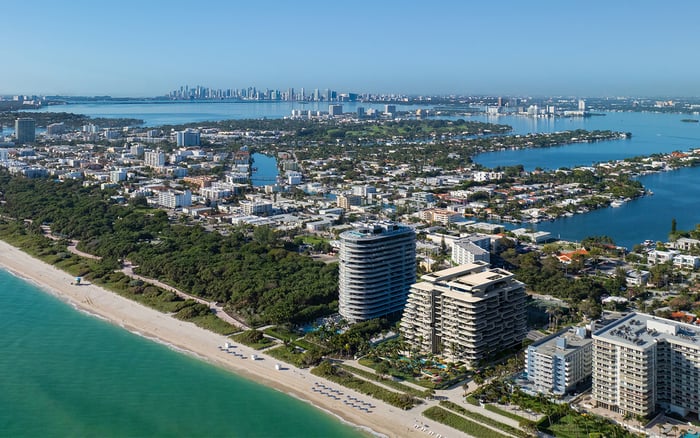
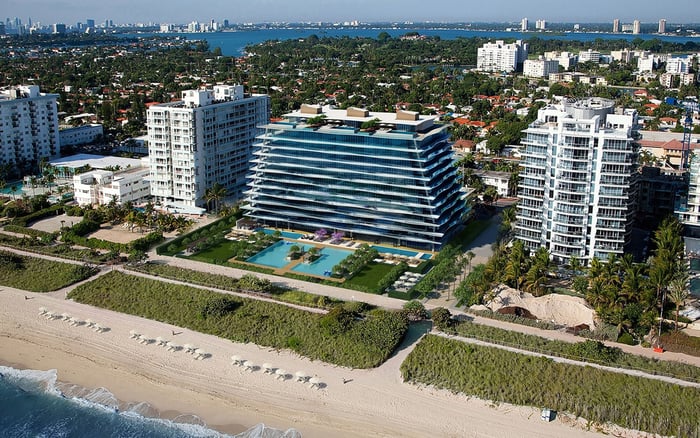
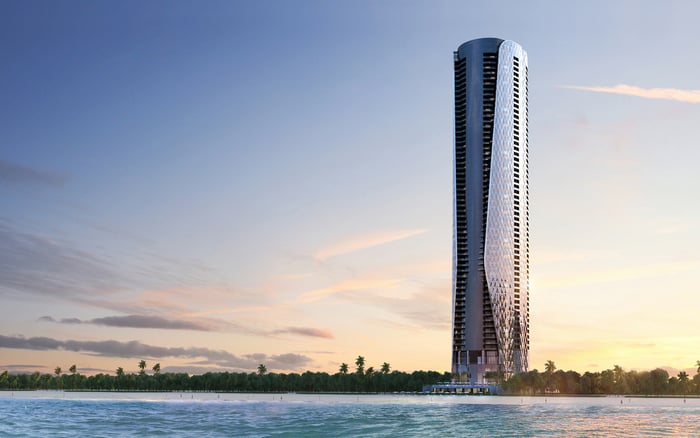
A discreet, buyer-oriented comparison of two Surfside addresses through the lens of architecture, privacy, and day-to-day livability, with a clear framework for choosing between statement design and boutique calm.
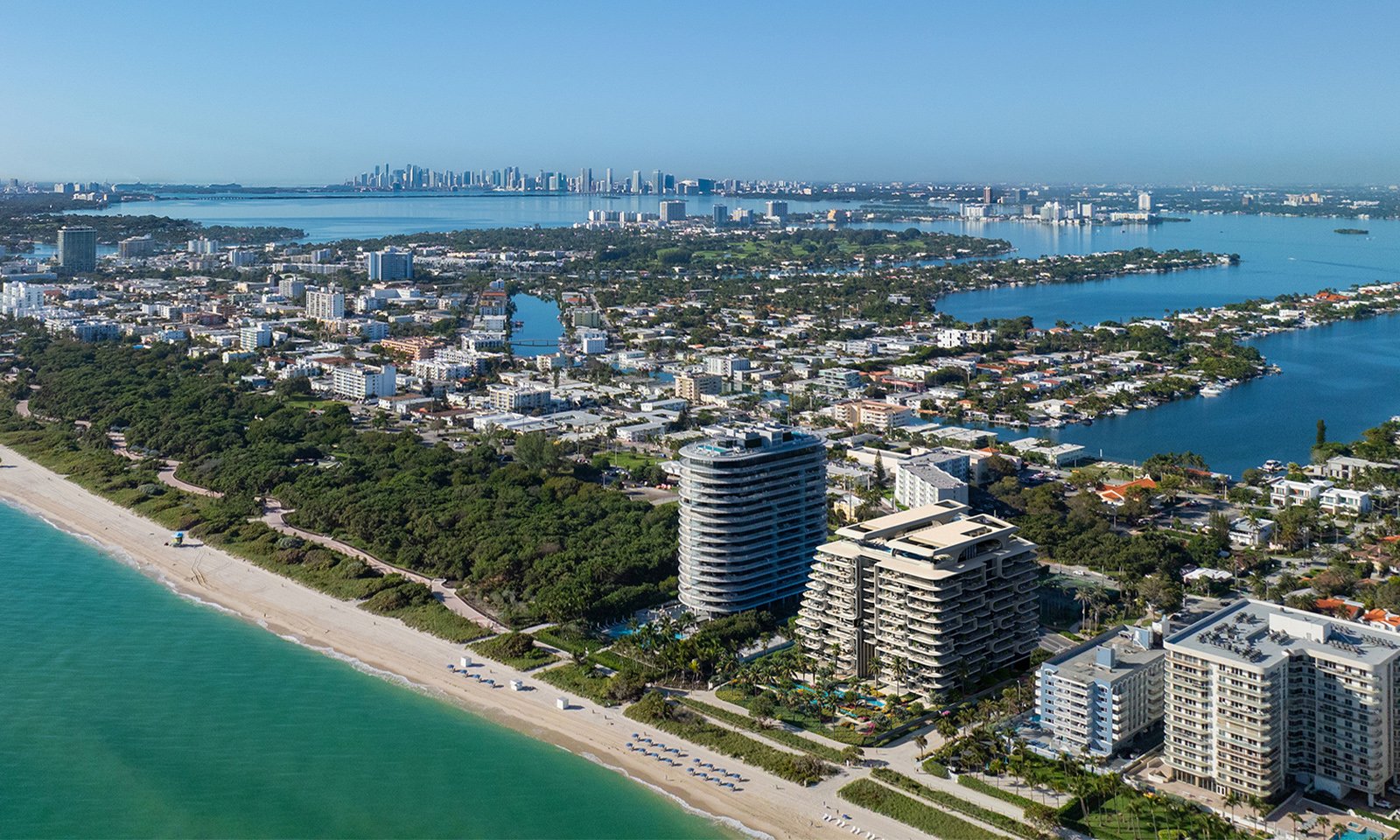
Surfside has become one of the most tightly held stretches of oceanfront living in South Florida, where buyer priorities lean less toward nightlife proximity and more toward calm, security, and a sense of controlled access. In that context, comparing The Delmore Surfside and Arte Surfside isn’t simply an aesthetic exercise. It’s a choice between two distinct philosophies of prestige.
One philosophy treats architecture as an unmistakable signature. The other makes privacy the main event, with design in service of a quieter goal: insulating daily life from friction, crowds, and visual exposure. Both can be “luxury.” Only one will feel right once you picture your routine-morning arrival, post-beach transitions, guests coming and going, and the difference between being seen and being settled.
When a globally recognized design language lands in a small beachfront town, it doesn’t just shift the skyline. It changes the lobby’s social temperature, the way residents talk about their home, and the kind of attention the building naturally attracts.
Zaha Hadid architecture, in particular, reads as kinetic and sculptural, often emphasizing movement, curvature, and futurism. For an owner, that can translate into a daily experience where the building itself carries a point of view. The residence becomes an extension of taste, and the property’s identity is immediately legible to visitors.
The tradeoff is subtle but real: highly recognizable design can draw interest beyond residents. That attention may be benign-even flattering-but it changes how anonymity feels at the curb, at the lobby threshold, and at the amenity level. If your definition of luxury includes being left alone, the key question isn’t whether the architecture is famous. It’s whether the building’s fame is operationally managed.
In ultra-premium Surfside, privacy should be evaluated as a system, not a promise. Buyers often focus on finish quality and view corridors, then discover that the lived experience is shaped by logistics.
Consider these practical privacy variables during tours and plan reviews:
Arrival choreography: A discreet home begins at the curb. Look for separation between resident arrivals, guest arrivals, and service. If every path converges into a single photogenic moment, your day will be more public than you expect.
Elevator strategy: Privacy is heavily influenced by whether you can move from car to residence with minimal shared space. Even with impeccable staffing, shared circulation creates incidental interaction.
Amenity exposure: Oceanfront amenities can be a gift or a liability. Pools, lounges, and fitness areas should feel protected from shoreline sightlines and neighboring towers. If they read as “on display,” residents often stop using them-which defeats the point.
Beach threshold: The most luxurious beach experience isn’t necessarily the closest one. It’s the one with the cleanest transition: towel storage, rinse-off points, and the ability to return home without turning your residence into a sand corridor.
As you compare the tone of The Delmore Surfside with Arte Surfside, treat boutique privacy as a series of design decisions-how the property edits your exposure, not how it markets tranquility.
A buyer choosing between statement architecture and boutique calm is usually choosing between two types of confidence.
The first is outward confidence: the building speaks for you. You arrive and the address announces itself. This can be ideal for owners who love hosting, who treat design as a form of collecting, or who want a residence that feels culturally adjacent to the museum-grade.
The second is inward confidence: the building protects you. The best boutique privacy feels effortless. It isn’t austere or antisocial; it simply reduces forced interaction. This tends to appeal to owners whose luxury baseline is control-control of who sees them, how they move through the property, and how much of their routine is visible.
Both sensibilities show up in Surfside and Bal-harbour adjacent living, where the appeal isn’t only oceanfront views, but a neighborhood rhythm that can feel curated.
Without leaning on marketing language, you can learn a great deal from how a floorplan handles edges.
Light: Oceanfront living is as much about light quality as it is about view. Ask whether the plan invites daylight deep into the home or concentrates it at the perimeter. Dramatic architecture sometimes favors moments of surprise-which can be wonderful-but it shouldn’t compromise daily comfort.
Edges: The “edge condition” is where interior becomes exterior. Study terrace access, door placements, and whether outdoor rooms feel usable in real wind patterns. Oceanfront terraces that are too exposed become ornamental.
Sightlines: Stand at the entry and imagine the home in use. Can someone at the door see straight through to your living area? Can a guest see into the kitchen, the primary corridor, or the terrace immediately? Some buyers prefer that openness. Others want a plan that reveals itself in stages.
If you’re comparing a more iconic, sculptural approach to a more boutique, privacy-first approach, the floorplan will reveal which philosophy is real-and which is cosmetic.
One reason Surfside is so compelling is that you can calibrate your preferences by seeing multiple expressions of oceanfront luxury within a short drive.
If your eye is drawn to calm minimalism with a residential feel, spend time around Ocean House Surfside and note what you respond to: quieter arrivals, understated common areas, and a sense that ownership is the main constituency.
If you’re attracted to architecture-forward living, consider how sculptural design performs over time, not just at first impression. A building can be visually exceptional and still function like a serene home, but the operational details must match the ambition.
And if you want a broader Miami-beach benchmark for ultra-luxury oceanfront positioning, a visit to Fendi Château Residences Surfside helps clarify the difference between branded glamour and understated seclusion, even within the same coastal corridor.
This is less about declaring one building “better” and more about matching temperament to environment.
Choose the icon-architecture posture if you:
Want your residence to feel like a design object you inhabit.
Expect to entertain and enjoy a lobby that feels like an arrival moment.
Prefer a building identity that is instantly recognizable.
Choose the boutique-privacy posture if you:
Value low-friction comings and goings more than social energy.
Want amenities that feel protected, not performative.
Prefer a home that reads as quietly expensive rather than conspicuously new.
If your life is split between Surfside and a second base in Miami’s core, compare how you feel in a skyline-driven environment like 2200 Brickell versus the narrower, beach-first focus of Surfside. The contrast can sharpen the decision: do you want your address to participate in the city’s visibility, or to edit it out?
When two oceanfront options both sit in the ultra-premium tier, the decision usually comes down to three questions.
Recognition isn’t vanity. It can be a form of joy: living inside a work of architecture. Protection isn’t paranoia. It’s simply a preference for controlled exposure.
If you’ll truly use pool, spa, fitness, and lounges, inspect their privacy and acoustics. If your lifestyle is beach walks, quiet dinners, and time at home, amenities can be minimal-as long as they’re well executed.
Primary homes need operational ease: storage, arrivals, service access, and day-to-day comfort. Second homes can tolerate a bit more theater if the payoff is emotional.
Answer those three honestly and the comparison between The Delmore Surfside and Arte Surfside clarifies, because it becomes about you-not a brochure.
Is Surfside more about privacy than nightlife? Yes. Surfside generally appeals to buyers prioritizing calm, security, and beach routine over late-night density.
What does “iconic architecture” change in daily life? It can increase visibility and attention at the building level, making arrival moments feel more public.
How can I evaluate privacy without relying on marketing language? Focus on arrivals, elevator access, amenity sightlines, and the beach-to-home transition.
Do boutique buildings always feel quieter? Often, but not automatically. Quiet comes from circulation design, resident-to-guest separation, and operations.
What should I look for in an oceanfront floorplan? Look for usable terraces, controlled sightlines from entry, and light that penetrates deep into the home.
Are amenities more important in Surfside than in Brickell? It depends on lifestyle. Brickell can be city-activated; Surfside tends to be home-and-shoreline oriented.
Does a famous design language reduce resale risk? It can help differentiate, but resale still depends on livability, privacy, and how the building ages.
Is Bal-harbour proximity a meaningful advantage? For many buyers, yes. It can add convenience and prestige without giving up the Surfside pace.
Should second-home buyers prioritize discretion or design? Either can work, but second homes often favor emotional impact, while primary homes favor low-friction privacy.
What is the fastest way to decide between two luxury buildings? Compare how you feel at the curb and in the elevator core; those moments define daily experience.
For a discreet conversation and a curated building-by-building shortlist, connect with MILLION Luxury.
If branded residences are on your mind — as a home or as an allocation — we would be glad to share what we are seeing, privately.
Begin a quiet conversation