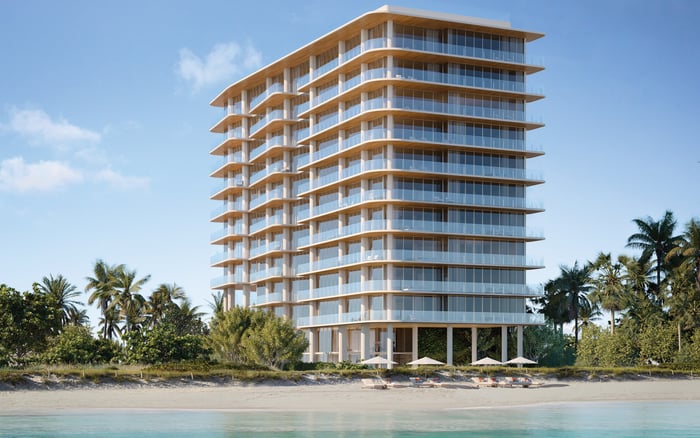
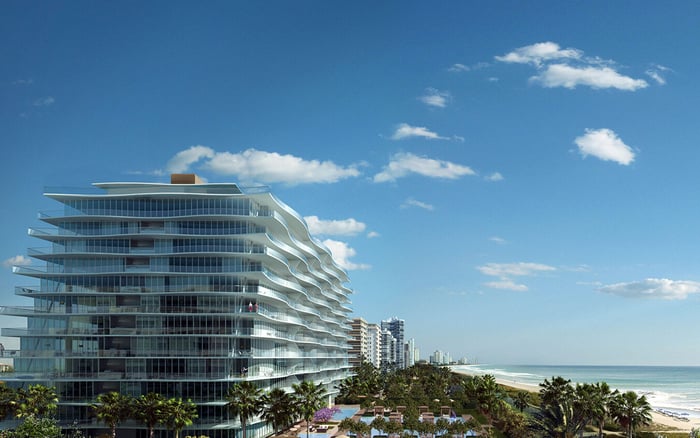
Two boutique oceanfront condominiums are reshaping how ultra-premium buyers think about Surfside: a Zaha Hadid Architects statement at The Delmore site and a smaller, service-forward alternative in Ocean House. Both are positioned around privacy, oversized floorplans, and curated amenities, but they speak to different definitions of modern beachfront living. Below, MILLION Luxury breaks down what is publicly marketed today, what it likely means for day-to-day ownership, and how to frame a purchase when final specifications can evolve during pre-construction.
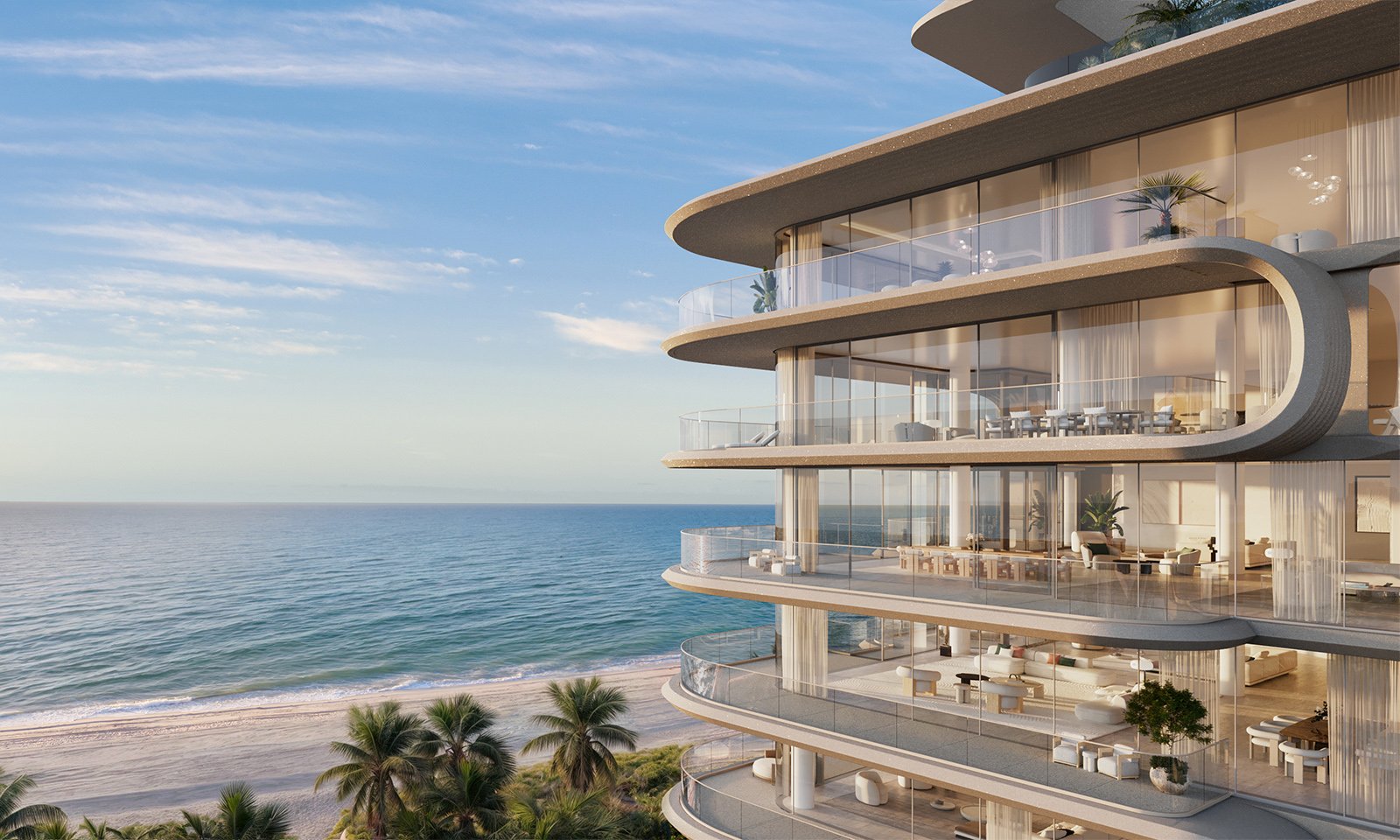
Surfside still sits in a rare middle band of Miami-Dade: close enough to Bal Harbour and Miami Beach to stay connected, yet disciplined enough to remain understated. For second-home owners and primary residents who move between cities and time zones, that balance often matters more than nightlife, foot traffic, or spectacle.
What is shifting is the profile of new supply. Instead of large towers with hundreds of residences competing on quantity of amenities, the most watched entries are boutique, oceanfront, and design-led. Two projects have become the clearest signal of that direction: The Delmore Surfside and Ocean House Surfside. Both are positioned around privacy, service, and curated wellness programs, and both aim at buyers willing to pay a premium for lower density and finish.
These are pre-construction offerings. Published specifications should be read as marketing-forward and subject to refinement. The more useful exercise is to interpret what the plans imply about daily ownership: how many neighbors you will have, how staff and amenities are likely to perform under real use, and how much of the experience is driven by architecture versus operations.
The Delmore’s defining asset is authorship. It is designed by Zaha Hadid Architects and publicly presented with a sculptural exterior language, including sand-toned concrete fins wrapping glass volumes. In Surfside, where much of the existing condominium stock was not conceived as collectible design, that distinction can be material. For a certain buyer, signature architecture is not a decorative layer. It is the core of the investment thesis.
The location also carries unavoidable gravity: the project is planned for the former site of Champlain Towers South. For many sophisticated buyers, that history elevates the importance of governance, engineering, and long-term stewardship. Those diligence points go well beyond brochure language, but they meaningfully shape how a modern oceanfront condominium is evaluated.
From a lifestyle standpoint, The Delmore is positioned as a true boutique property with a planned total of 37 residences. Residences are marketed at approximately 4,400 square feet and up, with penthouses marketed as exceeding roughly 12,000 square feet. The primary narrative is four- and five-bedroom “sky mansion” layouts, signaling not only size, but separation, privacy, and meaningful entertaining capacity.
Interiors are credited to Hirsch Bedner Associates (HBA). The project is also promoted with fully furnished residences, which supports a turnkey ownership model. For buyers who value immediate usability over extended post-closing construction, that is a practical advantage: fewer months of coordination and a more predictable, cohesive look aligned with the building’s architectural intent.
If The Delmore reads as a singular architectural statement, Ocean House is marketed as a more intimate, service-forward expression of oceanfront living. It is planned as a 12-story building with 25 total residences, designed by Arquitectonica with interiors by designer Carla Guilhem.
Its appeal is straightforward. First, smaller residence counts can create a calmer, more residential rhythm: fewer neighbors, quieter common areas, and a service experience that feels less stretched at peak hours. Second, the interiors are positioned around personal tailoring. Guilhem’s public-facing philosophy emphasizes collaboration and customization, which aligns with a premium expectation that a home should feel commissioned rather than standardized.
Ocean House residences are marketed from approximately 2,093 square feet up to approximately 6,279 square feet, with larger penthouse offerings indicated in marketing. That range creates a broader entry band than The Delmore while remaining firmly within the luxury tier.
The kitchen program is marketed with custom European cabinetry, Gaggenau appliances, and Silestone waterfall-edge islands. Bathrooms are presented as spa-inspired, including freestanding tubs and glass-enclosed rainfall showers, with natural stone flooring included in the marketed finish palette. Operationally, services are promoted to include 24/7 concierge and valet, private-elevator access, and beach access and service components.
Amenities are marketed at roughly 30,000 square feet across multiple levels, including a rooftop pool, along with wellness, fitness, and resident social spaces. For buyers who want meaningful amenities without the sensation of a resort-scale building, that balance can be the point.
In South Florida, “boutique” is often used loosely. Here, it has a measurable dimension: 37 residences at The Delmore versus 25 at Ocean House. That difference becomes meaningful when you model day-to-day usage.
Fewer residences generally translate into fewer simultaneous demands on staff, fewer peak-hour elevator cycles, and more predictable access to amenities. The trade-off is cost structure. Boutique buildings often require higher pricing to support the staffing, maintenance, and finish standards luxury buyers expect.
The pricing positioning is clearly differentiated. The Delmore is marketed from about $15 million and up, with top residences and penthouses reaching far higher. Ocean House is marketed from about $5.1 million and positioned for earlier delivery than The Delmore, within the mid to late 2020s timeframe. Buyers should confirm current pricing and timing directly with the sales teams, but the headline suggests two distinct profiles: one buyer pursuing architectural scarcity at a very high basis, the other seeking oceanfront discretion with a comparatively broader set of entry points.
At this pricing level, buyers tend to ask a deceptively simple question: will the residence feel complete on day one?
The Delmore is promoted with fully furnished residences, custom kitchens including statement stone islands, and, in select layouts, separate chef’s kitchens. Bathrooms are marketed as spa-style, with steam and rain shower systems and premium stone finishes. Technology readiness is also part of the narrative, including pre-wiring for AV, smart lighting, and automated window treatments. Taken together, the positioning is clear: move in, host quickly, and live within a cohesive design language that matches the building’s architecture.
Ocean House, by contrast, sells a more classic form of personalization. It is marketed with designer interiors, elevated appliance packages, and a palette built around stone and spa-like bathroom environments. Buyers who enjoy tuning a home, while still wanting a strong baseline specification, may find this approach more flexible.
Because finish packages and option sets can change during pre-construction, the practical strategy is to focus diligence on elements that typically endure: disclosed ceiling heights and window spans, the overall square footage band, the private-elevator concept, and the service model. Those fundamentals drive real lifestyle outcomes.
Both projects place amenities at the center of the value proposition, but the emphasis differs.
The Delmore’s amenity program is marketed at approximately 55,000 square feet, including an indoor lap pool and a signature elevated glass-bottom pool. That combination signals an owner base that expects year-round swimming and a strong visual identity. Indoor aquatic facilities, in particular, can shift how a building feels during shoulder seasons and weather events.
Ocean House’s amenity program is marketed at approximately 30,000 square feet and includes a rooftop pool, plus wellness, fitness, and social spaces. The rooftop element changes the water experience: less about a dramatic sculptural feature, more about a repeatable daily ritual framed by ocean and skyline views.
For buyers benchmarking against Miami Beach’s luxury set, it is often more useful to compare lifestyles than feature lists. Some owners will prefer the established cultural ecosystem of Faena House Miami Beach, while others prioritize a quieter shoreline and the residential calm Surfside offers. Buyers who want to remain closer to Miami Beach’s core oceanfront corridor may also weigh newer boutique options like 57 Ocean Miami Beach, depending on neighborhood feel and travel patterns.
At this altitude of pricing, “best” is rarely universal. It is situational, and it should be framed around how you actually live.
If you host at scale, want multi-bedroom capacity with meaningful separation of circulation, and value a turnkey interior narrative, The Delmore’s “sky mansion” positioning aligns directly. If you prefer a smaller building with a more intimate residential tempo, and you want the option to lean into a designer’s collaborative sensibility, Ocean House may feel like the more natural match.
Next, interrogate operations. Concierge and valet are table stakes, but execution is the differentiator. Ask how beach service is intended to function day to day, what private-elevator access means in practice, and how shared spaces are scheduled or reserved.
Finally, price your patience. Earlier delivery can reduce the risk of lifestyle drift and capital tied up in a long hold. On the other hand, truly scarce architecture often rewards buyers who are willing to wait.
What makes Surfside different from Miami Beach for buyers? Surfside generally feels more residential and discreet, with an emphasis on quiet oceanfront living rather than constant activity.
Is The Delmore Surfside a large building? No. It is marketed as boutique, with a planned 37 residences.
Who designed The Delmore Surfside? The project is designed by Zaha Hadid Architects and marketed with a sculptural exterior concept.
What is notable about The Delmore’s location? It is planned for the former site of Champlain Towers South.
How large are residences at The Delmore? They are marketed from roughly 4,400 square feet and up, with penthouses marketed as exceeding roughly 12,000 square feet.
What amenities are marketed at The Delmore? The amenity program is marketed at about 55,000 square feet, including an indoor lap pool and an elevated glass-bottom pool.
How many residences are planned at Ocean House Surfside? Ocean House is planned as a 12-story building with 25 residences.
What interiors and finishes are marketed at Ocean House? Ocean House is marketed with designer interiors, Gaggenau appliances, custom European cabinetry, and spa-inspired bathrooms.
Are these projects considered boutique and oceanfront? Yes. Both are marketed as boutique-scale, and both are oceanfront.
What should buyers keep in mind with pre-construction specifications? Many published details can change, so focus diligence on enduring fundamentals such as residence size, the service model, and building governance. For confidential guidance, visit MILLION Luxury.
If branded residences are on your mind — as a home or as an allocation — we would be glad to share what we are seeing, privately.
Begin a quiet conversation