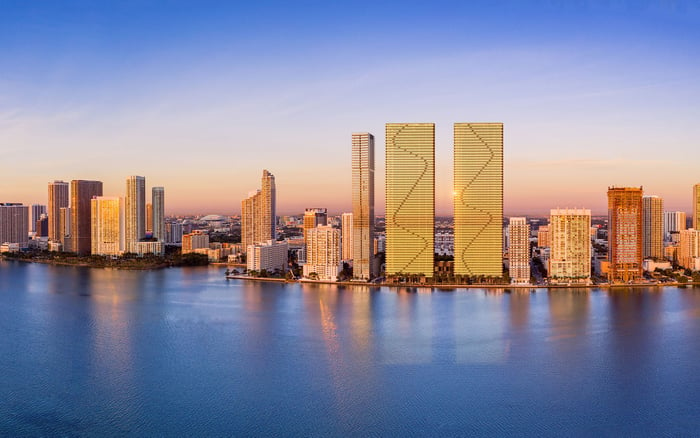
Edgewater’s waterfront inventory has tightened into a true scarcity story, while Midtown’s live-work-play grid keeps demand durable for buyers who value flexibility, walkability, and design-forward living. In a cooler, more selective luxury cycle, the smartest moves hinge on understanding neighborhood micro-markets: density versus privacy, usage rules, view corridors, and what a “branded” promise actually delivers day to day. This MILLION Luxury editorial maps the most practical considerations for ultra-premium buyers comparing Edgewater, Midtown, and the Design District seam, with a Miami Beach benchmark for those who want beachfront stature.
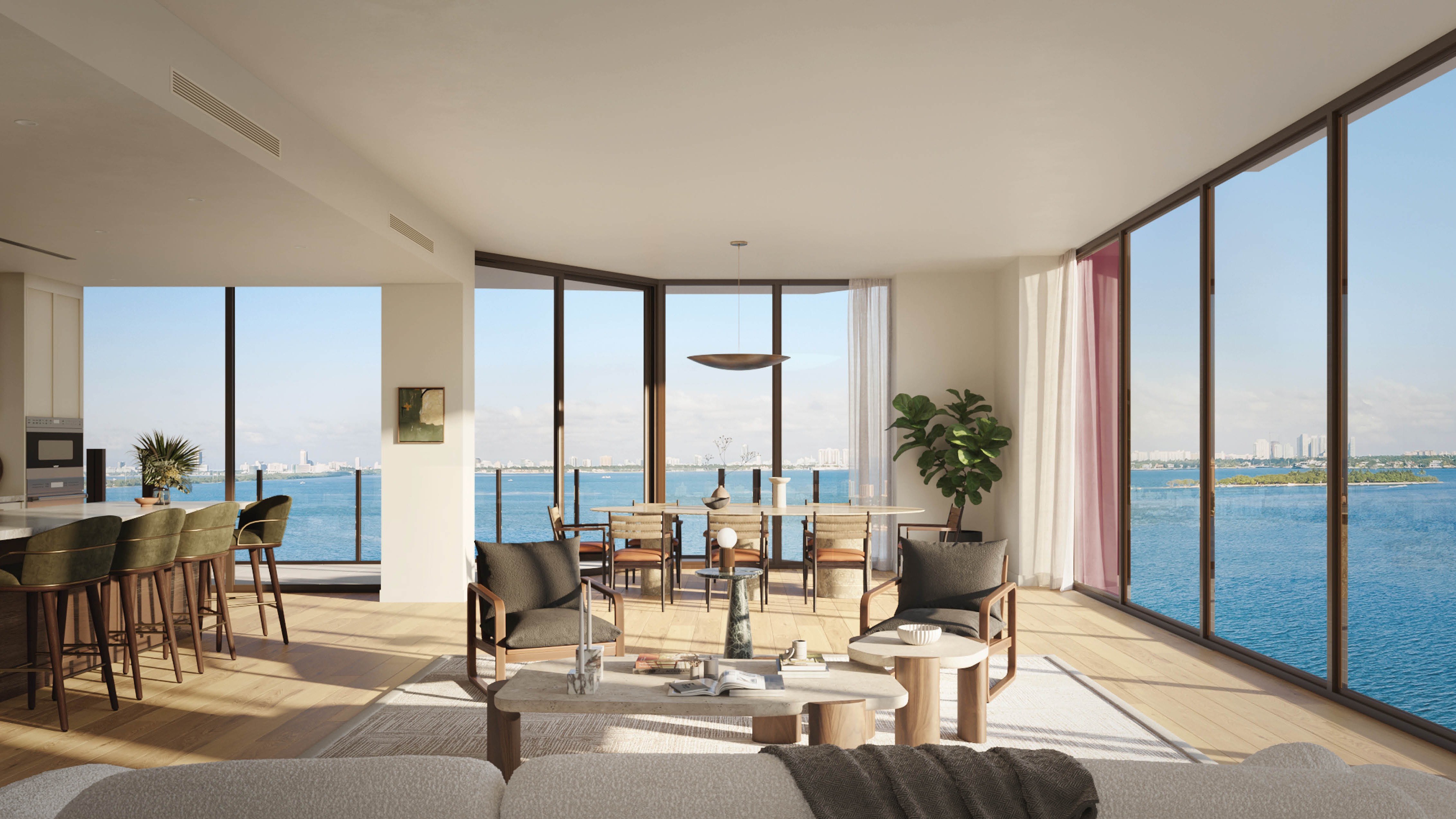
Edgewater has become one of Greater Downtown Miami’s clearest case studies for luxury condo buyers because the signals are consistent and measurable. In Q2 2025, Edgewater led the area with a median condo sale price of $1,575,000 and a median $902 per square foot. It also posted the lowest inventory in Greater Downtown, along with 37 closed condo sales and an average 96 days on market.
For an ultra-premium buyer, that profile usually points to a market where the best bayfront units can feel effectively pre-claimed before the wider audience reacts. Low inventory does not mean every listing trades instantly, but it often means that clean Biscayne Bay sightlines, strong orientation, and quiet exposure attract decision-ready attention. The practical question is not whether Edgewater is “hot.” It is what kind of scarcity you are buying: view scarcity, privacy scarcity, or newness scarcity.
Edgewater’s luxury supply is not one product; it is a range of living experiences with very different daily rhythms. On one end are large, high-amenity waterfront projects built to create a self-contained, resort-style cadence. Aria Reserve, for example, is a two-tower, 782-residence waterfront development that has been marketed as the tallest waterfront residential twin-tower project in the United States. Its flow-through residence concept and deep terraces are positioned to capture bay and skyline views, and its South Tower has been marketed as entering a closing phase after receiving a Temporary Certificate of Occupancy.
On the other end are lower-density options that trade scale for discretion. Elysee Miami, with 100 residences, is frequently cited as a boutique-style alternative within a corridor shaped by larger towers.
This is where a sophisticated buyer can get specific. If you want a building that operates like a private club, scale, staffing, and amenity programming matter. If you want a quieter arrival sequence, fewer neighbors, and less elevator choreography, boutique density can be the luxury.
For buyers tracking new branded options in Edgewater, Villa Miami has been publicly described as a 60-unit ultra-luxury tower with full- and half-floor residences and a rooftop helipad, with a listed groundbreaking timeline of December 2024 and an estimated completion in Q4 2027. For late-2020s buyers, that schedule can influence deposit planning, interim housing decisions, and expectations for the market cycle at delivery.
Midtown’s value proposition is less about waterfront positioning and more about compressing daily life into a walkable grid. Restaurants, galleries, and retail form the backdrop, and unit sizing and usage often lean more pied-à-terre friendly. For many buyers, that creates a different kind of liquidity: lifestyle convenience and the ability to use the residence with less friction.
The Standard Residences Midtown Miami has been marketed with a hospitality-led positioning, a smaller-unit mix, and flexible owner usage paired with a minimum rental period structure aimed at part-time residents. That combination tends to speak to buyers who want a second-home cadence without feeling they are carrying an unused residence for long stretches.
For buyers who prioritize leasing flexibility, Midtown also includes buildings promoted with higher-turnover rental policies. Midblock, for instance, has been advertised as allowing owners to rent without limits on the number of rentals per year. By contrast, near the Design District, Baltus House is marketed with more restrictive rental rules, including limits on rentals per year and minimum lease term requirements.
The takeaway is simple: “Midtown” is not a single governance model. It is a patchwork of building-by-building rules and enforcement cultures. Before you underwrite anything, align your intended usage pattern to a building’s actual policies, not its reputation.
A notable anchor at the Midtown and Design District seam is Miami Tropic Residences, publicly planned as a 49-story, 329-residence tower with a chef-driven amenities and dining concept. Chef-forward positioning can be compelling for buyers who value programming and social energy, but the true luxury is how those spaces function on an ordinary Tuesday: operating hours, access and reservations, noise transfer, and whether the building’s culture matches your own.
Citywide, Miami’s luxury condo market in Q3 2025 reported a $1.8M median price and a $995 median price per square foot, reflecting a cooler and more selective phase than earlier peaks. The more revealing detail is the segmentation: the $2M-plus tier outperformed, with 152 closed sales, up 15.2% year over year, and an average price per square foot reported around the mid-$1,400s.
For high-end buyers, this is a familiar pattern. The middle can pause while the top keeps moving, particularly when inventory is scarce, the product is differentiated, or the location is unusually strong. In practice, it rewards specificity. You do not need to “time Miami.” You need to time your building, your line, and your view corridor.
Even when your search is centered on Edgewater and Midtown, Miami Beach remains a cultural benchmark for buyers who want legacy cachet, direct ocean proximity, and a particular kind of international visibility.
A beachfront residence can also operate as a lifestyle hedge. When high season, events, and visitors shape your calendar, arriving and immediately plugging into the beach can feel less like a perk and more like a form of efficiency.
For buyers drawn to a design-forward, ultra-luxury profile, Faena House Miami Beach belongs naturally in the conversation. For those seeking a more club-forward oceanfront posture, Shore Club Private Collections Miami Beach offers another Miami Beach anchored lens on luxury living.
And for a globally recognizable hospitality identity, Setai Residences Miami Beach is often considered by buyers who want a service-centric experience that is legible to an international household staff, guests, and security teams.
When comparing Miami Beach to Edgewater, the difference is not simply bay versus ocean. It is how you live: morning routines, beach access, traffic patterns, and whether you want the city’s energy at your doorstep or at a comfortable remove.
Art-basel season is widely covered as a catalyst for short-burst real estate interest in Miami. Visitors tour properties, and buyer attention can accelerate during December programming. The key point is not that the event changes fundamentals overnight, but that it compresses decision timelines.
For buyers, that compression can be useful. If you are prepared and decisive, you may find that the market’s best options surface within a narrow window, and that motivated sellers may prefer certainty over prolonged negotiation. For sellers, it is a reminder that presentation, showing availability, and crisp documentation can matter more when attention peaks.
In a market that rewards selectivity, diligence becomes its own luxury. Treat the following as non-negotiable.
First, confirm view durability. A “bay view” is not a permanent asset if nearby development can reframe sightlines. Ask for a realistic picture of what can be built and how it would affect your specific line.
Second, map noise and traffic patterns. Midtown’s vibrancy is a strength, but it comes with deliveries, nightlife peaks, and event-driven congestion. Edgewater’s waterfront calm can be punctuated by construction cycles and arterial traffic.
Third, make usage rules explicit. If your plan involves part-time living, guest usage, or leasing, your building’s rental structure and enforcement culture must match your intent.
Finally, evaluate scale with honesty. Larger buildings can provide deeper amenities and staffing. Boutique buildings can provide a more discreet cadence. Neither is universally better. The right choice aligns with how you actually live.
Why is Edgewater commanding attention right now? Edgewater paired high pricing with low inventory in Q2 2025, reinforcing a scarcity narrative for prime bayfront units.
What does “days on market” tell a luxury buyer? Average days on market can indicate how selective buyers are and how accurately sellers are pricing, especially in a tight-inventory environment.
Are flow-through residences meaningful in daily living? Yes. Flow-through layouts can support cross-breezes, better separation of public and private areas, and dual exposures for bay and skyline views.
How should I think about Midtown versus Edgewater? Midtown tends to prioritize walkability and flexible usage, while Edgewater often centers on waterfront positioning and view-driven value.
Can rental rules vary dramatically by building in this area? Yes. Some buildings are marketed as investor-friendly, while others promote more restrictive rental policies.
Is the luxury condo market still strong at the top end? Q3 2025 results showed the $2M-plus segment outperforming, with higher sales activity year over year.
Should I worry about buying in a “cooler” market phase? A cooler phase can benefit disciplined buyers by increasing choice and negotiation leverage, provided the asset is truly differentiated.
Does Art-basel really impact real estate decisions? It can accelerate attention and tours within a short window, which may compress decision-making for both buyers and sellers.
What is the simplest way to compare buildings quickly? Start with density, view durability, amenity quality, and usage rules, then narrow to the specific line and orientation you would live with.
What is the biggest mistake luxury buyers make in these neighborhoods? Buying a narrative instead of a unit, and overlooking orientation, noise, governance, and the lived reality of the building.
For discreet guidance on South Florida’s most compelling residences, connect with MILLION Luxury.
If branded residences are on your mind — as a home or as an allocation — we would be glad to share what we are seeing, privately.
Begin a quiet conversation