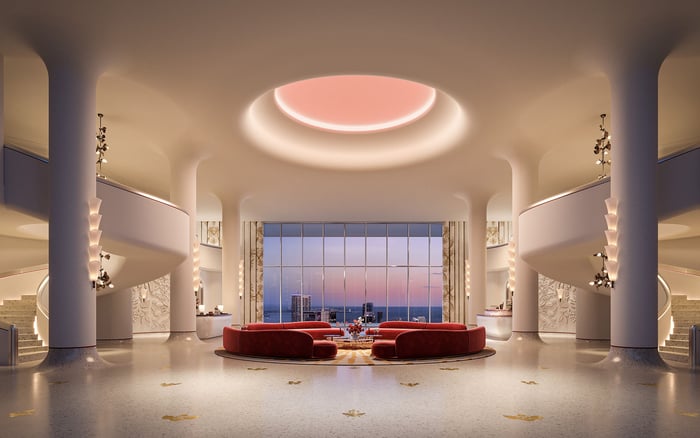
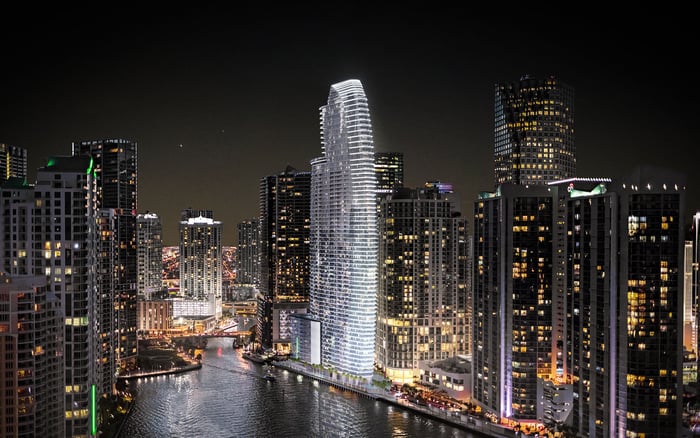
For ultra-high-net-worth buyers in Downtown Miami, a rooftop helipad is less a novelty than a complex intersection of airspace, safety, liability, operations, and brand. With limited publicly disclosed specifics, the most useful lens is viability: what has to be true for a helipad to function legally, quietly, and consistently, and what trade-offs owners should price in when comparing trophy towers.

In South Florida’s most rarefied residential segment, helipads sit at the edge of what a condominium can credibly promise. They suggest sovereign convenience-a private terminal in the sky-and a certain cinematic confidence. But real-world rooftop helipad viability is shaped less by aspiration and more by governance: approvals, airspace, operating protocols, insurance, noise management, and the building’s ability to physically separate aircraft activity from residential life.
For buyers comparing Waldorf Astoria Residences Downtown Miami and Aston Martin Residences Downtown Miami, the smarter question isn’t simply “does the tower have a helipad?” but “can it be used consistently, discreetly, and safely under the rules that actually apply-and what trade-offs come with that capability?” In the Downtown core, where density and logistics are unforgiving, the gap between a marketing-ready feature and an operationally reliable one can be substantial.
A rooftop helipad functions like a micro-airport layered onto a residential building. Buyers should underwrite it as a system with multiple potential points of failure, each with its own timeline and cost.
Regulatory clearance and operational permission.
A helipad can exist structurally yet be limited in use, restricted to emergency operations, or constrained to specific aircraft types and procedures. “Viable,” in a buyer’s sense, usually means predictable access for private flights under defined rules-not a theoretical landing surface.
Airspace and approach constraints.
Downtown Miami’s verticality and proximity to waterways, bridges, and commercial corridors can tighten approach options. Even when a site is technically suitable, the practical result may be fewer usable wind and weather windows than owners expect.
On-site circulation and security.
The helipad experience doesn’t end at touchdown. A viable system includes a controlled route from roof to residence that is private, secure, and operationally efficient. If the pathway forces exposure to shared corridors, crowded elevators, or public-facing lobbies, discretion erodes.
Resident experience and building politics.
Noise, rotor wash, and perceived risk tend to become governance issues. Over time, associations can formalize policies that narrow access, raise fees, or place use behind approvals that make the amenity less functional.
With limited publicly disclosed, building-specific operational detail available here, the most responsible comparison is a framework-not assumptions. Both towers target buyers for whom time and privacy can be as valuable as square footage. Both also sit in a neighborhood where every “extra” amenity intersects a web of constraints.
Start with a simple hierarchy:
Infrastructure implies a cohesive plan for access control, staff training, maintenance cycles, and clear rules of use.
A helipad that funnels arrivals into high-traffic elevator banks can turn a private arrival into a public moment. In trophy towers, the difference between a dedicated, controlled route and a shared path is the difference between luxury and spectacle.
Rooftops often compete for pools, lounges, mechanical equipment, and event programming. The more multifunctional the roof, the more likely conflicts arise that constrain aviation operations.
Even a well-designed helipad can become less usable if the association responds to complaints, insurance pressure, or operational incidents by tightening rules.
When evaluating Aston Martin Residences Downtown Miami, treat the helipad concept as one layer within a broader lifestyle stack that may also include marina adjacency and the overall arrival experience. When evaluating Waldorf Astoria Residences Downtown Miami, view helipad viability through a hospitality lens: is there a credible operational culture to support consistent protocols, staffing, and discretion at the roofline?
For buyers also considering nearby alternatives that emphasize privacy and amenity completeness without aviation complexity, Casa Bella by B&B Italia Downtown Miami and Faena Residences Miami Downtown Miami offer a useful contrast in how “arrival” can be delivered on the ground, at the water, and through curated service.
A helipad in a low-density setting is already complex. In Downtown Miami, density adds friction.
Competing verticalities.
Tall towers create wind effects and turbulence that can influence safe approach and departure procedures. Even if the helipad is engineered appropriately, the operational envelope may be narrower than expected.
Noise sensitivity.
Downtown is lively, but luxury buyers still expect control over sound and vibration. Helicopter activity can register more sharply than ambient street noise because it is episodic and unmistakable.
Weather reality.
South Florida’s heat, humidity, and seasonal storms can limit aviation windows. A helipad can be fully compliant yet functionally underused if conditions often make operations impractical.
Public perception and governance.
In a visible urban core, helipad use can attract attention. That attention can invite additional scrutiny, stricter building policies, or changes in how frequently owners feel comfortable using it.
If your definition of luxury is a quieter form of vertical living with resort-caliber wellness, it can be worth comparing against a Brickell-forward program such as 2200 Brickell, where the value proposition tends to be daily-use amenities and privacy engineering rather than aviation symbolism.
A serious buyer should treat helipad viability like a miniature acquisition within the purchase.
Ask for the rulebook, not the renderings.
Request the building’s policies governing access, scheduling, guest use, and any limitations on aircraft type or hours. A helipad that can’t be used during the windows you actually travel is not a mobility asset.
Clarify who operates it.
Is the helipad professionally managed with trained personnel and written protocols, or is it a rarely used feature that becomes active only when an owner pushes for it? Operational maturity often determines whether a helipad feels seamless or disruptive.
Underwrite ongoing cost.
Even when access is permitted, the helipad can carry maintenance, inspection, staffing, and insurance-related costs that are not obvious at first glance. The question isn’t only whether the building can sustain those costs, but whether residents will continue to support them.
Map the arrival journey.
Time savings evaporate if roof-to-residence routing is slow or exposed. The best outcomes combine speed with discretion: controlled elevator access, private corridors where possible, and security protocols that don’t create a scene.
Understand contingency planning.
What happens when wind, rain, or airspace constraints make rooftop operations impractical? A viable plan includes alternatives: a ground transfer protocol, an off-site landing strategy, and clear communication.
In the ultra-luxury market, scarcity sells-but only when scarcity is functional.
Resale value depends on credibility.
A helipad perceived as symbolic may still impress, but functional amenities hold value across buyer profiles. Over time, buyers become more sophisticated and will ask the same operational questions.
Signaling vs utility.
For some owners, the helipad is a brand statement that reinforces identity. For others, it’s about time, privacy, and the ability to arrive without friction. Be clear about which camp you’re in, then price the feature accordingly.
Governance is the long game.
Buildings evolve. Boards change, residents change, insurers change, and city dynamics change. A buyer’s job is to assess whether the helipad is likely to become more usable, less usable, or politically contentious.
This is where comparing a design-forward tower like Aston Martin Residences Downtown Miami with a hospitality-branded tower like Waldorf Astoria Residences Downtown Miami can be clarifying. The most viable helipad isn’t the most photographed; it’s the one supported by durable operations and a community aligned with its use.
Rooftop helipads in Downtown Miami are the definition of high-gloss complexity. They can be genuine mobility tools, but only when the building treats aviation as infrastructure: regulated, staffed, maintained, and integrated into a private arrival sequence. Otherwise, they drift into the category of paper amenities-impressive in conversation, less relevant in daily life.
When weighing Waldorf Astoria Residences Downtown Miami against Aston Martin Residences Downtown Miami, compare operational credibility, circulation privacy, and governance durability. In a market where discretion is the ultimate luxury, the most valuable feature is the one that works quietly, every time.
Do Downtown Miami luxury condos actually allow routine helicopter landings? It depends on approvals and building policies; a helipad can exist yet still have limited permitted use.
Is a rooftop helipad always a value-add at resale? Only if buyers believe it is operable and well-managed; otherwise, it may be viewed as symbolic.
What is the biggest constraint on helipad usability in Downtown? Usability is typically constrained by airspace procedures, weather windows, and building rules.
Will a helipad create noticeable noise for residents? It can; even occasional flights are highly perceptible, which is why policies and scheduling matter.
Can an association restrict helipad use after you buy? Yes. Associations can tighten rules over time, especially if insurance, complaints, or risk concerns grow.
Is privacy guaranteed if a building has a helipad? No; privacy depends on controlled roof-to-residence routing and security protocols.
Should buyers assume 24/7 access to a helipad? No; operating hours and scheduling are commonly restricted even in ultra-luxury buildings.
Does a helipad reduce total travel time in practice? Sometimes, but only if the entire arrival chain is efficient, including elevators and security.
Are helipads mainly a brand statement in Downtown? For many owners, yes-but they can be practical if operations are consistent and permitted.
What should I request during due diligence? Ask for written policies, management details, and a clear description of how arrivals are handled.
When you're ready to tour or underwrite the options, connect with MILLION Luxury.
If branded residences are on your mind — as a home or as an allocation — we would be glad to share what we are seeing, privately.
Begin a quiet conversation