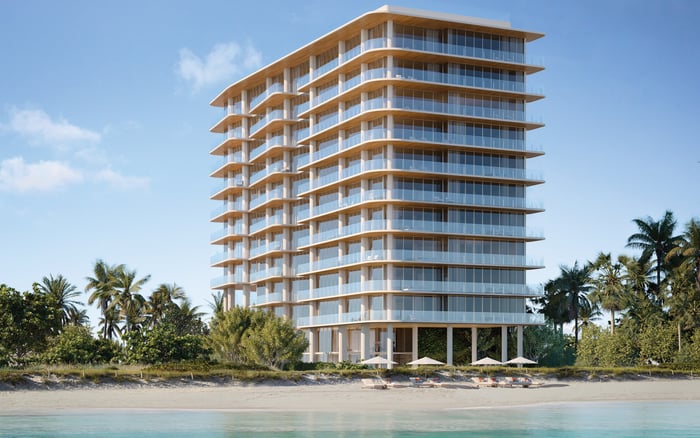
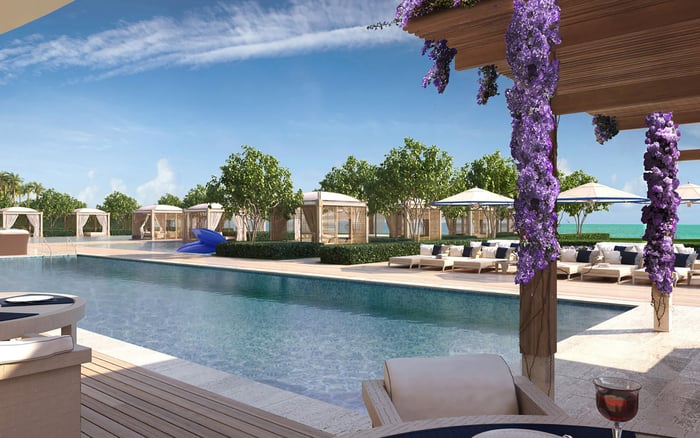
In Surfside, two names define a very specific kind of oceanfront luxury: the low-rise, privacy-forward residential experience. Ocean House Surfside and Fendi Château Residences Surfside both appeal to buyers who want beachfront proximity without the emotional temperature of a mega-tower. Yet their intimacy is expressed differently: one leans toward a quiet, residential cadence; the other pairs boutique scale with branded design identity. With no two households using “privacy” to mean the same thing, this comparison focuses on what you actually feel day to day: arrival, shared spaces, neighbor density, service posture, and how the building’s scale shapes the rhythm of living. The result is less about which is “better” and more about which version of intimacy matches your lifestyle, household size, and expectations of discretion.
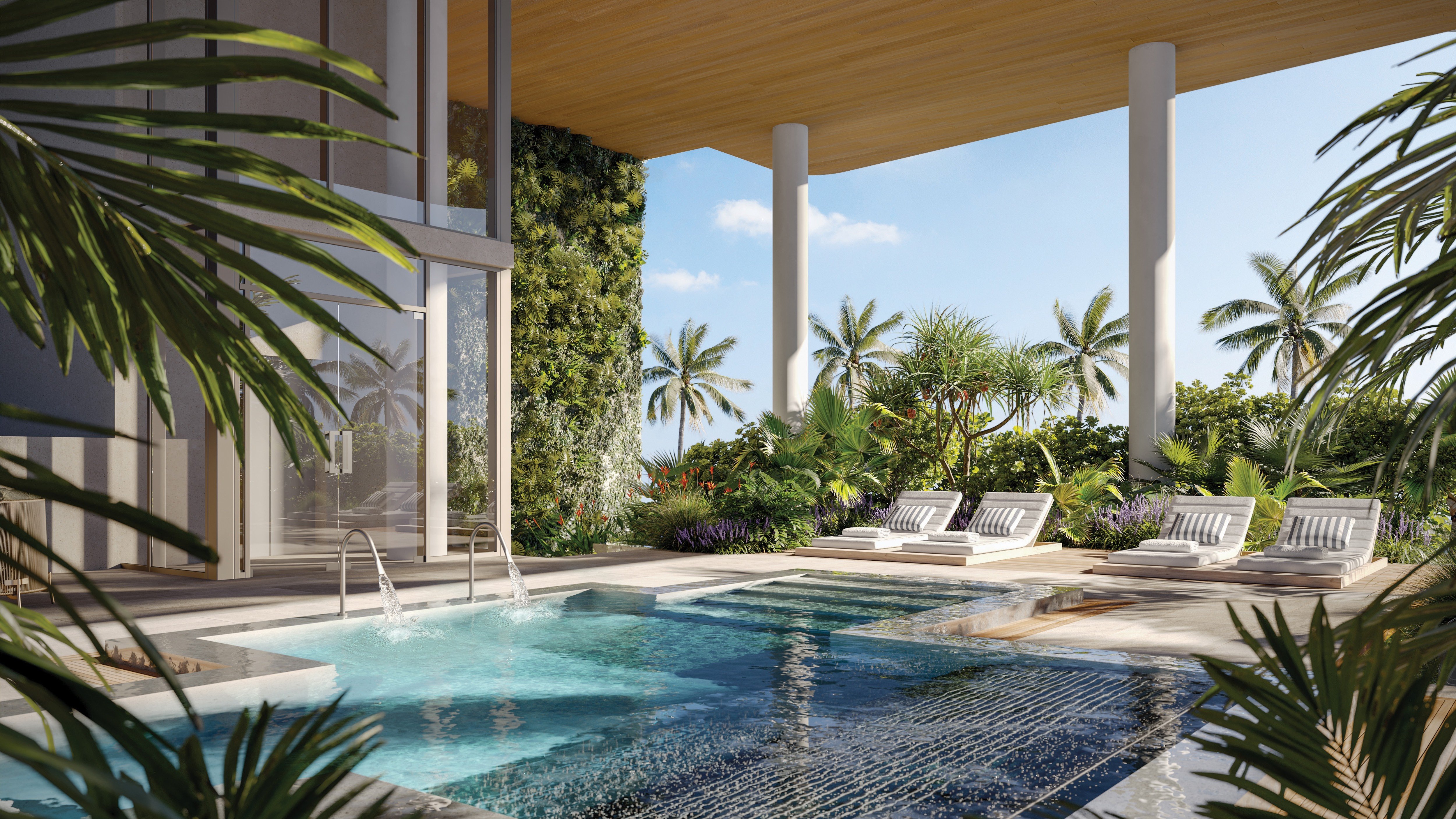
In ultra-prime coastal markets, intimacy is often mistaken for a simple function of height. Low-rise living can certainly feel more private, but the day-to-day experience is shaped by subtler factors: how you enter the property, whether common areas invite lingering, how staff manage visibility, and how often you naturally cross paths with neighbors.
In Surfside, intimacy also comes with a distinct social tone. Many owners want a calm, residential atmosphere that still delivers the advantages of an oceanfront address: effortless beach access, a turn-key second-home setup, and the sense that the building is a refuge-not a scene. That’s the most useful lens for evaluating Ocean House Surfside and Fendi Château Residences Surfside.
Both buildings are broadly regarded as boutique, oceanfront residential options in Surfside. The difference is not whether they are “exclusive,” but how that exclusivity is expressed.
Tends to communicate intimacy through restraint: a quieter, more residential posture where the building steps back and the oceanfront lifestyle takes the lead. The aim is straightforward-fewer interruptions, fewer performative moments, and a routine that feels fully your own.
Fendi Château Residences Surfside, by contrast, frames intimacy through a more defined identity. A branded residence can still be boutique, but the aesthetic narrative becomes part of the living experience. For many buyers, that isn’t about visibility-it’s about coherence. If you prefer design-forward environments where details feel deliberate and consistent, a branded building can make intimacy feel like curated comfort rather than anonymity.
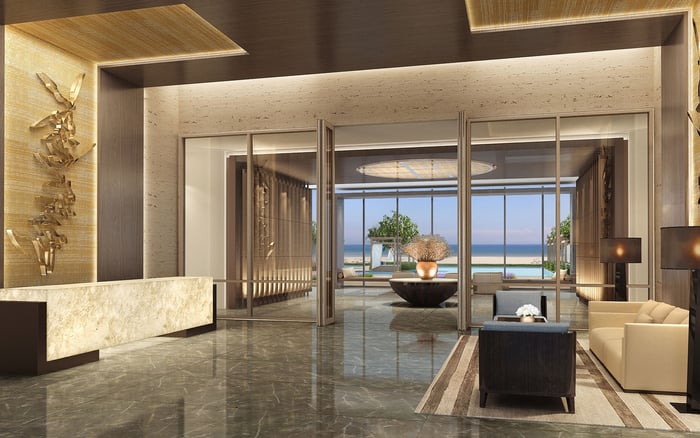
If you want to understand how private a building will feel, start with arrival. In genuinely intimate buildings, arrival is quiet, predictable, and controlled-moving from street to residence with minimal friction and minimal exposure.
Low-rise buildings often have an advantage because circulation is typically simpler: fewer elevators, fewer stacked lobbies, and less complexity in separating residents from guests. But intimacy is also behavioral, not purely architectural. Service culture, package and delivery handling, and guest-access management ultimately determine whether the experience feels like a “private home in the sky” or a small hotel.
In this regard, Ocean House often resonates with buyers who want their residence to read like an extension of a private beach house: understated, calm, and unforced. Fendi Château, meanwhile, tends to attract buyers who prefer a more orchestrated arrival-an environment that signals a specific design sensibility from the first step inside.
Buyers often assume boutique scale automatically means fewer amenities. In practice, boutique buildings more often deliver a tightly edited amenity set rather than an exhaustive one-and that can be a strength.
The real question is whether you want amenities that replace the neighborhood, or amenities that complement it.
In Surfside, the neighborhood itself can function as part of your amenity plan. Many residents prefer a lifestyle anchored by the beach and a short drive to the broader Miami Beach ecosystem, without living inside it. In that context, shared spaces matter most for daily ease and quiet pleasure-not constant programming.
When comparing intimacy, pay attention to how amenities are designed and positioned. Are they built for quiet use, with room for personal routines, or do they encourage social overlap? A smaller pool deck, a more hushed fitness space, or a lobby that feels like a living room can deepen the sense that you belong-rather than simply pass through.
For perspective, Surfside also sits near other highly recognizable oceanfront addresses that operate at a different scale and social temperature, such as The Surf Club Four Seasons Surfside. That contrast can clarify your preference: some buyers want hospitality-adjacent energy; others want a private-residence mood.
Surfside stands out for its blend of oceanfront beauty and a calmer daily rhythm. It can feel more residential than some neighboring beach enclaves, while still keeping you close to the broader dining, arts, and shopping orbit.
For second-home owners, that balance is consequential. Intimacy isn’t only about what happens inside the building-it’s also how you decompress once you step outside. A neighborhood that’s easy to navigate, pleasant to walk, and not perpetually in “event mode” can make even a larger building feel more livable.
Within this context, Ocean House and Fendi Château stand out for buyers who want Surfside specifically, not simply “anywhere on the sand.” And if you’re mapping the broader Surfside boutique landscape, Arte Surfside and Eighty Seven Park Surfside offer useful reference points for how design, scale, and atmosphere can vary along the same coastal corridor.
Because this comparison isn’t reduced to a checklist of specifications, the cleanest way to frame it is by household behavior. Consider these archetypes.
Ocean House Surfside often suits:
Owners who keep a consistent routine and value calm over spectacle.
Buyers who want their building to feel residential first, with service that supports-rather than defines-daily life.
Households that prefer fewer social touchpoints in shared spaces.
Fendi Château Residences Surfside often suits:
Design-driven buyers who enjoy a clear aesthetic narrative.
Owners who entertain and want common areas and arrival moments to feel deliberately composed.
Buyers who value a branded environment as a form of quality control and consistency.
In both cases, intimacy strengthens when expectations match the building’s personality. If you want privacy but enjoy a more curated atmosphere, Fendi Château can still feel intimate. If you want privacy that feels almost invisible, Ocean House tends to align with that instinct.
In luxury real estate, boutique buildings can command a different kind of premium: not only for finishes or location, but for emotional comfort. That premium holds best when the building remains genuinely easy to live in.
Ask yourself:
Will the lobby still feel pleasant on a busy weekend?
Does the building’s culture support quiet enjoyment, or does it invite constant interaction?
Do you want your residence to feel like a sanctuary, or like a designed object you inhabit?
Low-rise intimacy often ages well because it’s grounded in daily experience, not novelty. That said, branded residences can also age exceptionally well when the identity is timeless and the building is managed with discretion. The goal isn’t to choose the “more exclusive” option-it’s to choose what will feel effortless five years from now.
If you’re still deciding, picture your most common day in Surfside.
Scenario 1: You are arriving late, quietly, after travel. If your ideal is minimal friction and a near-silent transition from car to home, you may prefer the building that feels most purely residential in its arrival sequence and shared-space tone.
Scenario 2: You host guests who care about design. If you enjoy an environment that reads as intentionally styled-where the building itself feels like part of the experience-a branded, curated identity can elevate that moment without necessarily compromising privacy.
Scenario 3: You want to disappear for a month. True intimacy is tested by absence as much as presence. Consider which building’s culture, staffing posture, and overall rhythm feels best aligned with a lock-and-leave lifestyle while maintaining discretion.
Is low-rise always more private than a high-rise? Not always; privacy depends on arrival control, staffing culture, and shared-space design.
Do Ocean House Surfside and Fendi Château both qualify as boutique living? Yes, both are commonly viewed as boutique oceanfront options, expressed through different styles.
Which feels more “residential” day to day? Buyers often describe Ocean House as more purely residential in tone, while Fendi Château feels more curated.
Does a branded residence automatically mean less discretion? No; branding can be discreet, but it typically adds a clearer design identity to the experience.
What should I evaluate first when touring? Start with arrival and lobby flow, then observe how quiet or social the shared spaces feel.
How important are amenities in a small oceanfront building? They matter most when they support your routine; an edited amenity set can feel more intimate.
Is Surfside a good fit for second-home buyers? It can be, particularly for those who want oceanfront proximity with a calmer neighborhood rhythm.
How do nearby buildings help frame the decision? Touring other Surfside options can clarify whether you prefer hospitality energy or residential calm.
Should I prioritize building personality or floor plan first? For long-term satisfaction, personality and daily rhythm often matter as much as the residence itself.
Can I get a similar boutique feel elsewhere in the area? Yes; other Surfside projects offer variations on boutique oceanfront living and design sensibility.
To compare the best-fit options with clarity, connect with MILLION Luxury.
If branded residences are on your mind — as a home or as an allocation — we would be glad to share what we are seeing, privately.
Begin a quiet conversation