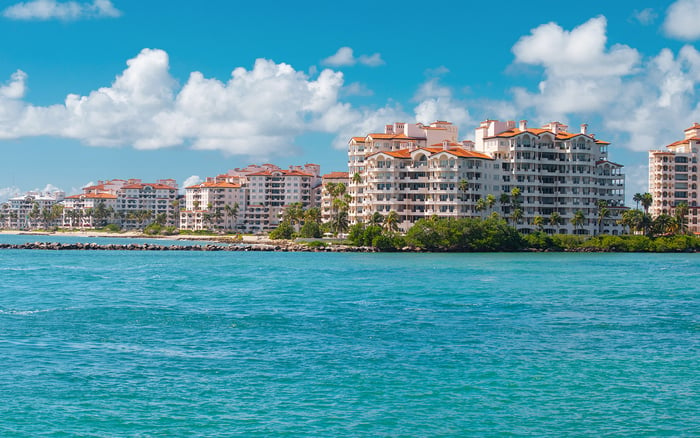
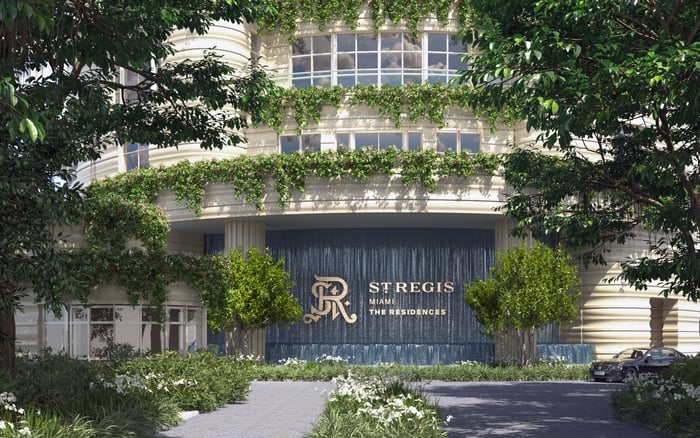
In Edgewater, two marquee residential towers can sit on the same skyline yet feel worlds apart at street level. Much of that difference comes down to how art is curated, commissioned, placed, and maintained, not as decoration but as a lived experience that shapes arrival, amenity rituals, and even resale narrative. This MILLION Luxury editorial compares the execution of art curations at EDITION Edgewater and Aria Reserve Miami through the lens buyers actually feel: the journey from lobby to elevator, the way shared spaces age, and the signals a building sends about taste, stewardship, and long-term brand discipline.
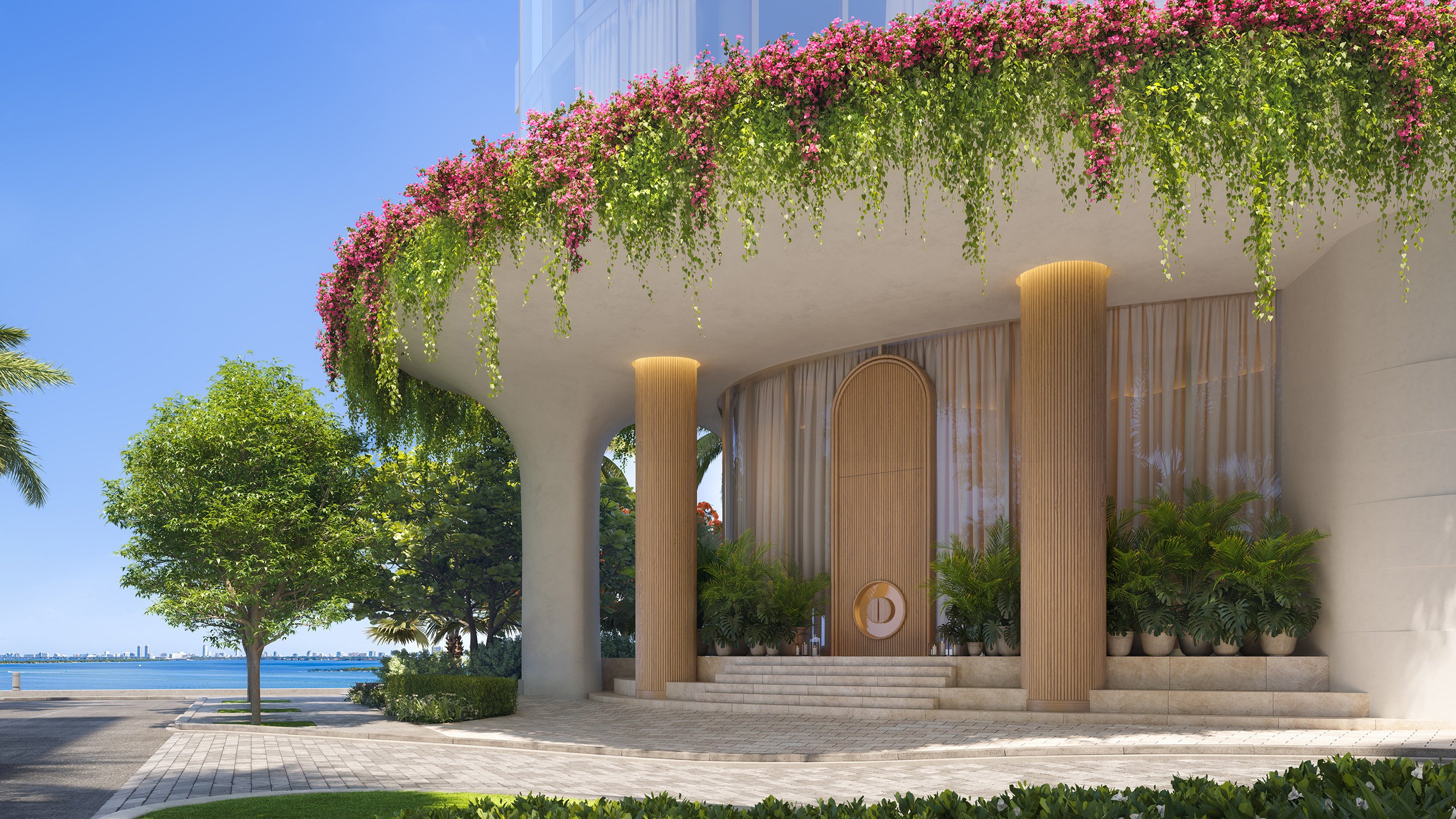
For an ultra-premium buyer, art inside a building is rarely about a single statement piece. It’s about how a property manages taste at scale. In Edgewater-where towers compete on water views and amenity decks-art curation becomes one of the few differentiators that can still feel unmistakably personal.
Execution is the operative word. A lobby can feature a compelling work and still miss if lighting flattens it, if glazing glare pushes it into the background, or if the circulation path makes it feel incidental. Conversely, a quieter collection can read as truly authoritative when it’s integrated into the building’s choreography: arrival, pause, ascent, and release into the private realm.
This is the frame MILLION Luxury applies when comparing EDITION Edgewater and Aria Reserve Miami. Set aside brand mythology; the buyer-level question is simple: how does each property execute art as an experience you live with-not merely pass by?
Even within the same neighborhood, buildings tend to commit to a thesis.
At EDITION Edgewater, the strongest art programs in the luxury market typically signal restraint. That doesn’t mean sparse; it means edited. Expect intentional negative space, museum-like pacing, and a preference for works that hold up under repeated viewing. In this mode, art heightens materiality: a textured wall finish reads richer with a single point of focus; a corridor feels calmer when the eye isn’t asked to process five competing moments.
Aria Reserve Miami, by contrast, reads more naturally as a scale-forward proposition. In large-format residential environments, art often functions as a landmark system-helping you orient within a long lobby sequence, marking the transition from public to semi-private zones, and signaling where amenity experiences begin. When executed well, this approach turns shared spaces into destinations rather than pass-throughs.
Neither is inherently superior. The difference is what each philosophy demands from management over time. Intimacy requires discipline. Spectacle requires upkeep.
Luxury buyers often decide how they feel about a building before they consciously evaluate the apartment. Art is central to that impression because it controls tempo.
EDITION Edgewater: gallery cadence.
The best “curated intimacy” lobbies behave like galleries. A work gets breathing room. Seating is oriented so residents and guests can actually face the piece-not simply move past it. Lighting tends to be layered and adjustable, so the art holds its character at noon as well as in the evening. When that execution is present, the lobby reads like an extension of the private home: composed, low-noise, and confidently edited.
Aria Reserve Miami: landmark orientation.
In “curated spectacle,” the lobby often prioritizes a focal moment that can be read quickly and remembered easily. The art helps define the building’s identity for guests, ride-share arrivals, and new residents. In a development that devotes substantial square footage to shared experiences, this kind of art can also operate as a psychological threshold-it tells you you’ve arrived somewhere significant.
What to look for, practically: whether art aligns with the natural walking path, whether it’s protected from touch points and crowding, and whether the piece has a lighting plan separate from general lobby illumination.
Art in amenity areas is where execution either compounds value-or quietly erodes it.
In buildings where residents use wellness, lounges, and pool environments frequently, art must stand up to humidity, sunscreen contact, cleaning chemicals, and shifting daylight. A strong program anticipates this through placement, glazing, and material choices. A weaker program ends up with works that are perpetually “almost” right: faded, scuffed, or visually swallowed by the space.
For EDITION Edgewater’s likely buyer profile, amenity art tends to perform best when it supports privacy. That can mean fewer pieces, placed to create alcoves, soften acoustics, and reinforce the feeling that you can be in a shared space without being on display.
For Aria Reserve Miami’s scale and energy, art has the opportunity to act as a social catalyst. Larger pieces can anchor gathering zones and give visual structure to expansive amenity layouts. The risk is dilution: if every corner has a “moment,” nothing feels like a moment.
If you want a useful comparison point beyond Edgewater, consider how other Miami neighborhoods resolve the same dilemma. In Downtown, Aston Martin Residences Downtown Miami often appeals to buyers who like narrative-driven design cues, while in Brickell, Baccarat Residences Brickell attracts residents who expect a more formal, object-quality finish to shared spaces. The lesson isn’t that one approach is “better,” but that coherence matters: the art must match the building’s social contract.
Most of the art conversation happens in public areas, but the lived buyer experience is shaped by thresholds closer to home: elevator lobbies, corridor turns, and the visual pause before your front door.
A disciplined program treats these as micro-galleries. Works are sized correctly for viewing distance, and the palette respects corridor lighting temperatures. This is where EDITION Edgewater’s restrained approach can outperform-because smaller, intentional choices can make the daily transition into your home feel ceremonial.
A more energetic program can still succeed here, but it must avoid the common pitfall of “corridor wallpaper.” If art repeats too predictably across floors, residents stop seeing it. In large towers, it’s worth asking whether there’s variation by level, by vertical neighborhood, or by corridor zone.
Luxury buyers should treat art like any other building system. The question is not what it is-it’s how it’s maintained.
Key execution signals include:
Lighting control. Art needs dedicated aiming and dimming, not just ambient downlights.
Surface protection. Pieces should be mounted with appropriate standoff, corners protected, and clearances respected.
Daylight strategy. UV exposure is predictable; if art is placed near glazing, there should be an intentional mitigation approach.
Cleaning protocol. If daily operations treat art like a wall finish, it will age like a wall finish.
This isn’t about being fussy. It’s about asset stewardship. In ultra-luxury, buyers often pay for the promise that everything will look as good in year eight as it did on day one.
Art curation in a residential tower is also a governance question. Over time, lobbies accumulate “helpful” additions-seasonal decor, sponsor signage, or temporary installations that drift from the original vision. Strong buildings protect the aesthetic with a clear decision-making structure.
A restrained program-like the one buyers often associate with EDITION-style living-typically requires a strong “no.” The building must resist visual clutter and keep public spaces edited. A scale-forward program-closer to Aria Reserve Miami’s likely stance-requires a different discipline: a refresh cadence that prevents signature pieces from feeling dated, without constant change that makes the building feel like a rotating showroom.
If you’re purchase-minded, ask during due diligence how public-area design decisions are made and whether there’s a consistent curatorial hand. That answer is often more predictive of the long-term experience than the initial installation itself.
In South Florida, resale isn’t only a price conversation. It’s a story conversation.
A building with a calm, coherent art program tends to photograph in a timeless way. Listings benefit because shared spaces read as quiet-luxury, not trend-specific. That can be advantageous for buyers who value discretion and want their home to feel insulated from the city’s fashion cycle.
A building with bold, landmark-style art can create instant recognition. That can support desirability for buyers who want energy, social currency, and a sense of arrival that guests immediately register. The trade-off is clear: high-impact aesthetics must be maintained to keep their authority.
In practice, both approaches can perform strongly-but they speak to different sensibilities. If your lifestyle overlaps with Miami Beach’s art-season energy, a building’s relationship to culture can matter as much as its floor plan. For context outside Edgewater, Shore Club Private Collections Miami Beach captures a different coastal expression of branded living where design cues become part of the daily rhythm.
If you tour both in the same afternoon, use a consistent checklist. You’re not judging taste-you’re judging execution.
Stand still in the lobby for 30 seconds. Does the art reward stillness, or is it only meant to be glanced at while walking?
Look for glare and shadow. Good lighting makes art feel dimensional. Poor lighting makes it purely decorative.
Track the sightlines. The best placements are discovered naturally, not forced by signage or awkward turns.
Watch how people behave around the work. If guests drift toward it, photograph it, or pause, the piece is functioning as intended.
Inspect the edges. Frames, mounts, corners, and wall condition reveal maintenance culture.
Ask what changes over the year. A program that refreshes intelligently stays relevant without feeling restless.
Ultimately, EDITION Edgewater will tend to satisfy buyers who want curated calm and a private-club sensibility, while Aria Reserve Miami will tend to satisfy buyers who want scale, visibility, and an amenity world where art plays a more extroverted role.
Which building typically feels more “gallery-like,” EDITION Edgewater or Aria Reserve Miami? EDITION Edgewater generally reads more restrained, which often translates to a gallery cadence.
Does a bigger lobby mean better art execution? Not necessarily; execution depends on placement, lighting, and how the piece is experienced.
What is the single most important technical factor in art presentation? Lighting, because it determines depth, color accuracy, and whether the work holds attention.
How can I tell if the art will age well in shared spaces? Look for protective mounting, thoughtful clearances, and evidence of careful maintenance.
Is art curation relevant if I spend most of my time inside my residence? Yes; the daily transition through corridors and elevator lobbies shapes the lived experience.
Can art curation affect resale appeal? Yes; cohesive public spaces strengthen the building’s visual identity in listing photography.
Should I ask who selects or approves new installations? Absolutely; governance predicts whether the original aesthetic remains protected over time.
Do amenities require different kinds of art than lobbies? Yes; humidity, sunlight, and cleaning routines demand more durable placement strategies.
How do I compare two buildings quickly during a tour? Use the same checklist: stillness test, glare check, sightlines, and edge-condition inspection.
What if my taste differs from the building’s art style? Focus on execution; even a style you wouldn’t choose can feel luxurious if it’s curated well.
To compare the best-fit options with clarity, connect with MILLION Luxury.
If branded residences are on your mind — as a home or as an allocation — we would be glad to share what we are seeing, privately.
Begin a quiet conversation