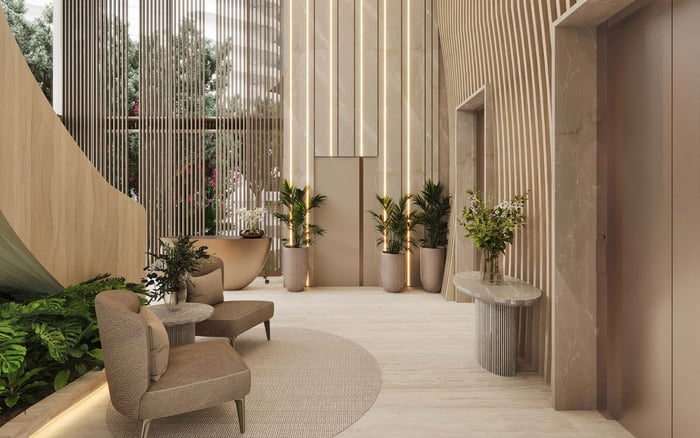
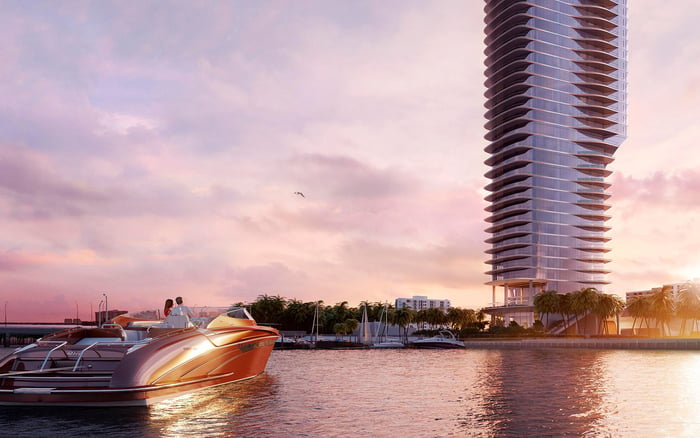
In 2026, South Florida’s luxury condo market is being shaped less by square footage and more by the lived experience inside the building. Coverage of next-cycle demand repeatedly points to three priorities: privacy that feels intentional, wellness that is integrated rather than ornamental, and resort-level service that restores time as the ultimate luxury. This editorial guide translates those themes into practical, buyer-oriented considerations across Miami’s leading neighborhoods.
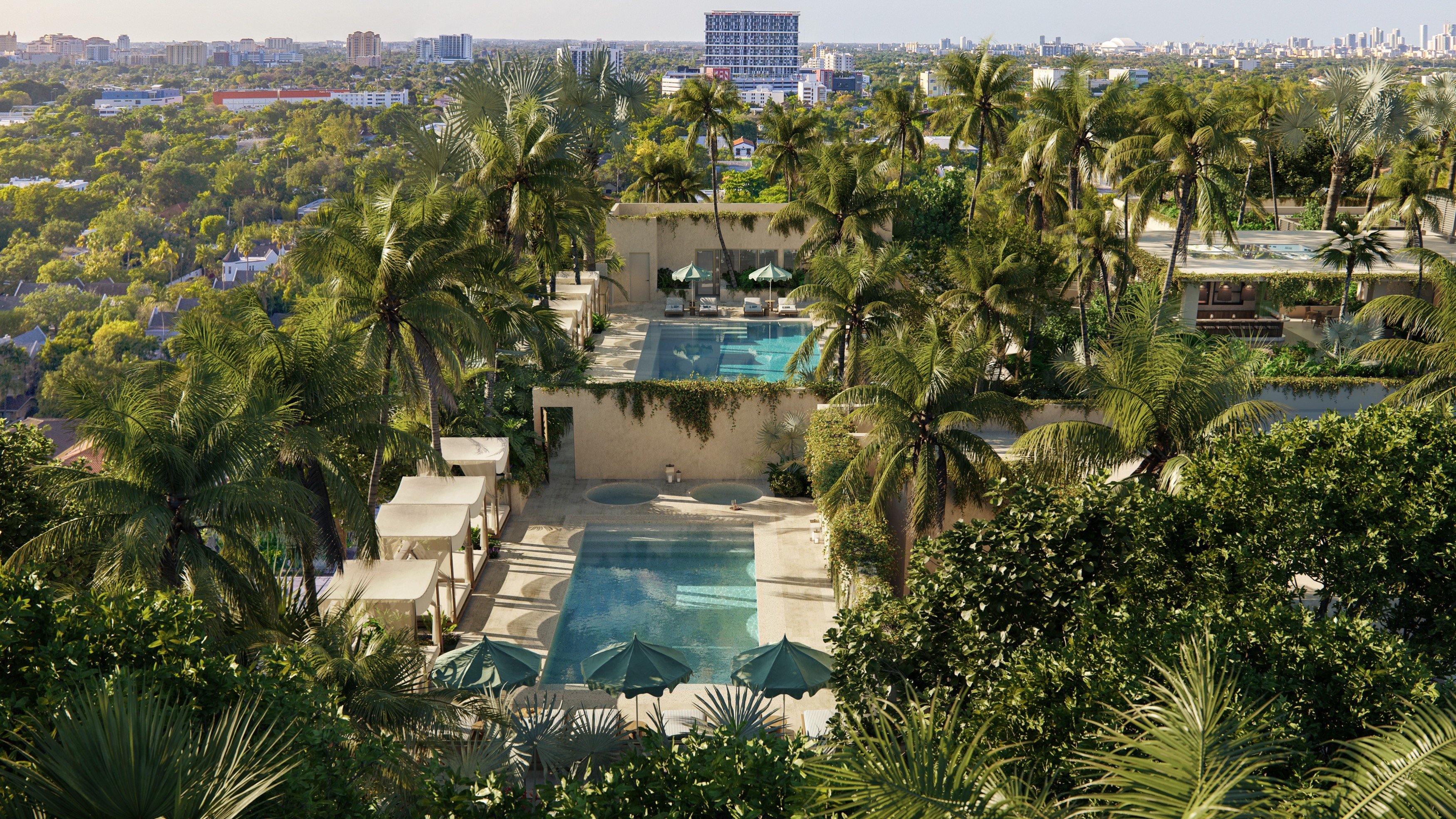
A quiet recalibration is underway at the top end of South Florida real estate. Sophisticated buyers still expect excellent architecture and finishes, but the center of the decision has shifted to how a building performs, hour by hour, day by day. Coverage heading into 2026 repeatedly frames demand as increasingly driven by lifestyle priorities, especially privacy, wellness, and resort-level service, rather than square footage alone.
Broader reporting also leans on a similar idea: the most relevant amenities are the ones that shape how residents actually live. For a buyer, that reframing is practical. It changes the evaluation from “Which unit is best?” to “Which building supports my routines, my discretion needs, and my version of community?”
In real terms, the right address is less about a view in isolation and more about choreography. How you arrive, where you pause, who sees you, how staff anticipates needs, and how shared spaces either energize or restore you. This is where terms like boutique scale, branded service, and controlled-access amenities become more than marketing language. They become daily experience.
Privacy used to mean separation. In 2026, it reads more like a system: a set of design and operational choices that reduce friction and exposure without making life feel cut off.
Boutique-scale development is one clear path. A smaller resident population can mean fewer chance encounters, less congestion in common areas, and a more predictable rhythm in the lobby, corridors, and amenities. Projects positioned as limited-residence concepts often emphasize privacy-forward elements such as private elevator access and a more controlled arrival sequence. In Coconut Grove, Opus Coconut Grove is presented as a boutique concept that foregrounds limited residences and privacy-oriented design.
Privacy also shows up through programming. Members-only spaces and private clubs, increasingly built into new luxury developments, create a controlled-access social life that feels exclusive but edited. The appeal is not being seen. It is the option to participate on your own terms.
Just as important, privacy is neighborhood-specific. Some buyers want an active on-property scene and define privacy as boundaries within vibrancy. Others want a quieter baseline where privacy is ambient, not managed. The smartest decisions begin with a simple self-audit: are you buying a sanctuary, or a serviced home base designed to keep you connected?
Wellness real estate has moved from a trend line to a recognizable category, with “wellness residences” using design and services to support health-focused living. In South Florida’s luxury condo market, the shift is increasingly visible in buildings where wellness is not a single spa room, but a combined promise around air, light, materials, movement, and programming.
In Bay Harbor Islands, the appeal is often the calm itself. The area is commonly positioned as more residential and lower-key than Miami’s busiest cores, while still close to major destinations. In that context, a wellness-led building can feel less like an added feature and more like an extension of place. The Well Bay Harbor Islands is positioned as a wellness-forward luxury concept where amenities and programming are central to the value proposition.
On Miami Beach, wellness often intersects with hospitality. Aman Miami Beach has been widely covered as an Aman-branded project on Collins Avenue with a very limited residential component paired with a hotel-and-spa style service model. The underlying idea remains consistent: wellbeing as a daily operating system, supported by staff, spaces, and a culture of discretion.
The buyer takeaway is straightforward: look beyond the brochure. Ask how wellness is maintained, how it is staffed, how crowded it becomes at peak hours, and whether the building culture supports the routines you actually keep.
The most discerning luxury is often invisible: a life that runs smoothly. Branded and “condo-hotel” style residences typically highlight hospitality services such as concierge support, dining, spa and fitness, and hotel operations. The result can be a more social, serviced lifestyle with operational depth that traditional condo staffing does not always match.
That is why certain buildings continue to stand as reference points. Continuum on South Beach, for example, markets privacy, wellness, and resort-style amenities as core priorities for today’s buyer. Its amenity mix is designed around shared, resort-like social spaces such as pools, fitness and spa, and recreation that keep residents on-property. The distinction is not “more amenities,” but amenities that can realistically carry a complete day without needing to leave.
In Brickell, large multi-tower communities are often framed as all-in-one lifestyle hubs. Icon Brickell is positioned in that vein, with substantial shared amenities and on-site dining and entertainment that support a live-work-play cadence. For buyers who want social energy built into the ecosystem, that model can be compelling.
Service carries a nuance that matters in 2026: it can either enhance privacy or erode it. The strongest service models protect discretion through consistent protocols, clear access rules, and a resident experience designed to minimize unnecessary exposure.
In 2026, the building is only half the decision. The other half is the neighborhood’s social temperature and the path of least resistance to your life.
Coconut Grove is often framed as leafy and village-like compared with denser, higher-energy neighborhoods, which changes how a condo community feels on an ordinary Tuesday. A private-island setting can take that retreat impulse further. Vita at Grove Isle is presented as a private-island luxury development where controlled access and a limited-residence approach support discretion and a sense of retreat.
Miami Beach offers a spectrum, from quieter North Beach contexts to more animated corridors. Boutique luxury condos such as Eighty Seven Park, associated with architect Renzo Piano and positioned around exclusivity in a calmer North Beach setting, appeal to buyers who want Miami Beach proximity without constant intensity.
For buyers drawn to cultural energy and walkable convenience that often accompany reinvestment cycles, new residential product can feel like a reset. Five Park Miami Beach is one example of new construction that speaks to those seeking a modern operating standard paired with Miami Beach’s daily pleasures.
Bay Harbor Islands typically reads as deliberately calmer, which can be ideal for second-home owners who want proximity without performance. The best match depends on whether you want your building to create your social life, or simply refine it.
Luxury buyers rarely need more options. They need better questions. Use this framework when evaluating a primary residence, a second home, or a pre-construction purchase where the lifestyle promise matters as much as the floor plan.
First, map the privacy path. Trace arrival from curb to door: valet and entry, elevator access, and how shared spaces are buffered. If the building uses private clubs or controlled-access lounges, evaluate whether they feel curated or performative.
Second, validate wellness as an operating system. Look for spaces that can support daily use, not just occasional visits. Consider how maintenance is handled and whether the building culture encourages consistent routines.
Third, define service depth. In a serviced model, ask what is handled in-house, what is outsourced, and how continuity is maintained. A building that promises hospitality should deliver it through staffing and standards, not merely through language.
Fourth, choose your ecosystem. Larger complexes can function as efficient lifestyle hubs, while boutique buildings can preserve quiet and control. Neither is inherently better. The right one matches your cadence.
Finally, align building and neighborhood. Coconut Grove can read as intimate and residential, Bay Harbor can feel composed and close-in, and Miami Beach can offer everything from serene to electric. Lifestyle is location plus operations, and 2026 buyers are weighing operations more than ever.
What are 2026 luxury condo buyers prioritizing most? Privacy, wellness, and resort-level service are increasingly central, often outweighing pure size or finishes.
What does “privacy” actually mean in a condo setting? It typically means controlled access, predictable shared spaces, and design choices such as private elevator arrival that reduce exposure.
Are boutique buildings always more private? Often, yes, because fewer residences can mean fewer shared interactions, but privacy still depends on access control and day-to-day operations.
Why is wellness real estate growing in relevance? Wellness is becoming a category where design and services support health-focused living as a daily baseline.
How do wellness-led buildings differ from amenity-heavy ones? Wellness-led concepts typically integrate programming and purpose-built spaces rather than treating wellness as a single feature.
What is the appeal of condo-hotel or branded residences? They tend to offer hospitality-style operations such as concierge support, dining, and spa and fitness, which can meaningfully simplify life.
How can service enhance privacy instead of undermining it? Strong service models create consistent protocols for access, deliveries, guests, and resident movement through the property.
Is Bay Harbor Islands a good fit for buyers who want calm? It is widely positioned as a more residential alternative to Miami’s busiest cores while staying close to major destinations.
What should I consider with a pre-construction purchase? Focus on the operating promise: how privacy, wellness, and service will be delivered through staffing, access, and resident programming.
What is the fastest way to narrow the right building for my lifestyle? Define your social temperature, then evaluate whether the building is an ecosystem for connection or a framework for retreat.
For private guidance on South Florida’s most discreet addresses, explore MILLION Luxury.
If branded residences are on your mind — as a home or as an allocation — we would be glad to share what we are seeing, privately.
Begin a quiet conversation