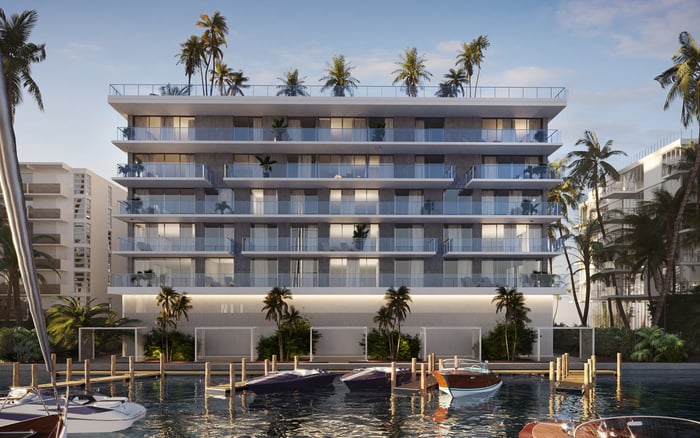
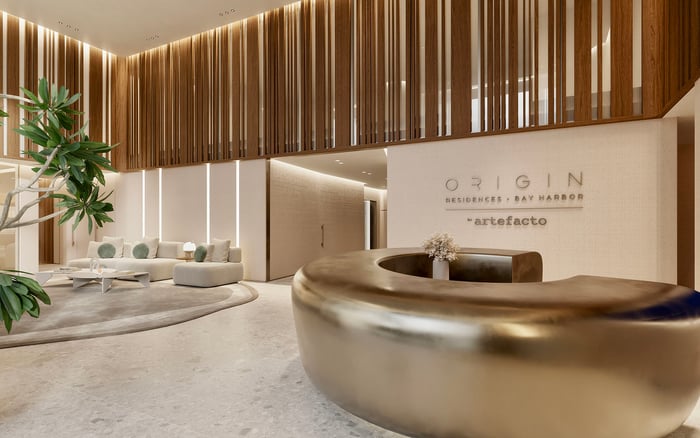
In Bay Harbor Islands, boutique waterfront living often comes down to one decisive variable: when your capital is required, and what that timing buys you in certainty. Alana and Origin Residences by Artefacto both advertise a familiar 40 percent pre-closing deposit and 60 percent due at closing, yet the cadence differs meaningfully. For South Florida’s private buyers, the right choice is less about the headline percentage and more about aligning liquidity, delivery timeline, and lifestyle priorities.
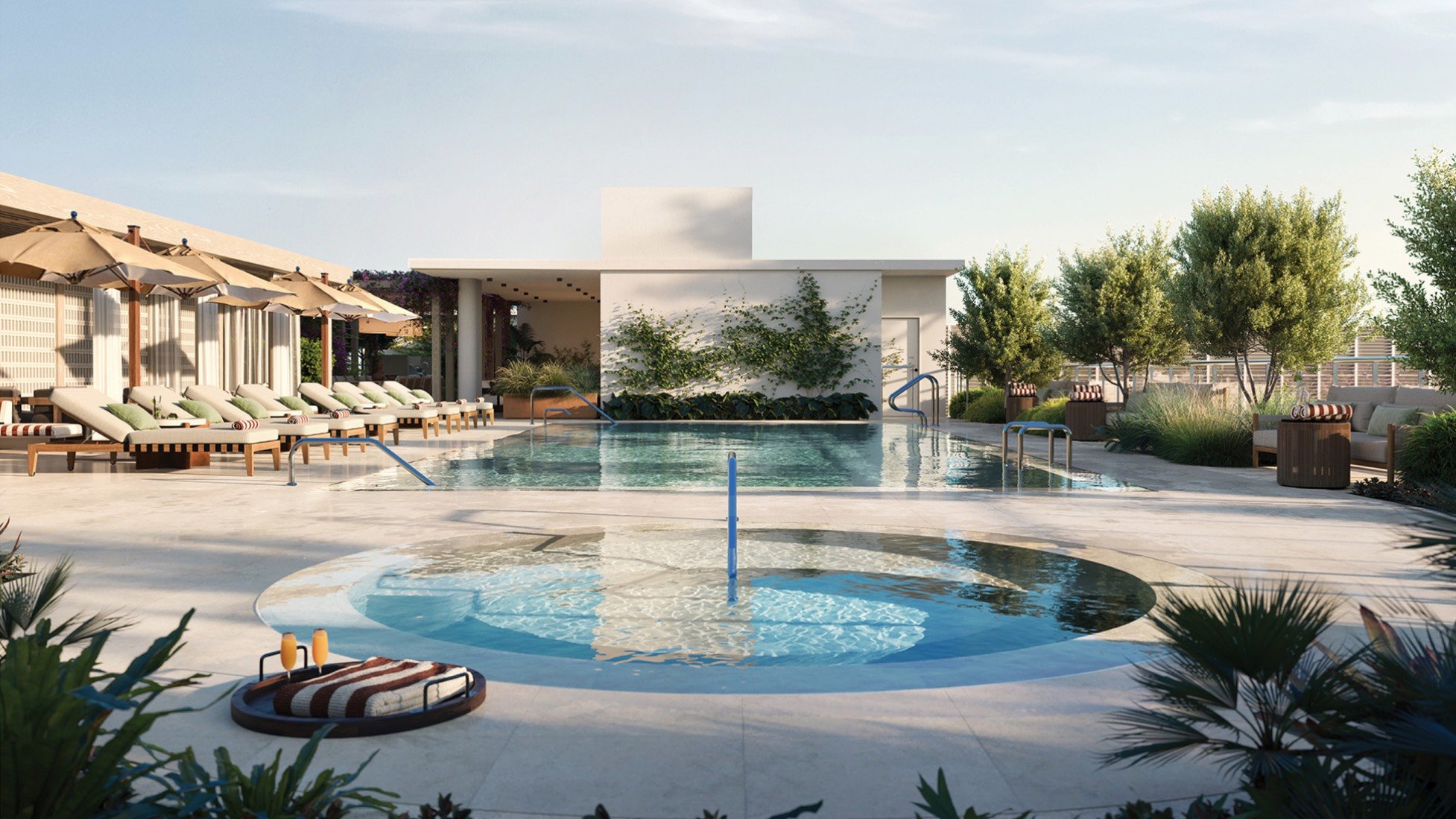
Bay Harbor Islands occupies a rare South Florida overlap: truly residential, yet minutes from Bal Harbour and the broader Miami Beach orbit. Here, boutique condominium living rarely wins on sheer amenity count. It wins on privacy, daily ease, and the practical question sophisticated buyers ask early: when is capital required, and what does that timing buy you in certainty.
Two boutique projects capture this dynamic. Alana Bay Harbor Islands is a 7-story, 30-residence condominium at 9901 W Bay Harbor Dr. Origin Residences by Artefacto is also 7 stories, with 27 residences at 9760 W Bay Harbor Dr. On paper, they appear comparable. In the funding cadence, they feel meaningfully different.
For high-net-worth buyers, the deposit schedule is not a footnote. It is a liquidity plan that must live alongside portfolio positioning, other real estate commitments, and the very real desire to plan a move with minimal friction.
Both projects are widely reported to follow a familiar South Florida pre-development template: 40 percent of the purchase price is collected prior to closing, with 60 percent due at closing.
That headline similarity matters because it sets expectations for boutique pre-construction. If you are comparing projects at this scale, the primary differentiator is typically not whether deposits are required. It is when they are required, what triggers each installment, and how that timeline aligns with your life.
Buyers often refer to this as “risk,” but the more precise issue is timing certainty. Timing ambiguity can be expensive, whether your intent is full-time residency, a second home, or simply the ability to coordinate furniture, schools, travel, and financial planning without constant revision.
Alana’s deposit structure is commonly described as 40 percent prior to closing, with a significant portion due early. The widely published schedule is 20 percent at contract, 10 percent at 30 days, and 10 percent at 90 days, followed by 60 percent at closing.
The strategic implication is simple: Alana asks for more commitment sooner. That is not inherently superior or inferior. For many private buyers, it is attractive to satisfy major funding requirements early, then move into a quieter waiting period with fewer interim triggers.
Alana also brings a level of near-term clarity that is uncommon in a boutique pipeline. A Temporary Certificate of Occupancy (TCO) was reported on February 6, 2025, and coverage around that milestone noted the project was over 90 percent sold at that time. In practical terms, TCO is often the moment when move-ins and closings can begin. When a building is at that stage, the conversation shifts away from projections and toward execution.
From a lifestyle perspective, Alana is often published with residences in the roughly 1,229 to 1,662 square foot range, commonly in 2 to 3 bedroom configurations depending on layout. For many boutique buyers, that footprint is the sweet spot: comfortably livable, yet still low-maintenance for seasonal use.
Origin Residences by Artefacto is frequently positioned as design-forward, with branding and interiors tied to the Artefacto partnership. Its deposit plan is also commonly published as 40 percent before closing, but the cadence is tied to construction milestones rather than a strict early calendar sequence.
The schedule is widely described as 10 percent at reservation, 10 percent at contract or 30 days, 10 percent at groundbreaking, and 10 percent at top-off, followed by 60 percent at closing.
For certain buyers, the appeal is straightforward: milestone triggers can keep portions of the deposit liquid until visible progress is achieved. In other words, the timing of capital outlay may track the timing of construction advancement more closely.
Origin’s market reception has also been notable. Coverage reported the project reached roughly 70 percent sold within six months of launch. Additionally, Florida YIMBY reported a $30.5 million construction loan was secured with foundation work underway, and projected delivery in late 2026.
In terms of product, Origin residences are commonly listed around 1,300 to 2,330 square feet with 2 to 4 bedroom layouts. That size range can indicate a slightly different buyer profile: one prioritizing larger entertaining areas, more flexible room count, or a floor plan that supports longer stays.
The difference between these projects is not the 40 percent. It is the shape of the 40 percent.
With Alana, pre-closing equity is deployed earlier and on a predictable calendar. With Origin, that same pre-closing equity is spread across milestones, which may keep capital available for longer. This can matter if you are coordinating another acquisition, timing the sale of an existing asset, or simply preserving optionality while a project progresses.
A discreet way to evaluate the decision is to ask two questions:
In Bay Harbor Islands, where boutique inventory is limited, many buyers choose based on calendar discipline as much as on finish selection.
For luxury buyers, the emotional inflection point in pre-development is the transition from “future” to “deliverable.” A TCO is not merely administrative. It typically signals a building has reached a phase where closings and move-ins can begin.
Alana’s reported TCO in early February 2025 is therefore a differentiator for buyers who want to plan with minimal ambiguity. It is also a practical milestone that can affect financing coordination, insurance planning, and the sequencing of interior procurement.
Origin, by contrast, is still in the pipeline stage based on public reporting, with foundation work underway and a late-2026 delivery projection. That is not a drawback. It simply means your planning horizon is longer, and your cash-flow timing is designed around milestone events.
In boutique condominiums, monthly fees can feel “quiet” until they are not. Alana’s HOA or maintenance figure is commonly listed around $1.07 per square foot, which buyers often use to estimate a monthly range based on interior size.
While line items, reserves, and final budgets can evolve, the underwriting discipline is valuable: pair your deposit plan with your expected carry so ownership feels predictable rather than surprising.
Origin’s publicly discussed materials in this research set emphasize lifestyle differentiators and the development timeline. Specific maintenance guidance is not included here, so the prudent posture is conservative underwriting until a budget is disclosed.
In a neighborhood as specific as Bay Harbor Islands, amenities are often fewer, but more intentional.
Origin includes a private marina amenity, a meaningful differentiator among boutique peers. For buyers whose weekends revolve around the water, that single feature can outweigh a longer list of amenities that are used less often.
Alana’s appeal, as covered, leans into a calm, boutique cadence and the advantage of being further along in the delivery cycle. Buyers prioritizing near-term usability often gravitate toward that clarity.
Some buyers who start in Bay Harbor Islands also compare fully branded, hospitality-anchored condominiums in Miami Beach. The driver is not necessarily unit size. It is service, staffing, and the psychology of a turnkey arrival.
If you are considering that alternative, focus on the ownership proposition: you are often buying into a lifestyle system as much as a residence. Projects such as Shore Club Private Collections Miami Beach and Setai Residences Miami Beach sit in a different category, but they can clarify what you value most: neighborhood intimacy or hotel-grade service.
For buyers who want Miami Beach proximity with a recognizable flag, The Ritz-Carlton Residences® Miami Beach is another reference point in the branded-residential conversation. Even if Bay Harbor is the final choice, cross-shopping categories sharpens your non-negotiables.
Choose Alana when:
Choose Origin Bay Harbor Islands when:
In both cases, Bay Harbor Islands rewards buyers who define “luxury” precisely. Sometimes it is an address or a water view. Just as often, it is the elegance of a timeline.
What is the key deposit difference between Alana and Origin? Alana is widely described as front-loaded and calendar-based, while Origin is commonly described as milestone-based.
How much is typically due before closing in both projects? Both are widely reported to collect 40 percent prior to closing, with the remaining 60 percent due at closing.
What does TCO mean for a buyer at Alana? A Temporary Certificate of Occupancy generally indicates move-ins and closings can begin, shifting the deal from projected to actionable.
When did Alana receive its reported TCO? It was reported as February 6, 2025.
How sold-out was Alana reported to be around the TCO milestone? Market reporting noted the project was over 90 percent sold at that time.
What sizes are commonly published for Alana residences? They are commonly published around 1,229 to 1,662 square feet, often in 2 to 3 bedroom layouts depending on plan.
What sizes are commonly published for Origin residences? They are commonly listed around 1,300 to 2,330 square feet, generally in 2 to 4 bedroom layouts.
What is a standout amenity at Origin Bay Harbor Islands? A private marina is a highlighted differentiator for the project.
What is the reported delivery timing for Origin? Public reporting projected delivery in late 2026.
What is a commonly published HOA estimate for Alana? It is commonly listed around $1.07 per square foot, often used to estimate monthly fees by unit size.
For bespoke guidance on Bay Harbor Islands and Miami Beach luxury inventory, speak with MILLION Luxury.
If branded residences are on your mind — as a home or as an allocation — we would be glad to share what we are seeing, privately.
Begin a quiet conversation